Pakistan Rolling Mill Components and Ancillary Equipment Market Growth Rate Analysis (2025 - 2031)
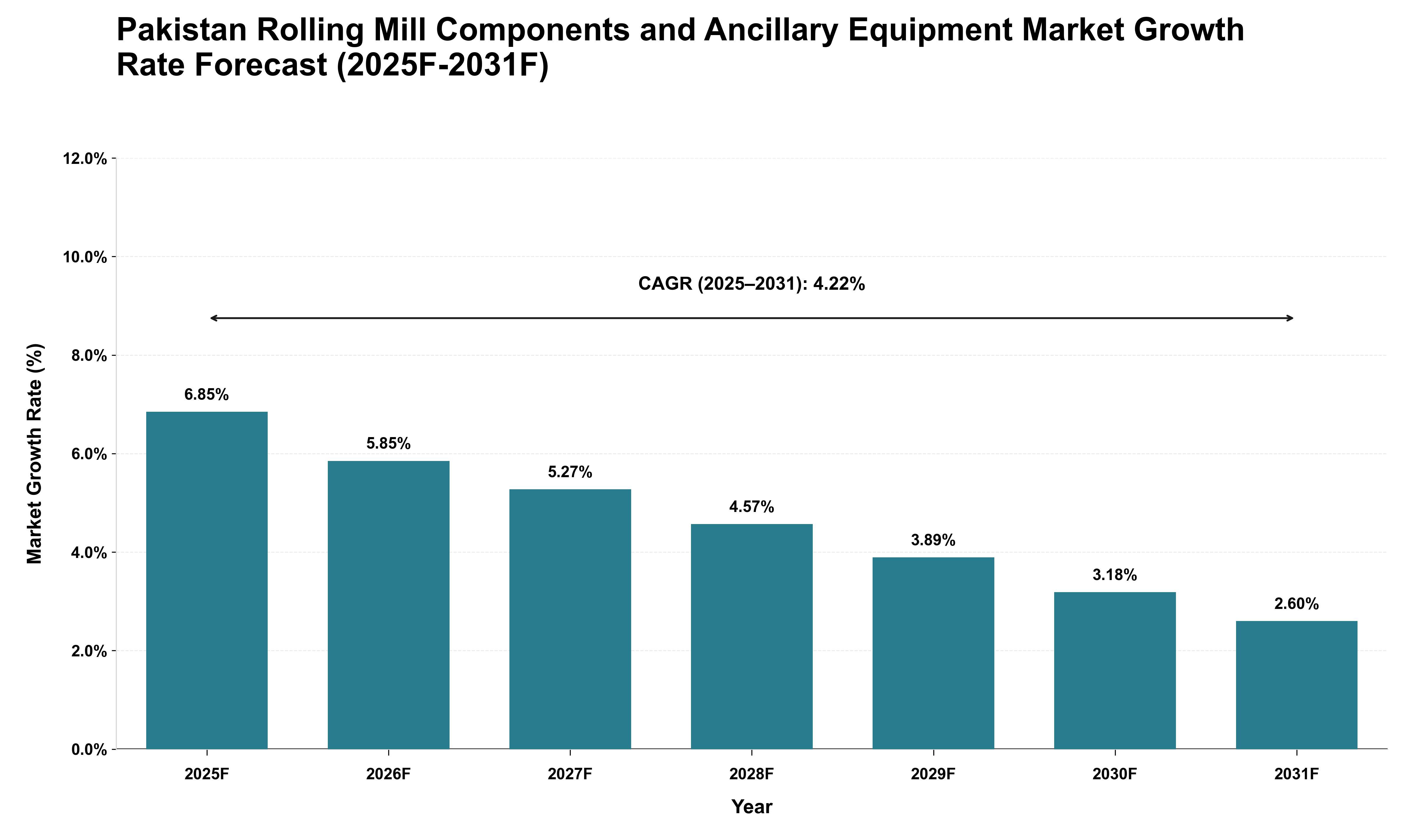
From 2025 onward, the Pakistan rolling mill components and ancillary equipment market will likely experience a steady growth trajectory, driven by the anticipated demand for raw materials and the evolving landscape of manufacturing capabilities. The forecasted CAGR of 4.22% reflects a robust market response to increasing industrial activity, particularly in steel production, which will necessitate enhanced machinery and components. As domestic production may not fully meet demand, import dependencies will play a crucial role in shaping pricing dynamics; fluctuations in global raw material availability could lead to cost pressures that impact overall market growth rates. The initial years of this forecast period (2025-2027) will see higher growth rates around 6.85% to 5.27%, as manufacturers ramp up investments in technology and infrastructure, while later years (2028-2031) may witness a gradual deceleration due to potential cyclical trends affecting capital expenditures and operational efficiencies within the sector.
Key Highlights of the Report:
- Pakistan Rolling Mill Components and Ancillary Equipment Market Outlook
- Market Size of Pakistan Rolling Mill Components and Ancillary Equipment Market, 2025
- Forecast of Pakistan Rolling Mill Components and Ancillary Equipment Market, 2032
- Historical Data and Forecast of Pakistan Rolling Mill Components and Ancillary Equipment Revenues & Volume for the Period 2022-2032F
- Pakistan Rolling Mill Components and Ancillary Equipment Market Trend Evolution
- Pakistan Rolling Mill Components and Ancillary Equipment Market Drivers and Challenges
- Pakistan Rolling Mill Components and Ancillary Equipment Price Trends
- Pakistan Rolling Mill Components and Ancillary Equipment Porter's Five Forces
- Pakistan Rolling Mill Components and Ancillary Equipment Industry Life Cycle
- Historical Data and Forecast of Pakistan Rolling Mill Components and Ancillary Equipment Market Revenues & Volume By Product for the Period 2022-2032F
- Historical Data and Forecast of Pakistan Rolling Mill Components and Ancillary Equipment Market Revenues & Volume By Iron Rolls for the Period 2022-2032F
- Historical Data and Forecast of Pakistan Rolling Mill Components and Ancillary Equipment Market Revenues & Volume By Steel Rolls for the Period 2022-2032F
- Historical Data and Forecast of Pakistan Rolling Mill Components and Ancillary Equipment Market Revenues & Volume By Others for the Period 2022-2032F
- Historical Data and Forecast of Pakistan Rolling Mill Components and Ancillary Equipment Market Revenues & Volume By End User for the Period 2022-2032F
- Historical Data and Forecast of Pakistan Rolling Mill Components and Ancillary Equipment Market Revenues & Volume By Oil & Gas for the Period 2022-2032F
- Historical Data and Forecast of Pakistan Rolling Mill Components and Ancillary Equipment Market Revenues & Volume By Industrial for the Period 2022-2032F
- Historical Data and Forecast of Pakistan Rolling Mill Components and Ancillary Equipment Market Revenues & Volume By Automotive for the Period 2022-2032F
- Historical Data and Forecast of Pakistan Rolling Mill Components and Ancillary Equipment Market Revenues & Volume By Mining for the Period 2022-2032F
- Historical Data and Forecast of Pakistan Rolling Mill Components and Ancillary Equipment Market Revenues & Volume By Others for the Period 2022-2032F
- Pakistan Rolling Mill Components and Ancillary Equipment Import Export Trade Statistics
- Market Opportunity Assessment By Product
- Market Opportunity Assessment By End User
- Pakistan Rolling Mill Components and Ancillary Equipment Top Companies Market Share
- Pakistan Rolling Mill Components and Ancillary Equipment Competitive Benchmarking By Technical and Operational Parameters
- Pakistan Rolling Mill Components and Ancillary Equipment Company Profiles
- Pakistan Rolling Mill Components and Ancillary Equipment Key Strategic Recommendations






































