Pakistan Washing Machine Market: Import Trend Analysis
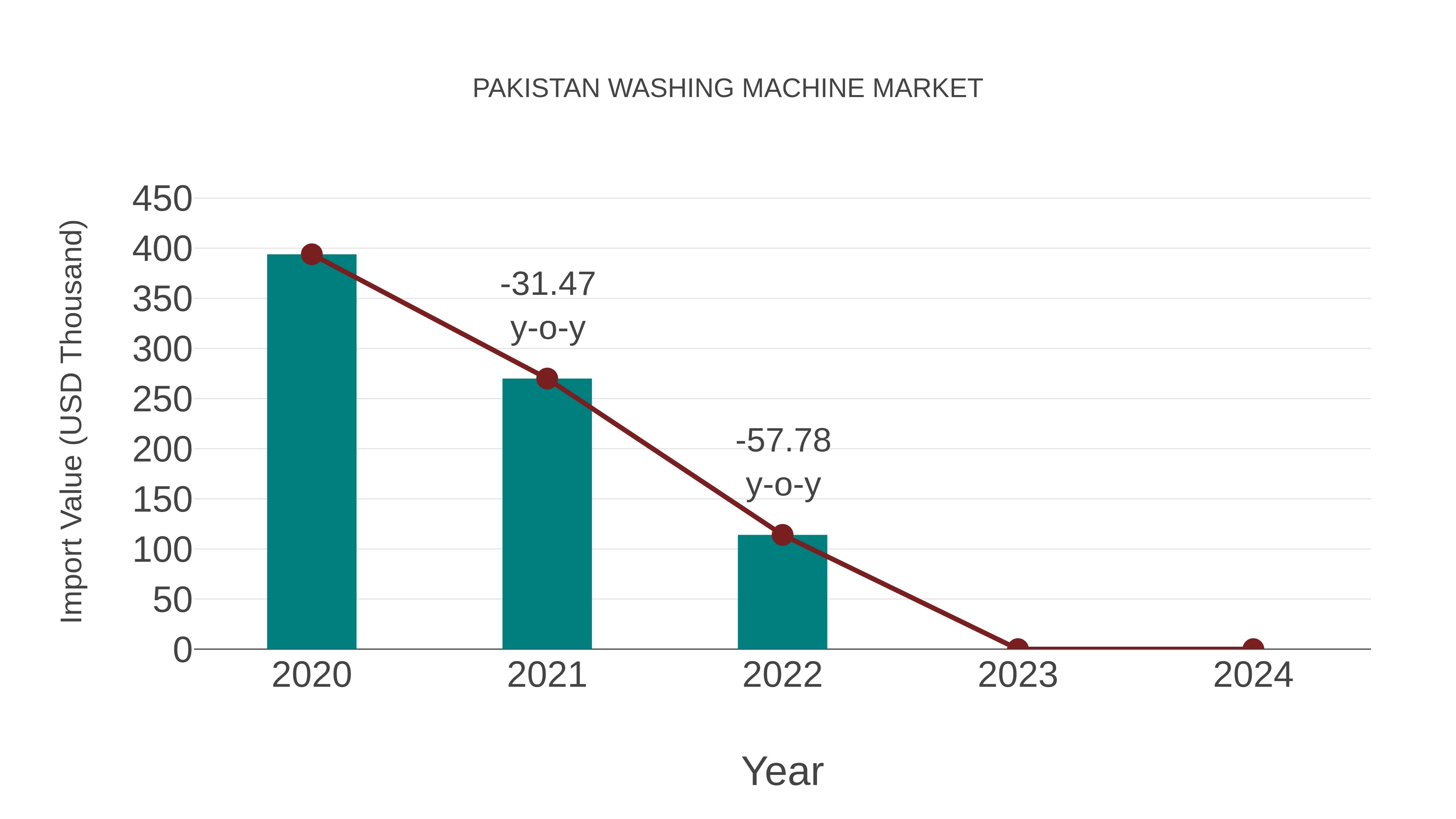
Pakistan washing machine market witnessed a declining import trend from 2020 to 2024, with a Compound Annual Growth Rate (CAGR) of -46.21%. This significant decrease could be attributed to shifts in consumer preferences towards local products or changes in trade policies affecting imports.
Pakistan Washing Machine Market Overview
The Washing Machine Market in Pakistan is growing with the increasing demand for convenient and efficient laundry solutions in households and commercial establishments. Washing machines offer automated and effective cleaning, saving time and effort. The market growth is driven by rising disposable incomes, changing lifestyles, and the growing focus on home appliances that enhance convenience and efficiency.
Drivers of the market
The Washing Machine market in Pakistan is fueled by the rising disposable incomes, changing lifestyles, and increasing urbanization. Consumers are increasingly opting for automated and energy-efficient washing machines for convenience and time-saving. The growing awareness about hygiene and the availability of advanced washing machine models with innovative features drive the market growth.
Challenges of the market
The washing machine market in Pakistan is hindered by the high cost of advanced washing machine technologies and the lack of local manufacturing capabilities. Reliance on imports raises costs and creates supply chain vulnerabilities. Additionally, limited awareness about the benefits of modern washing machines for energy and water efficiency hampers market growth and consumer adoption.
Government Policy of the market
Regarding household appliances, government policies emphasize energy efficiency standards, product safety certifications, and consumer protection. Regulatory frameworks include appliance labeling requirements, energy consumption limits, and environmental impact assessments. Initiatives promote technology adoption in washing machine technologies, skills development in appliance repair services, and market regulation of efficient appliances that conserve resources, reduce utility costs, and promote sustainable living in Pakistan.
Key Highlights of the Report:
- Pakistan Washing Machine Market Outlook
- Market Size of Pakistan Washing Machine Market, 2024
- Forecast of Pakistan Washing Machine Market, 2031
- Historical Data and Forecast of Pakistan Washing Machine Revenues & Volume for the Period 2018 - 2031
- Pakistan Washing Machine Market Trend Evolution
- Pakistan Washing Machine Market Drivers and Challenges
- Pakistan Washing Machine Price Trends
- Pakistan Washing Machine Porter's Five Forces
- Pakistan Washing Machine Industry Life Cycle
- Historical Data and Forecast of Pakistan Washing Machine Market Revenues & Volume By Product for the Period 2018 - 2031
- Historical Data and Forecast of Pakistan Washing Machine Market Revenues & Volume By Fully automatic for the Period 2018 - 2031
- Historical Data and Forecast of Pakistan Washing Machine Market Revenues & Volume By Semi-automatic for the Period 2018 - 2031
- Historical Data and Forecast of Pakistan Washing Machine Market Revenues & Volume By Dryers for the Period 2018 - 2031
- Historical Data and Forecast of Pakistan Washing Machine Market Revenues & Volume By Technology for the Period 2018 - 2031
- Historical Data and Forecast of Pakistan Washing Machine Market Revenues & Volume By Smart connected washing machine for the Period 2018 - 2031
- Historical Data and Forecast of Pakistan Washing Machine Market Revenues & Volume By Conventional washing machine for the Period 2018 - 2031
- Historical Data and Forecast of Pakistan Washing Machine Market Revenues & Volume By Capacity for the Period 2018 - 2031
- Historical Data and Forecast of Pakistan Washing Machine Market Revenues & Volume By Below 6 kg for the Period 2018 - 2031
- Historical Data and Forecast of Pakistan Washing Machine Market Revenues & Volume By 6.1 to 8 kg for the Period 2018 - 2031
- Historical Data and Forecast of Pakistan Washing Machine Market Revenues & Volume By Above 8 kg for the Period 2018 - 2031
- Historical Data and Forecast of Pakistan Washing Machine Market Revenues & Volume By End-use for the Period 2018 - 2031
- Historical Data and Forecast of Pakistan Washing Machine Market Revenues & Volume By Commercial for the Period 2018 - 2031
- Historical Data and Forecast of Pakistan Washing Machine Market Revenues & Volume By Residential for the Period 2018 - 2031
- Historical Data and Forecast of Pakistan Washing Machine Market Revenues & Volume By Application for the Period 2018 - 2031
- Historical Data and Forecast of Pakistan Washing Machine Market Revenues & Volume By Healthcare for the Period 2018 - 2031
- Historical Data and Forecast of Pakistan Washing Machine Market Revenues & Volume By Hospitality for the Period 2018 - 2031
- Historical Data and Forecast of Pakistan Washing Machine Market Revenues & Volume By Others for the Period 2018 - 2031
- Pakistan Washing Machine Import Export Trade Statistics
- Market Opportunity Assessment By Product
- Market Opportunity Assessment By Technology
- Market Opportunity Assessment By Capacity
- Market Opportunity Assessment By End-use
- Market Opportunity Assessment By Application
- Pakistan Washing Machine Top Companies Market Share
- Pakistan Washing Machine Competitive Benchmarking By Technical and Operational Parameters
- Pakistan Washing Machine Company Profiles
- Pakistan Washing Machine Key Strategic Recommendations






































