Peru Botanical Ingredients Market Top 5 Importing Countries and Market Competition (HHI) Analysis
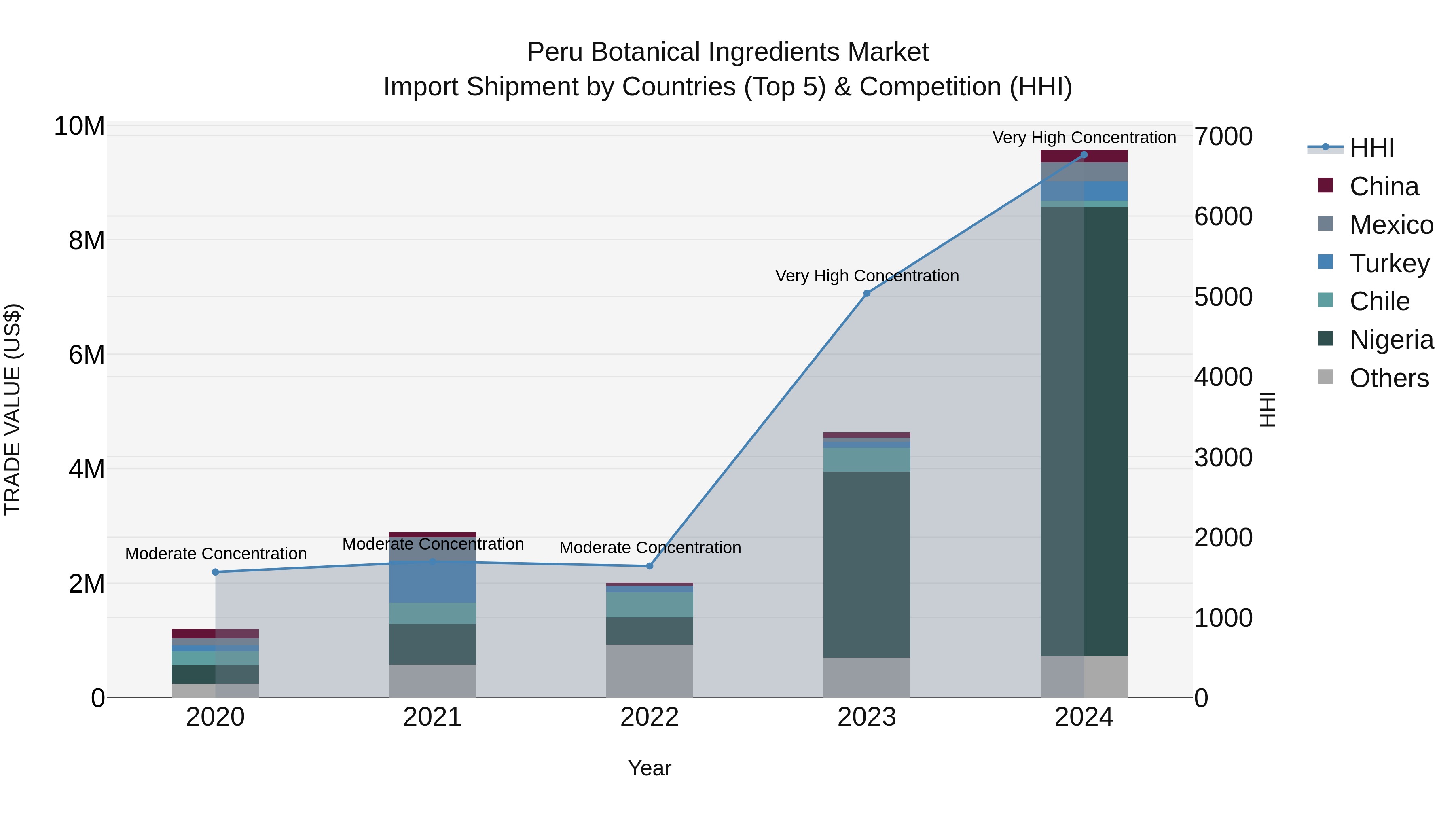
Peru`s botanical ingredients import market continues to thrive in 2024, with significant shipments coming from top exporting countries including Nigeria, Turkey, Mexico, Free Zones, and China. The high Herfindahl-Hirschman Index (HHI) indicates a concentrated market, while the impressive Compound Annual Growth Rate (CAGR) of 67.91% from 2020 to 2024 showcases strong expansion. The exceptional growth rate of 106.47% from 2023 to 2024 highlights the increasing demand for botanical ingredients in Peru, indicating promising opportunities for both domestic and international suppliers in the market.
Botanical Ingredients Market: Peru vs Top 5 Major Economies in 2027 (Latin America)
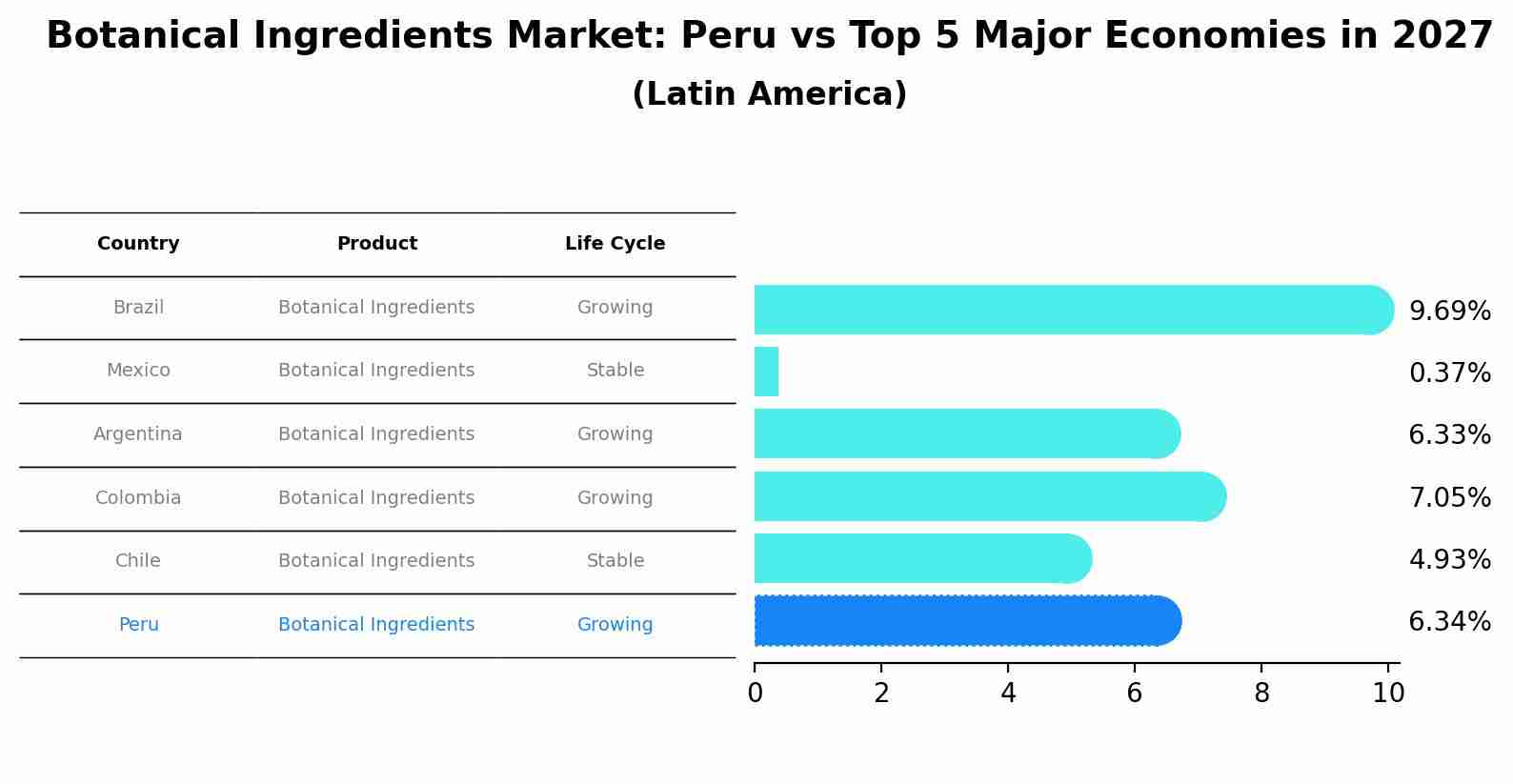
In the Latin America region, the Botanical Ingredients market in Peru is projected to expand at a growing growth rate of 6.34% by 2027. The largest economy is Brazil, followed by Mexico, Argentina, Colombia and Chile.
Peru Botanical Ingredients Market Synopsis
The Peru Botanical Ingredients Market is witnessing steady growth driven by increasing consumer awareness of the health benefits of natural products. Peru`s rich biodiversity provides a vast array of botanical ingredients used in various industries, including pharmaceuticals, cosmetics, and food and beverages. The country`s diverse climate and ecosystems support the cultivation of popular ingredients such as maca, quinoa, and cacao, which have gained global popularity for their nutritious properties. Growing demand for organic and sustainably sourced ingredients further boosts the market, with consumers seeking products that are ethically produced and environmentally friendly. Key players in the Peru Botanical Ingredients Market are focusing on quality control, certifications, and partnerships with local farmers to ensure a consistent supply of high-quality ingredients to meet the increasing demand both domestically and internationally.
Peru Botanical Ingredients Market Trends
The Peru Botanical Ingredients Market is experiencing a surge in demand driven by the rising interest in natural and organic products globally. Consumers are increasingly seeking products derived from botanical sources due to their perceived health benefits and sustainability. Peru`s rich biodiversity and traditional knowledge of plant-based remedies have positioned it as a key player in the global botanical ingredients market. Key trends include the growing popularity of superfoods such as maca, lucuma, and sacha inchi, as well as increasing demand for botanical extracts in the cosmetics and personal care industry. Sustainability and traceability have become important factors for consumers, leading to a focus on ethically sourced and environmentally friendly botanical ingredients in the market. Overall, the Peru Botanical Ingredients Market is poised for continued growth as consumers prioritize natural and plant-based products.
Peru Botanical Ingredients Market Challenges
In the Peru Botanical Ingredients Market, some challenges include sustainability concerns due to overharvesting of certain plant species, lack of standardized regulations and quality control measures, limited access to modern technology for processing and preserving botanical ingredients, and competition from other countries with lower production costs. Additionally, issues related to land rights and indigenous communities` involvement in the supply chain can pose challenges in ensuring ethical sourcing practices. Building strong partnerships with local growers and investing in research and development to innovate sustainable harvesting methods are crucial steps for companies operating in the Peru Botanical Ingredients Market to address these challenges effectively.
Peru Botanical Ingredients Market Investment Opportunities
The Peru Botanical Ingredients Market offers promising investment opportunities due to the country`s rich biodiversity and traditional knowledge of medicinal plants. Investors can explore opportunities in sourcing, processing, and exporting botanical ingredients such as maca, quinoa, sacha inchi, and cacao. With increasing global demand for natural and plant-based products in industries like pharmaceuticals, cosmetics, and food supplements, Peru`s botanical ingredients are gaining popularity for their unique properties and potential health benefits. Investing in sustainable and ethical practices, as well as certifications like organic and fair trade, can further enhance the marketability and value of Peruvian botanical ingredients in the international market, making it a lucrative and socially responsible investment option.
Jordan Agar Market Government Policies
The Peruvian government has implemented various policies to support and regulate the Botanical Ingredients Market. These include promoting sustainable harvesting practices to ensure the long-term viability of plant species, incentivizing the cultivation of native botanicals through subsidies and technical assistance, and establishing quality standards to maintain the integrity and safety of botanical products. Additionally, the government has implemented certification programs such as organic and fair trade certifications to enhance the competitiveness of Peruvian botanical ingredients in international markets. These policies aim to protect the country`s rich biodiversity, support local communities dependent on botanical resources, and boost the export potential of Peru`s botanical ingredients industry.
Peru Botanical Ingredients Market Future Outlook
The future outlook for the Peru Botanical Ingredients Market appears promising, driven by growing consumer demand for natural and organic products globally. Peru is known for its rich biodiversity and traditional knowledge of plant-based remedies, positioning it as a key player in the botanical ingredients market. Factors such as increasing awareness about the health benefits of botanicals, rising interest in sustainable sourcing practices, and the growing popularity of clean-label products are expected to drive the market`s growth. Additionally, the rising demand for superfoods like maca, quinoa, and camu camu from Peru further enhances the market`s potential. With ongoing research and development efforts to explore new botanical ingredients and their applications, the Peru Botanical Ingredients Market is projected to expand in the coming years.
Key Highlights of the Report:
- Peru Botanical Ingredients Market Outlook
- Market Size of Peru Botanical Ingredients Market, 2021
- Forecast of Peru Botanical Ingredients Market, 2031
- Historical Data and Forecast of Peru Botanical Ingredients Revenues & Volume for the Period 2018 - 2031
- Peru Botanical Ingredients Market Trend Evolution
- Peru Botanical Ingredients Market Drivers and Challenges
- Peru Botanical Ingredients Price Trends
- Peru Botanical Ingredients Porter's Five Forces
- Peru Botanical Ingredients Industry Life Cycle
- Historical Data and Forecast of Peru Botanical Ingredients Market Revenues & Volume By Form for the Period 2018 - 2031
- Historical Data and Forecast of Peru Botanical Ingredients Market Revenues & Volume By Powder for the Period 2018 - 2031
- Historical Data and Forecast of Peru Botanical Ingredients Market Revenues & Volume By Liquid for the Period 2018 - 2031
- Historical Data and Forecast of Peru Botanical Ingredients Market Revenues & Volume By Source for the Period 2018 - 2031
- Historical Data and Forecast of Peru Botanical Ingredients Market Revenues & Volume By Herbs for the Period 2018 - 2031
- Historical Data and Forecast of Peru Botanical Ingredients Market Revenues & Volume By Leaves for the Period 2018 - 2031
- Historical Data and Forecast of Peru Botanical Ingredients Market Revenues & Volume By Spices for the Period 2018 - 2031
- Historical Data and Forecast of Peru Botanical Ingredients Market Revenues & Volume By Flowers for the Period 2018 - 2031
- Historical Data and Forecast of Peru Botanical Ingredients Market Revenues & Volume By Others for the Period 2018 - 2031
- Historical Data and Forecast of Peru Botanical Ingredients Market Revenues & Volume By Application for the Period 2018 - 2031
- Historical Data and Forecast of Peru Botanical Ingredients Market Revenues & Volume By Food & Beverages for the Period 2018 - 2031
- Historical Data and Forecast of Peru Botanical Ingredients Market Revenues & Volume By Dietary Supplements for the Period 2018 - 2031
- Historical Data and Forecast of Peru Botanical Ingredients Market Revenues & Volume By Personal Care & Cosmetics for the Period 2018 - 2031
- Historical Data and Forecast of Peru Botanical Ingredients Market Revenues & Volume By Pharmaceuticals for the Period 2018 - 2031
- Historical Data and Forecast of Peru Botanical Ingredients Market Revenues & Volume By Others for the Period 2018 - 2031
- Peru Botanical Ingredients Import Export Trade Statistics
- Market Opportunity Assessment By Form
- Market Opportunity Assessment By Source
- Market Opportunity Assessment By Application
- Peru Botanical Ingredients Top Companies Market Share
- Peru Botanical Ingredients Competitive Benchmarking By Technical and Operational Parameters
- Peru Botanical Ingredients Company Profiles
- Peru Botanical Ingredients Key Strategic Recommendations






































