Peru Cooking Oil Market Growth Rate Analysis (2021 - 2031)
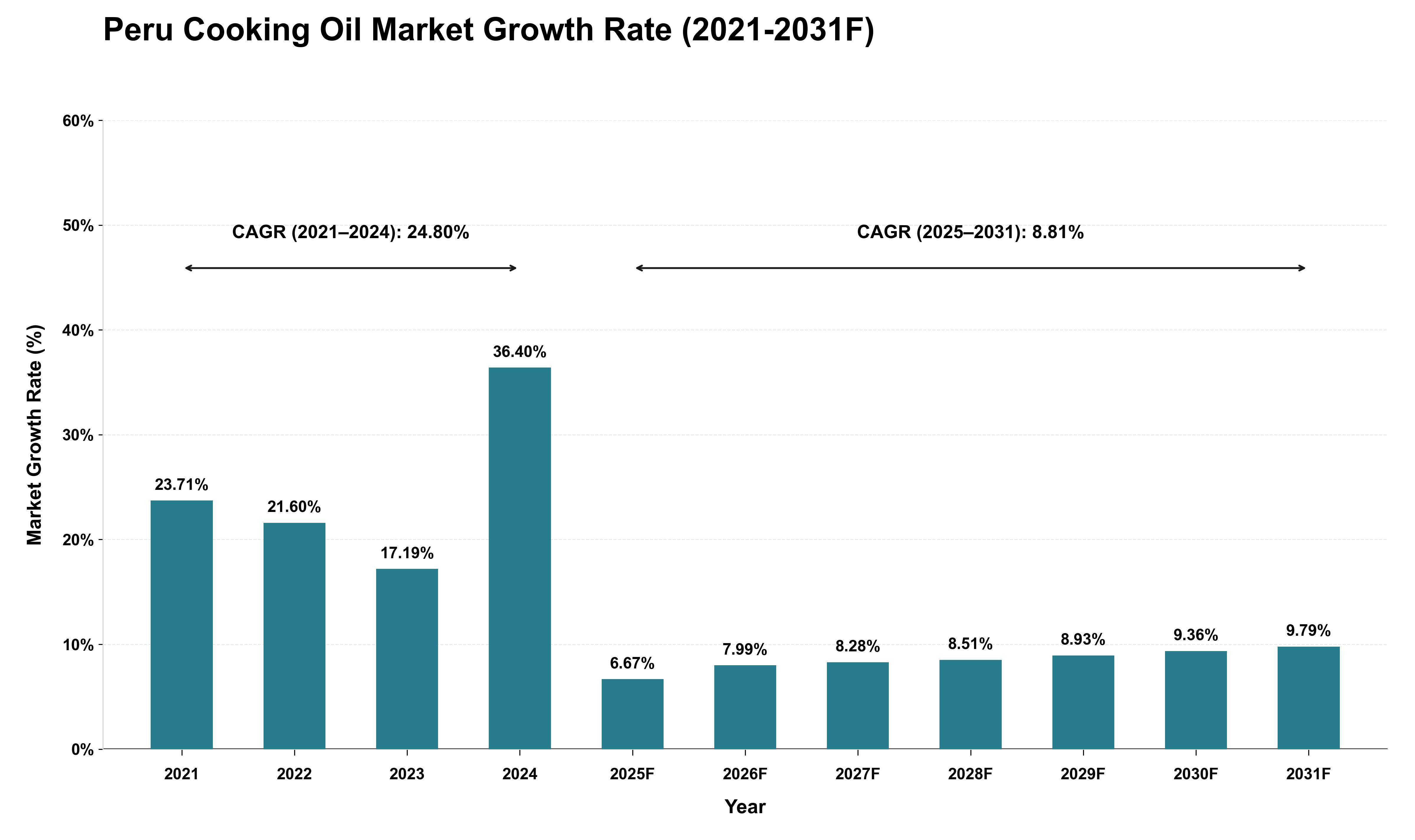
The Peru cooking oil market experienced a robust historical CAGR of 24.80% from 2021 to 2024, driven by significant shifts in global trade dynamics and heightened demand for edible oils amid post-pandemic recovery. The surge in annual growth rates, peaking at 36.40% in 2024, can be attributed to increased import reliance as domestic production struggled to meet rising consumption needs, exacerbated by global supply chain disruptions and commodity price fluctuations during the COVID-19 pandemic. As the forecast period (2025-2031) approaches, growth is expected to moderate to a CAGR of 8.81%, reflecting a stabilization in import volumes and a gradual adjustment to evolving consumer preferences and economic conditions. This trend suggests that while demand will continue to grow, it will do so at a more sustainable pace as the market adapts to both local agricultural capacities and international trade influences.
Key Highlights of the Report:
- Peru Cooking Oil Market Outlook
- Market Size of Peru Cooking Oil Market, 2024
- Forecast of Peru Cooking Oil Market, 2031
- Historical Data and Forecast of Peru Cooking Oil Revenues & Volume for the Period 2021- 2031
- Peru Cooking Oil Market Trend Evolution
- Peru Cooking Oil Market Drivers and Challenges
- Peru Cooking Oil Price Trends
- Peru Cooking Oil Porter's Five Forces
- Peru Cooking Oil Industry Life Cycle
- Historical Data and Forecast of Peru Cooking Oil Market Revenues & Volume By Product Type for the Period 2021- 2031
- Historical Data and Forecast of Peru Cooking Oil Market Revenues & Volume By Sunflower Oil for the Period 2021- 2031
- Historical Data and Forecast of Peru Cooking Oil Market Revenues & Volume By Corn Oil for the Period 2021- 2031
- Historical Data and Forecast of Peru Cooking Oil Market Revenues & Volume By Palm Oil for the Period 2021- 2031
- Historical Data and Forecast of Peru Cooking Oil Market Revenues & Volume By Others for the Period 2021- 2031
- Historical Data and Forecast of Peru Cooking Oil Market Revenues & Volume By Package Type for the Period 2021- 2031
- Historical Data and Forecast of Peru Cooking Oil Market Revenues & Volume By Retail for the Period 2021- 2031
- Historical Data and Forecast of Peru Cooking Oil Market Revenues & Volume By Bulk for the Period 2021- 2031
- Peru Cooking Oil Import Export Trade Statistics
- Market Opportunity Assessment By Product Type
- Market Opportunity Assessment By Package Type
- Peru Cooking Oil Top Companies Market Share
- Peru Cooking Oil Competitive Benchmarking By Technical and Operational Parameters
- Peru Cooking Oil Company Profiles
- Peru Cooking Oil Key Strategic Recommendations






































