Peru IoT Market Size & Growth Rate (2026-2032)
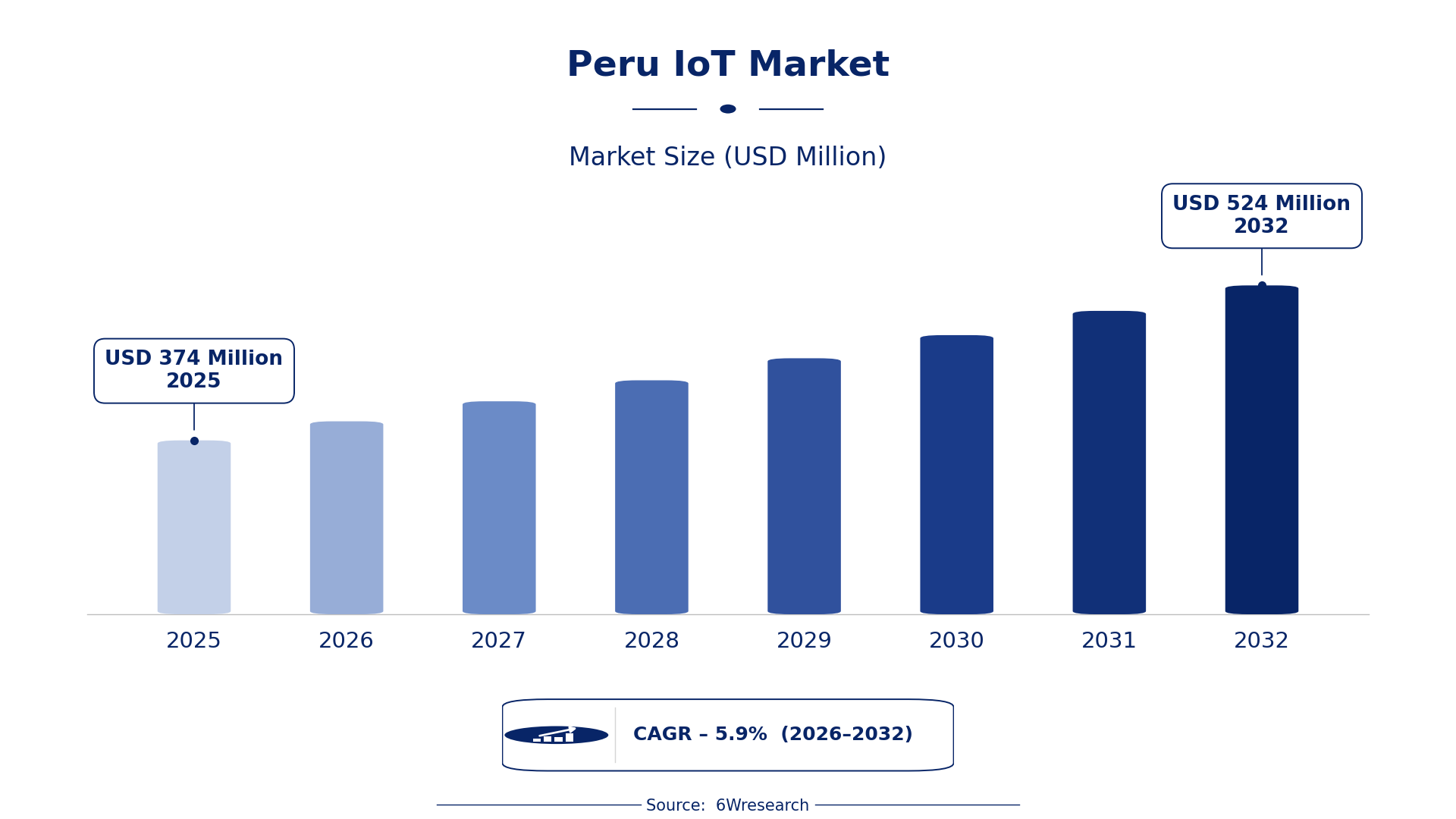
The Peru IoT Market was estimated at USD 374 Million in 2025 and is projected to reach USD 524 Million by 2032, growing at a CAGR of 5.9% from 2026 to 2032.
Peru IoT Market Synopsis
The most influential factor shaping the Peru IoT Market today is the increasing adoption of smart technologies across various sectors. This trend is largely driven by the demand for enhanced operational efficiency and improved decision-making capabilities, especially in industries like manufacturing and healthcare.
Government initiatives to promote digital transformation further boost the market's momentum. These policies not only support infrastructure development but also incentivize local businesses to invest in IoT solutions, making Peru a vibrant hub for innovation in the IoT space.
Peru IoT Market Year-wise Growth Rate and Key Drivers
This graph illustrates the annual growth rates of the Peru IoT Market from 2021 to 2032, highlighting a steady upward trajectory and projected expansion over the forecast period.
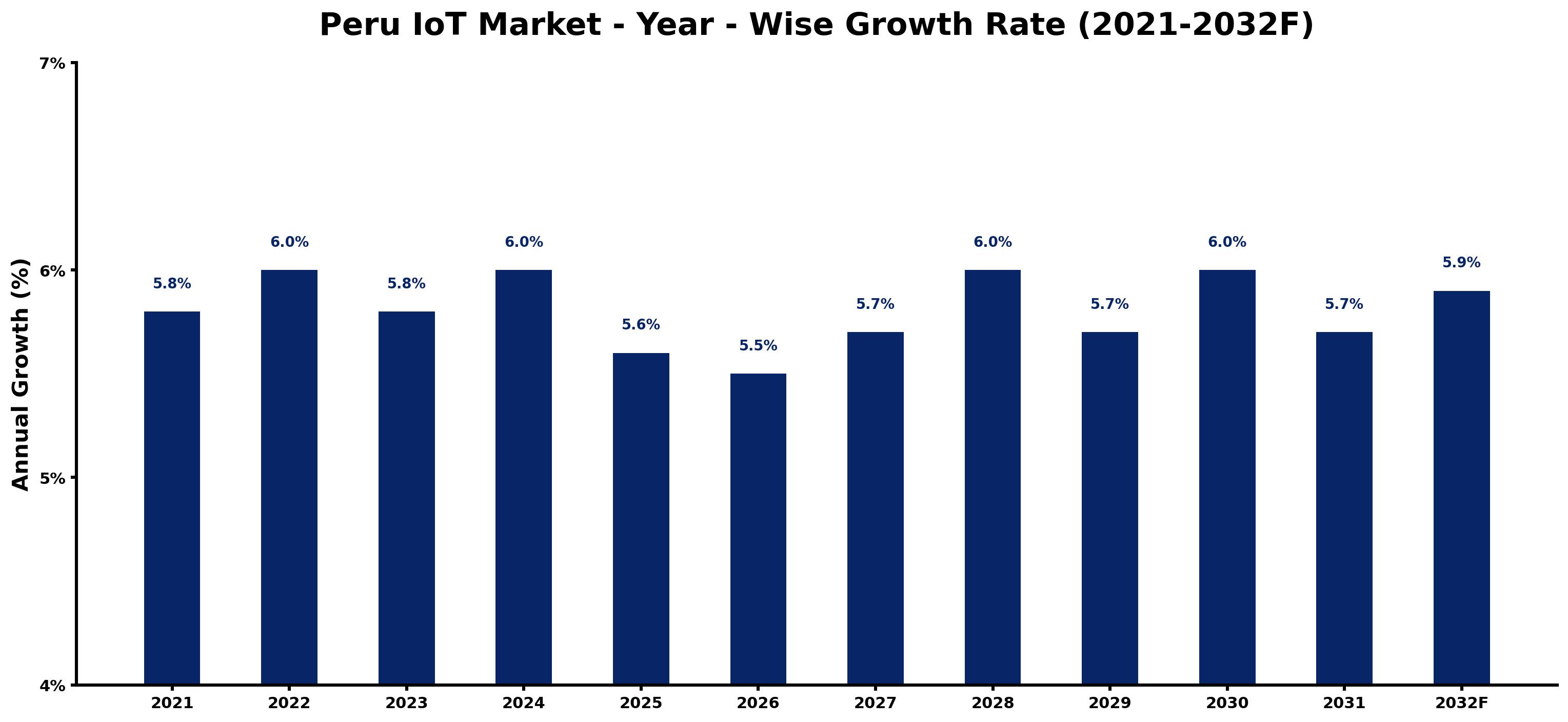
The table below presents the year‑wise growth rates along with the key drivers influencing the market
| Year | Growth Rate | Major Drivers |
| 2021 | 5.8% | Increased mining sector adoption of IoT for operations. |
| 2022 | 6.0% | Telecommunications reforms improving IoT connectivity across regions. |
| 2023 | 5.8% | Growth in healthcare IoT solutions amidst pandemic recovery. |
| 2024 | 6.0% | Government initiatives promoting smart city IoT implementations. |
| 2025 | 5.6% | Urbanization driving demand for smart agriculture IoT solutions. |
| 2026 | 5.5% | Sustainable projects integrating IoT for environmental monitoring. |
| 2027 | 5.7% | Increased logistics efficiency through IoT-enabled supply chains. |
| 2028 | 6.0% | Investment in smart transport systems enhancing IoT usage. |
| 2029 | 5.7% | Public safety initiatives adopting IoT technology for surveillance. |
| 2030 | 6.0% | Rising e-commerce trends necessitating enhanced IoT logistics. |
| 2031 | 5.7% | Local startups innovating IoT solutions for small businesses. |
| 2032 | 5.9% | Strengthened cybersecurity measures boosting IoT adoption confidence. |
Note: Market size estimations and growth projections presented in this report are based on 6Wresearch's proprietary forecasting methodology, utilizing the latest available industry data, government publications, and primary research inputs.
Peru IoT Market Key Takeaways
Below are some of the specific key takeaways from the market, including:
- The Peru IoT Market is on a solid growth trajectory, with a projected CAGR of 5.8% from 2026 to 2032.
- Key industries driving adoption include manufacturing, agriculture, and healthcare.
- Government policies are increasingly supportive, fostering infrastructure and investment.
- Data privacy and cybersecurity concerns pose challenges that must be addressed for sustainable growth.
- There's a notable trend towards integrating AI and machine learning with IoT solutions.
Evaluation of Restraints in Peru IoT Market
The Peru IoT Market faces several restraints that could impede its growth. One of the most pressing issues is the lack of standardized regulations, which creates uncertainty for companies looking to invest in IoT technologies. This regulatory ambiguity can stifle innovation and lead to hesitance among potential adopters.
Additionally, the shortage of skilled professionals in IoT development presents a significant barrier. This skills gap hinders the ability to implement and maintain IoT solutions effectively. on top of that, connectivity issues in remote areas limit the scalability of IoT projects, making it difficult for companies to achieve their desired outcomes.
Peru IoT Market Trends
Several trends are currently shaping the Peru IoT Market. The increasing demand for connected devices is driving innovation in sectors like smart agriculture and healthcare, where remote monitoring and asset tracking are becoming essential. As businesses seek efficient resource management, IoT solutions are being integrated with AI and machine learning to enhance functionality.
There's also a push towards smart city initiatives, reflecting a growing interest in urban development that leverages IoT technologies for improved public services. This trend indicates a shift towards sustainability and operational efficiency, positioning Peru as a potential leader in the region's IoT adoption.
Peru IoT Market Opportunities
The Peru IoT Market presents numerous growth opportunities for businesses willing to invest. One promising area is the development of tailored IoT applications that meet the specific needs of local industries. By understanding the unique challenges faced by sectors such as agriculture and transportation, companies can create innovative solutions that drive adoption.
on top of that, there is considerable potential for partnerships between IoT vendors and local enterprises. Collaborative efforts can facilitate knowledge transfer and support the implementation of IoT technologies in a way that resonates with the Peruvian market. Expanding IoT infrastructure to support smart city projects also offers a fertile ground for investment.
Government Initiatives in the Peru IoT Market
The Peruvian government is actively shaping the IoT landscape through a series of strategic initiatives. These efforts aim to create a conducive environment for digital transformation, focusing on regulatory frameworks, funding opportunities, and infrastructure development. This approach is critical for attracting both local and international players to the market.
- A recently launched National IoT Plan focuses on fostering the development and adoption of IoT technologies across various sectors.
- Currently underway is a public-private partnership initiative aimed at enhancing connectivity infrastructure throughout the country.
- Planned for the near future is a regulatory framework that will establish clear guidelines for IoT implementation, addressing data privacy and security concerns.
- Tax incentives are being offered to businesses that invest in IoT projects, encouraging more companies to adopt these technologies.
- Efforts to upgrade national digital infrastructure are expected to support IoT deployment in underserved regions.
Future Insights of the Peru IoT Market
Looking ahead to 2026-2032, the Peru IoT Market is set for substantial growth. The demand for smart solutions across various sectors will likely increase, spurred by the ongoing digital transformation initiatives. As more businesses recognize the competitive advantages of IoT adoption, investments in this space will grow.
The integration of advanced technologies like AI and machine learning will enhance the capabilities of IoT solutions, making them more appealing to a broader audience. As infrastructure improves and regulatory frameworks stabilize, we can expect the Peru IoT Market to mature, creating a wealth of opportunities for innovation and collaboration.
Peru IoT Market Latest Developments
In the past year, the Peru IoT Market has seen a notable uptick in activity, driven by both governmental and private sector initiatives. Companies are increasingly investing in IoT technologies, and new partnerships are emerging to harness the potential of connected devices. This momentum indicates a growing recognition of IoT's value across different industries.
- A major technology vendor announced the rollout of a new IoT platform in early 2025 aimed at enhancing resource management in agriculture.
- A partnership between local businesses and an international IoT firm is currently underway, focusing on developing smart transportation solutions.
- A recent initiative to enhance digital infrastructure was launched in Q1 2025, aimed at increasing internet connectivity in rural areas.
- Upcoming in 2026 is a planned launch of a national cybersecurity framework specifically designed to protect IoT systems and data.
- A public initiative expected to begin in the second half of 2026 will focus on deploying smart city projects in major urban areas.
Peru IoT Market - Key Attractiveness of the Report
- 10 Years of Market Numbers
- Historical Data Starting from 2022 to 2025
- Base Year: 2025
- Forecast Data until 2032
- Key Performance Indicators Impacting the Market
- Major Upcoming Developments and Projects
Key Highlights of the Report:
- Peru IoT Market Outlook
- Market Size of Peru IoT Market, 2025
- Forecast of Peru IoT Market, 2032
- Historical Data and Forecast of Peru IoT Revenues & Volume for the Period 2022-2032F
- Peru IoT Market Trend Evolution
- Peru IoT Market Drivers and Challenges
- Peru IoT Price Trends
- Peru IoT Porter's Five Forces
- Peru IoT Industry Life Cycle
- Historical Data and Forecast of Peru IoT Market Revenues & Volume By Component for the Period 2022-2032F
- Historical Data and Forecast of Peru IoT Market Revenues & Volume By Platform for the Period 2022-2032F
- Historical Data and Forecast of Peru IoT Market Revenues & Volume By Service for the Period 2022-2032F
- Historical Data and Forecast of Peru IoT Market Revenues & Volume By Software Solution for the Period 2022-2032F
- Historical Data and Forecast of Peru IoT Market Revenues & Volume By Application for the Period 2022-2032F
- Historical Data and Forecast of Peru IoT Market Revenues & Volume By Building & Home Automation for the Period 2022-2032F
- Historical Data and Forecast of Peru IoT Market Revenues & Volume By Smart Energy for the Period 2022-2032F
- Historical Data and Forecast of Peru IoT Market Revenues & Volume By Smart Manufacturing for the Period 2022-2032F
- Historical Data and Forecast of Peru IoT Market Revenues & Volume By Connected Logistics for the Period 2022-2032F
- Historical Data and Forecast of Peru IoT Market Revenues & Volume By Connected Health for the Period 2022-2032F
- Historical Data and Forecast of Peru IoT Market Revenues & Volume By Smart Retail for the Period 2022-2032F
- Historical Data and Forecast of Peru IoT Market Revenues & Volume By Smart Mobility & Transportation for the Period 2022-2032F
- Historical Data and Forecast of Peru IoT Market Revenues & Volume By Security & Emergencies for the Period 2022-2032F
- Historical Data and Forecast of Peru IoT Market Revenues & Volume By Platform for the Period 2022-2032F
- Historical Data and Forecast of Peru IoT Market Revenues & Volume By Device Management Platform for the Period 2022-2032F
- Historical Data and Forecast of Peru IoT Market Revenues & Volume By Application Management Software for the Period 2022-2032F
- Historical Data and Forecast of Peru IoT Market Revenues & Volume By Network Management Software for the Period 2022-2032F
- Historical Data and Forecast of Peru IoT Market Revenues & Volume By Software Solution for the Period 2022-2032F
- Historical Data and Forecast of Peru IoT Market Revenues & Volume By Real-time Stream Analytics for the Period 2022-2032F
- Historical Data and Forecast of Peru IoT Market Revenues & Volume By Security Solution for the Period 2022-2032F
- Historical Data and Forecast of Peru IoT Market Revenues & Volume By Data Management for the Period 2022-2032F
- Historical Data and Forecast of Peru IoT Market Revenues & Volume By Remote Monitoring System for the Period 2022-2032F
- Historical Data and Forecast of Peru IoT Market Revenues & Volume By Network Bandwidth Management for the Period 2022-2032F
- Historical Data and Forecast of Peru IoT Market Revenues & Volume By Service for the Period 2022-2032F
- Historical Data and Forecast of Peru IoT Market Revenues & Volume By Professional Services for the Period 2022-2032F
- Historical Data and Forecast of Peru IoT Market Revenues & Volume By Managed Services for the Period 2022-2032F
- Peru IoT Import Export Trade Statistics
- Market Opportunity Assessment By Component
- Market Opportunity Assessment By Application
- Market Opportunity Assessment By Platform
- Market Opportunity Assessment By Software Solution
- Market Opportunity Assessment By Service
- Peru IoT Top Companies Market Share
- Peru IoT Competitive Benchmarking By Technical and Operational Parameters
- Peru IoT Company Profiles
- Peru IoT Key Strategic Recommendations






































