Philippines Foot Care Products Market Size, Share & Growth Rate
The Philippines Foot Care Products Market was estimated at USD 258 Million in 2025 and is projected to reach USD 344 Million by 2032, growing at a CAGR of 4.2% from 2026 to 2032. This growth trajectory is fueled by an increasing awareness of foot health and hygiene among the population, largely driven by shifts towards self-care and wellness in daily routines. The urbanization trend, coupled with rising disposable incomes, is leading consumers to invest more in personal care products, thereby propelling the demand for foot care solutions.
Philippines Foot Care Products Market Year-wise Growth Rate and Key Drivers
This graph highlights how the Philippines Foot Care Products Market has steadily grown over the years, supported by major growth factors.
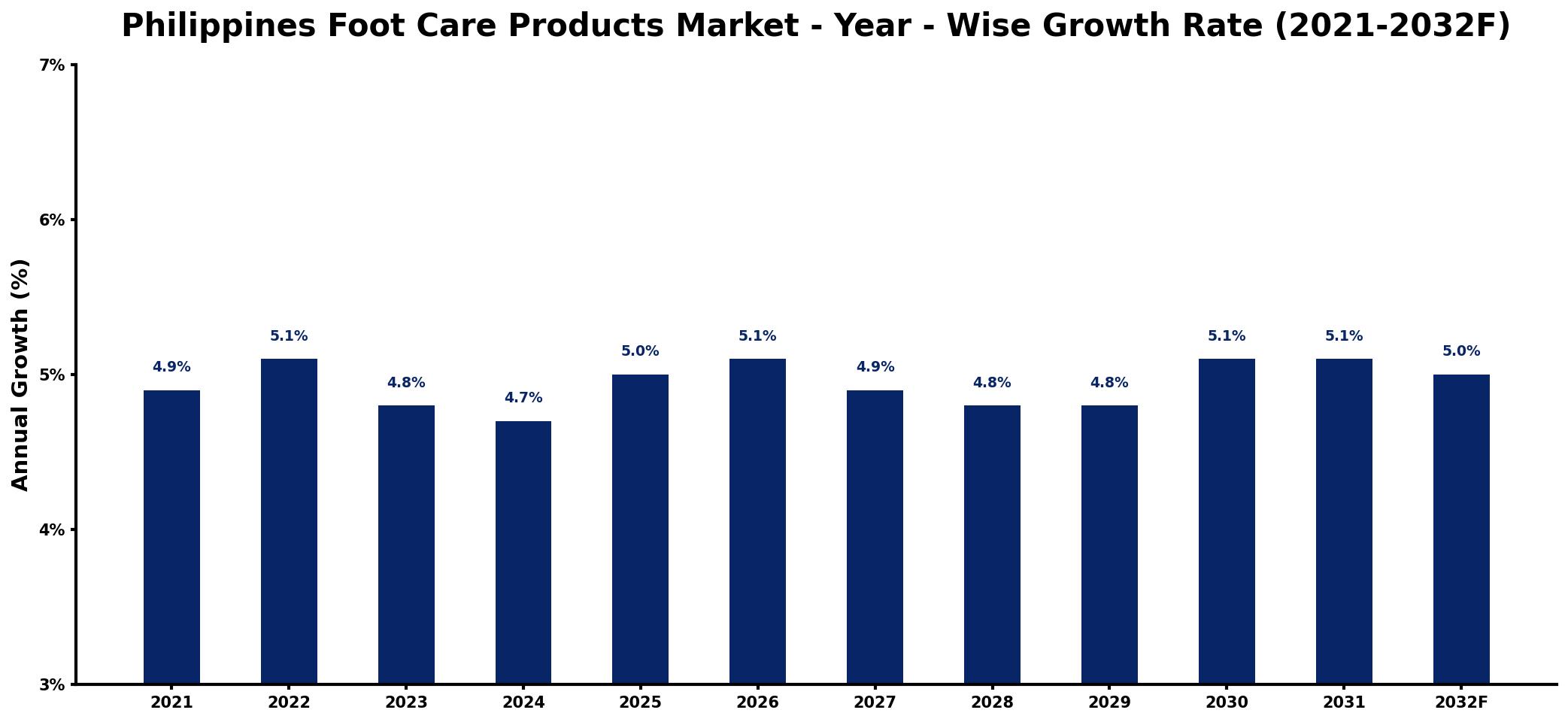
The table below presents the year‑wise growth rates along with the key drivers influencing the market
| Year | Growth Rate | Major Drivers |
| 2021 | 4.9% | Increased consumer health awareness |
| 2022 | 5.1% | Expansion of retail distribution channels |
| 2023 | 4.8% | Growing popularity of wellness trends |
| 2024 | 4.7% | Rise in online shopping preference |
| 2025 | 5.0% | Investment in innovative formulations |
| 2026 | 5.1% | Emergence of eco-friendly alternatives |
| 2027 | 4.9% | Heightened focus on preventive measures |
| 2028 | 4.8% | Growth in e-commerce platforms |
| 2029 | 4.8% | Increased urbanization and lifestyle changes |
| 2030 | 5.1% | Surge in demand for convenience |
| 2031 | 5.1% | Adoption of holistic health approaches |
| 2032 | 5.0% | Strengthened marketing and branding efforts |
Note: Market size estimations and growth projections presented in this report are based on 6Wresearch's proprietary forecasting methodology, utilizing the latest available industry data, government publications, and primary research inputs.
Philippines Foot Care Products Market Synopsis
The strongest force shaping the Philippines Foot Care Products Market today is the growing emphasis on personal hygiene and health care, particularly post-pandemic. As consumers become more health-conscious, foot care products such as creams, lotions, and specialized treatments are experiencing a surge in popularity, reflecting a broader trend towards self-care.
This increased focus on foot health is not only a response to health trends but also a result of evolving lifestyles in urban areas. As more individuals prioritize well-being, the demand for effective and accessible foot care solutions continues to rise, further enhancing market growth.
Philippines Foot Care Products Market Key Takeaways
- Heightened consumer awareness about foot health is driving demand for foot care products.
- The market is benefiting from rising disposable incomes, allowing for greater spending on personal care.
- Urbanization is influencing consumer behavior, with more individuals seeking specialized foot care solutions.
- COVID-19 has accelerated the trend towards self-care, increasing the overall demand for foot care products.
- Despite growth, educating consumers on preventative foot care remains a challenge for the market.
Evaluation of Restraints in Philippines Foot Care Products Market
Despite the market's robust growth prospects, several restraints impact its full potential. A significant factor is the prevailing lack of awareness regarding foot health, which often leads consumers to overlook its importance in their daily self-care routines. Many individuals are yet to recognize the benefits of preventative foot care, making it essential for brands and marketers to invest in educational initiatives. Such outreach efforts are crucial in changing consumer perceptions and fostering a culture that prioritizes foot health.
Philippines Foot Care Products Market Trends
Current trends influencing the Philippines Foot Care Products Market include the rise of e-commerce, which is making foot care products more accessible to a broader audience. Additionally, the integration of natural and organic ingredients in foot care formulations is gaining traction, as consumers increasingly favor products that are perceived as safe and environmentally friendly. Furthermore, tailored treatments for specific conditions such as athlete's foot or diabetic foot care are also emerging, reflecting a more personalized approach to foot health.
Philippines Foot Care Products Market Opportunities
The market presents substantial growth opportunities in areas such as product innovation and targeted marketing campaigns. There is an increasing demand for specialized foot care products, particularly those addressing common foot problems faced by urban populations. Moreover, as consumer preferences shift towards natural and holistic solutions, manufacturers can capitalize on this trend by developing products that highlight these attributes. Expanding into underpenetrated regions and enhancing distribution channels also represent significant avenues for growth.
Government Initiatives in the Philippines Foot Care Products Market
The Philippine government has been increasingly supportive of health-related initiatives, emphasizing public health awareness and preventive care. Various programs aimed at improving overall public health indirectly benefit the foot care products market, as they promote health education and hygiene practices. By encouraging citizens to adopt healthier lifestyles, these initiatives create a conducive environment for the growth of personal care sectors, including foot care.
Future Insights of the Philippines Foot Care Products Market
Looking ahead to 2026-2032, the Philippines Foot Care Products Market is expected to continue its upward trajectory. Factors such as sustained urbanization, increased consumer awareness, and a growing emphasis on health and wellness will drive market dynamics. Furthermore, innovations in product formulations and the rise of digital marketing strategies will enhance consumer engagement, making foot care products more appealing. As the market matures, brands that adapt to changing consumer behaviors and preferences will likely emerge as leaders in this space.
Philippines Foot Care Products Market Latest Developments (2025 - 2026)
In recent months, the Philippines Foot Care Products Market has witnessed several noteworthy developments, including increased collaboration between brands and health professionals aimed at promoting foot health. Additionally, several companies are launching campaigns centered on education to raise awareness of foot care. The trend towards natural ingredients continues, with several brands reformulating their products to meet consumer demand for organic options. As e-commerce grows, brands are enhancing their online presence to cater to a digitally-savvy consumer base.
Philippines Foot Care Products Market - Key Attractiveness of the Report
- 10 Years of Market Numbers
- Historical Data Starting from 2022 to 2025
- Base Year: 2025
- Forecast Data until 2032
- Key Performance Indicators Impacting the Market
- Major Upcoming Developments and Projects
Key Highlights of the Report:
- Philippines Foot Care Products Market Outlook
- Market Size of Philippines Foot Care Products Market, 2025
- Forecast of Philippines Foot Care Products Market, 2032
- Historical Data and Forecast of Philippines Foot Care Products Revenues & Volume for the Period 2022-2032F
- Philippines Foot Care Products Market Trend Evolution
- Philippines Foot Care Products Market Drivers and Challenges
- Philippines Foot Care Products Price Trends
- Philippines Foot Care Products Porter's Five Forces
- Philippines Foot Care Products Industry Life Cycle
- Historical Data and Forecast of Philippines Foot Care Products Market Revenues & Volume By Application for the Period 2022-2032F
- Historical Data and Forecast of Philippines Foot Care Products Market Revenues & Volume By Sports & Athletics for the Period 2022-2032F
- Historical Data and Forecast of Philippines Foot Care Products Market Revenues & Volume By Medical for the Period 2022-2032F
- Historical Data and Forecast of Philippines Foot Care Products Market Revenues & Volume By Personal Comfort for the Period 2022-2032F
- Historical Data and Forecast of Philippines Foot Care Products Market Revenues & Volume By Distribution Channel for the Period 2022-2032F
- Historical Data and Forecast of Philippines Foot Care Products Market Revenues & Volume By Drug Stores & Pharmacies for the Period 2022-2032F
- Historical Data and Forecast of Philippines Foot Care Products Market Revenues & Volume By Hospitals & Specialty Clinics for the Period 2022-2032F
- Historical Data and Forecast of Philippines Foot Care Products Market Revenues & Volume By Online Stores for the Period 2022-2032F
- Historical Data and Forecast of Philippines Foot Care Products Market Revenues & Volume By Others for the Period 2022-2032F
- Philippines Foot Care Products Import Export Trade Statistics
- Market Opportunity Assessment By Application
- Market Opportunity Assessment By Distribution Channel
- Philippines Foot Care Products Top Companies Market Share
- Philippines Foot Care Products Competitive Benchmarking By Technical and Operational Parameters
- Philippines Foot Care Products Company Profiles
- Philippines Foot Care Products Key Strategic Recommendations






































