Philippines Government Cloud Market Size & Growth Rate (2026-2032)
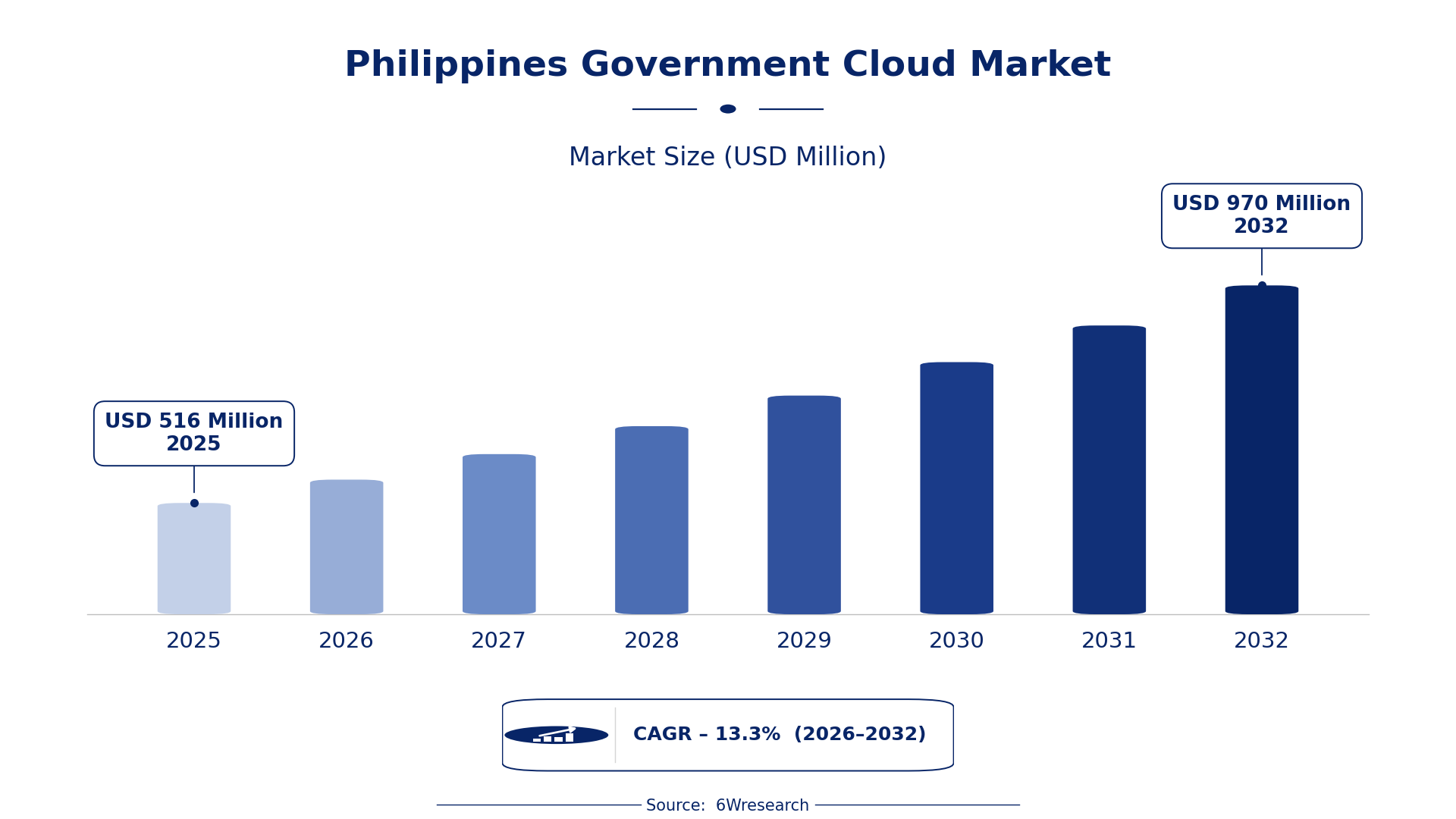
The Philippines Government Cloud Market was estimated at USD 516 Million in 2025 and is projected to reach USD 970 Million by 2032, growing at a CAGR of 13.3% from 2026 to 2032.
Philippines Government Cloud Market Synopsis
The Philippines Government Cloud Market is witnessing a surge as public sector organizations increasingly adopt cloud computing to improve service delivery and operational efficiency. This shift is not only about modernization; it directly addresses the urgent need for enhanced data management and accessibility in government operations.
In response to the challenges posed by the COVID-19 pandemic, government agencies have accelerated their digital transformation efforts. This urgency reflects a broader recognition that cloud solutions are essential for maintaining continuity and meeting the evolving needs of citizens.
Philippines Government Cloud Market Year-wise Growth Rate and Key Drivers
This graph illustrates the annual growth rates of the Philippines Government Cloud Market from 2021 to 2032, highlighting a steady upward trajectory and projected expansion over the forecast period.
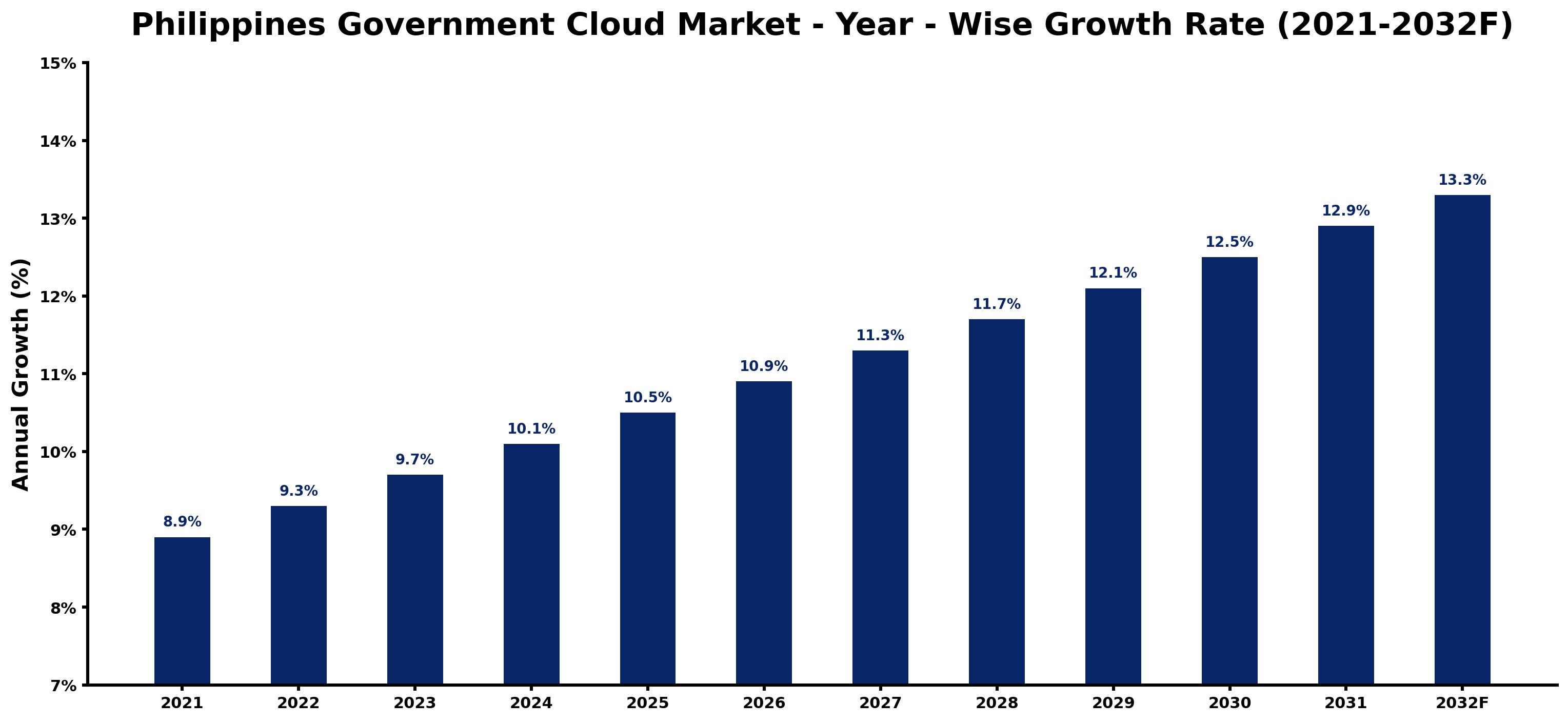
The table below presents the year‑wise growth rates along with the key drivers influencing the market
| Year | Growth Rate | Major Drivers |
| 2021 | 8.9% | Philippine national government cloud-first policy implementation |
| 2022 | 9.3% | Increased cybersecurity regulations require cloud compliance upgrades |
| 2023 | 9.7% | Growth in digital transactions boosts cloud storage needs |
| 2024 | 10.1% | Public sector digitization initiatives enhance cloud adoption |
| 2025 | 10.5% | Local government units accelerating online services transformation |
| 2026 | 10.9% | Philippine Statistics Authority promotes data centralization in cloud |
| 2027 | 11.3% | Remote work trends increase demand for secure cloud solutions |
| 2028 | 11.7% | Government investments in IT infrastructure support cloud growth |
| 2029 | 12.1% | Emergence of local cloud providers fosters competitive pricing |
| 2030 | 12.5% | Sustained focus on digital transformation in public services |
| 2031 | 12.9% | Increasing awareness about cloud benefits drives government adoption |
| 2032 | 13.3% | Public-private partnerships enhance technological advancements in cloud |
Note: Market size estimations and growth projections presented in this report are based on 6Wresearch's proprietary forecasting methodology, utilizing the latest available industry data, government publications, and primary research inputs.
Philippines Government Cloud Market Key Takeaways
Below are some of the specific key takeaways from the market, including:
- Growing investment in cloud infrastructure to enhance public service delivery.
- Increased focus on data security and compliance with local regulations.
- Government agencies prioritizing digital services as part of their strategic initiatives.
- Collaboration with technology providers to develop tailored cloud solutions.
- Rising demand for training and capacity-building programs in cloud technologies.
Evaluation of Restraints in Philippines Government Cloud Market
Despite its growth potential, the Philippines Government Cloud Market faces notable constraints. Data security remains a primary concern, as agencies struggle to protect sensitive information while complying with strict privacy regulations. The challenge of data localization also poses hurdles, as some entities are hesitant to store citizen data in offshore cloud environments. on top of that, the lack of a comprehensive regulatory framework can impede the adoption of innovative cloud solutions. These factors collectively slow down the market's growth trajectory, highlighting the need for enhanced strategies to address these limitations.
Philippines Government Cloud Market Trends
The market is currently shaped by several trends that signal a shift towards more advanced cloud solutions. One such trend is the growing emphasis on hybrid cloud environments, allowing agencies to balance between public and private cloud services. This approach facilitates enhanced flexibility and data control. Additionally, there’s an increasing interest in AI and machine learning capabilities integrated into cloud solutions, aimed at optimizing governmental processes. The public sector is also focusing on green computing initiatives, promoting sustainability in its cloud strategies.
Philippines Government Cloud Market Opportunities
The landscape of opportunities in the Philippines Government Cloud Market is promising. Agencies are looking to improve their digital infrastructure, creating a fertile ground for investments in cloud technologies. There is a significant push for public-private partnerships that can catalyze innovation and expedite the implementation of cloud services. on top of that, the demand for specialized cloud training programs presents an avenue for investment, as agencies seek to upskill their workforce to better manage these new technologies.
Government Initiatives in the Philippines Government Cloud Market
The Philippine government is actively shaping the cloud market through various initiatives aimed at enhancing digital governance and service delivery. These efforts reflect a commitment to modernizing public services and ensuring compliance with emerging technological standards.
- A national digital infrastructure upgrade programme, recently launched, focuses on enhancing connectivity for government services.
- Currently underway is a regulatory framework aimed at establishing clearer guidelines for cloud service providers, enhancing accountability and security.
- A planned public-private initiative expected to foster innovation in cloud computing is set to kick off in 2026, targeting improvements in data management.
- The government is also implementing training programs for public sector employees to ensure effective utilization of cloud technologies.
- In 2025, a comprehensive review of data protection laws was completed to align with international standards, enhancing compliance frameworks for cloud services.
Future Insights of the Philippines Government Cloud Market
Looking ahead to 2026-2032, the Philippines Government Cloud Market is expected to evolve significantly. As agencies increasingly recognize the benefits of cloud computing, investment is likely to rise, particularly in areas that enhance citizen engagement and service delivery. The integration of advanced technologies, such as AI and analytics, will further drive efficiencies and improve decision-making processes. Expect a stronger emphasis on cybersecurity measures and compliance as agencies work to protect sensitive information in a cloud environment.
Philippines Government Cloud Market Latest Developments
In the past year, the Philippines Government Cloud Market has seen dynamic activity as agencies ramp up their digital transformation efforts. Recent developments highlight a concerted push towards adopting cloud technologies and enhancing operational efficiencies.
- A major technology vendor completed the rollout of a new cloud service tailored for public sector needs in early 2025, designed to streamline governmental processes.
- An initiative that began in mid-2025 and remains underway is focused on improving cybersecurity protocols for cloud-based services within government agencies.
- A partnership between local government units and private tech firms is currently being established to foster cloud adoption, expected to finalize by late 2025.
- A planned nationwide campaign to promote awareness and understanding of cloud technologies among government employees is expected to launch in Q3 2026.
- Recently, a pilot project was successfully implemented, demonstrating the effectiveness of cloud solutions in public service delivery, which is now being evaluated for broader application.
Philippines Government Cloud Market - Key Attractiveness of the Report
- 10 Years of Market Numbers
- Historical Data Starting from 2022 to 2025
- Base Year: 2025
- Forecast Data until 2032
- Key Performance Indicators Impacting the Market
- Major Upcoming Developments and Projects
Key Highlights of the Report:
- Philippines Government Cloud Market Outlook
- Market Size of Philippines Government Cloud Market, 2025
- Forecast of Philippines Government Cloud Market, 2032
- Historical Data and Forecast of Philippines Government Cloud Revenues & Volume for the Period 2022-2032F
- Philippines Government Cloud Market Trend Evolution
- Philippines Government Cloud Market Drivers and Challenges
- Philippines Government Cloud Price Trends
- Philippines Government Cloud Porter's Five Forces
- Philippines Government Cloud Industry Life Cycle
- Historical Data and Forecast of Philippines Government Cloud Market Revenues & Volume By Solutions for the Period 2022-2032F
- Historical Data and Forecast of Philippines Government Cloud Market Revenues & Volume By Cloud Storage for the Period 2022-2032F
- Historical Data and Forecast of Philippines Government Cloud Market Revenues & Volume By Disaster Recovery for the Period 2022-2032F
- Historical Data and Forecast of Philippines Government Cloud Market Revenues & Volume By Identity and Access Management (IAM) for the Period 2022-2032F
- Historical Data and Forecast of Philippines Government Cloud Market Revenues & Volume By Risk and compliance management for the Period 2022-2032F
- Historical Data and Forecast of Philippines Government Cloud Market Revenues & Volume By Others (reporting and analytics, and security and vulnerability) for the Period 2022-2032F
- Historical Data and Forecast of Philippines Government Cloud Market Revenues & Volume By Services for the Period 2022-2032F
- Historical Data and Forecast of Philippines Government Cloud Market Revenues & Volume By Training, consulting, and education for the Period 2022-2032F
- Historical Data and Forecast of Philippines Government Cloud Market Revenues & Volume By Support and Maintenance for the Period 2022-2032F
- Historical Data and Forecast of Philippines Government Cloud Market Revenues & Volume By Integration and Migration for the Period 2022-2032F
- Historical Data and Forecast of Philippines Government Cloud Market Revenues & Volume By Service Model for the Period 2022-2032F
- Historical Data and Forecast of Philippines Government Cloud Market Revenues & Volume By Infrastructure as a Service (IaaS) for the Period 2022-2032F
- Historical Data and Forecast of Philippines Government Cloud Market Revenues & Volume By Platform as a Service (PaaS) for the Period 2022-2032F
- Historical Data and Forecast of Philippines Government Cloud Market Revenues & Volume By Software as a Service (SaaS) for the Period 2022-2032F
- Historical Data and Forecast of Philippines Government Cloud Market Revenues & Volume By Deployment Model for the Period 2022-2032F
- Historical Data and Forecast of Philippines Government Cloud Market Revenues & Volume By Public Cloud for the Period 2022-2032F
- Historical Data and Forecast of Philippines Government Cloud Market Revenues & Volume By Private Cloud for the Period 2022-2032F
- Historical Data and Forecast of Philippines Government Cloud Market Revenues & Volume By Hybrid Cloud for the Period 2022-2032F
- Philippines Government Cloud Import Export Trade Statistics
- Market Opportunity Assessment By Solutions
- Market Opportunity Assessment By Services
- Market Opportunity Assessment By Service Model
- Market Opportunity Assessment By Deployment Model
- Philippines Government Cloud Top Companies Market Share
- Philippines Government Cloud Competitive Benchmarking By Technical and Operational Parameters
- Philippines Government Cloud Company Profiles
- Philippines Government Cloud Key Strategic Recommendations






































