Philippines Leather Furniture Market Top 5 Importing Countries and Market Competition (HHI) Analysis
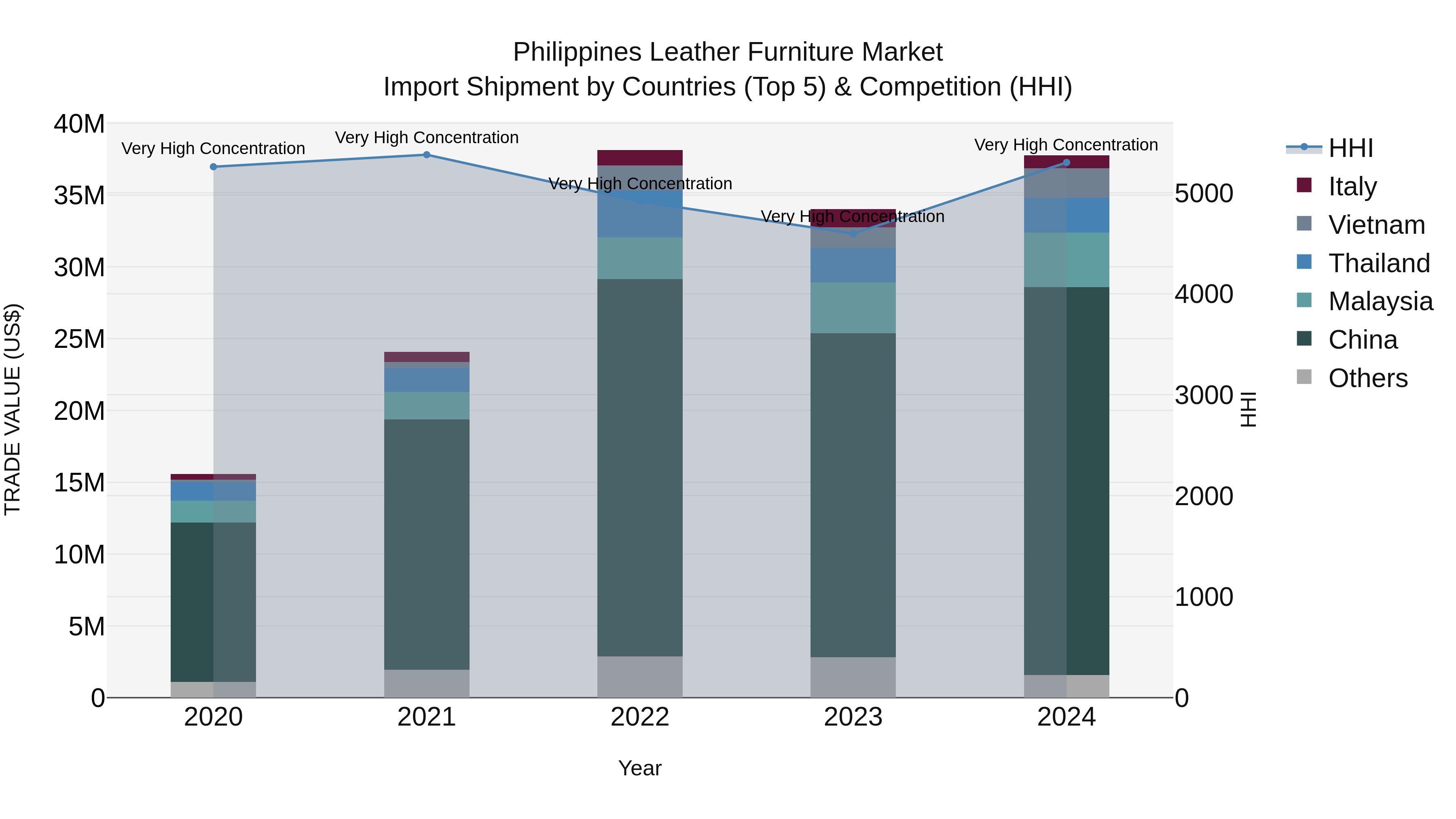
The Philippines experienced a significant increase in leather furniture import shipments in 2024, with top exporters being China, Malaysia, Thailand, Vietnam, and Italy. Despite the high Herfindahl-Hirschman Index (HHI) indicating market concentration, the industry showed robust growth with a compound annual growth rate (CAGR) of 24.76% from 2020 to 2024. The growth momentum continued in 2024 with a growth rate of 10.94% compared to the previous year, reflecting a strong demand for leather furniture in the Philippines market.
Philippines Leather Furniture Market Overview
The leather furniture market in the Philippines is expanding due to increasing demand for premium home and office furnishings. Consumers prefer leather for its durability, aesthetic appeal, and ease of maintenance. Rising disposable incomes and urbanization further boost market growth. However, fluctuations in leather prices and competition from synthetic materials pose challenges. Manufacturers are focusing on eco-friendly and cruelty-free leather alternatives to meet changing consumer preferences.
Drivers of the market
The growth of the real estate and interior design sectors is driving the leather furniture market in the Philippines. The rising demand for high-end home and office furnishings, coupled with increasing disposable income, is fueling market expansion. Additionally, the preference for durable, stylish, and easy-to-maintain furniture is encouraging consumers to invest in premium leather sofas, chairs, and recliners. The expansion of online furniture retail and customization options is further supporting market growth.
Challenges of the market
The leather furniture market is constrained by high material costs and competition from synthetic leather and fabric alternatives. Economic fluctuations impact consumer spending on luxury furniture, making demand unpredictable. Additionally, concerns about environmental sustainability are shifting preferences toward eco-friendly alternatives.
Investment opportunities in the Market
The growing real estate and hospitality sectors in the Philippines are driving demand for leather furniture. Consumers prefer high-end, durable furnishings for homes, offices, and hotels. Investment opportunities exist in domestic manufacturing, luxury furniture retail, and sustainable leather alternatives. However, competition from imported furniture brands and high production costs may challenge local businesses. Companies focusing on craftsmanship, affordability, and eco-friendly leather options can establish a strong market presence.
Government Policy of the market
The government promotes the leather furniture industry through policies supporting the local craftsmanship sector. The DTI provides financial assistance to furniture makers through grants and low-interest loans, helping them modernize production. The government also encourages the use of locally sourced materials to reduce dependence on imports and support the domestic leather industry. Under the Philippine Export Development Plan (PEDP), furniture manufacturers receive incentives for exporting their products, making Philippine-made leather furniture more competitive in international markets.
Key Highlights of the Report:
- Philippines Leather Furniture Market Outlook
- Market Size of Philippines Leather Furniture Market, 2024
- Forecast of Philippines Leather Furniture Market, 2031
- Historical Data and Forecast of Philippines Leather Furniture Revenues & Volume for the Period 2021- 2031
- Philippines Leather Furniture Market Trend Evolution
- Philippines Leather Furniture Market Drivers and Challenges
- Philippines Leather Furniture Price Trends
- Philippines Leather Furniture Porter's Five Forces
- Philippines Leather Furniture Industry Life Cycle
- Historical Data and Forecast of Philippines Leather Furniture Market Revenues & Volume By Category for the Period 2021- 2031
- Historical Data and Forecast of Philippines Leather Furniture Market Revenues & Volume By Full Grain for the Period 2021- 2031
- Historical Data and Forecast of Philippines Leather Furniture Market Revenues & Volume By Top Grain for the Period 2021- 2031
- Historical Data and Forecast of Philippines Leather Furniture Market Revenues & Volume By Genuine for the Period 2021- 2031
- Historical Data and Forecast of Philippines Leather Furniture Market Revenues & Volume By Bicast for the Period 2021- 2031
- Historical Data and Forecast of Philippines Leather Furniture Market Revenues & Volume By Bonded for the Period 2021- 2031
- Historical Data and Forecast of Philippines Leather Furniture Market Revenues & Volume By Synthetic for the Period 2021- 2031
- Historical Data and Forecast of Philippines Leather Furniture Market Revenues & Volume By Finish for the Period 2021- 2031
- Historical Data and Forecast of Philippines Leather Furniture Market Revenues & Volume By Aniline for the Period 2021- 2031
- Historical Data and Forecast of Philippines Leather Furniture Market Revenues & Volume By Semi-Aniline for the Period 2021- 2031
- Historical Data and Forecast of Philippines Leather Furniture Market Revenues & Volume By Brush-Colored for the Period 2021- 2031
- Historical Data and Forecast of Philippines Leather Furniture Market Revenues & Volume By Degrained for the Period 2021- 2031
- Historical Data and Forecast of Philippines Leather Furniture Market Revenues & Volume By Die-Cut for the Period 2021- 2031
- Historical Data and Forecast of Philippines Leather Furniture Market Revenues & Volume By Embossed for the Period 2021- 2031
- Historical Data and Forecast of Philippines Leather Furniture Market Revenues & Volume By Others for the Period 2021- 2031
- Historical Data and Forecast of Philippines Leather Furniture Market Revenues & Volume By Product for the Period 2021- 2031
- Historical Data and Forecast of Philippines Leather Furniture Market Revenues & Volume By Sofa for the Period 2021- 2031
- Historical Data and Forecast of Philippines Leather Furniture Market Revenues & Volume By Chair for the Period 2021- 2031
- Historical Data and Forecast of Philippines Leather Furniture Market Revenues & Volume By Bean Bags for the Period 2021- 2031
- Historical Data and Forecast of Philippines Leather Furniture Market Revenues & Volume By Corner Sofa for the Period 2021- 2031
- Historical Data and Forecast of Philippines Leather Furniture Market Revenues & Volume By Recliner for the Period 2021- 2031
- Historical Data and Forecast of Philippines Leather Furniture Market Revenues & Volume By Others for the Period 2021- 2031
- Historical Data and Forecast of Philippines Leather Furniture Market Revenues & Volume By Distribution Channel for the Period 2021- 2031
- Historical Data and Forecast of Philippines Leather Furniture Market Revenues & Volume By E-Commerce for the Period 2021- 2031
- Historical Data and Forecast of Philippines Leather Furniture Market Revenues & Volume By B2B for the Period 2021- 2031
- Historical Data and Forecast of Philippines Leather Furniture Market Revenues & Volume By Third Party Distributors for the Period 2021- 2031
- Historical Data and Forecast of Philippines Leather Furniture Market Revenues & Volume By Others for the Period 2021- 2031
- Historical Data and Forecast of Philippines Leather Furniture Market Revenues & Volume By Application for the Period 2021- 2031
- Historical Data and Forecast of Philippines Leather Furniture Market Revenues & Volume By Residential for the Period 2021- 2031
- Historical Data and Forecast of Philippines Leather Furniture Market Revenues & Volume By Commercial for the Period 2021- 2031
- Philippines Leather Furniture Import Export Trade Statistics
- Market Opportunity Assessment By Category
- Market Opportunity Assessment By Finish
- Market Opportunity Assessment By Product
- Market Opportunity Assessment By Distribution Channel
- Market Opportunity Assessment By Application
- Philippines Leather Furniture Top Companies Market Share
- Philippines Leather Furniture Competitive Benchmarking By Technical and Operational Parameters
- Philippines Leather Furniture Company Profiles
- Philippines Leather Furniture Key Strategic Recommendations






































