Philippines Sponge & Scouring Pads Market Top 5 Importing Countries and Market Competition (HHI) Analysis
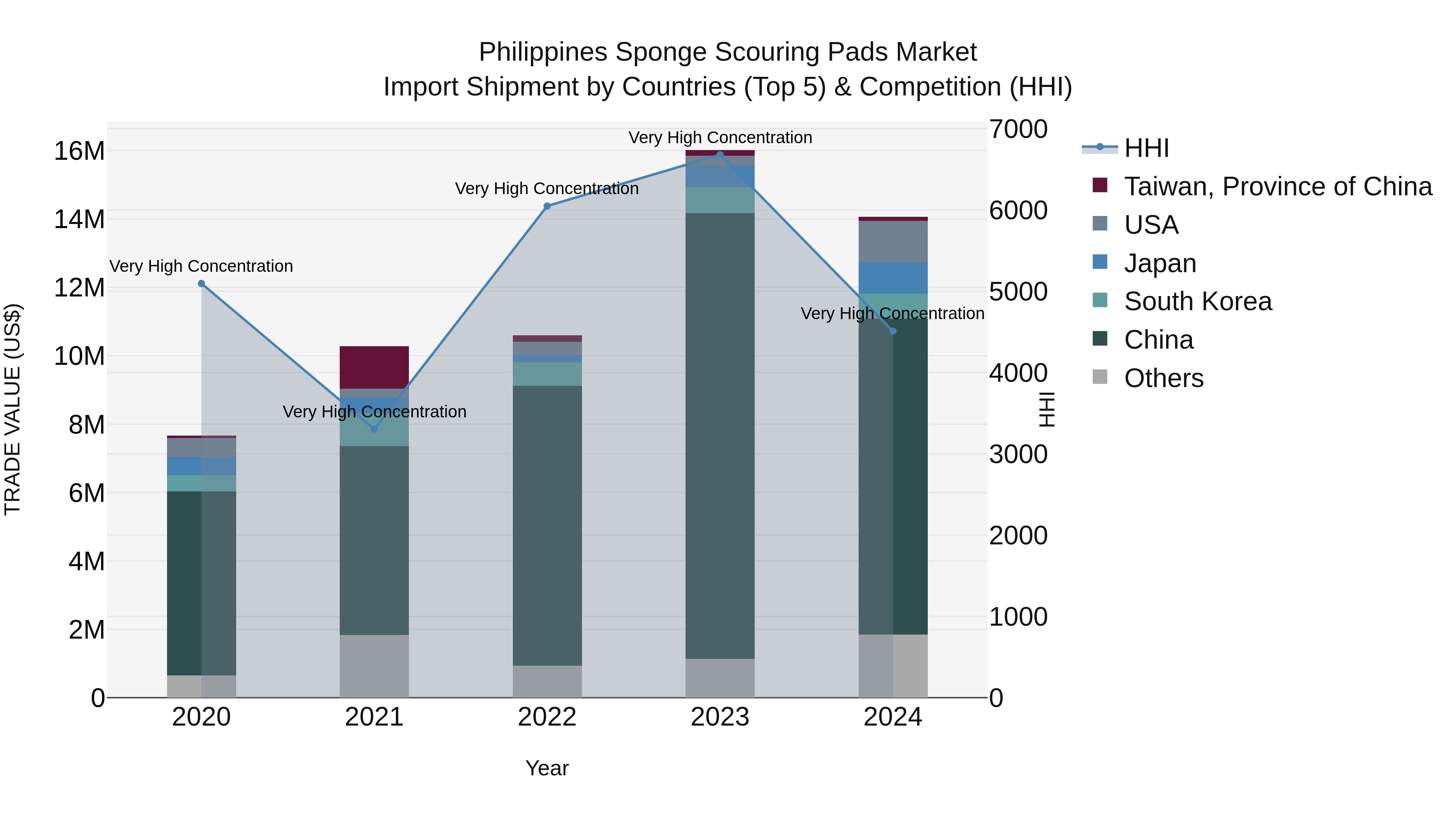
Despite a slight decline in growth rate from 2023 to 2024, the Philippines continues to import a significant amount of sponge and scouring pads, with top exporting countries including China, USA, Japan, Hong Kong, and South Korea. The high Herfindahl-Hirschman Index (HHI) concentration indicates a competitive market dominated by a few key players. The impressive compound annual growth rate (CAGR) of 16.42% from 2020 to 2024 demonstrates sustained demand for these products in the Philippines. This data suggests a strong market for sponge and scouring pads imports in the country, with potential for further growth and competition in the future.
Philippines Sponge & Scouring Pads Market Growth Rate
According to 6Wresearch internal database and industry insights, the Philippines Sponge & Scouring Pads Market is projected to grow at a compound annual growth rate (CAGR) of 5.8% during the forecast period (2026–2032).
Topics Covered in the Philippines Sponge & Scouring Pads Market Report
The Philippines Sponge & Scouring Pads Market report thoroughly covers the market by product, raw material, application, and end-use. The report provides a detailed analysis of ongoing market trends, opportunities/high-growth areas, and market drivers that will help stakeholders align strategies based on current and future market dynamics.
Philippines Sponge & Scouring Pads Market Highlights
| Report Name | Philippines Sponge & Scouring Pads Market |
| Forecast Period | 2026–2032 |
| CAGR | 5.8% |
| Growing Sector | Commercial (Foodservice) |
Philippines Sponge & Scouring Pads Market Synopsis
Philippines Sponge & Scouring Pads Market is projected to accomplish massive growth in the years to come as urban household formation accelerates and the foodservice industry expands across the archipelago to a major extent. Apart from this, the growth of this industry is mainly stimulated by the "Philippine Development Plan 2023-2028," which emphasizes boosting the manufacturing sector and improving logistics, making household essentials more accessible in remote regions. Also, a growing middle-class population is shifting from traditional, unbranded cleaning methods to specialized, non-scratch sponges that protect premium non-stick cookware, thus fueling the value-driven segments of the market.
Evaluation of Growth Drivers in Philippines Sponge & Scouring Pads Market
Below are some prominent drivers and their influence on the market dynamics:
| Drivers | Primary Segments Affected | Why It Matters |
| Hospitality Growth | By End-use (Commercial) | Massive influx of tourists requires high-frequency cleaning in hotels and cafes. |
| Retail Modernization | By End-use (Household) | Increased availability of branded products in malls across Luzon and Visayas. |
| Sustainable Innovation | By Raw Material (Polymer/Natural) | Demand for biodegradable coconut-husk fibers is rising among urban consumers. |
| Urbanization | By Application (Kitchen Utensils) | Smaller condo-style kitchens drive the need for multi-functional tools. |
| Hygiene Awareness | By Product (Heavy Duty) | Firmer sanitation standards in industrial kitchens boost high-performance pads |
The Philippines Sponge & Scouring Pads Market is anticipated to grow at a CAGR of 5.8% during the forecast period 2026-2032. Increased awareness about personal health and hygiene has elevated the demand for effective cleaning solutions, including sponges and scouring pads. Also, urbanization and increase in incomes have made it possible for people to buy better cleaning supplies.
Apart from this, the growth of the food and beverage industry has also spurred the need for commercial cleaning products, further driving sales. Sustainability trends that encourage the use of eco-friendly materials have also led to new ideas for making bio-based sponges and scouring pads, which has attracted even more environmentally conscious customers.
Evaluation of Restraints in the Philippines Sponge & Scouring Pads Market
Below are some major restraints and their influence on market dynamics:
| Restraints | Primary Segments Affected | What This Means |
| Price Sensitivity | By Product (All Types) | People with lower incomes might not be able to afford high-quality scouring pads. |
| Volatility of Raw Material Cost | By Raw Material (Steel, Polymer) | The price of raw materials can change, which can affect the price of the finished product. |
| Competition from Substitute Products | By Product (All Types) | Strong competition from other cleaning products, such as wipes or cloths, could slow down market growth. |
| Waste Disposal Issues | By End-User (Household, Commercial) | Some synthetic scouring pads are non-biodegradable, contributing to environmental concerns. |
Philippines Sponge & Scouring Pads Market Challenges
The Philippines Sponge & Scouring Pads Industry faces several challenges in terms of price sensitivity among consumers as lower-income groups may opt for cost-effective alternatives over branded products. Also, the availability of counterfeit and low-quality products in informal markets also affects the revenue of established players. On the other hand, the transition towards sustainable and eco-friendly products is often hampered by the higher costs associated with raw materials such as biodegradable polymers and natural fibers.
Philippines Sponge & Scouring Pads Market Trends
Several emerging trends are present in the Philippines sponge and scouring pads market such as a surge in the demand for biodegradable and eco-friendly products. Manufacturers have been switching towards polymer-based sponges designed for durability and reduced environmental impact in the country. Innovations in sustainable packaging have gained prominence in the country, as growing emphasize on environmentally conscious consumers. Additionally, another major trend is the rising incorporation of antimicrobial technologies in sponges to encounter some major concerns about the bacterial growth during cleaning tasks.
Investment Opportunities in the Philippines Sponge & Scouring Pads Market
The Philippines present some lucrative investment opportunities within the sponge and scouring pads market. Growing urban population, rise in usage of premium cleaning products, and the rising demand from the commercial sector. There is significant potential to initiate sustainable, and innovative cleaning solutions that target environmentally conscious consumers. Investments are made in local manufacturers for more cost benefit, and partnerships with established e-commerce platforms can provide accessible distribution opportunities to improve market reach.
Top 5 Leading Players in the Philippines Sponge & Scouring Pads Market
Here is a comprehensive list of leading companies contributing to Philippines Sponge & Scouring Pads Market growth:
1. 3M Philippines (Scotch-Brite)
| Company Name | 3M Philippines (Scotch-Brite) |
|---|---|
| Established Year | 1964 |
| Headquarters | Taguig City, Metro Manila |
| Official Website | - |
As the market leader, 3M provides a wide range of advanced scouring pads and sponges, including their world-renowned Scotch-Brite line, widely used in both residential and professional kitchens.
2. Unilever
| Company Name | Unilever |
|---|---|
| Established Year | 1927 |
| Headquarters | Bonifacio Global City, Manila |
| Official Website | Click Here |
A dominant FMCG giant that leverages its massive distribution network to offer bundled cleaning solutions, influencing household purchasing habits across the country.
3. Scrub Daddy
| Company Name | Scrub Daddy |
|---|---|
| Established Year | 2023 |
| Headquarters | Manila (Distribution) |
| Official Website | Click Here |
A tech-innovator in the cleaning space, known for their temperature-adaptive foam technology, catering to the premium and tech-savvy urban consumer segment.
4. Sterling Paper Group (Cleaning Products Division)
| Company Name | Sterling Paper Group (Cleaning Products Division) |
|---|---|
| Established Year | 1946 |
| Headquarters | Makati City, Metro Manila |
| Official Website | Click Here |
A diversified Filipino conglomerate that has expanded into household cleaning products, offering affordable, locally-manufactured scouring pads for the mass market.
5. Eco Hommie Household Products (Coco E-Sponge)
| Company Name | Eco Hommie Household Products (Coco E-Sponge) |
|---|---|
| Established Year | 2022 |
| Headquarters | Las Piñas, NCR |
| Official Website | Click Here |
An emerging niche player focusing on sustainability, they have pioneered the use of coconut husk fibers to create eco-friendly sponges, targeting the "conscious consumer" demographic.
Government Regulations in the Philippines Sponge & Scouring Pads Market
The Philippine government, through the Department of Trade and Industry (DTI), enforces firm "Product Quality and Safety Standards" to ensure that synthetic materials used in sponges do not leach harmful chemicals. A prime example of state-level initiative is the "Extended Producer Responsibility (EPR) Act of 2022," which mandates large enterprises to establish programs for plastic waste recovery, pushing sponge manufacturers toward more recyclable packaging and materials. Furthermore, the Board of Investments (BOI) provides fiscal incentives for companies investing in "Green Manufacturing" processes that utilize indigenous renewable resources like abaca and coconut fiber.
Future Insights of the Philippines Sponge & Scouring Pads Market
The future of the Philippines sponge and scouring pads market is influenced by various factors, such as a rise in awareness about hygiene and sustainability aspects. Other factors that will shape the Philippines Sponge & Scouring Pads Market growth are expanding urban population and rising income levels of the population will further increase household and commercial demand, while local production and distribution networks remain to increase. Furthermore, more collaborations between e-commerce platforms and manufacturers will boot the market’s future by streamlining product availability globally.
Market Segmentation Analysis
The report offers a comprehensive study of the following market segments and their leading categories:
By Product – Heavy Duty to Lead the Market
Heavy Duty segment is anticipated to lead as Filipino cuisine often involves high-heat frying and grilling, leading to stubborn food residue on cookware. Both households and commercial eateries prioritize pads that can tackle "burnt-on" food efficiently without disintegrating.
By End-use – Household to Lead the Market
According to Rishil, Senior Research Analyst, 6Wresearch, Household segment is expected to dominate the Philippines Sponge & Scouring Pads Market share due to the cultural emphasis on home-prepared meals and high standards of domestic cleanliness. With over 25 million households, the complete volume of everyday dishwashing activities creates a frequent demand for replacement sponges.
Key Attractiveness of the Report
- 10 Years of Market Numbers
- Historical Data Starting from 2022 to 2025
- Base Year: 2025
- Forecast Data until 2032
- Key Performance Indicators Impacting the Market
- Major Upcoming Developments and Projects
Key Highlights of the Report:
- Philippines Sponge & Scouring Pads Market Outlook
- Market Size of Philippines Sponge & Scouring Pads Market, 2025
- Forecast of Philippines Sponge & Scouring Pads Market, 2032
- Historical Data and Forecast of Philippines Sponge & Scouring Pads Revenues & Volume for the Period 2022-2032
- Philippines Sponge & Scouring Pads Market Trend Evolution
- Philippines Sponge & Scouring Pads Market Drivers and Challenges
- Philippines Sponge & Scouring Pads Price Trends
- Philippines Sponge & Scouring Pads Porter's Five Forces
- Philippines Sponge & Scouring Pads Industry Life Cycle
- Historical Data and Forecast of Philippines Sponge & Scouring Pads Market Revenues & Volume By Product for the Period 2022-2032
- Historical Data and Forecast of Philippines Sponge & Scouring Pads Market Revenues & Volume By Light Duty for the Period 2022-2032
- Historical Data and Forecast of Philippines Sponge & Scouring Pads Market Revenues & Volume By Heavy Duty for the Period 2022-2032
- Historical Data and Forecast of Philippines Sponge & Scouring Pads Market Revenues & Volume By Medium Duty for the Period 2022-2032
- Historical Data and Forecast of Philippines Sponge & Scouring Pads Market Revenues & Volume By Extra Heavy Duty for the Period 2022-2032
- Historical Data and Forecast of Philippines Sponge & Scouring Pads Market Revenues & Volume By Raw Material for the Period 2022-2032
- Historical Data and Forecast of Philippines Sponge & Scouring Pads Market Revenues & Volume By Steel for the Period 2022-2032
- Historical Data and Forecast of Philippines Sponge & Scouring Pads Market Revenues & Volume By Polymer for the Period 2022-2032
- Historical Data and Forecast of Philippines Sponge & Scouring Pads Market Revenues & Volume By Application for the Period 2022-2032
- Historical Data and Forecast of Philippines Sponge & Scouring Pads Market Revenues & Volume By Slabs & Sinks for the Period 2022-2032
- Historical Data and Forecast of Philippines Sponge & Scouring Pads Market Revenues & Volume By Kitchen Utensils for the Period 2022-2032
- Historical Data and Forecast of Philippines Sponge & Scouring Pads Market Revenues & Volume By Others for the Period 2022-2032
- Historical Data and Forecast of Philippines Sponge & Scouring Pads Market Revenues & Volume By End-use for the Period 2022-2032
- Historical Data and Forecast of Philippines Sponge & Scouring Pads Market Revenues & Volume By Household for the Period 2022-2032
- Historical Data and Forecast of Philippines Sponge & Scouring Pads Market Revenues & Volume By Commercial for the Period 2022-2032
- Philippines Sponge & Scouring Pads Import Export Trade Statistics
- Market Opportunity Assessment By Product
- Market Opportunity Assessment By Raw Material
- Market Opportunity Assessment By Application
- Market Opportunity Assessment By End-use
- Philippines Sponge & Scouring Pads Top Companies Market Share
- Philippines Sponge & Scouring Pads Competitive Benchmarking By Technical and Operational Parameters
- Philippines Sponge & Scouring Pads Company Profiles
- Philippines Sponge & Scouring Pads Key Strategic Recommendations
Market Covered
The report offers a comprehensive study of the following market segments:
By Product
- Light Duty
- Medium Duty
- Heavy Duty
- Extra Heavy Duty
By Raw Material
- Steel
- Polymer
By Application
- Slabs & Sinks
- Kitchen Utensils
- Others
By End-use
- Household
- Commercial






































