Philippines Surgical Robots Market Top 5 Importing Countries and Market Competition (HHI) Analysis
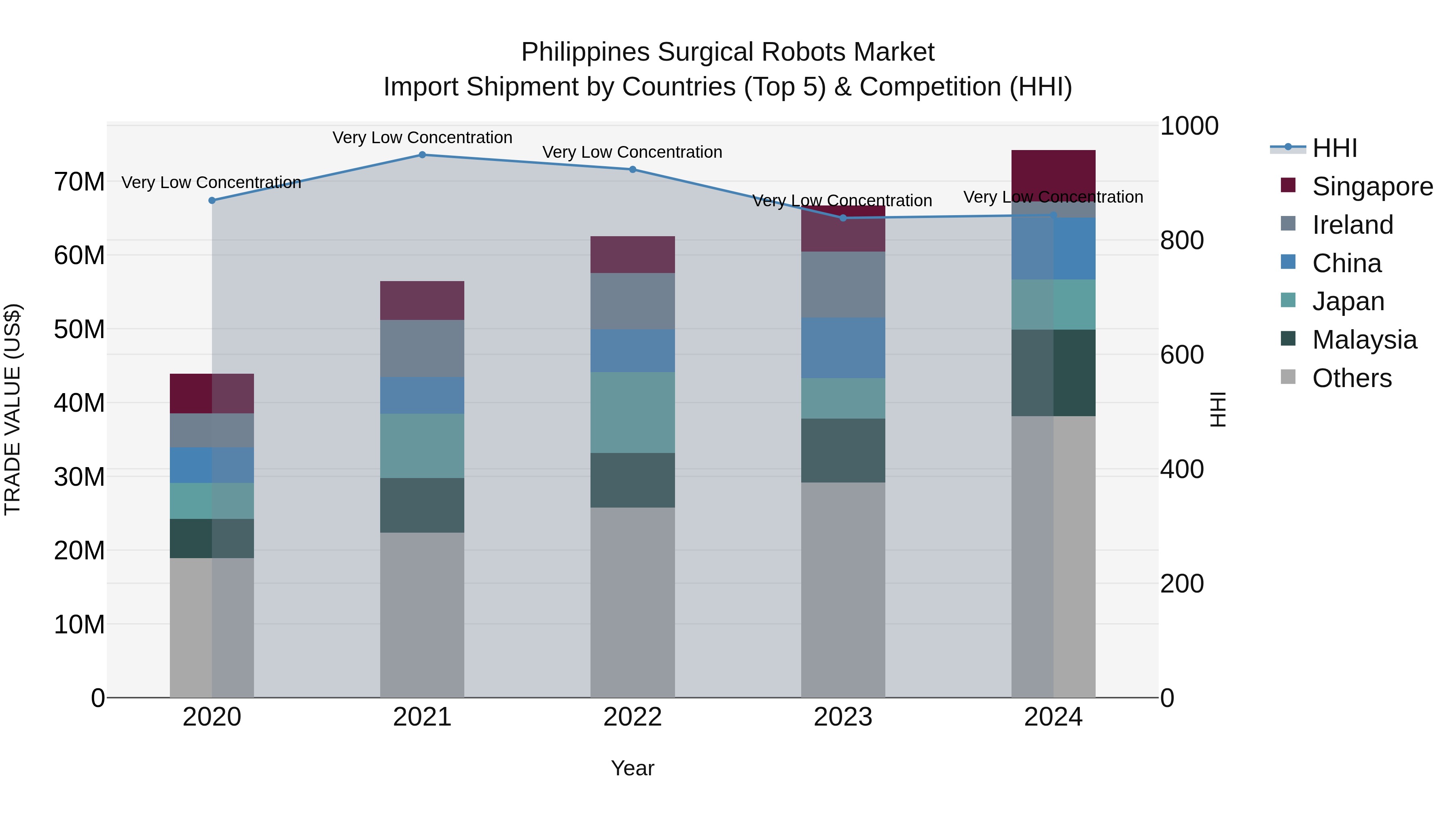
The Philippines saw a significant rise in the import of surgical robots in 2024, with top exporters being Malaysia, China, Singapore, Japan, and Costa Rica. The market remained highly competitive with a low Herfindahl-Hirschman Index (HHI) concentration. The compound annual growth rate (CAGR) from 2020 to 2024 stood at an impressive 14.02%, indicating a robust expansion in the market. Additionally, the growth rate from 2023 to 2024 was recorded at 11.28%, showcasing a continued upward trajectory in the importation of surgical robots in the Philippines.
Philippines Surgical Robots Market Synopsis
The Philippines Surgical Robots market is expanding due to the adoption of robotic systems for minimally invasive surgeries across various medical specialties. Surgical robots offer improved precision, flexibility, and control, allowing surgeons to perform complex procedures with greater accuracy. The market is further supported by advancements in technology, including 3D imaging, haptic feedback, and AI integration, which improve the overall performance of surgical robots. As hospitals invest in high-tech equipment to improve patient outcomes, the surgical robots market is expected to continue growing.
Trends of the market
The surgical robots market in the Philippines is increasing rapidly as more healthcare facilities incorporate robotic systems into their operations. These robots enhance the capabilities of surgeons, providing greater precision, flexibility, and reduced recovery time for patients. The demand for robotic systems is rising in specialties such as urology, gynecology, and orthopedics. As healthcare technology evolves and more hospitals invest in robotic systems, this market is expected to continue expanding.
Challenges of the market
Surgical robots are considered a luxury in many Philippine hospitals due to their prohibitively high cost. In addition, hospitals often lack the infrastructure necessary to support robotic surgery, such as sufficient operating room space and specialized staff. The country also faces significant disparities in healthcare access, which makes it difficult to justify the investment in robotic systems outside of major metropolitan areas.
Investment opportunities in the Market
The Philippines Surgical Robots market is expanding as robotic technologies are increasingly adopted in various surgical disciplines. Surgical robots offer superior precision, reduce the risk of human error, and shorten recovery times for patients. As more healthcare facilities in the Philippines integrate robotic systems, investors have the opportunity to develop or distribute innovative robotic systems that offer advanced functionalities, such as improved dexterity, real-time imaging, and ease of use, catering to various types of surgeries.
Government Policy of the market
The Philippine government plays a significant role in regulating and promoting the growth of the Surgical Robots Market by implementing policies that ensure these advanced systems meet international safety and performance standards. These regulations focus on the safety of robotic surgeries, ensuring that robots used in medical procedures are reliable and improve the overall outcomes for patients. The government also provides financial support for hospitals and surgical centers to adopt robotic systems, aiming to enhance the precision of surgeries and reduce recovery times.
Key Highlights of the Report:
- Philippines Surgical Robots Market Outlook
- Market Size of Philippines Surgical Robots Market, 2024
- Forecast of Philippines Surgical Robots Market, 2031
- Historical Data and Forecast of Philippines Surgical Robots Revenues & Volume for the Period 2021- 2031
- Philippines Surgical Robots Market Trend Evolution
- Philippines Surgical Robots Market Drivers and Challenges
- Philippines Surgical Robots Price Trends
- Philippines Surgical Robots Porter's Five Forces
- Philippines Surgical Robots Industry Life Cycle
- Historical Data and Forecast of Philippines Surgical Robots Market Revenues & Volume By Type for the Period 2021- 2031
- Historical Data and Forecast of Philippines Surgical Robots Market Revenues & Volume By Robotic Systems for the Period 2021- 2031
- Historical Data and Forecast of Philippines Surgical Robots Market Revenues & Volume By Instruments and Accessories for the Period 2021- 2031
- Historical Data and Forecast of Philippines Surgical Robots Market Revenues & Volume By Services for the Period 2021- 2031
- Historical Data and Forecast of Philippines Surgical Robots Market Revenues & Volume By Others for the Period 2021- 2031
- Historical Data and Forecast of Philippines Surgical Robots Market Revenues & Volume By Application for the Period 2021- 2031
- Historical Data and Forecast of Philippines Surgical Robots Market Revenues & Volume By Hospitals for the Period 2021- 2031
- Historical Data and Forecast of Philippines Surgical Robots Market Revenues & Volume By Ambulatory Surgery Centers for the Period 2021- 2031
- Philippines Surgical Robots Import Export Trade Statistics
- Market Opportunity Assessment By Type
- Market Opportunity Assessment By Application
- Philippines Surgical Robots Top Companies Market Share
- Philippines Surgical Robots Competitive Benchmarking By Technical and Operational Parameters
- Philippines Surgical Robots Company Profiles
- Philippines Surgical Robots Key Strategic Recommendations






































