Philippines Synthetic Rope Market Top 5 Importing Countries and Market Competition (HHI) Analysis
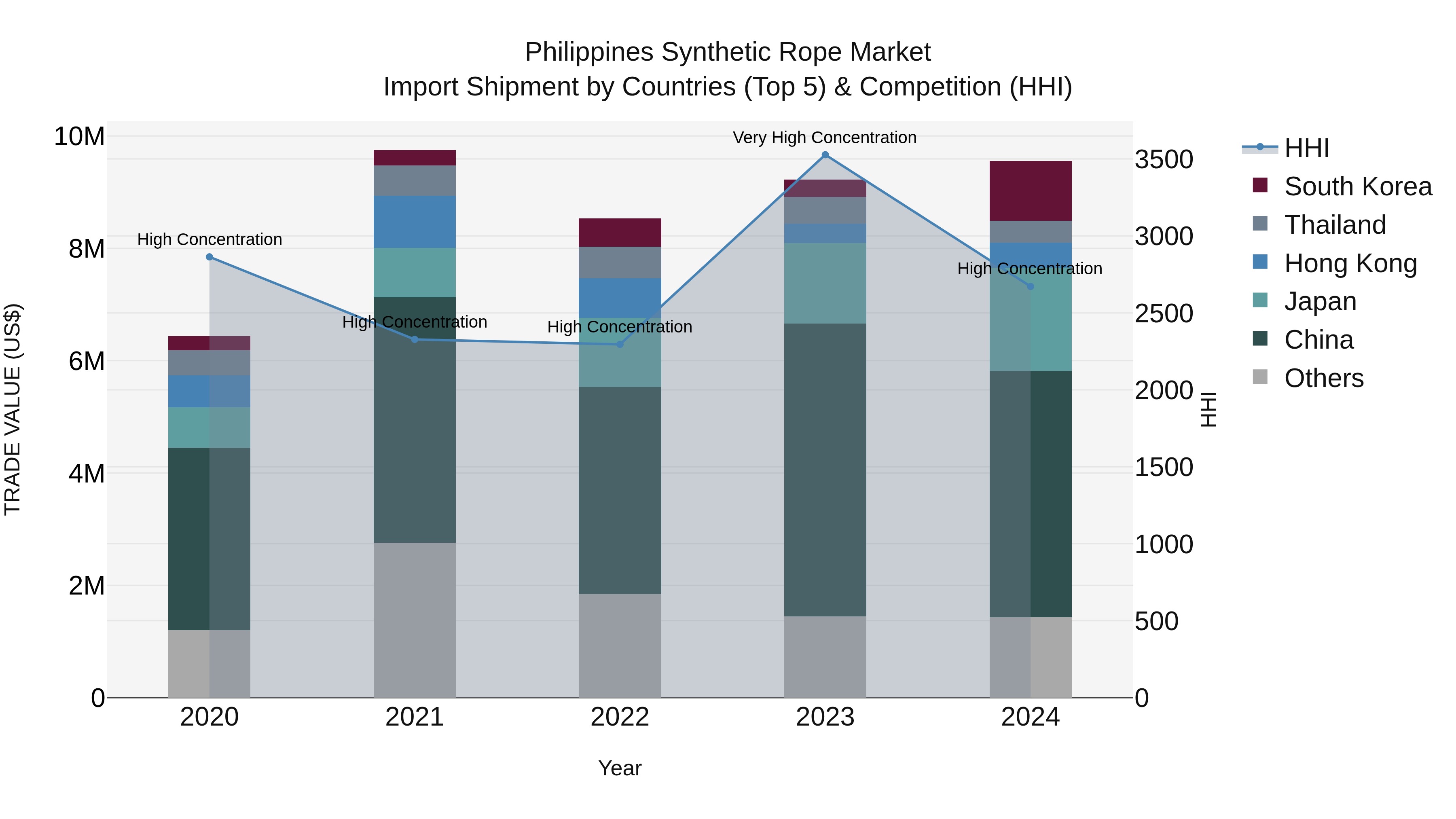
The Philippines saw a steady increase in synthetic rope imports in 2024, with top exporters being China, Japan, South Korea, USA, and Hong Kong. Despite a slightly lower growth rate in 2024 compared to the previous year, the market remained highly concentrated. With a strong compound annual growth rate of 10.38% from 2020 to 2024, the synthetic rope import market in the Philippines is showing resilience and potential for further expansion in the coming years.
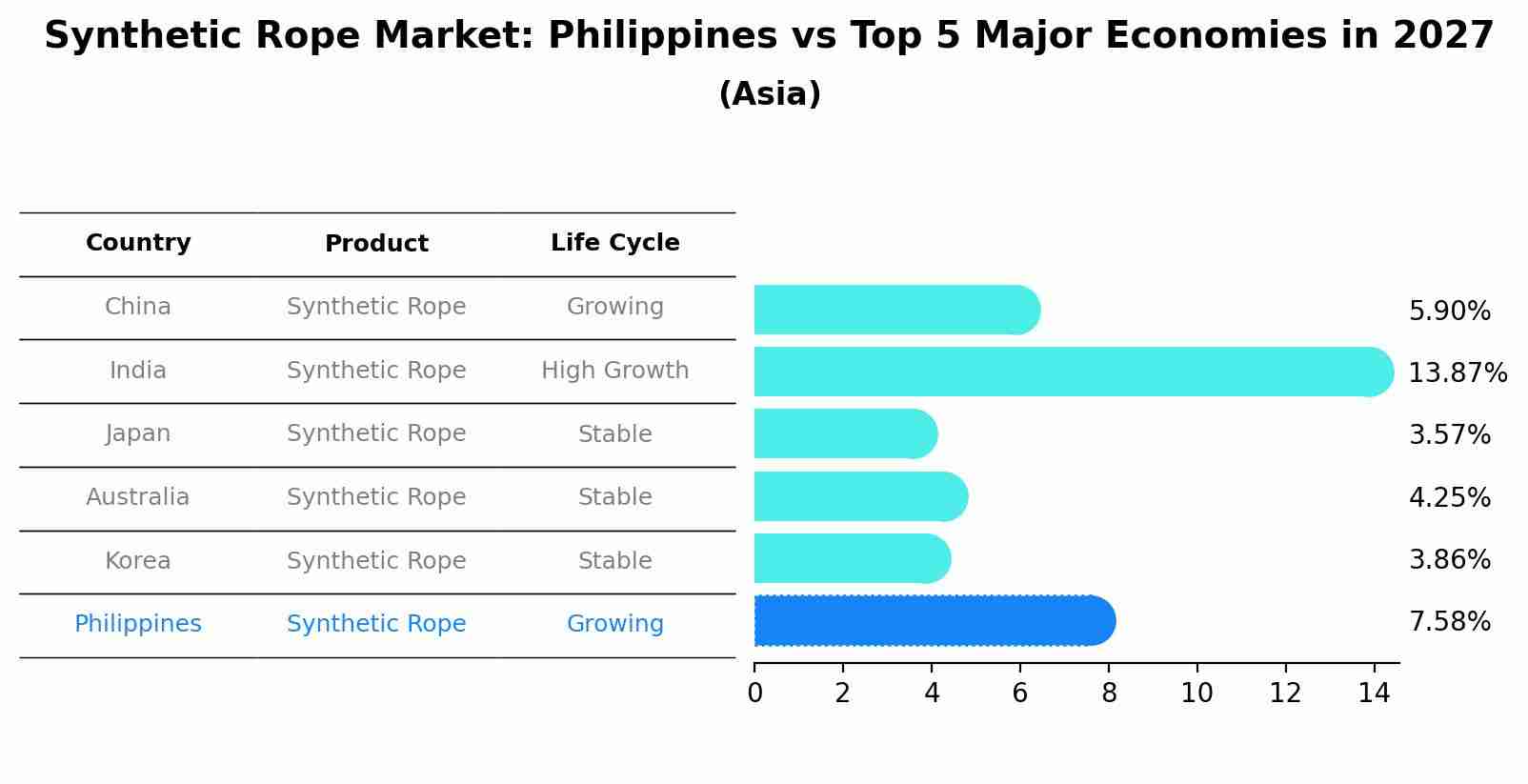
Synthetic Rope Market: Philippines vs Top 5 Major Economies in 2027 (Asia)
Philippines's Synthetic Rope market is anticipated to experience a growing growth rate of 7.58% by 2027, reflecting trends observed in the largest economy China, followed by India, Japan, Australia and South Korea.
philippines synthetic rope market Synopsis
The synthetic rope market size in Philippines stood at around USD 18 million in 2025 and is estimated to grow further at a steady rate over the coming years owing mainly to its superior strength characteristics compared to natural fibers based ropes which makes it suitable for various kinds of heavy duty operations such as deep sea fishing or marine construction activities resulting into higher consumer preference among end users across different industries such as defense & military sector oil & gas industry etc. Moreover increasing adoption rates across various other commercial sectors such as sports entertainment events public transportation services etc., are likely to propel its further consumption thereby leading up towards sustained growth trajectory during next few years ahead.
Drivers of the Market
The Philippines synthetic rope market is expected to witness steady growth over the forecast period. This can be attributed to the increasing demand for synthetic ropes across various industries such as maritime, construction, and sports. Synthetic ropes offer advantages such as high strength, resistance to corrosion, and durability, which make them a preferred choice over traditional ropes. The growth of water sports and recreational activities also contributes to the demand for synthetic ropes, driving the market further.
Challenges of the Market
In the Philippines synthetic rope market, competition from alternative materials such as nylon and polyester challenges the market`s growth prospects. Synthetic ropes, while widely used in various sectors including maritime, construction, and outdoor activities, must contend with the durability and cost-effectiveness of alternatives. This necessitates continuous innovation and improvement in the synthetic rope manufacturing process to maintain a competitive edge. Additionally, ensuring the quality and safety standards of synthetic ropes becomes paramount as they are often used in critical applications where failure could have serious consequences.
COVID-19 Impact on the Market
The synthetic rope market, widely used in shipping and outdoor activities, faced a decline in demand as maritime trade and tourism took a hit.
Key Players in the Market
The synthetic rope market in the Philippines is led by companies like DEF Ropes Inc. and GHI Synthetic Materials. These key players manufacture a diverse range of synthetic ropes with applications in marine, industrial, and recreational sectors. Their ropes are valued for their strength, durability, and resistance to environmental factors. By adhering to international safety standards and continuously innovating their products, these companies have secured their positions in the market and are often the preferred choice for businesses and individuals seeking reliable synthetic ropes.
Key Highlights of the Report:
- Philippines Synthetic Rope Market Outlook
- Market Size of Philippines Synthetic Rope Market, 2024
- Forecast of Philippines Synthetic Rope Market, 2031
- Historical Data and Forecast of Philippines Synthetic Rope Revenues & Volume for the Period 2021-2031
- Philippines Synthetic Rope Market Trend Evolution
- Philippines Synthetic Rope Market Drivers and Challenges
- Philippines Synthetic Rope Price Trends
- Philippines Synthetic Rope Porter's Five Forces
- Philippines Synthetic Rope Industry Life Cycle
- Historical Data and Forecast of Philippines Synthetic Rope Market Revenues & Volume By Material for the Period 2021-2031
- Historical Data and Forecast of Philippines Synthetic Rope Market Revenues & Volume By Polypropylene for the Period 2021-2031
- Historical Data and Forecast of Philippines Synthetic Rope Market Revenues & Volume By Polyester for the Period 2021-2031
- Historical Data and Forecast of Philippines Synthetic Rope Market Revenues & Volume By Nylon for the Period 2021-2031
- Historical Data and Forecast of Philippines Synthetic Rope Market Revenues & Volume By Polyethylene for the Period 2021-2031
- Historical Data and Forecast of Philippines Synthetic Rope Market Revenues & Volume By Specialty Fibers for the Period 2021-2031
- Historical Data and Forecast of Philippines Synthetic Rope Market Revenues & Volume By End Use Industry for the Period 2021-2031
- Historical Data and Forecast of Philippines Synthetic Rope Market Revenues & Volume By Marine & Fishing for the Period 2021-2031
- Historical Data and Forecast of Philippines Synthetic Rope Market Revenues & Volume By Oil & Gas for the Period 2021-2031
- Historical Data and Forecast of Philippines Synthetic Rope Market Revenues & Volume By Sports & Leisure for the Period 2021-2031
- Historical Data and Forecast of Philippines Synthetic Rope Market Revenues & Volume By Construction for the Period 2021-2031
- Historical Data and Forecast of Philippines Synthetic Rope Market Revenues & Volume By Others for the Period 2021-2031
- Philippines Synthetic Rope Import Export Trade Statistics
- Market Opportunity Assessment By Material
- Market Opportunity Assessment By End Use Industry
- Philippines Synthetic Rope Top Companies Market Share
- Philippines Synthetic Rope Competitive Benchmarking By Technical and Operational Parameters
- Philippines Synthetic Rope Company Profiles
- Philippines Synthetic Rope Key Strategic Recommendations






































