Philippines Syrup Market Top 5 Importing Countries and Market Competition (HHI) Analysis
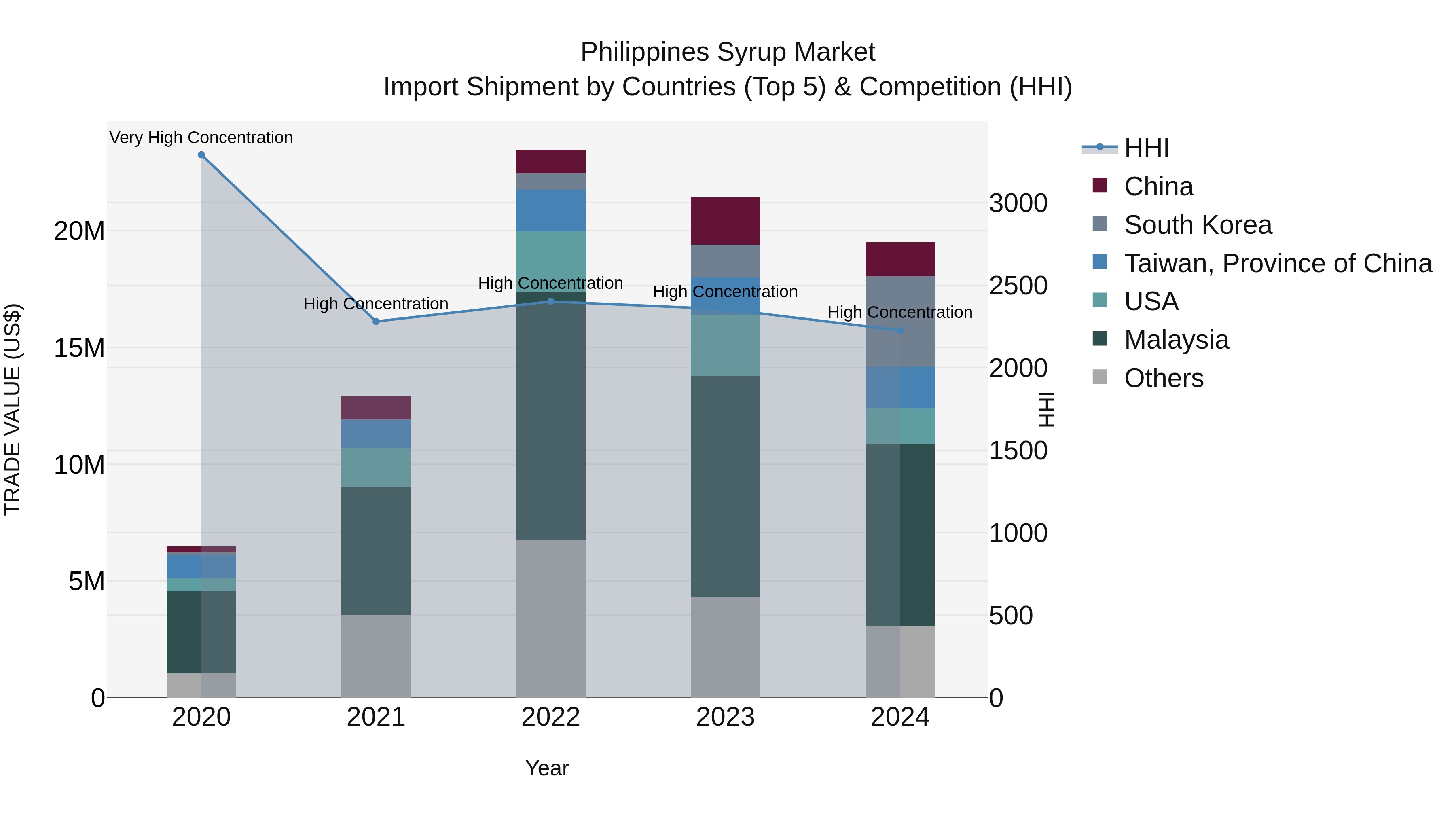
The Philippines experienced a significant increase in syrup import shipments in 2024, with Malaysia, South Korea, Taiwan, USA, and China leading the way. Despite the high concentration in the market, the Compound Annual Growth Rate (CAGR) from 2020 to 2024 was an impressive 31.7%. However, there was a slight dip in the growth rate from 2023 to 2024 by -9.01%, indicating a potential shift in market dynamics. This data suggests a thriving market for syrup imports in the Philippines, with diverse sources contributing to its growth.
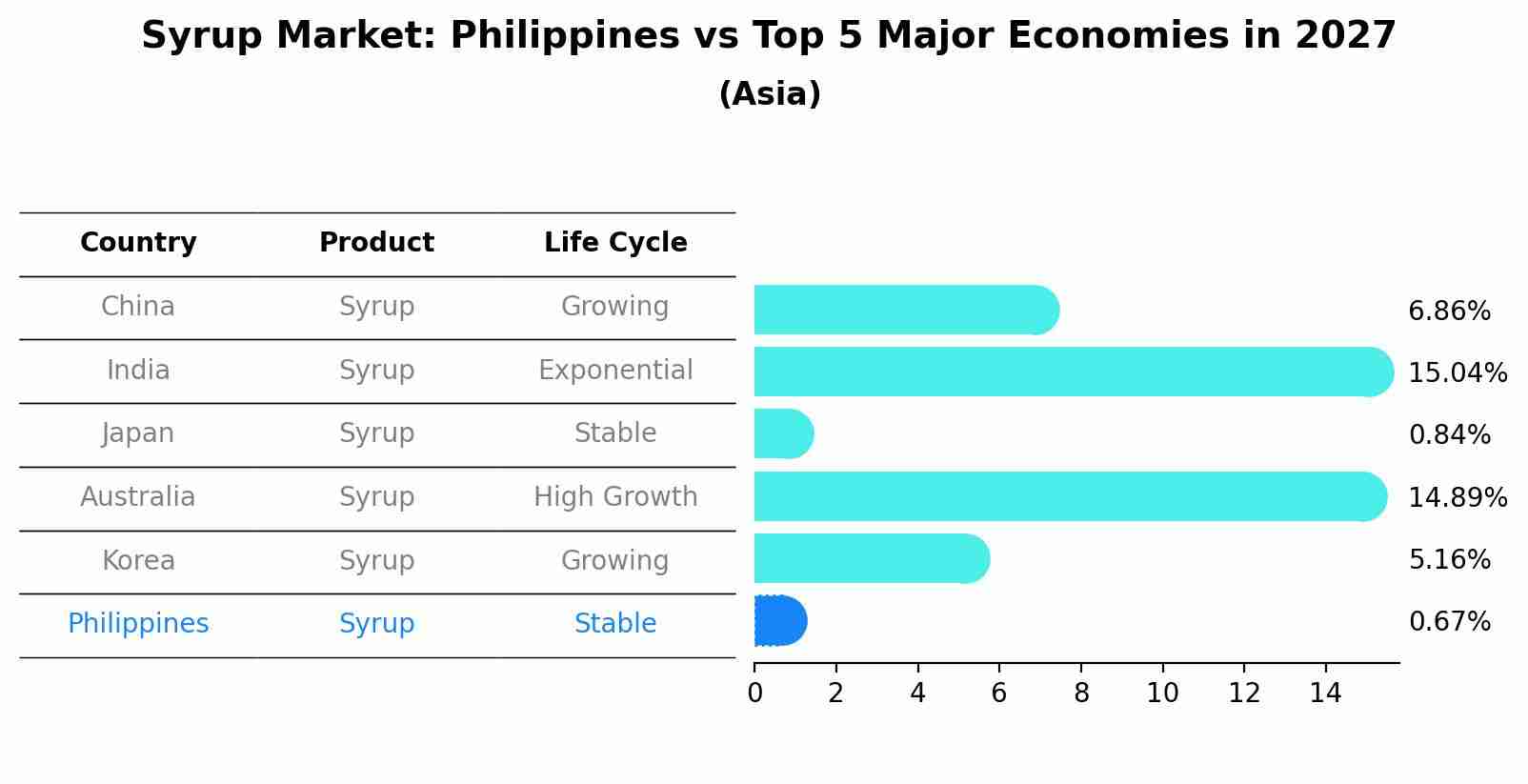
Syrup Market: Philippines vs Top 5 Major Economies in 2027 (Asia)
Philippines's Syrup market is anticipated to experience a stable growth rate of 0.67% by 2027, reflecting trends observed in the largest economy China, followed by India, Japan, Australia and South Korea.
Philippines Syrup Market Growth Rate
According to 6Wresearch internal database and industry insights, the Philippines Syrup Market is growing at a compound annual growth rate (CAGR) of 8.2% during the forecast period (2026-2032).
Five-Years Growth Trajectory of the Philippines Syrup Market with Core Drivers
Below mentioned are the evaluation of year-wise growth rate along with key drivers:
| Years | Est. Annual Growth in % | Growth Drivers |
| 2021 | 4.8% | Rising consumption of sweeteners in beverages and desserts. |
| 2022 | 5.3% | Increasing demand for syrup-based breakfast products and cafes. |
| 2023 | 5.9% | Increase of foodservice outlets and restaurant chains. |
| 2024 | 6.7% | Growth in online retail and e-commerce platforms for FMCG products. |
| 2025 | 7.1% | Rising preference for flavored and health-oriented syrups. |
Topics Covered in the Philippines Syrup Market Report
Philippines Syrup Market report thoroughly covers the market by type and distribution channel. The market report provides an unbiased and detailed analysis of ongoing market trends, opportunities/high growth areas, and market drivers, which would help stakeholders devise and align their market strategies according to the current and future market dynamics.
Philippines Syrup Market Highlights
| Report Name | Philippines Syrup Market |
| Forecast Period | 2026–2032 |
| CAGR | 8.2% |
| Growing Sector | supermarket & hypermarket |
Philippines Syrup Market Synopsis
Philippines Syrup Market is witnessing consistent growth, due to gradual changes in consumer tastes and awareness related to health trends. Syrups have become a staple in the household and food and beverage industry, used in drinks, desserts, and various culinary applications. Local producers and foreign companies are now focusing on flavor profiles favored by the region to meet the needs of the growing and dynamic consumer population. The expansion of e-commerce channels offers an opportunity for greater market penetration, reaching consumers in both urban and rural areas.
Evaluation of Growth Drivers in the Philippines Syrup Market
Below mentioned some growth drivers and their impact on market dynamics:
| Drivers | Primary Segments Affected | Why It Matters |
| Increasing Breakfast & Dessert Consumption | Chocolate syrup, Fruit syrup | Drives household and foodservice demand. |
| Expansion of Cafes & Restaurants | Maple syrup, High fructose corn syrup | Makes the bulk and retail sales higher in commercial outlets. |
| Rising Online Retail Adoption | All Syrup Types | It basically makes product accessible and convenience. |
| Health-Conscious Trends | Honey, Tapioca syrup | Makes more demand for natural and low-calorie syrups. |
| Government Food Safety Regulations | All Syrup Types | Increases consumer trust and market credibility. |
The Philippines Syrup Market is projected to grow significantly, with a CAGR of 8.2% during the forecast period of 2026-2032. Given the current landscape in the Philippines Syrup Market Growth, the market has been expanding due to demand for convenience and ready-to-eat products. Health-conscious consumers are also looking for sugar substitutes, organic syrups, as well as innovative functional products enriched with Vitamins and minerals. As the coffee shop culture embraces a new wave for young urban professionals, syrups are being used as primary components in coffees, teas, and specialty drinks. The demand is also driven by a growing middle class with more disposable income. Altogether, the above factors are expected to encourage the market expansion.
Evaluation of Restraints in the Philippines Syrup Market
Below mentioned are some major restraints and their influence on market dynamics:
| Restraints | Primary Segments Affected | What This Means |
| High Sugar Content Concerns | Chocolate syrup, High fructose corn syrup | May reduce demand among health-conscious consumers. |
| Price Fluctuations of Raw Materials | All Syrup Types | Affects cost and retail pricing. |
| Limited Awareness of Natural Syrups | Honey, Tapioca syrup | Slows adoption in rural areas. |
| Competition from Local Brands | Supermarket & Hypermarket | Creates pricing and quality competition. |
| Shelf-Life Limitations | Fruit syrup, Honey | Requires efficient storage and distribution. |
Philippines Syrup Market Challenges
The Philippines Syrup Market Growth encounters several challenges in its path of growth. These challenges are need to be dealt by the manufacturers to ensure steady expansion of the market. First, imported commodity prices are rising, especially for natural and organic ingredients. As a result, it makes it more difficult for producers to maintain affordable pricing for consumers. Second, increasing consumer awareness of sugar content and artificial additives could impact demand and specific syrup products. Lastly, the food industry is experiencing an increase in regulations surrounding food safety and proper labeling, and they may need additional capital to comply with the regulations.
Philippines Syrup Market Trends
Some major trends contributing to the Philippines syrup market growth are:
- Health-Conscious and Natural Ingredients: The consumers are preferring more of syrups that are made of natural, low-sugar, or functional ingredients, attributed to increasing health consciousness.
- Flavor Innovation and Variety: There is an increasing preference for fresh and exotic flavors like tropical fruits and dessert-inspired syrups by consumers.
- Convenience and Ready-to-Use Products: There is more demand among consumers for pre-mixed syrup options due to busy lifestyles and demand for convenience.
Investment Opportunities in the Philippines Syrup Market
Here are some investment opportunities in the Philippines syrup industry:
- Production of Natural and Functional Syrups: Developing syrups with low sugar, organic, or functional ingredients can cater to health-conscious consumers.
- E-commerce and Online Retailing: The online retail platforms encourage the market expansion by providing ease of accessibility and variety of products.
- Partnerships with F&B Outlets: Collaborating with cafés, bakeries, and beverage chains can enhance brand visibility and drive bulk adoption.
Top 5 Leading Players in the Philippines Syrup Market
Here are some top companies contributing to Philippines Syrup Market Share:
1. NutriSweet Philippines
| Company Name | NutriSweet Philippines |
|---|---|
| Established Year | 1998 |
| Headquarters | Manila, Philippines |
| Official Website | - |
NutriSweet Philippines specializes in high-quality syrups for household and commercial use, including chocolate, maple, and fruit syrups. The company emphasizes consistent taste, product safety, and innovative flavors to maintain market leadership.
2. Del Monte Philippines, Inc.
| Company Name | Del Monte Philippines, Inc. |
|---|---|
| Established Year | 1926 |
| Headquarters | Quezon City, Philippines |
| Official Website | - |
Del Monte Philippines offers a wide range of syrups including fruit-based and honey syrups. The company focuses on premium quality and strong distribution across modern trade and online channels.
3. HoneyTree Inc.
| Company Name | HoneyTree Inc. |
|---|---|
| Established Year | 2005 |
| Headquarters | Cebu City, Philippines |
| Official Website | - |
HoneyTree Inc. produces natural and organic syrups such as honey and tapioca syrups. They focus on health-conscious consumers and provide eco-friendly packaging solutions.
4. Maple Delight Philippines
| Company Name | Maple Delight Philippines |
|---|---|
| Established Year | 2010 |
| Headquarters | Davao City, Philippines |
| Official Website | - |
Maple Delight Philippines specializes in flavored syrups including maple and chocolate syrups for cafes, restaurants, and households, emphasizing premium taste and quality control.
5. SweetSyrup Co.
| Company Name | SweetSyrup Co. |
|---|---|
| Established Year | 2008 |
| Headquarters | Makati City, Philippines |
| Official Website | - |
SweetSyrup Co. manufactures a wide variety of syrups for retail and foodservice, focusing on innovation, flavored offerings, and compliance with FDA food safety standards.
Government Regulations Introduced in the Philippines Syrup Market
According to Philippine government data, the Philippine syrup market requires businesses to follow government regulations which protect consumer safety and ensure product quality and control contamination. The Food and Drug Administration (FDA) Philippines establishes regulations that businesses must follow when they produce and distribute syrups and syrup-based products. The regulations establish requirements for labelling and sugar content and synthetic additive restrictions which exist to protect consumer interests. The new sugar taxation regulations which target public health problems are creating multiple impacts on both pricing and product formulation methods used in the industry.
Future Insights of the Philippines Syrup Market
The Philippines Syrup Market is poised for strong growth, fueled by increasing urbanization and constantly changing lifestyles. The pandemic-driven surge in at-home food and drink preparation suggests ongoing consumer demand for syrups. The market will see sustained demand for health-conscious and novel products, including plant-based and functional syrups. This will also provide opportunities for digital marketing and online sales. In the long term, sustainability, health preferences, and diverse consumer needs will drive the Philippine syrup market forward.
Market Segmentation Analysis
The report offers a comprehensive study of the subsequent market segments and their leading categories.
Chocolate Syrup to Dominate the Market – By Type
According to Guneet Kaur, Senior Research Analyst, 6Wresearch, chocolate syrup dominates the Philippines Syrup Market due to its high popularity among households, cafes, and dessert outlets. It is widely used in beverages, ice creams, and bakery items, contributing to its strong demand in both retail and commercial sectors.
Supermarket & Hypermarket to Dominate the Market – By Distribution Channel
The supermarket and hypermarket channels control the market. The channels achieve this success as they provide widespread access to numerous brands while their customers can take advantage of promotional offers and buy products in bulk. The channels continue to be the first choice for urban and semi-urban customers who want easy access to multiple products at low prices.
Key attractiveness of the report
- 10 Years Market Numbers.
- Historical Data Starting from 2022 to 2025.
- Base Year: 2025
- Forecast Data until 2032.
- Key Performance Indicators Impacting the Market.
- Major Upcoming Developments and Projects.
Key Highlights of the Report:
- Philippines Syrup Market Outlook
- Market Size of Philippines Syrup Market, 2025
- Forecast of Philippines Syrup Market, 2032
- Historical Data and Forecast of Philippines Syrup Revenues & Volume for the Period 2022-2032
- Philippines Syrup Market Trend Evolution
- Philippines Syrup Market Drivers and Challenges
- Philippines Syrup Price Trends
- Philippines Syrup Porter's Five Forces
- Philippines Syrup Industry Life Cycle
- Historical Data and Forecast of Philippines Syrup Market Revenues & Volume By Type for the Period 2022-2032
- Historical Data and Forecast of Philippines Syrup Market Revenues & Volume By Chocolate syrup for the Period 2022-2032
- Historical Data and Forecast of Philippines Syrup Market Revenues & Volume By Maple syrup for the Period 2022-2032
- Historical Data and Forecast of Philippines Syrup Market Revenues & Volume By High fructose corn syrup for the Period 2022-2032
- Historical Data and Forecast of Philippines Syrup Market Revenues & Volume By Malt syrup for the Period 2022-2032
- Historical Data and Forecast of Philippines Syrup Market Revenues & Volume By Tapioca syrup for the Period 2022-2032
- Historical Data and Forecast of Philippines Syrup Market Revenues & Volume By Honey for the Period 2022-2032
- Historical Data and Forecast of Philippines Syrup Market Revenues & Volume By Fruit syrup for the Period 2022-2032
- Historical Data and Forecast of Philippines Chocolate syrup Syrup Market Revenues & Volume By Others for the Period 2022-2032
- Historical Data and Forecast of Philippines Syrup Market Revenues & Volume By Distribution Channel for the Period 2022-2032
- Historical Data and Forecast of Philippines Syrup Market Revenues & Volume By Supermarket and Hypermarket for the Period 2022-2032
- Historical Data and Forecast of Philippines Syrup Market Revenues & Volume By Convenience Store for the Period 2022-2032
- Historical Data and Forecast of Philippines Syrup Market Revenues & Volume By Online Retail Stores for the Period 2022-2032
- Historical Data and Forecast of Philippines Syrup Market Revenues & Volume By Other Distribution Channels for the Period 2022-2032
- Philippines Syrup Import Export Trade Statistics
- Market Opportunity Assessment By Type
- Market Opportunity Assessment By Distribution Channel
- Philippines Syrup Top Companies Market Share
- Philippines Syrup Competitive Benchmarking By Technical and Operational Parameters
- Philippines Syrup Company Profiles
- Philippines Syrup Key Strategic Recommendations
Market covered
The report subsequently covers the market by following segments and subsegments.
By Type
- Chocolate syrup
- Maple syrup
- High fructose corn syrup
- Malt syrup
- Tapioca syrup
- Honey
- Fruit syrup
- Others
By Distribution Channel
- Supermarket and Hypermarket
- Convenience Store
- Online Retail Stores
- Other Distribution Channels






































