Philippines Yacht Market Size, Share & Growth Rate
The Philippines Yacht Market was estimated at USD 500 Million in 2025 and is projected to reach USD 659 Million by 2032, growing at a CAGR of 4.0% from 2026 to 2032. This robust growth trajectory is driven by rising tourism, increased demand for luxury recreational vessels, and enhanced government support for the maritime sector. As the allure of the Philippines' beautiful archipelago continues to attract international tourists, the demand for yachts—both for purchase and charter—remains strong.
Philippines Yacht Market Year-wise Growth Rate and Key Drivers
This graph highlights how the Philippines Yacht Market has steadily grown over the years, supported by major growth factors.
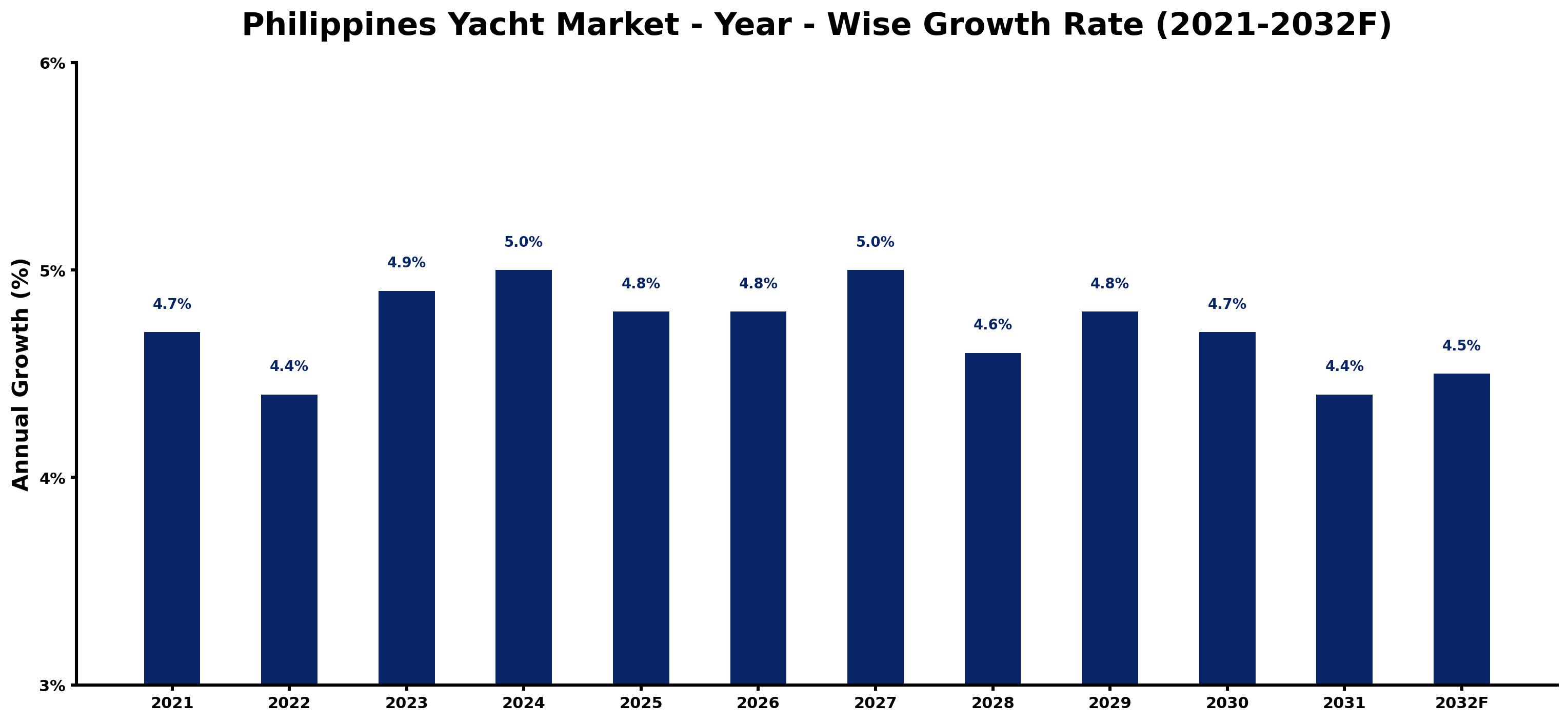
The table below presents the year‑wise growth rates along with the key drivers influencing the market
| Year | Growth Rate | Major Drivers |
| 2021 | 4.7% | Increasing adoption of advanced technologies |
| 2022 | 4.4% | Rapid growth in telecom and data center sectors |
| 2023 | 4.9% | Growing urbanization and commercial development |
| 2024 | 5.0% | Increasing adoption of advanced technologies |
| 2025 | 4.8% | Expansion of transportation and logistics networks |
| 2026 | 4.8% | Expansion of manufacturing activities |
| 2027 | 5.0% | Expansion of transportation and logistics networks |
| 2028 | 4.6% | Rising electricity demand across industries |
| 2029 | 4.8% | Increasing smart city development projects |
| 2030 | 4.7% | Expansion of commercial construction activities |
| 2031 | 4.4% | Growing urbanization and commercial development |
| 2032 | 4.5% | Increasing smart city development projects |
Note - Market size estimations and growth projections presented in this report are based on 6Wresearch's advanced forecasting approach, validated with industry datasets as of June 2026.
Philippines Yacht Market Synopsis
One of the key factors shaping the Philippines yacht market is the surging interest in luxury yacht tourism, which offers both locals and tourists a unique way to explore the stunning islands. This trend is complemented by the country's investment in expanding marina facilities, making yacht ownership more accessible and practical for enthusiasts.
Moreover, the increasing disposable income among Filipinos is encouraging more individuals to consider yacht ownership as an attainable luxury. This shift in consumer behavior, alongside the established reputation of the Philippines as a premier boating destination, sets the stage for a thriving yacht market.
Philippines Yacht Market Key Takeaways
- The market is projected to reach USD 659 Million by 2032, highlighting substantial growth opportunities.
- Luxury yacht demand is bolstered by a growing tourism sector and increased recreational boating activities.
- Investment in marina facilities is improving accessibility for yacht owners and enhancing overall market appeal.
- Government initiatives are fostering a supportive environment for both local and foreign yacht buyers.
- Philippine islands' international appeal is drawing more visitors, further stimulating the market.
Evaluation of Restraints in Philippines Yacht Market
Despite its promising outlook, the Philippines yacht market faces several constraints that could hinder its growth. A lack of comprehensive infrastructure in less developed regions can limit access for prospective yacht owners, making it challenging for them to operate freely. Additionally, regulatory complexities in yacht registration and ownership can deter potential buyers, particularly among foreign investors. Addressing these barriers is crucial for unleashing the full potential of the market.
Philippines Yacht Market Trends
Current trends indicate a significant uptick in the popularity of eco-friendly yachts, reflecting a global shift towards sustainability. Consumers are becoming increasingly aware of the environmental impact of their choices, prompting manufacturers to innovate and offer greener alternatives. Simultaneously, advancements in yacht technology, such as enhanced navigation systems and luxury features, are attracting discerning buyers seeking high-performance vessels.
Philippines Yacht Market Opportunities
The evolving landscape of the Philippines yacht market presents a plethora of growth and investment opportunities. The expansion of local tourism, coupled with a rise in affluent consumers, creates a fertile ground for yacht manufacturers and dealers. Additionally, opportunities for collaboration with tourism boards to promote yacht chartering experiences can drive demand further, opening avenues for innovative service offerings and enhanced customer experiences.
Government Initiatives in the Philippines Yacht Market
The Philippine government has implemented several initiatives to boost the maritime sector, aiming to attract both local and international yacht enthusiasts. Programs offering financial assistance for yacht purchases and improvements in marine infrastructure support the growth of this market. Furthermore, the promotion of maritime sports and events serves to raise public awareness, enhancing the overall appeal of boating activities across the islands.
Future Insights of the Philippines Yacht Market
Looking forward to 2026-2032, the Philippines yacht market is expected to continue its upward trajectory, driven by ongoing investment in tourism and infrastructure. A growing recognition of the leisure and economic potential of yachting will likely lead to further government support and private sector investment. As environmental sustainability becomes increasingly important, the market may also shift towards more eco-conscious practices and products, setting the stage for innovation and modernization.
Philippines Yacht Market Latest Developments (May 2025 - June 2026)
Recent developments within the Philippines yacht market reflect a dynamic and evolving industry. Investments in several key marina projects have been announced, aimed at enhancing berthing facilities and services for yacht owners. Additionally, promotional campaigns targeting both local and international tourists are gaining traction, showcasing the diverse recreational opportunities available through yacht experiences, thereby increasing market visibility and interest.
Philippines Yacht Market - Key Attractiveness of the Report
- 10 Years of Market Numbers
- Historical Data Starting from 2022 to 2025
- Base Year: 2025
- Forecast Data until 2032
- Key Performance Indicators Impacting the Market
- Major Upcoming Developments and Projects
Key Highlights of the Report:
- Philippines Yacht Market Outlook
- Market Size of Philippines Yacht Market, 2025
- Forecast of Philippines Yacht Market, 2032
- Historical Data and Forecast of Philippines Yacht Revenues & Volume for the Period 2022-2032F
- Philippines Yacht Market Trend Evolution
- Philippines Yacht Market Drivers and Challenges
- Philippines Yacht Price Trends
- Philippines Yacht Porter's Five Forces
- Philippines Yacht Industry Life Cycle
- Historical Data and Forecast of Philippines Yacht Market Revenues & Volume By Types for the Period 2022-2032F
- Historical Data and Forecast of Philippines Yacht Market Revenues & Volume By Super yacht for the Period 2022-2032F
- Historical Data and Forecast of Philippines Yacht Market Revenues & Volume By Flybridge yacht for the Period 2022-2032F
- Historical Data and Forecast of Philippines Yacht Market Revenues & Volume By Sport yacht for the Period 2022-2032F
- Historical Data and Forecast of Philippines Yacht Market Revenues & Volume By Long range yacht for the Period 2022-2032F
- Historical Data and Forecast of Philippines Yacht Market Revenues & Volume By Others for the Period 2022-2032F
- Historical Data and Forecast of Philippines Yacht Market Revenues & Volume By Length for the Period 2022-2032F
- Historical Data and Forecast of Philippines Yacht Market Revenues & Volume By Up to 20 ft for the Period 2022-2032F
- Historical Data and Forecast of Philippines Yacht Market Revenues & Volume By 20 to 50 ft for the Period 2022-2032F
- Historical Data and Forecast of Philippines Yacht Market Revenues & Volume By Above 50 ft for the Period 2022-2032F
- Philippines Yacht Import Export Trade Statistics
- Market Opportunity Assessment By Types
- Market Opportunity Assessment By Length
- Philippines Yacht Top Companies Market Share
- Philippines Yacht Competitive Benchmarking By Technical and Operational Parameters
- Philippines Yacht Company Profiles
- Philippines Yacht Key Strategic Recommendations






































