Poland Biomimetic Materials Market Size, Share & Growth Rate
The Poland Biomimetic Materials Market was estimated at USD 282 Million in 2025 and is projected to reach USD 376 Million by 2032, growing at a CAGR of 4.2% from 2026 to 2032. This upward trajectory is largely driven by intensified research and development initiatives and the increasing adoption of sustainable materials across key sectors. With an expanding focus on eco-friendliness and innovative product development, the market is well-positioned for continued expansion in the coming years.
Poland Biomimetic Materials Market Year-wise Growth Rate and Key Drivers
This graph highlights how the Poland Biomimetic Materials Market has steadily grown over the years, supported by major growth factors.
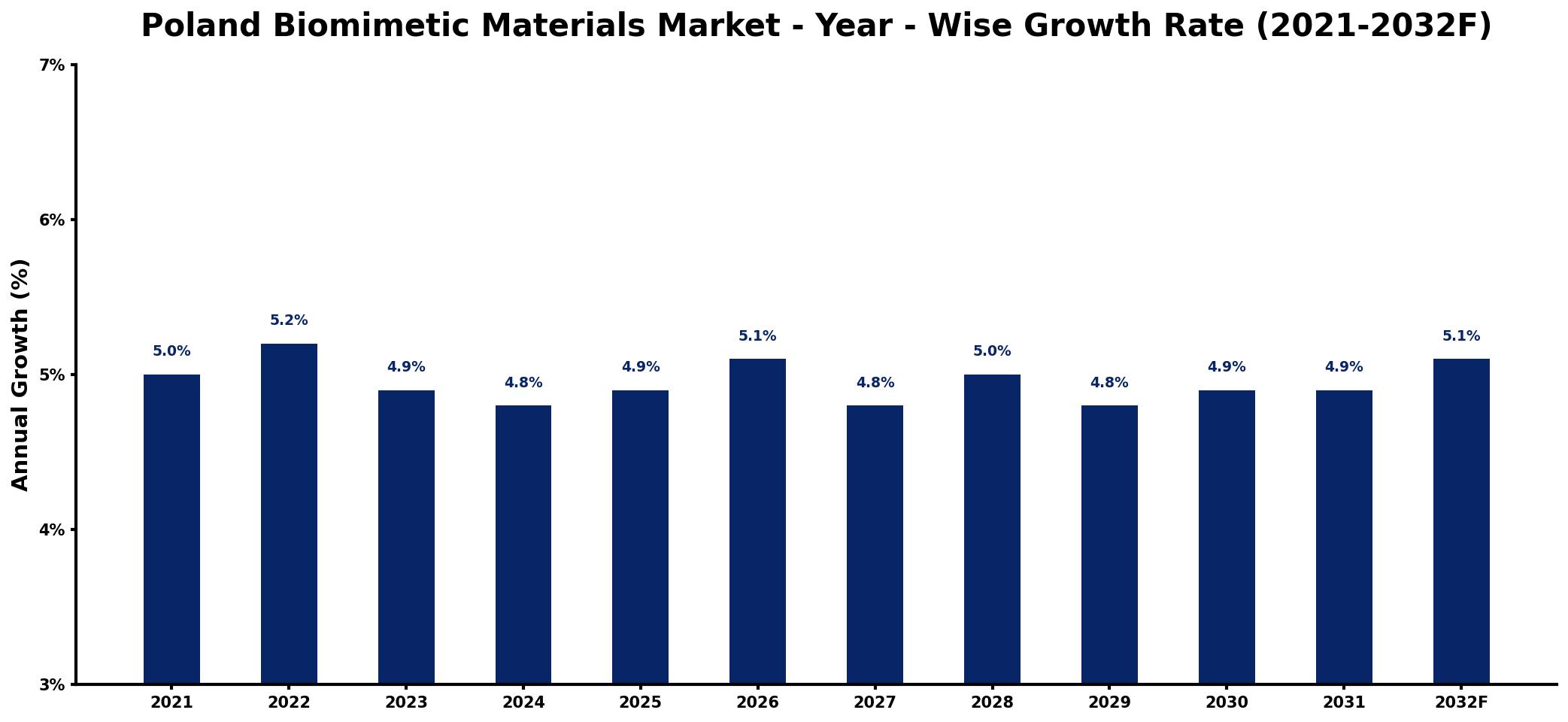
The table below presents the year‑wise growth rates along with the key drivers influencing the market
| Year | Growth Rate | Major Drivers |
| 2021 | 5.0% | Rising demand for sustainable solutions |
| 2022 | 5.2% | Increased investment in green technologies |
| 2023 | 4.9% | Growing interest in eco-friendly applications |
| 2024 | 4.8% | Expansion of research funding initiatives |
| 2025 | 4.9% | Surge in alternative energy projects |
| 2026 | 5.1% | Higher consumer awareness of sustainability |
| 2027 | 4.8% | Advancements in bio-inspired design concepts |
| 2028 | 5.0% | Strengthening partnerships with universities |
| 2029 | 4.8% | Emerging markets for innovative applications |
| 2030 | 4.9% | growing emerging market penetration |
| 2031 | 4.9% | Growing collaboration across industries |
| 2032 | 5.1% | Increased regulatory support for innovation |
Note: Market size estimations and growth projections presented in this report are based on 6Wresearch's proprietary forecasting methodology, utilizing the latest available industry data, government publications, and primary research inputs.
Poland Biomimetic Materials Market Synopsis
The Poland biomimetic materials market is evolving rapidly, fueled by a confluence of technological advancements and heightened awareness surrounding sustainability. As industries such as healthcare, construction, and aerospace adopt these innovative materials, Poland is establishing itself as a hub for biomimetic research and application.
Recent collaborations between academia and industry are paving the way for breakthroughs in product offerings, while government incentives promote the integration of biomimetic solutions. This dynamic landscape is catalyzing a transformation in how materials are perceived and utilized, driving greater investment and interest in biomimetic solutions.
Poland Biomimetic Materials Market Key Takeaways
- The market is driven by increasing demand for sustainable and eco-friendly materials across various sectors.
- Significant research and development activities are leading to innovative biomimetic product offerings.
- Strategic collaborations between academia and industry are fostering technological advancements.
- Government policies are supportive of green technologies, enhancing market growth potential.
- The market is expected to grow steadily, supported by heightened awareness of biomimetic materials benefits.
Evaluation of Restraints in Poland Biomimetic Materials Market
Despite the promising outlook, several restraints impede the growth of the Poland biomimetic materials market. Chief among these is the limited awareness and understanding of biomimetic materials among potential users and manufacturers. This knowledge gap can lead to hesitant adoption rates, as many organizations remain anchored in traditional material choices. Additionally, navigating regulatory landscapes can pose challenges, as manufacturers strive to meet safety and efficacy standards for novel biomimetic products. The high costs associated with research and development further limit participation from smaller firms, potentially slowing the overall pace of innovation.
Poland Biomimetic Materials Market Trends
Current trends in the Poland biomimetic materials market highlight a growing inclination toward materials that boast self-healing properties, enhanced biocompatibility, and lightweight strength. Industries are increasingly recognizing the benefits of these materials, not only for their performance but also for their potential in reducing environmental impact. The emphasis on sustainable manufacturing practices is gaining momentum, with biomimetic materials seen as a key component in achieving these goals. Collaborative efforts and academic research are also spurring innovation, leading to new applications in various fields.
Poland Biomimetic Materials Market Opportunities
The potential for investment in the Poland biomimetic materials market is substantial, particularly in sectors such as healthcare and construction. As demand for innovative solutions rises, opportunities abound for stakeholders willing to invest in research and development initiatives. In healthcare, applications in tissue engineering and advanced medical implants hold promise for transformational outcomes. In construction, biomimetic materials can enhance sustainability practices, leading to more eco-friendly building projects. The ongoing quest for improved product performance and efficiency in manufacturing also presents lucrative opportunities for market participants.
Government Initiatives in the Poland Biomimetic Materials Market
Poland's government is actively promoting the biomimetic materials market through a variety of initiatives focused on research and innovation. Funding programs and grants aimed at developing green technologies serve as critical support for projects in this domain. Additionally, the government is working to enhance regulations surrounding biomimetic materials, ensuring that safety and quality standards are upheld. Educational initiatives aimed at raising awareness about the advantages of biomimetic solutions are also being implemented, fostering a culture of innovation and sustainability across industries.
Future Insights of the Poland Biomimetic Materials Market
Looking ahead to 2026-2032, the Poland biomimetic materials market is set to expand as industries increasingly pivot toward environmentally friendly practices. The emphasis on reducing carbon footprints and enhancing material performance will drive demand for innovative solutions that mimic nature's designs. Continuous advancements in technology and a deeper understanding of biomimetic benefits will likely bolster market acceptance and stimulate new applications. The collaborative environment between academia and industry is expected to play a pivotal role in shaping the trajectory of this market.
Poland Biomimetic Materials Market Latest Developments (2025 - 2026)
The biomimetic materials landscape in Poland is witnessing various initiatives aimed at enhancing technological adoption and product development. Recent conferences and industry forums have highlighted innovative research outcomes, while partnerships have been formed to accelerate the commercialization of biomimetic solutions. Additionally, advancements in production techniques are enabling more efficient manufacturing processes, contributing to the growth of sustainable practices in the market. Companies are keenly focusing on the integration of cutting-edge technologies to further unlock the potential of biomimetic materials.
Poland Biomimetic Materials Market - Key Attractiveness of the Report
- 10 Years of Market Numbers
- Historical Data Starting from 2022 to 2025
- Base Year: 2025
- Forecast Data until 2032
- Key Performance Indicators Impacting the Market
- Major Upcoming Developments and Projects
Key Highlights of the Report:
- Poland Biomimetic Materials Market Outlook
- Market Size of Poland Biomimetic Materials Market, 2025
- Forecast of Poland Biomimetic Materials Market, 2032
- Historical Data and Forecast of Poland Biomimetic Materials Revenues & Volume for the Period 2022-2032F
- Poland Biomimetic Materials Market Trend Evolution
- Poland Biomimetic Materials Market Drivers and Challenges
- Poland Biomimetic Materials Price Trends
- Poland Biomimetic Materials Porter's Five Forces
- Poland Biomimetic Materials Industry Life Cycle
- Historical Data and Forecast of Poland Biomimetic Materials Market Revenues & Volume By Material for the Period 2022-2032F
- Historical Data and Forecast of Poland Biomimetic Materials Market Revenues & Volume By Biomimetic Polymers for the Period 2022-2032F
- Historical Data and Forecast of Poland Biomimetic Materials Market Revenues & Volume By Biomimetic Ceramics & Glass for the Period 2022-2032F
- Historical Data and Forecast of Poland Biomimetic Materials Market Revenues & Volume By Biomimetic Metals & Alloys for the Period 2022-2032F
- Historical Data and Forecast of Poland Biomimetic Materials Market Revenues & Volume By Others for the Period 2022-2032F
- Historical Data and Forecast of Poland Biomimetic Materials Market Revenues & Volume By Application for the Period 2022-2032F
- Historical Data and Forecast of Poland Biomimetic Materials Market Revenues & Volume By Medical for the Period 2022-2032F
- Historical Data and Forecast of Poland Biomimetic Materials Market Revenues & Volume By Automotive for the Period 2022-2032F
- Historical Data and Forecast of Poland Biomimetic Materials Market Revenues & Volume By Defense for the Period 2022-2032F
- Historical Data and Forecast of Poland Biomimetic Materials Market Revenues & Volume By Electronics for the Period 2022-2032F
- Historical Data and Forecast of Poland Biomimetic Materials Market Revenues & Volume By Others for the Period 2022-2032F
- Poland Biomimetic Materials Import Export Trade Statistics
- Market Opportunity Assessment By Material
- Market Opportunity Assessment By Application
- Poland Biomimetic Materials Top Companies Market Share
- Poland Biomimetic Materials Competitive Benchmarking By Technical and Operational Parameters
- Poland Biomimetic Materials Company Profiles
- Poland Biomimetic Materials Key Strategic Recommendations






































