Poland Castor Oil Market: Import Trend Analysis
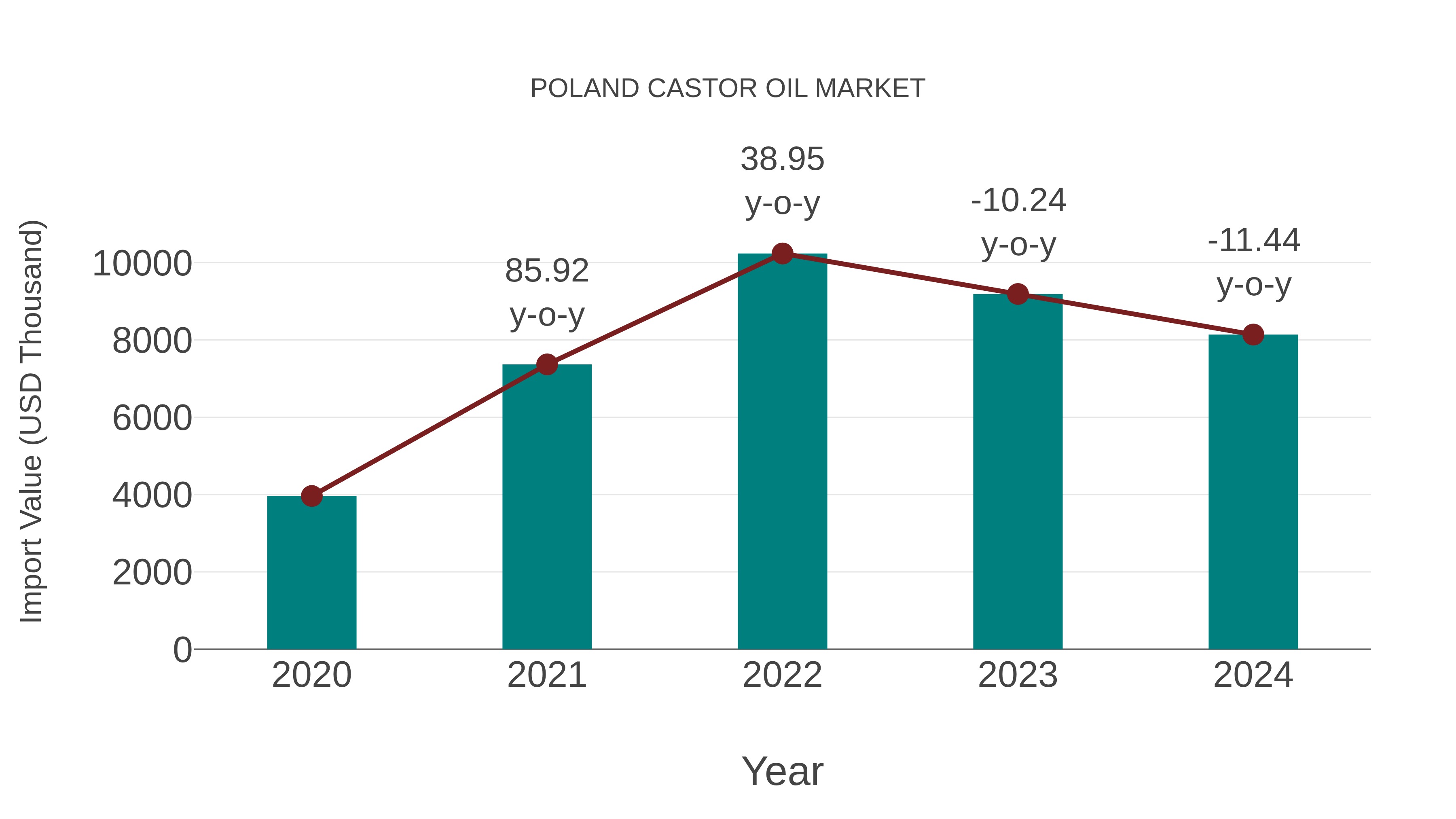
In 2024, Poland import trend for castor oil experienced a decline of -11.44% from the previous year, following a compound annual growth rate (CAGR) of 19.71% from 2020 to 2023. This negative growth can be attributed to shifts in demand dynamics or changes in market conditions impacting import momentum.
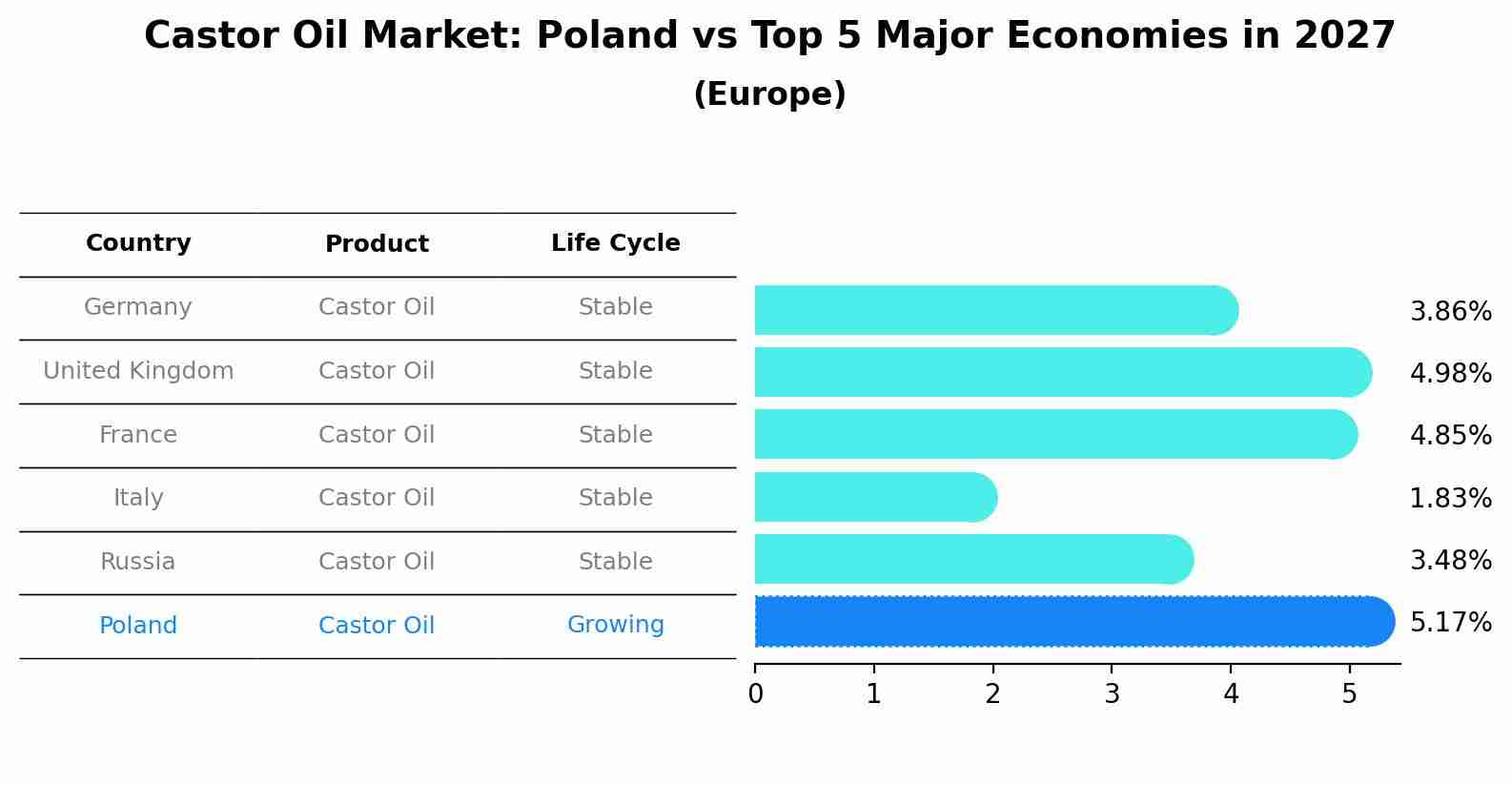
Castor Oil Market: Poland vs Top 5 Major Economies in 2027 (Europe)
Poland's Castor Oil market is anticipated to experience a growing growth rate of 5.17% by 2027, reflecting trends observed in the largest economy Germany, followed by United Kingdom, France, Italy and Russia.
Poland Castor Oil Market Overview
The Poland Castor Oil Market is expanding due to the widespread use of castor oil in industrial applications such as lubricants, paints, and pharmaceuticals. The demand for natural and sustainable products is also contributing to the market`s growth.
Drivers of the market
The castor oil market in Poland is influenced by its diverse applications in industries such as pharmaceuticals, cosmetics, and industrial manufacturing. Castor oil is valued for its unique chemical properties and versatility, making it a key ingredient in various products, including skincare formulations and industrial lubricants. The increasing demand for natural and organic ingredients, coupled with innovations in castor oil extraction and processing, drives market growth. Additionally, the expanding applications of castor oil in emerging technologies support market dynamics.
Challenges of the market
The castor oil market in Poland faces challenges due to limited local production, as castor plants are not commonly cultivated in the region. This results in high reliance on imports, which raises production costs and leads to price volatility. Additionally, the market faces competition from alternative oils, such as soybean and sunflower oil, which are more readily available.
Government Policy of the market
In Poland, the castor oil market is influenced by regulations focusing on product safety and environmental sustainability. Government policies ensure that castor oil products meet EU standards for quality and safety. Compliance with regulations on ingredient labeling, chemical safety, and environmental impact shapes market practices. Government support for sustainable sourcing and innovations in castor oil production technologies drives market dynamics.
Key Highlights of the Report:
- Poland Castor Oil Market Outlook
- Market Size of Poland Castor Oil Market, 2024
- Forecast of Poland Castor Oil Market, 2031
- Historical Data and Forecast of Poland Castor Oil Revenues & Volume for the Period 2018 - 2031
- Poland Castor Oil Market Trend Evolution
- Poland Castor Oil Market Drivers and Challenges
- Poland Castor Oil Price Trends
- Poland Castor Oil Porter's Five Forces
- Poland Castor Oil Industry Life Cycle
- Historical Data and Forecast of Poland Castor Oil Market Revenues & Volume By End Use for the Period 2018 - 2031
- Historical Data and Forecast of Poland Castor Oil Market Revenues & Volume By Pharmaceuticals for the Period 2018 - 2031
- Historical Data and Forecast of Poland Castor Oil Market Revenues & Volume By Lubricants for the Period 2018 - 2031
- Historical Data and Forecast of Poland Castor Oil Market Revenues & Volume By Paints for the Period 2018 - 2031
- Historical Data and Forecast of Poland Castor Oil Market Revenues & Volume By Soaps for the Period 2018 - 2031
- Historical Data and Forecast of Poland Castor Oil Market Revenues & Volume By Others for the Period 2018 - 2031
- Poland Castor Oil Import Export Trade Statistics
- Market Opportunity Assessment By End Use
- Poland Castor Oil Top Companies Market Share
- Poland Castor Oil Competitive Benchmarking By Technical and Operational Parameters
- Poland Castor Oil Company Profiles
- Poland Castor Oil Key Strategic Recommendations






































