Poland Octopus Market: Import Trend Analysis
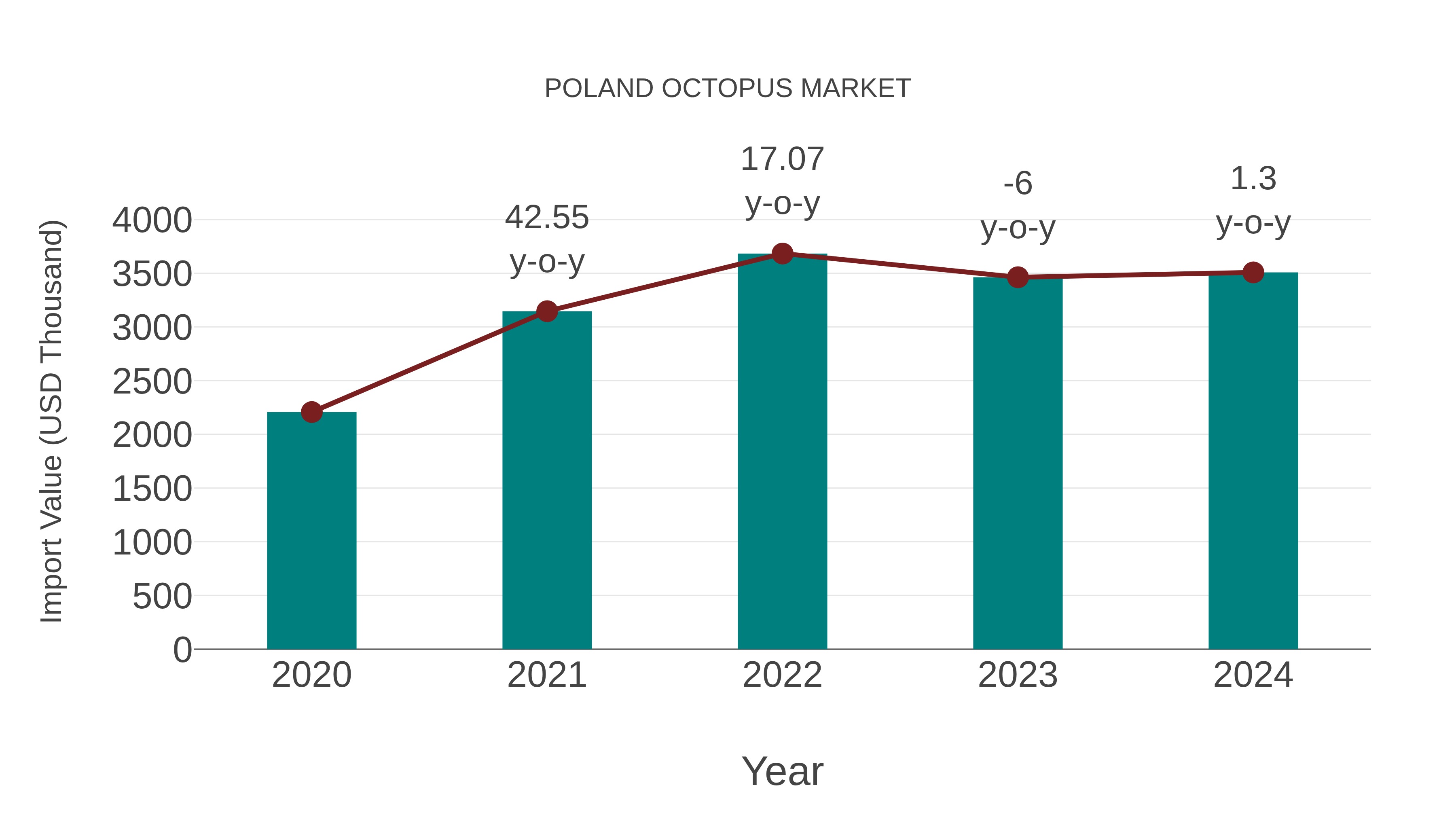
In the Poland octopus market, import trends showed a growth rate of 1.3% from 2023 to 2024, with a compound annual growth rate (CAGR) of 12.28% from 2020 to 2024. This increase can be attributed to a steady demand shift towards imported octopus products, indicating sustained market stability and consumer preference for these goods.
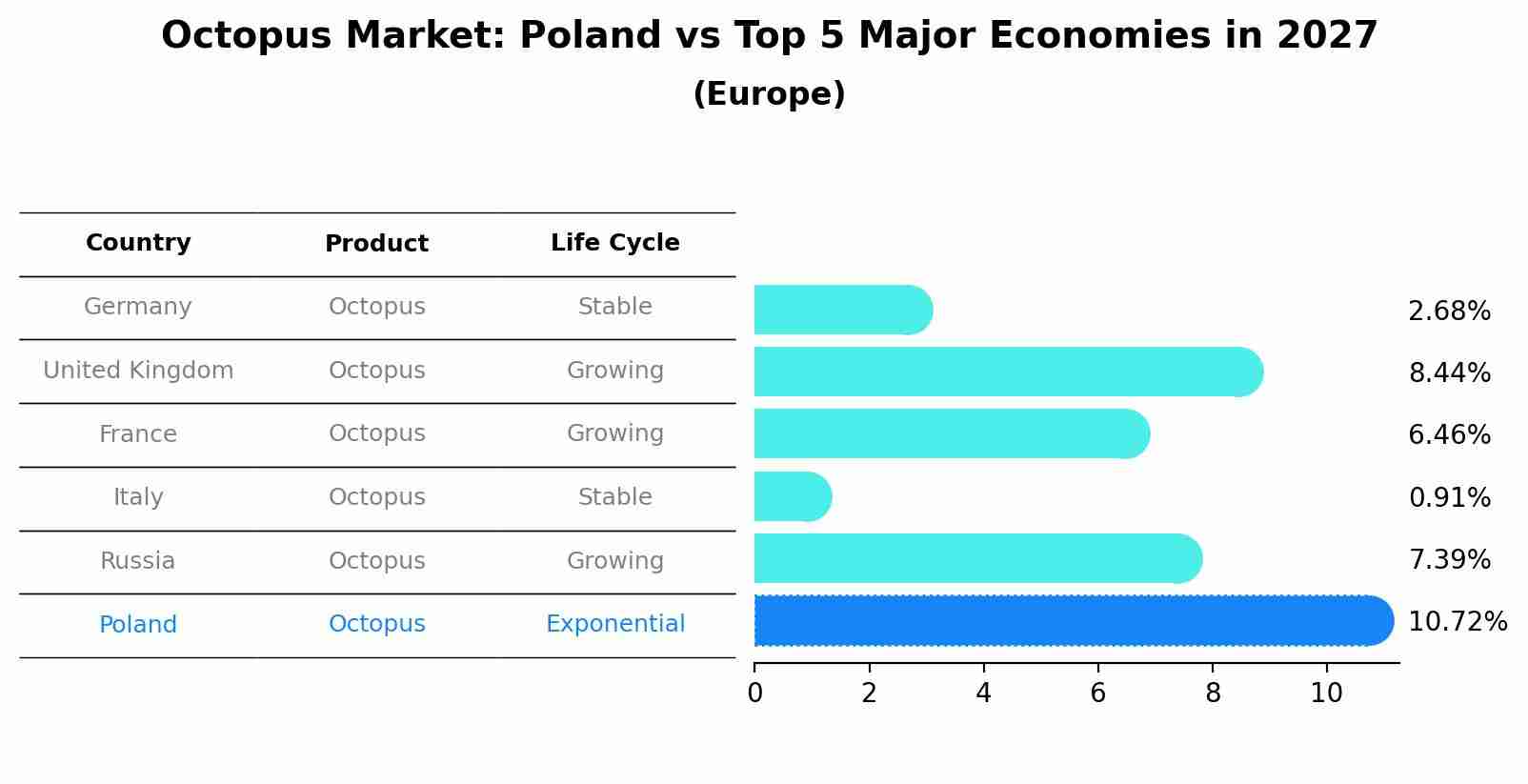
Octopus Market: Poland vs Top 5 Major Economies in 2027 (Europe)
The Octopus market in Poland is projected to grow at a high growth rate of 10.72% by 2027, within the Europe region led by Germany, along with other countries like United Kingdom, France, Italy and Russia, collectively shaping a dynamic and evolving market environment driven by innovation and increasing adoption of emerging technologies.
Poland Octopus Market Synopsis
The Poland Octopus Market is characterized by a growing demand for octopus as a seafood delicacy. Octopus consumption in Poland has been steadily increasing due to changing dietary preferences and a rising interest in exotic cuisines. The market is primarily driven by the foodservice industry, including restaurants and hotels, as well as seafood retailers catering to a niche consumer segment. Importing octopus from countries like Spain, Portugal, and Morocco is common to meet the demand for this specialty seafood. Factors such as health-conscious eating habits, a focus on sustainable seafood sourcing, and a growing culinary awareness among Polish consumers are influencing the market dynamics. In addition, the availability of various octopus products, such as fresh, frozen, and canned octopus, provides consumers with multiple options to incorporate octopus into their meals, further fueling market growth.
Poland Octopus Market Trends
The Poland Octopus Market is experiencing growth due to increasing consumer demand for seafood products and a rise in popularity of octopus dishes in restaurants. The market is witnessing a trend towards sustainable sourcing practices, with consumers showing a preference for ethically sourced and environmentally friendly octopus. Additionally, there is a growing interest in innovative octopus products such as ready-to-eat octopus salads and snacks catering to the convenience-seeking consumer segment. The market is also seeing collaborations between restaurants and suppliers to offer unique octopus-based dishes, further driving the demand for octopus. Overall, the Poland Octopus Market is expected to continue its growth trajectory fueled by changing consumer preferences and a rising awareness of sustainable seafood sourcing practices.
Poland Octopus Market Challenges
In the Poland Octopus Market, some of the key challenges include sourcing sustainable and high-quality octopus due to fluctuations in availability and demand. Another challenge is the competition with other seafood products in the market, as octopus is not as commonly consumed in Poland compared to other seafood varieties. Additionally, there are logistical challenges in terms of transportation and storage of fresh octopus to maintain its quality and freshness. Regulatory issues and compliance with international standards for seafood imports also pose challenges for market players. Overall, navigating these challenges requires market players to innovate in sourcing practices, educate consumers about the benefits of octopus consumption, and ensure efficient supply chain management to maintain competitiveness in the Poland Octopus Market.
Poland Octopus Market Investment Opportunities
In the Poland Octopus Market, there are promising investment opportunities for businesses involved in the seafood industry, particularly those focusing on octopus products. With the increasing demand for octopus in the global market, Poland`s octopus industry offers potential for growth and profitability. Investors could consider opportunities in octopus fishing, processing, distribution, and retail. Additionally, there is room for innovation and value-added product development in this market, such as ready-to-cook octopus meals or gourmet octopus dishes for restaurants. Collaborating with local fishermen, establishing processing facilities, and developing strong distribution networks could be key strategies for success in the Poland Octopus Market. Conducting thorough market research and understanding consumer preferences will be crucial for investors looking to capitalize on the growing demand for octopus in Poland and beyond.
Jordan Agar Market Government Policies
The Poland Octopus Market is governed by various regulations to ensure sustainability and ethical practices. The European Union sets catch quotas and fishing restrictions to prevent overfishing and protect the octopus population. Additionally, Poland implements measures to monitor and enforce these regulations, including licensing requirements for fishermen and inspections of fishing vessels. The government also promotes traceability in the supply chain to combat illegal fishing and ensure the octopus sold in the market is sourced responsibly. These policies aim to maintain the ecological balance of the octopus population, support the livelihoods of fishermen, and provide consumers with transparent and ethically sourced seafood options in the Poland Octopus Market.
Poland Octopus Market Future Outlook
The future outlook for the Poland Octopus Market appears to be positive, driven by growing demand for seafood products and increased consumer interest in exotic and sustainable food options. As seafood consumption continues to rise in Poland, octopus is becoming a popular choice among consumers for its unique taste and health benefits. Additionally, the rise of seafood restaurants and the increasing availability of octopus in retail stores are further fueling the market growth. Suppliers are also focusing on ensuring sustainable sourcing practices to meet the growing demand while maintaining environmental responsibility. Overall, the Poland Octopus Market is expected to continue on an upward trajectory in the coming years, presenting opportunities for both domestic and international players in the seafood industry.
Key Highlights of the Report:
- Poland Octopus Market Outlook
- Market Size of Poland Octopus Market, 2025
- Forecast of Poland Octopus Market, 2032
- Historical Data and Forecast of Poland Octopus Revenues & Volume for the Period 2022 - 2032F
- Poland Octopus Market Trend Evolution
- Poland Octopus Market Drivers and Challenges
- Poland Octopus Price Trends
- Poland Octopus Porter's Five Forces
- Poland Octopus Industry Life Cycle
- Historical Data and Forecast of Poland Octopus Market Revenues & Volume By Product Type for the Period 2022 - 2032F
- Historical Data and Forecast of Poland Octopus Market Revenues & Volume By Fresh for the Period 2022 - 2032F
- Historical Data and Forecast of Poland Octopus Market Revenues & Volume By Processed for the Period 2022 - 2032F
- Historical Data and Forecast of Poland Octopus Market Revenues & Volume By Application for the Period 2022 - 2032F
- Historical Data and Forecast of Poland Octopus Market Revenues & Volume By Commercial for the Period 2022 - 2032F
- Historical Data and Forecast of Poland Octopus Market Revenues & Volume By Food and Beverage for the Period 2022 - 2032F
- Historical Data and Forecast of Poland Octopus Market Revenues & Volume By Distribution Channel for the Period 2022 - 2032F
- Historical Data and Forecast of Poland Octopus Market Revenues & Volume By Direct for the Period 2022 - 2032F
- Historical Data and Forecast of Poland Octopus Market Revenues & Volume By Indirect for the Period 2022 - 2032F
- Poland Octopus Import Export Trade Statistics
- Market Opportunity Assessment By Product Type
- Market Opportunity Assessment By Application
- Market Opportunity Assessment By Distribution Channel
- Poland Octopus Top Companies Market Share
- Poland Octopus Competitive Benchmarking By Technical and Operational Parameters
- Poland Octopus Company Profiles
- Poland Octopus Key Strategic Recommendations






































