Poland Office Chair Market: Import Trend Analysis
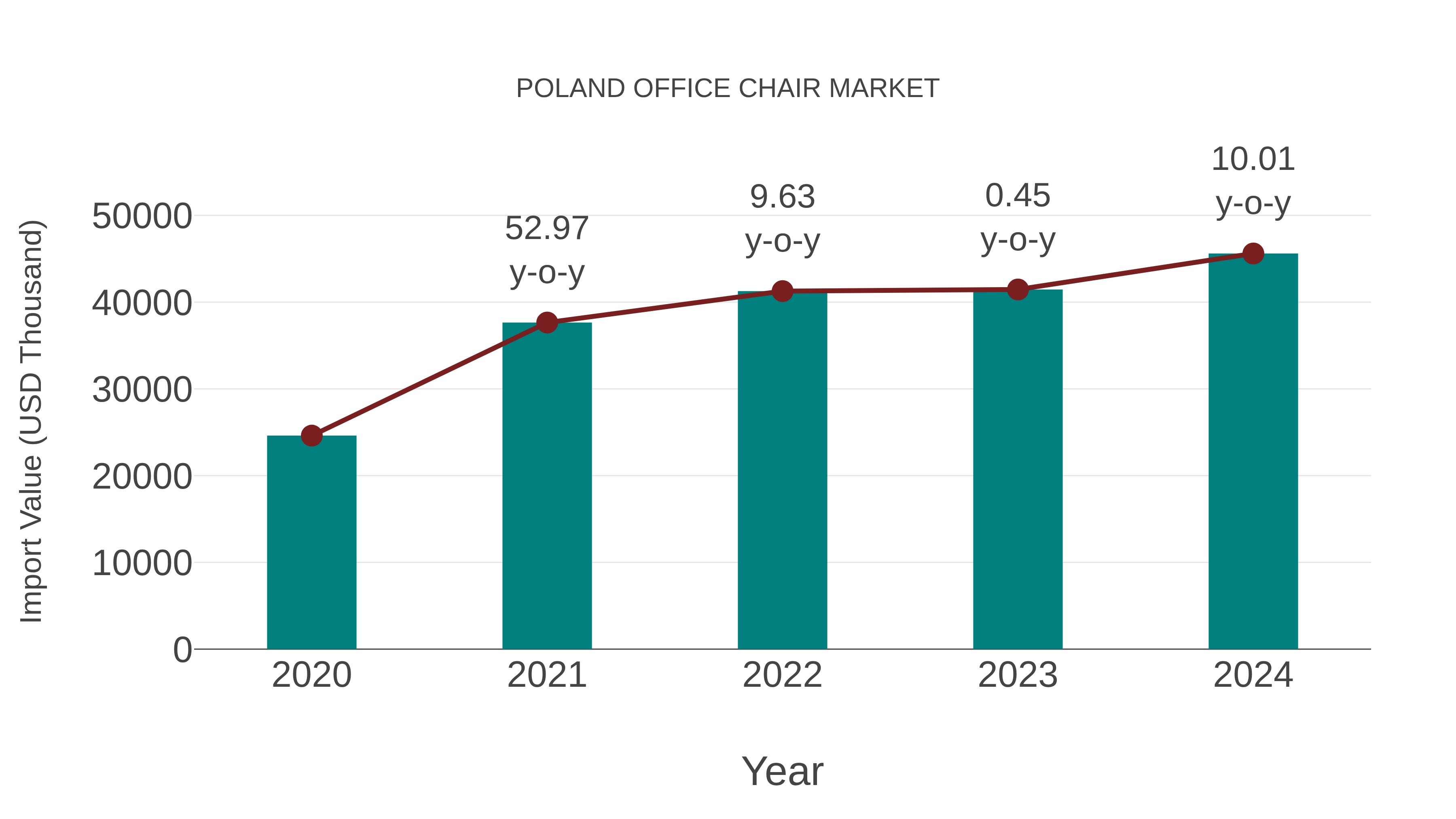
In the Poland office chair market, import trends showed a growth rate of 10.01% from 2023 to 2024, with a compound annual growth rate (CAGR) of 16.68% for the period 2020-2024. This strong import momentum can be attributed to a notable demand shift towards ergonomic and sustainable office furniture solutions.
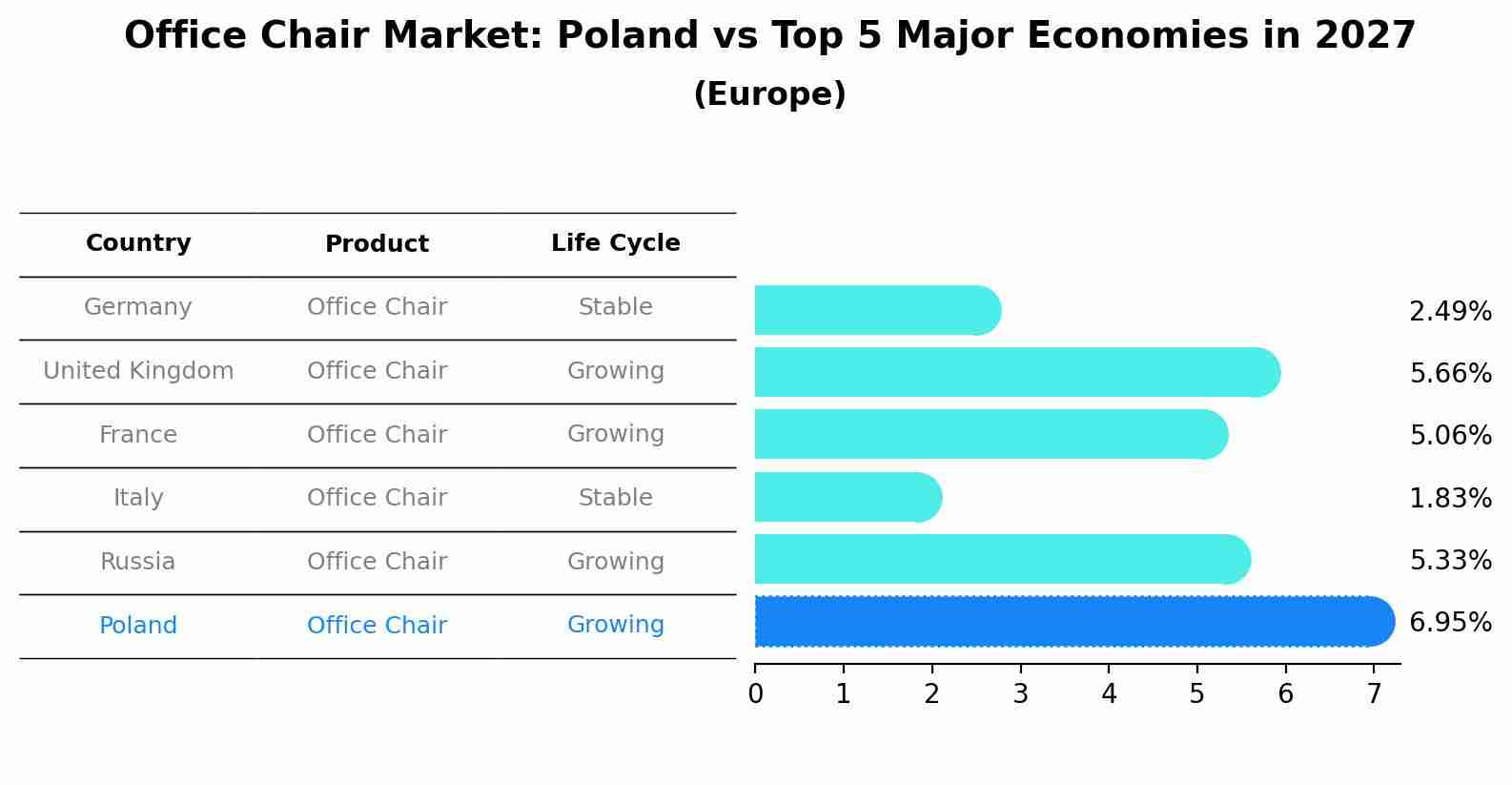
Office Chair Market: Poland vs Top 5 Major Economies in 2027 (Europe)
The Office Chair market in Poland is projected to grow at a growing growth rate of 6.95% by 2027, highlighting the country's increasing focus on advanced technologies within the Europe region, where Germany holds the dominant position, followed closely by United Kingdom, France, Italy and Russia, shaping overall regional demand.
Poland Office Chair Market Synopsis
The Poland office chair market is experiencing steady growth driven by the increasing demand for ergonomic and stylish office furniture. The market is characterized by a wide range of products offered by both domestic manufacturers and international brands. Key trends in the market include a growing preference for adjustable and customizable chairs to promote better posture and comfort among office workers. With the rise of remote work arrangements and the importance of creating productive workspaces, there is a growing emphasis on high-quality, durable office chairs that cater to the needs of modern professionals. The market is also witnessing a shift towards sustainable and environmentally friendly materials in chair manufacturing to align with growing eco-conscious consumer preferences. Overall, the Poland office chair market is poised for further expansion as businesses prioritize employee well-being and productivity.
Poland Office Chair Market Trends
In the Poland Office Chair Market, there is a growing demand for ergonomic and adjustable chairs that prioritize comfort and support for long hours of sitting. Companies are increasingly focusing on providing chairs with customizable features such as lumbar support, adjustable armrests, and breathable materials to enhance the overall working experience. Sustainability is also emerging as a key trend, with a rising preference for chairs made from eco-friendly materials and production processes. Additionally, there is a noticeable shift towards modern and minimalist designs that complement contemporary office spaces. As remote work continues to be prevalent, there is a demand for versatile chairs that can seamlessly transition between home offices and traditional workspaces. Overall, the Poland Office Chair Market is witnessing a shift towards functional, sustainable, and aesthetically pleasing seating solutions.
Poland Office Chair Market Challenges
In the Poland office chair market, one of the key challenges is the increasing competition from both domestic manufacturers and international brands. This competition puts pressure on companies to differentiate their products through design, quality, and pricing in order to remain competitive. Additionally, fluctuating raw material prices can impact production costs, making it challenging for companies to maintain profitability. Another challenge is the evolving consumer preferences and trends, which require companies to constantly innovate and adapt their product offerings to meet changing demands. Furthermore, economic uncertainties and regulatory changes can also impact the market dynamics, creating additional challenges for companies operating in the Poland office chair market. Overall, navigating these challenges requires companies to stay agile, innovative, and customer-focused to remain successful in the market.
Poland Office Chair Market Investment Opportunities
In the Poland Office Chair Market, there are several investment opportunities worth considering. With the increasing trend towards ergonomic workspaces and the growing awareness of the importance of employee comfort and productivity, there is a growing demand for high-quality, ergonomic office chairs. Investing in innovative, ergonomic office chair designs that prioritize comfort, adjustability, and durability could be a lucrative opportunity in this market. Additionally, as more companies in Poland embrace flexible working arrangements and remote work, there is a potential for investment in mobile or compact office chair solutions that cater to this evolving work environment. Collaborating with local manufacturers or distributors to introduce sustainable and eco-friendly office chair options could also be a strategic investment move, considering the increasing focus on sustainability in business practices.
Jordan Agar Market Government Policies
The Polish government has implemented various policies related to the Office Chair Market to ensure consumer safety and promote fair competition. These policies include regulations on product standards and quality control to guarantee that office chairs meet safety requirements and do not pose health risks to users. Additionally, the government has set guidelines for fair trade practices and anti-monopoly regulations to prevent market domination by a single company. Tax incentives and subsidies may also be available to support local manufacturers and encourage innovation in the office chair industry. Overall, the government`s policies aim to create a competitive and sustainable market environment for office chair manufacturers and consumers in Poland.
Poland Office Chair Market Future Outlook
The Poland Office Chair Market is projected to experience steady growth in the coming years due to factors such as increasing demand for ergonomic office furniture, rising awareness of the importance of employee health and comfort in the workplace, and the growing trend of remote work leading to home office setups. With a focus on innovation and design, manufacturers are expected to introduce technologically advanced and customizable office chairs to cater to the evolving needs of consumers. Additionally, the shift towards sustainable and eco-friendly materials is likely to influence product development in the market. Overall, the Poland Office Chair Market is anticipated to expand as businesses and individuals prioritize creating ergonomic and comfortable work environments for improved productivity and well-being.
Key Highlights of the Report:
- Poland Office Chair Market Outlook
- Market Size of Poland Office Chair Market, 2025
- Forecast of Poland Office Chair Market, 2032
- Historical Data and Forecast of Poland Office Chair Revenues & Volume for the Period 2022 - 2032F
- Poland Office Chair Market Trend Evolution
- Poland Office Chair Market Drivers and Challenges
- Poland Office Chair Price Trends
- Poland Office Chair Porter's Five Forces
- Poland Office Chair Industry Life Cycle
- Historical Data and Forecast of Poland Office Chair Market Revenues & Volume By Product Type for the Period 2022 - 2032F
- Historical Data and Forecast of Poland Office Chair Market Revenues & Volume By Executive Office for the Period 2022 - 2032F
- Historical Data and Forecast of Poland Office Chair Market Revenues & Volume By Ergonomic for the Period 2022 - 2032F
- Historical Data and Forecast of Poland Office Chair Market Revenues & Volume By Conference for the Period 2022 - 2032F
- Historical Data and Forecast of Poland Office Chair Market Revenues & Volume By Material for the Period 2022 - 2032F
- Historical Data and Forecast of Poland Office Chair Market Revenues & Volume By Mesh for the Period 2022 - 2032F
- Historical Data and Forecast of Poland Office Chair Market Revenues & Volume By Lather for the Period 2022 - 2032F
- Historical Data and Forecast of Poland Office Chair Market Revenues & Volume By Plastic for the Period 2022 - 2032F
- Historical Data and Forecast of Poland Office Chair Market Revenues & Volume By Fabric for the Period 2022 - 2032F
- Historical Data and Forecast of Poland Office Chair Market Revenues & Volume By Sales Channel for the Period 2022 - 2032F
- Historical Data and Forecast of Poland Office Chair Market Revenues & Volume By Offline for the Period 2022 - 2032F
- Historical Data and Forecast of Poland Office Chair Market Revenues & Volume By Online for the Period 2022 - 2032F
- Poland Office Chair Import Export Trade Statistics
- Market Opportunity Assessment By Product Type
- Market Opportunity Assessment By Material
- Market Opportunity Assessment By Sales Channel
- Poland Office Chair Top Companies Market Share
- Poland Office Chair Competitive Benchmarking By Technical and Operational Parameters
- Poland Office Chair Company Profiles
- Poland Office Chair Key Strategic Recommendations






































