Office Chair Market: Ukraine vs Top 5 Major Economies in 2027 (Asia)
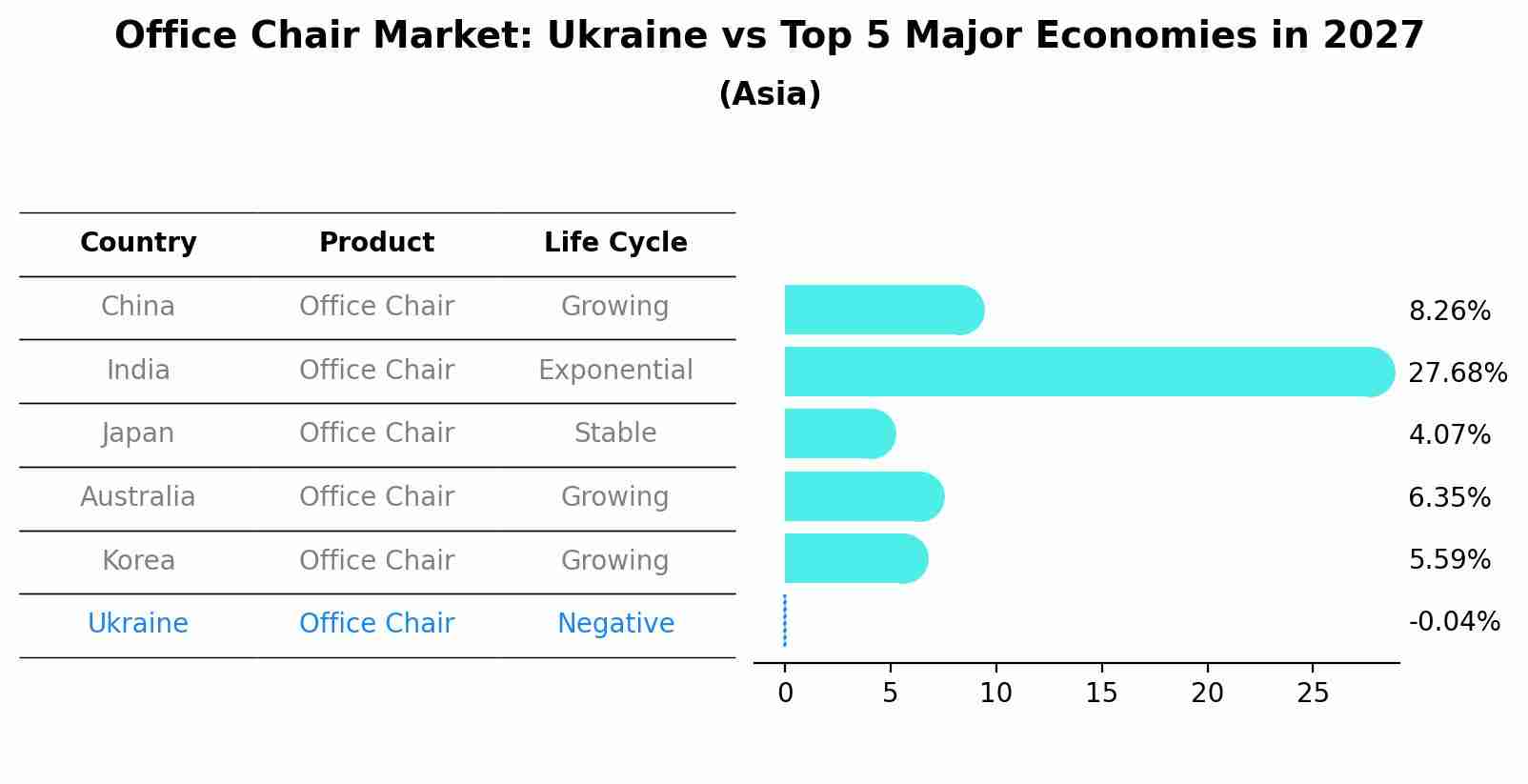
In the Asia region, the Office Chair market in Ukraine is projected to expand at a negative growth rate of -0.04% by 2027. The largest economy is China, followed by India, Japan, Australia and South Korea.
Ukraine Office Chair Market Synopsis
The Ukraine Office Chair Market is experiencing steady growth driven by the expanding corporate sector and increasing demand for ergonomic furniture. With a focus on enhancing employee comfort and productivity, there is a rising trend towards adjustable chairs with lumbar support and breathable materials. The market is competitive with both local manufacturers and international brands offering a wide range of products to cater to various customer preferences. E-commerce platforms have also played a significant role in expanding the market reach, providing consumers with more options and convenience in purchasing office chairs. As businesses prioritize creating ergonomic workspaces, the demand for high-quality, durable office chairs is expected to continue growing in Ukraine.
Ukraine Office Chair Market Trends
In the Ukraine Office Chair Market, there is a growing demand for ergonomic and customizable office chairs that prioritize comfort and support for long hours of sitting. Companies are increasingly focusing on offering chairs with adjustable features such as height, armrests, and lumbar support to cater to the needs of employees working from home or in traditional office settings. Additionally, sustainability and eco-friendly materials are becoming more important to consumers, leading to a rise in the production of chairs made from recycled or recyclable materials. Online sales channels are also gaining traction in the market, as customers seek convenience and a wider variety of options when purchasing office chairs. Overall, the trend is towards functional, comfortable, and environmentally conscious office chairs in the Ukraine market.
Ukraine Office Chair Market Challenges
The Ukraine office chair market faces several challenges, including increasing competition from international brands and the presence of lower-cost imported chairs. Local manufacturers often struggle to compete with the pricing of these imported products, leading to pricing pressure and reduced profit margins. Additionally, fluctuating economic conditions and currency exchange rates can impact the cost of raw materials and production, further impacting the profitability of office chair manufacturers in Ukraine. Moreover, the lack of awareness about ergonomic office furniture among businesses and consumers in the country poses a challenge for companies trying to promote higher-end, more expensive chairs. Overall, the Ukraine office chair market is characterized by intense competition, pricing pressures, economic uncertainties, and a need for greater education on the benefits of ergonomic furniture.
Ukraine Office Chair Market Investment Opportunities
The Ukraine office chair market presents various investment opportunities for both domestic and international investors. With the growing demand for ergonomic and stylish office furniture, there is a trend towards higher-quality, more comfortable office chairs. Investing in manufacturing facilities to produce these modern office chairs could be a lucrative opportunity. Additionally, there is potential for e-commerce platforms specializing in office furniture to expand and capture a larger market share. Partnering with local distributors or retailers to penetrate the market and offer a wider range of office chair options could also be a strategic investment move. Overall, the Ukraine office chair market offers opportunities for investment in manufacturing, e-commerce, and distribution channels to cater to the evolving needs of the workforce.
Jordan Agar Market Government Policies
Government policies related to the Ukraine Office Chair Market primarily focus on promoting domestic production and supporting local manufacturers. The government encourages the use of locally sourced materials and offers incentives to companies that manufacture office chairs within the country. There are also regulations in place to ensure product quality and safety standards are met, with periodic inspections conducted to monitor compliance. Additionally, the government may impose import tariffs on foreign office chair products to protect the domestic industry. Overall, the policies aim to boost the competitiveness of Ukrainian office chair manufacturers, stimulate economic growth, and create employment opportunities within the sector.
Ukraine Office Chair Market Future Outlook
The Ukraine office chair market is expected to witness steady growth in the coming years, driven by factors such as the increasing number of businesses and offices in the country, growing adoption of ergonomic furniture, and rising awareness about the importance of comfortable and supportive seating for employee productivity and well-being. Additionally, the trend towards remote work and flexible office setups is likely to fuel demand for high-quality office chairs that offer both comfort and style. Manufacturers in the market are expected to focus on innovation, sustainability, and customization to cater to the evolving needs of consumers. Overall, the Ukraine office chair market presents opportunities for players to introduce technologically advanced, environmentally friendly, and aesthetically pleasing products to gain a competitive edge in the growing market.
Key Highlights of the Report:
- Ukraine Office Chair Market Outlook
- Market Size of Ukraine Office Chair Market, 2021
- Forecast of Ukraine Office Chair Market, 2031
- Historical Data and Forecast of Ukraine Office Chair Revenues & Volume for the Period 2018 - 2031
- Ukraine Office Chair Market Trend Evolution
- Ukraine Office Chair Market Drivers and Challenges
- Ukraine Office Chair Price Trends
- Ukraine Office Chair Porter's Five Forces
- Ukraine Office Chair Industry Life Cycle
- Historical Data and Forecast of Ukraine Office Chair Market Revenues & Volume By Product Type for the Period 2018 - 2031
- Historical Data and Forecast of Ukraine Office Chair Market Revenues & Volume By Executive Office for the Period 2018 - 2031
- Historical Data and Forecast of Ukraine Office Chair Market Revenues & Volume By Ergonomic for the Period 2018 - 2031
- Historical Data and Forecast of Ukraine Office Chair Market Revenues & Volume By Conference for the Period 2018 - 2031
- Historical Data and Forecast of Ukraine Office Chair Market Revenues & Volume By Material for the Period 2018 - 2031
- Historical Data and Forecast of Ukraine Office Chair Market Revenues & Volume By Mesh for the Period 2018 - 2031
- Historical Data and Forecast of Ukraine Office Chair Market Revenues & Volume By Lather for the Period 2018 - 2031
- Historical Data and Forecast of Ukraine Office Chair Market Revenues & Volume By Plastic for the Period 2018 - 2031
- Historical Data and Forecast of Ukraine Office Chair Market Revenues & Volume By Fabric for the Period 2018 - 2031
- Historical Data and Forecast of Ukraine Office Chair Market Revenues & Volume By Sales Channel for the Period 2018 - 2031
- Historical Data and Forecast of Ukraine Office Chair Market Revenues & Volume By Offline for the Period 2018 - 2031
- Historical Data and Forecast of Ukraine Office Chair Market Revenues & Volume By Online for the Period 2018 - 2031
- Ukraine Office Chair Import Export Trade Statistics
- Market Opportunity Assessment By Product Type
- Market Opportunity Assessment By Material
- Market Opportunity Assessment By Sales Channel
- Ukraine Office Chair Top Companies Market Share
- Ukraine Office Chair Competitive Benchmarking By Technical and Operational Parameters
- Ukraine Office Chair Company Profiles
- Ukraine Office Chair Key Strategic Recommendations






































