Poland Phenol Market: Import Trend Analysis
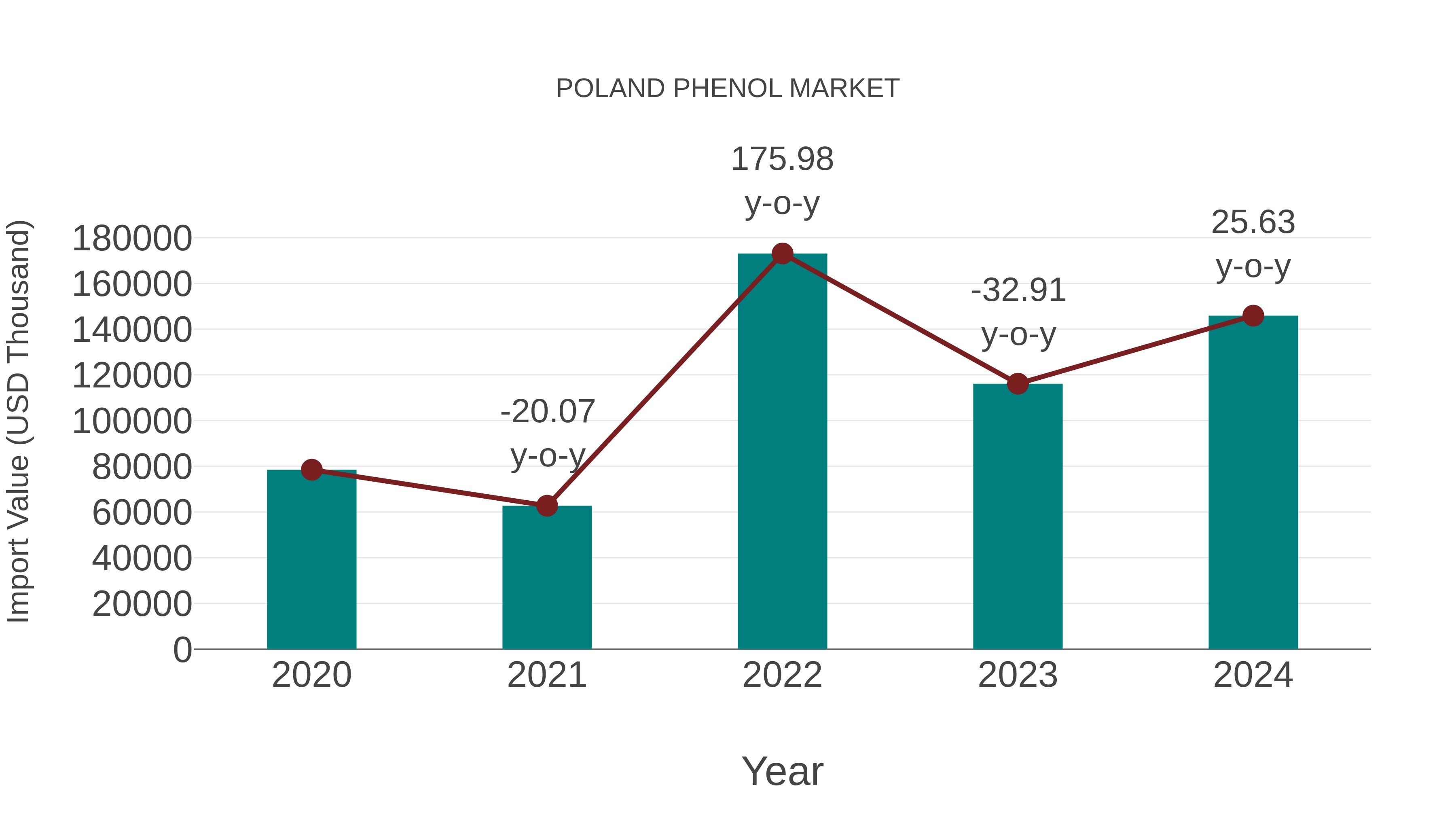
In the Poland phenol market, import trends showed a notable growth rate of 25.63% from 2023 to 2024, with a compound annual growth rate (CAGR) of 16.77% for the period 2020-2024. This surge in imports can be attributed to a significant demand shift towards phenol-based products within the region, indicating a strengthening market stability and potential for sustained import momentum.
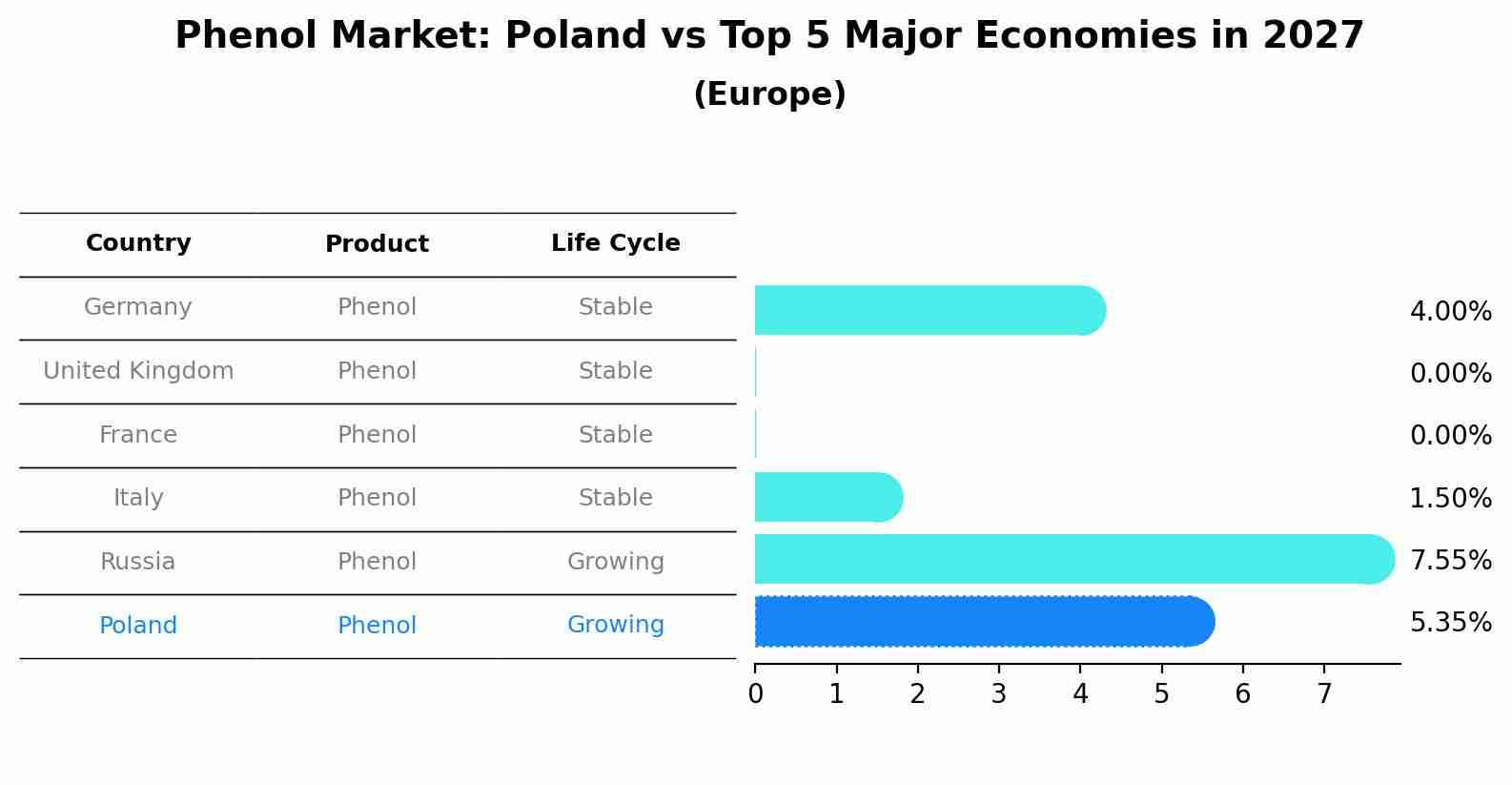
Phenol Market: Poland vs Top 5 Major Economies in 2027 (Europe)
By 2027, Poland's Phenol market is forecasted to achieve a growing growth rate of 5.35%, with Germany leading the Europe region, followed by United Kingdom, France, Italy and Russia.
Poland Phenol Market Overview
The Poland Phenol Market is witnessing steady growth driven by its diverse applications in industries such as automotive, construction, electronics, and healthcare. The increasing demand for phenol as a key chemical intermediate in the production of various products like bisphenol-A, phenolic resins, and caprolactam is fueling market growth. Additionally, the rising focus on sustainable and eco-friendly solutions is driving manufacturers to develop bio-based phenol, further expanding market opportunities. However, challenges such as fluctuating raw material prices and stringent regulations regarding environmental impact are posing constraints to market growth. Overall, the Poland Phenol Market is expected to continue its growth trajectory, supported by ongoing industrial developments and innovations in production technologies.
Poland Phenol Market Trends
The Poland Phenol Market is experiencing steady growth due to increasing demand from various end-use industries such as automotive, construction, electronics, and packaging. The market is driven by the rising production of phenol-based products like bisphenol-A, phenolic resins, and caprolactam. There is a growing emphasis on sustainable practices, leading to a shift towards bio-based phenol production methods. Additionally, the market is witnessing investments in research and development to innovate new applications and improve production efficiency. However, challenges such as fluctuating raw material prices and environmental regulations regarding phenol production are influencing market dynamics. Overall, the Poland Phenol Market is poised for continued growth, driven by expanding industrial sectors and technological advancements in the country.
Poland Phenol Market Challenges
In the Poland Phenol Market, challenges include fluctuating raw material prices, increasing competition from international producers, and regulatory pressures related to environmental sustainability and safety standards. Additionally, the market faces the impact of global economic conditions, which can affect demand and pricing dynamics. The need for continuous innovation and investment in technology to improve production efficiency and product quality is crucial for companies operating in this market. Adapting to changing consumer preferences and market trends while maintaining cost competitiveness presents another challenge for industry players in the Poland Phenol Market. Overall, navigating these challenges requires strategic planning, market intelligence, and a proactive approach to ensure sustainable growth and competitiveness in the industry.
Poland Phenol Market Investment Opportunities
The Poland Phenol Market presents several investment opportunities due to factors such as increased demand for phenol derivatives in a variety of industries including automotive, electronics, and construction. With the country`s strong manufacturing base and growing economy, there is a promising market for phenol-based products. Additionally, the shift towards sustainable and eco-friendly chemicals is driving the development of bio-based phenol production methods in Poland, opening up opportunities for investors in the renewable chemicals sector. Investing in Poland`s phenol market could offer long-term growth potential, especially for companies focusing on innovation, sustainability, and meeting the evolving needs of industries looking for high-quality phenol products.
Poland Phenol Market Government Policy
The Poland Phenol Market is influenced by various government policies, including regulations set by the European Chemicals Agency (ECHA) under the Registration, Evaluation, Authorisation and Restriction of Chemicals (REACH) framework. Companies operating in the market must comply with REACH requirements, such as registering substances, obtaining authorization for hazardous chemicals, and adhering to restrictions on certain substances. Additionally, the Polish government has its own regulations regarding the handling, production, and disposal of phenol to ensure environmental and public health protection. These policies aim to promote the safe use of phenol in industrial processes while minimizing potential risks to human health and the environment, ultimately shaping the market dynamics in Poland.
Poland Phenol Market Future Outlook
The Poland Phenol Market is expected to witness steady growth in the coming years due to increasing demand from various industries such as automotive, construction, and electronics. The growing use of phenol in the production of plastics, resins, and pharmaceuticals is anticipated to drive market growth. Additionally, the rising awareness about sustainable and eco-friendly alternatives is likely to propel the demand for bio-based phenol in the region. However, challenges such as fluctuating raw material prices and stringent environmental regulations could potentially hinder market growth. Overall, with the growing industrial applications and technological advancements in phenol production, the Poland Phenol Market is forecasted to experience moderate but steady growth in the foreseeable future.
Key Highlights of the Report:
- Poland Phenol Market Outlook
- Market Size of Poland Phenol Market, 2021
- Forecast of Poland Phenol Market, 2027
- Historical Data and Forecast of Poland Phenol Revenues & Volume for the Period 2018 - 2027
- Poland Phenol Market Trend Evolution
- Poland Phenol Market Drivers and Challenges
- Poland Phenol Price Trends
- Poland Phenol Porter's Five Forces
- Poland Phenol Industry Life Cycle
- Historical Data and Forecast of Poland Phenol Market Revenues & Volume By End-users for the Period 2018 - 2027
- Historical Data and Forecast of Poland Phenol Market Revenues & Volume By Bisphenol A for the Period 2018 - 2027
- Historical Data and Forecast of Poland Phenol Market Revenues & Volume By Phenolic Resins for the Period 2018 - 2027
- Historical Data and Forecast of Poland Phenol Market Revenues & Volume By Caprolactam for the Period 2018 - 2027
- Historical Data and Forecast of Poland Phenol Market Revenues & Volume By Alkyl Phenyls for the Period 2018 - 2027
- Historical Data and Forecast of Poland Phenol Market Revenues & Volume By Others for the Period 2018 - 2027
- Poland Phenol Import Export Trade Statistics
- Market Opportunity Assessment By End-users
- Poland Phenol Top Companies Market Share
- Poland Phenol Competitive Benchmarking By Technical and Operational Parameters
- Poland Phenol Company Profiles
- Poland Phenol Key Strategic Recommendations






































