Portugal Secondhand Luxury Goods Market Top 5 Importing Countries and Market Competition (HHI) Analysis
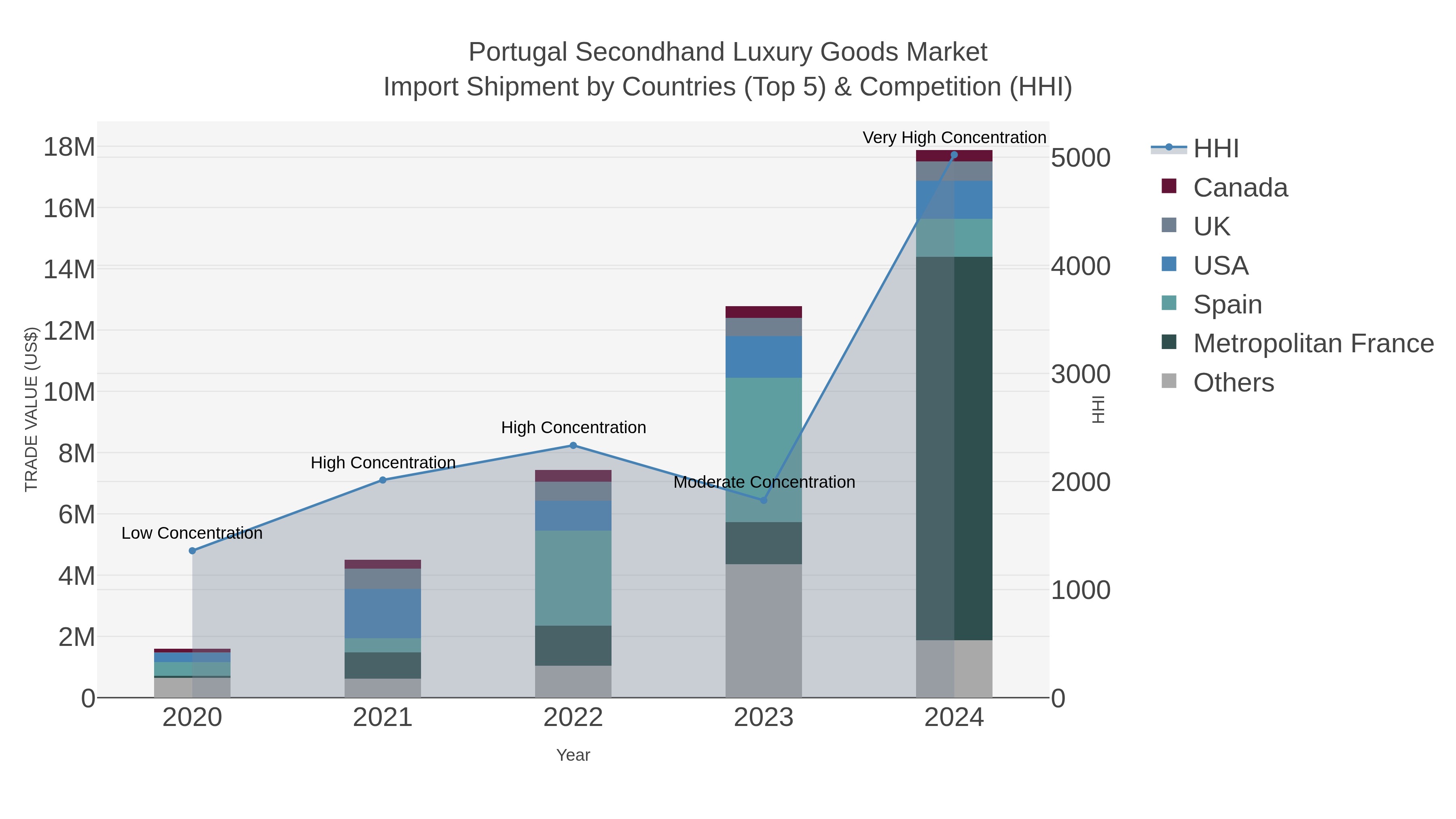
In 2024, Portugal experienced a significant surge in secondhand luxury goods import shipments, with the top exporting countries being Metropolitan France, Spain, USA, UK, and Canada. The market concentration, as measured by the HHI, escalated from moderate in 2023 to very high in 2024, indicating a more consolidated market landscape. The impressive compound annual growth rate (CAGR) of 83.06% from 2020 to 2024 demonstrates the robust expansion of this sector. Moreover, the growth rate of 39.8% from 2023 to 2024 highlights the accelerating pace of imports, signaling a thriving market for secondhand luxury goods in Portugal.
Portugal Secondhand Luxury Goods Market Overview
The secondhand luxury goods market in Portugal is experiencing steady growth, driven by increasing consumer interest in sustainable fashion and the allure of luxury brands at more affordable prices. Online platforms such as Vestiaire Collective and The RealReal are gaining popularity among Portuguese consumers looking to buy and sell pre-owned luxury items. The market offers a wide range of products including designer clothing, handbags, shoes, and accessories from brands like Gucci, Louis Vuitton, and Chanel. With a growing emphasis on circular fashion and the desire for unique pieces, the secondhand luxury goods market in Portugal presents opportunities for both buyers and sellers to participate in a more sustainable and cost-effective way of enjoying luxury fashion.
Portugal Secondhand Luxury Goods Market Trends and Opportunities
The Portugal Secondhand Luxury Goods Market is experiencing growth due to an increasing focus on sustainability and conscious consumerism. Consumers are turning to pre-owned luxury items as a more affordable and eco-friendly option, driving the demand for secondhand designer goods. Online platforms and consignment stores are expanding, making it easier for buyers to access a wider range of luxury products. Additionally, the rise of social media influencers promoting sustainable fashion is further boosting the market. Opportunities lie in providing authenticity guarantees and quality assurance to build trust with consumers. Collaborations with luxury brands to establish official resale channels can also help capitalize on this growing trend in the Portugal luxury goods market.
Portugal Secondhand Luxury Goods Market Challenges
In the Portugal secondhand luxury goods market, one of the major challenges faced is the issue of authenticity and trust. Consumers often worry about the legitimacy of products being sold, leading to concerns about purchasing counterfeit items. Additionally, the lack of standardized authentication processes and regulations in the secondhand luxury market can make it difficult for buyers to differentiate between genuine and fake products. Moreover, the presence of unauthorized sellers and online platforms can further exacerbate these authenticity concerns. Building trust and ensuring transparency in transactions are crucial for the growth of the Portugal secondhand luxury goods market, requiring sellers to invest in authentication measures and establish credibility to attract and retain discerning customers.
Portugal Secondhand Luxury Goods Market Drivers
The Portugal Secondhand Luxury Goods Market is being driven by several key factors. One of the main drivers is the increasing consumer demand for sustainable and eco-friendly shopping options. Buying secondhand luxury goods allows consumers to reduce waste and lessen their environmental impact. Additionally, the growing trend of conscious consumerism is driving individuals to seek high-quality luxury items at more affordable prices through the secondhand market. The rise of online platforms and marketplaces specializing in pre-owned luxury goods has also made it more convenient and accessible for consumers to buy and sell items. Furthermore, the desire for unique and rare pieces that may be difficult to find in traditional retail stores is fueling the growth of the secondhand luxury goods market in Portugal.
Portugal Secondhand Luxury Goods Market Government Policies
In Portugal, the secondhand luxury goods market is subject to various government policies aimed at regulating the industry. These policies primarily focus on consumer protection, tax compliance, and intellectual property rights. Regulations require sellers in the secondhand luxury goods market to provide accurate information about the authenticity and condition of the items being sold to ensure consumer trust and prevent counterfeiting. Additionally, sellers are obligated to comply with tax laws by reporting their income from the sale of secondhand luxury goods. Intellectual property rights laws also play a crucial role in protecting the trademarks and copyrights of luxury brands in the secondhand market. Overall, these policies aim to promote transparency, fair practices, and legal compliance within the Portugal secondhand luxury goods market.
Portugal Secondhand Luxury Goods Market Future Outlook
The future outlook for the Portugal Secondhand Luxury Goods Market looks promising, driven by the increasing popularity of sustainable and circular fashion practices among consumers. As more people become conscious of the environmental impact of fast fashion and seek unique, high-quality items at a more affordable price point, the demand for pre-owned luxury goods is expected to continue to rise. Additionally, the rise of online platforms and marketplaces dedicated to selling secondhand luxury items has made it easier for consumers to access these products. With a growing focus on sustainability and value for money, the Portugal Secondhand Luxury Goods Market is poised for steady growth in the coming years.
Key Highlights of the Report:
- Portugal Secondhand Luxury Goods Market Outlook
- Market Size of Portugal Secondhand Luxury Goods Market, 2025
- Forecast of Portugal Secondhand Luxury Goods Market, 2032
- Historical Data and Forecast of Portugal Secondhand Luxury Goods Revenues & Volume for the Period 2022- 2032
- Portugal Secondhand Luxury Goods Market Trend Evolution
- Portugal Secondhand Luxury Goods Market Drivers and Challenges
- Portugal Secondhand Luxury Goods Price Trends
- Portugal Secondhand Luxury Goods Porter's Five Forces
- Portugal Secondhand Luxury Goods Industry Life Cycle
- Historical Data and Forecast of Portugal Secondhand Luxury Goods Market Revenues & Volume By Product Type for the Period 2022- 2032
- Historical Data and Forecast of Portugal Secondhand Luxury Goods Market Revenues & Volume By Handbags for the Period 2022- 2032
- Historical Data and Forecast of Portugal Secondhand Luxury Goods Market Revenues & Volume By Jewelry & Watches for the Period 2022- 2032
- Historical Data and Forecast of Portugal Secondhand Luxury Goods Market Revenues & Volume By Clothing for the Period 2022- 2032
- Historical Data and Forecast of Portugal Secondhand Luxury Goods Market Revenues & Volume By Small Leather Goods for the Period 2022- 2032
- Historical Data and Forecast of Portugal Secondhand Luxury Goods Market Revenues & Volume By Footwear for the Period 2022- 2032
- Historical Data and Forecast of Portugal Secondhand Luxury Goods Market Revenues & Volume By Accessories for the Period 2022- 2032
- Historical Data and Forecast of Portugal Secondhand Luxury Goods Market Revenues & Volume By Other for the Period 2022- 2032
- Historical Data and Forecast of Portugal Secondhand Luxury Goods Market Revenues & Volume By Demography for the Period 2022- 2032
- Historical Data and Forecast of Portugal Secondhand Luxury Goods Market Revenues & Volume By Women for the Period 2022- 2032
- Historical Data and Forecast of Portugal Secondhand Luxury Goods Market Revenues & Volume By Men for the Period 2022- 2032
- Historical Data and Forecast of Portugal Secondhand Luxury Goods Market Revenues & Volume By Unisex for the Period 2022- 2032
- Historical Data and Forecast of Portugal Secondhand Luxury Goods Market Revenues & Volume By Distribution Channel for the Period 2022- 2032
- Historical Data and Forecast of Portugal Secondhand Luxury Goods Market Revenues & Volume By Offline for the Period 2022- 2032
- Historical Data and Forecast of Portugal Secondhand Luxury Goods Market Revenues & Volume By Online for the Period 2022- 2032
- Portugal Secondhand Luxury Goods Import Export Trade Statistics
- Market Opportunity Assessment By Product Type
- Market Opportunity Assessment By Demography
- Market Opportunity Assessment By Distribution Channel
- Portugal Secondhand Luxury Goods Top Companies Market Share
- Portugal Secondhand Luxury Goods Competitive Benchmarking By Technical and Operational Parameters
- Portugal Secondhand Luxury Goods Company Profiles
- Portugal Secondhand Luxury Goods Key Strategic Recommendations






































