Qatar Ammonia Market Size Growth Rate
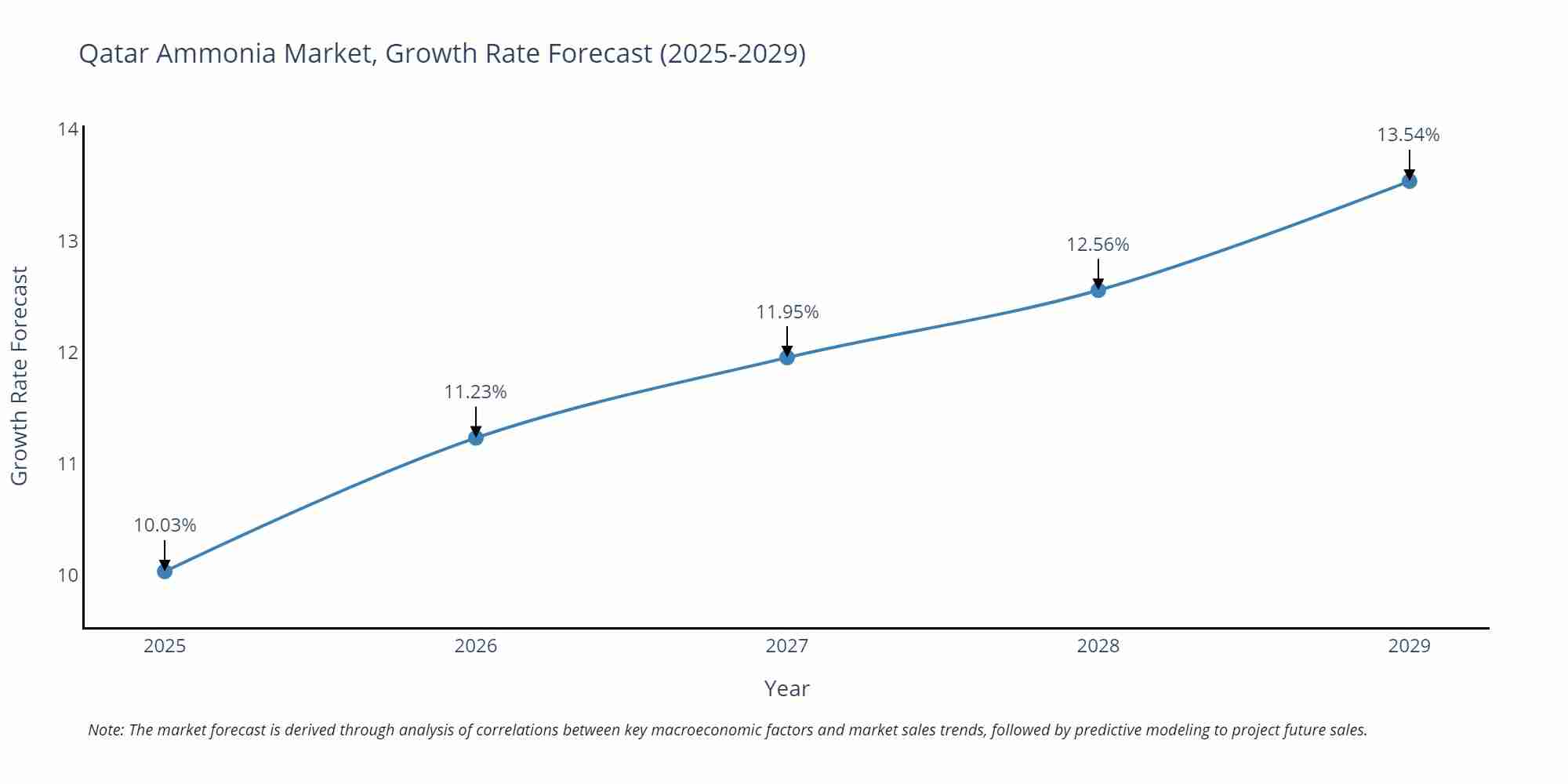
The Qatar Ammonia Market is poised for steady growth rate improvements from 2025 to 2029. The growth rate starts at 10.03% in 2025 and reaches 13.54% by 2029.
Qatar Ammonia Market Synopsis
Ammonia is one of the key raw materials used across various industries such as pharmaceuticals, agriculture & fertilizers etc. , globally. In Qatar, demand for ammonia has risen significantly due to growth in population coupled with increased industrial activities particularly related to petrochemical projects such as RasGas II & III expansion project which required ammonia feedstock. The total imports for ammonia into Qatar was at $48 Million USD during 2025 representing an increase of 6 % compared to 2018 levels ($45million). Major suppliers include Saudi Arabia, Kuwait and UAE respectively accounting 39%, 25 %and 21%.
Drivers of the Market
The Qatar Ammonia market is poised for growth due to the thriving agriculture sector, where ammonia-based fertilizers are essential for enhancing crop yields. Qatar commitment to sustainable food production and security fuels the demand for ammonia-based fertilizers. Furthermore, ammonia`s applications in chemical synthesis, pharmaceuticals, and refrigeration systems contribute to its market growth. Qatar strategic investments in petrochemical projects and infrastructure development support the ammonia industry`s expansion, making it a vital driver of the country`s economic growth.
Challenges of the Market
The Qatar Ammonia market encounters challenges related to energy consumption and greenhouse gas emissions. Ammonia production is energy-intensive and often relies on fossil fuels. As the industry moves towards cleaner and more sustainable practices, reducing the carbon footprint of ammonia production will be a significant challenge. Implementing energy-efficient technologies, exploring alternative feedstocks, and integrating carbon capture and utilization techniques will be essential to address these challenges.
COVID-19 Impact on the Market
The Qatar ammonia market, crucial for the production of fertilizers and chemicals, encountered challenges due to the COVID-19 pandemic. Reduced agricultural activities and disruptions in supply chains affected the demand for ammonia-based fertilizers. Additionally, lockdowns and logistical issues impacted the market`s operations. As economies recover and agriculture stabilizes, the Qatar ammonia market is expected to regain its momentum. The long-term outlook remains favorable, driven by the global need for food security and the ongoing demand for ammonia-based products in various industries.
Key Players in the Market
Qatar Petrochemical Company (QAPCO) holds a significant position in the Qatar Ammonia market. Ammonia is used in fertilizers, chemicals, and industrial processes. The market`s growth is influenced by agricultural demands and industrial applications. The key player may prioritize efficient production methods and sustainable sourcing.
Key Highlights of the Report:
- Qatar Ammonia Market Outlook
- Market Size of Qatar Ammonia Market, 2024
- Forecast of Qatar Ammonia Market, 2031
- Historical Data and Forecast of Qatar Ammonia Revenues & Volume for the Period 2021-2031
- Qatar Ammonia Market Trend Evolution
- Qatar Ammonia Market Drivers and Challenges
- Qatar Ammonia Price Trends
- Qatar Ammonia Porter's Five Forces
- Qatar Ammonia Industry Life Cycle
- Historical Data and Forecast of Qatar Ammonia Market Revenues & Volume By Type for the Period 2021-2031
- Historical Data and Forecast of Qatar Ammonia Market Revenues & Volume By Liquid for the Period 2021-2031
- Historical Data and Forecast of Qatar Ammonia Market Revenues & Volume By Gas for the Period 2021-2031
- Historical Data and Forecast of Qatar Ammonia Market Revenues & Volume By End-user Industry for the Period 2021-2031
- Historical Data and Forecast of Qatar Ammonia Market Revenues & Volume By Agriculture for the Period 2021-2031
- Historical Data and Forecast of Qatar Ammonia Market Revenues & Volume By Textiles for the Period 2021-2031
- Historical Data and Forecast of Qatar Ammonia Market Revenues & Volume By Mining for the Period 2021-2031
- Historical Data and Forecast of Qatar Ammonia Market Revenues & Volume By Pharmaceutical for the Period 2021-2031
- Historical Data and Forecast of Qatar Ammonia Market Revenues & Volume By Refrigeration for the Period 2021-2031
- Historical Data and Forecast of Qatar Ammonia Market Revenues & Volume By Others for the Period 2021-2031
- Qatar Ammonia Import Export Trade Statistics
- Market Opportunity Assessment By Type
- Market Opportunity Assessment By End-user Industry
- Qatar Ammonia Top Companies Market Share
- Qatar Ammonia Competitive Benchmarking By Technical and Operational Parameters
- Qatar Ammonia Company Profiles
- Qatar Ammonia Key Strategic Recommendations






































