Qatar Dairy Cream Market Size Growth Rate
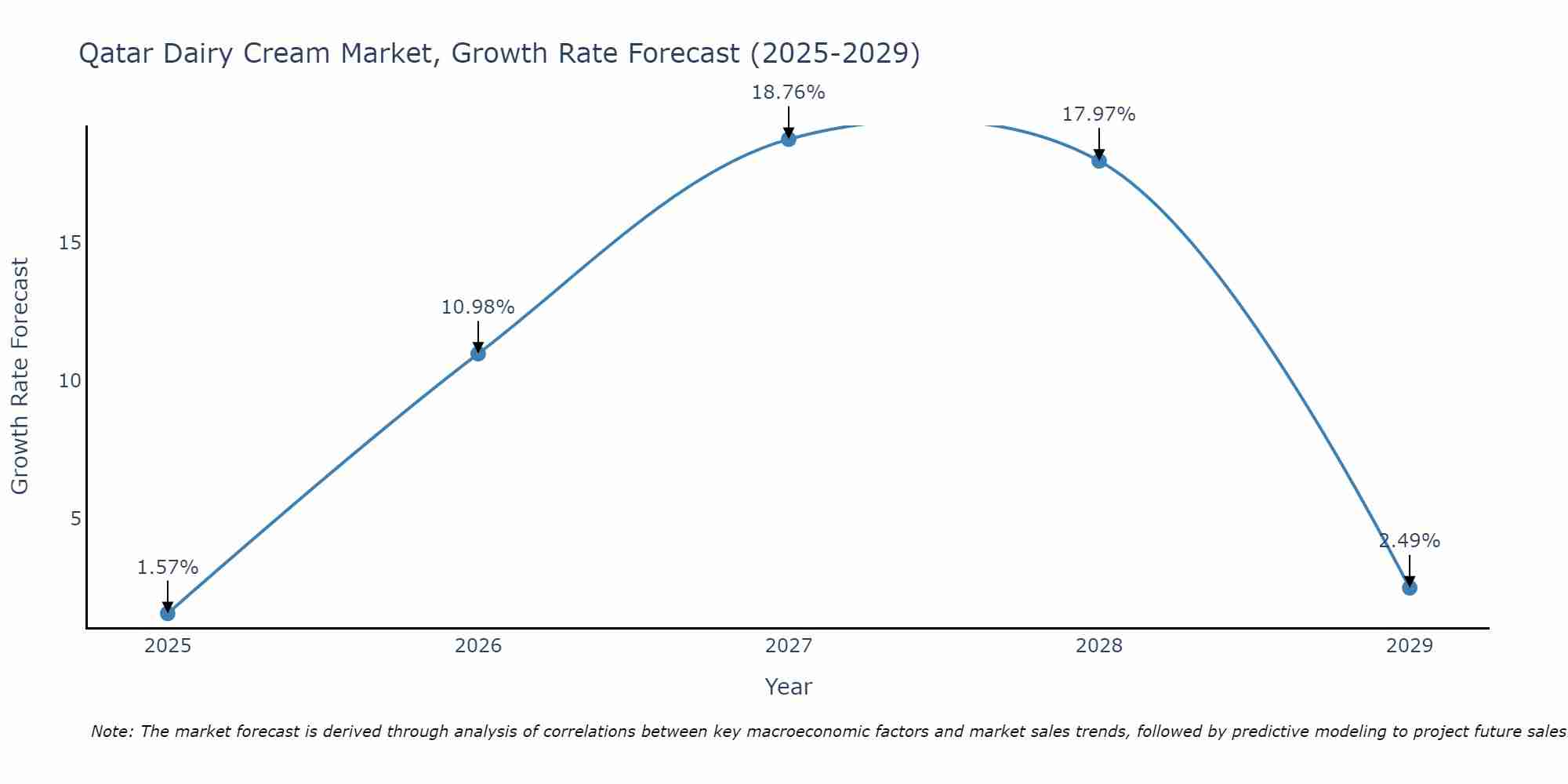
The Qatar Dairy Cream Market is projected to witness mixed growth rate patterns during 2025 to 2029. Growth accelerates to 18.76% in 2027, following an initial rate of 1.57%, before easing to 2.49% at the end of the period.
Qatar Dairy Cream Market Synopsis
The Qatar Dairy Cream Market is a niche within the dairy and dairy products sector. Dairy cream, used in cooking and as a topping, is an integral ingredient in many culinary traditions. In Qatar, the market for dairy cream is driven by both domestic consumption and the needs of the hospitality and foodservice industries. While not a dominant player in the dairy sector, the market for dairy cream offers specialized products to meet various culinary demands.
Drivers of the Market
The Qatar Dairy Cream market is driven by key factors that contribute to its growth and development. Dairy cream, a versatile ingredient used in both sweet and savory dishes, holds a significant place in Qatar culinary landscape. The country`s diverse food culture, influenced by both traditional and international cuisines, contributes to the demand for dairy cream in various recipes. The rise in dining-out experiences and the hospitality sector`s emphasis on culinary excellence further fuel the demand for high-quality dairy products.
Challenges of the Market
The Qatar dairy cream market faces challenges linked to storage and transportation in a hot climate. Maintaining the quality and freshness of dairy cream products from production to consumption is a critical issue. Developing efficient cold-chain logistics and distribution networks while minimizing food waste is a complex challenge.
COVID-19 Impact on the Market
The Qatar dairy cream market faced shifts in consumer preferences and supply chain disruptions during the COVID-19 pandemic. With a focus on essentials, there was a temporary decline in demand for non-essential dairy products like whipped cream. The closure of restaurants and cafes also impacted the foodservice sector, affecting bulk purchases of dairy cream. To counter this, the market saw innovation in packaging and a pivot towards promoting at-home coffee experiences and baking. As restrictions eased, a gradual recovery was observed, driven by both home consumption and the reopening of food establishments.
Key Players in the Market
The Qatar dairy cream market has witnessed significant growth in recent years, driven by factors such as increasing disposable income and a growing interest in culinary innovations. Local and international players have been actively participating in this market. Prominent local dairy producers, such as Almarai Qatar and Baladna, have expanded their product offerings to include a variety of dairy cream options, catering to both traditional and contemporary consumer preferences. These companies have leveraged their established distribution networks and brand reputation to maintain a strong presence in the market. Additionally, international players like Nestle and Danone have also made strategic inroads, introducing premium and specialty dairy cream products to cater to the evolving tastes of the Qatar consumers.
Key Highlights of the Report:
- Qatar Dairy Cream Market Outlook
- Market Size of Qatar Dairy Cream Market, 2024
- Forecast of Qatar Dairy Cream Market, 2031
- Historical Data and Forecast of Qatar Dairy Cream Revenues & Volume for the Period 2021-2031
- Qatar Dairy Cream Market Trend Evolution
- Qatar Dairy Cream Market Drivers and Challenges
- Qatar Dairy Cream Price Trends
- Qatar Dairy Cream Porter's Five Forces
- Qatar Dairy Cream Industry Life Cycle
- Historical Data and Forecast of Qatar Dairy Cream Market Revenues & Volume By Type for the Period 2021-2031
- Historical Data and Forecast of Qatar Dairy Cream Market Revenues & Volume By Fresh Cream for the Period 2021-2031
- Historical Data and Forecast of Qatar Dairy Cream Market Revenues & Volume By Thickened Cream/Heavy Cream for the Period 2021-2031
- Historical Data and Forecast of Qatar Dairy Cream Market Revenues & Volume By Whipping Cream for the Period 2021-2031
- Historical Data and Forecast of Qatar Dairy Cream Market Revenues & Volume By Sour Cream for the Period 2021-2031
- Historical Data and Forecast of Qatar Dairy Cream Market Revenues & Volume By Other Types for the Period 2021-2031
- Historical Data and Forecast of Qatar Dairy Cream Market Revenues & Volume By Distribution Channel for the Period 2021-2031
- Historical Data and Forecast of Qatar Dairy Cream Market Revenues & Volume By Supermarkets/ Hypermarkets for the Period 2021-2031
- Historical Data and Forecast of Qatar Dairy Cream Market Revenues & Volume By Convenince Stores for the Period 2021-2031
- Historical Data and Forecast of Qatar Dairy Cream Market Revenues & Volume By Online Retail Stores for the Period 2021-2031
- Historical Data and Forecast of Qatar Dairy Cream Market Revenues & Volume By Other Distribution Channels for the Period 2021-2031
- Qatar Dairy Cream Import Export Trade Statistics
- Market Opportunity Assessment By Type
- Market Opportunity Assessment By Distribution Channel
- Qatar Dairy Cream Top Companies Market Share
- Qatar Dairy Cream Competitive Benchmarking By Technical and Operational Parameters
- Qatar Dairy Cream Company Profiles
- Qatar Dairy Cream Key Strategic Recommendations






































