Qatar Decentralized Identity Market Size & Growth Rate (2026-2032)
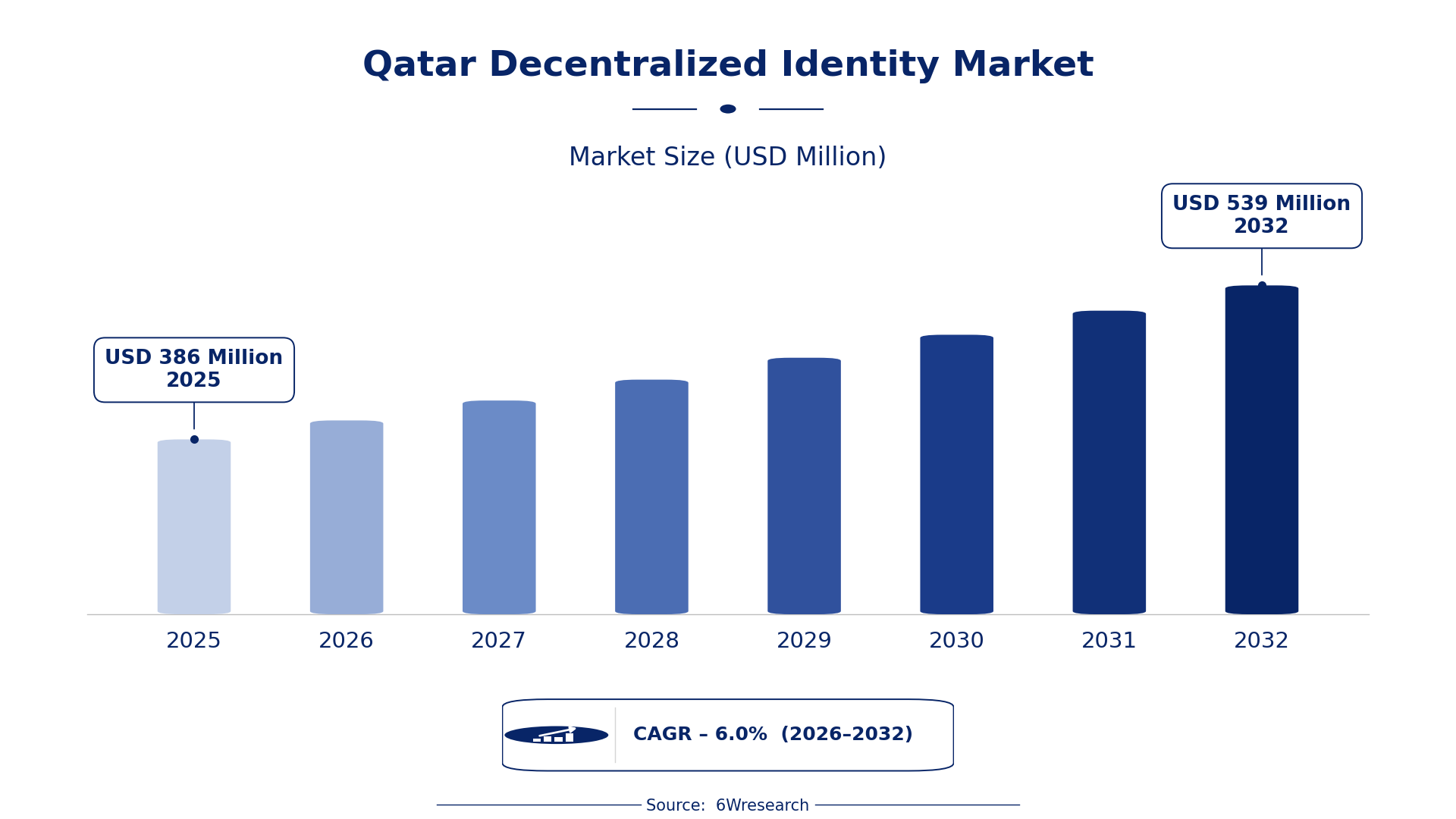
The Qatar Decentralized Identity Market was estimated at USD 386 Million in 2025 and is projected to reach USD 539 Million by 2032, growing at a CAGR of 6.0% from 2026 to 2032.
Qatar Decentralized Identity Market Synopsis
The recent surge in interest around decentralized identity solutions in Qatar underscores a significant shift in how organizations manage identity and authentication. As digital transformation becomes increasingly prominent, businesses and government entities alike are recognizing the potential of blockchain technologies to enhance privacy and security.
In the coming years, the Qatar Decentralized Identity Market is expected to evolve from early adopters to widespread implementation across various sectors. Growing concerns around data breaches, coupled with a demand for user-centric identity management, create a promising environment for innovative solutions to thrive.
Qatar Decentralized Identity Market Year-wise Growth Rate and Key Drivers
This graph illustrates the annual growth rates of the Qatar Decentralized Identity Market from 2021 to 2032, highlighting a steady upward trajectory and projected expansion over the forecast period.
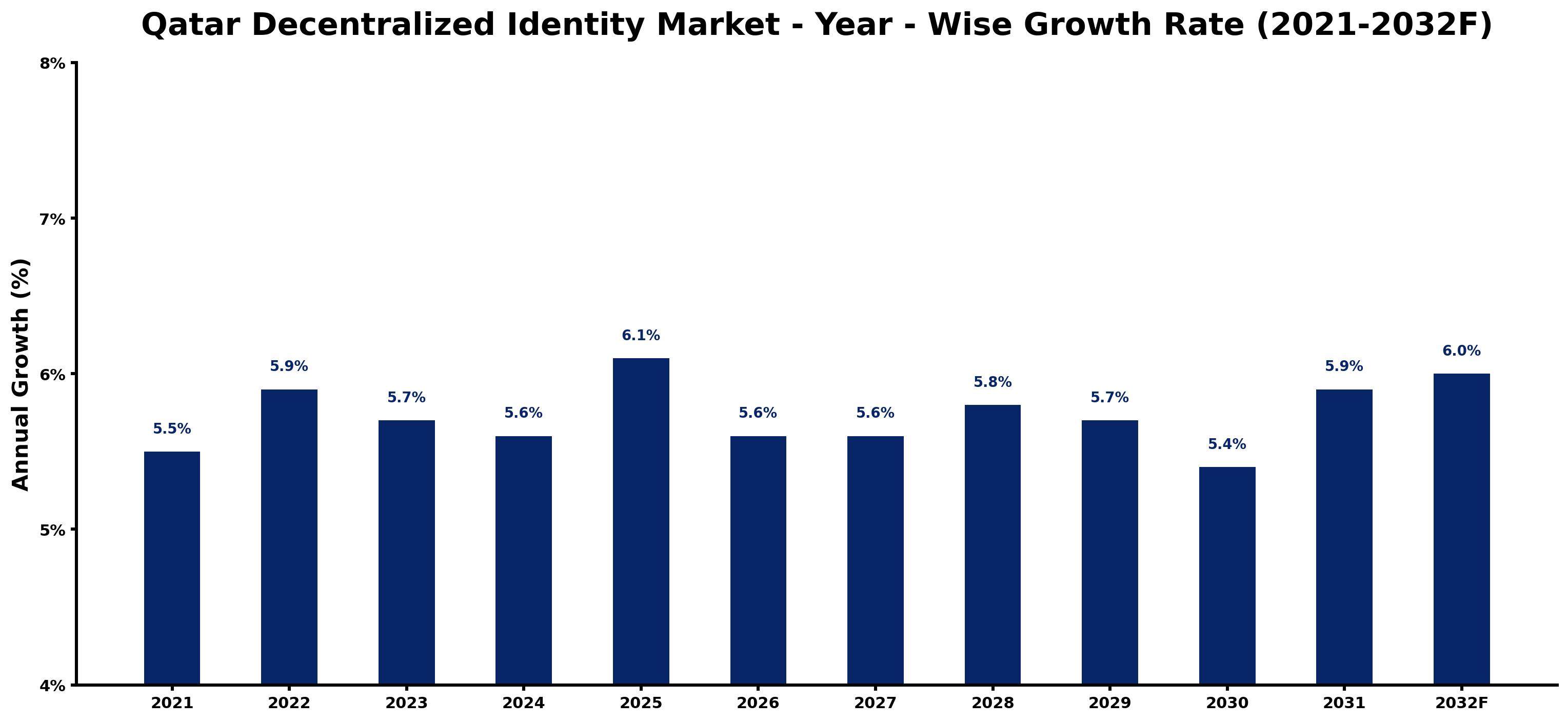
The table below presents the year‑wise growth rates along with the key drivers influencing the market
| Year | Growth Rate | Major Drivers |
| 2021 | 5.5% | Qatar's National Vision 2030 promotes digital identity initiatives. |
| 2022 | 5.9% | Increase in government KYC regulations enhancing identity security. |
| 2023 | 5.7% | Adoption of blockchain technology by Qatari enterprises accelerates. |
| 2024 | 5.6% | Rising digital transformation trends among local businesses. |
| 2025 | 6.1% | Launch of Qatar's e-government initiatives drives identity solutions. |
| 2026 | 5.6% | Increased awareness of cybersecurity threats among citizens. |
| 2027 | 5.6% | Partnerships with international tech firms boost local innovation. |
| 2028 | 5.8% | Youth demographic's growing need for online identity verification. |
| 2029 | 5.7% | Local tech incubators supporting decentralized identity startups. |
| 2030 | 5.4% | Regulatory support for digital identity infrastructure development. |
| 2031 | 5.9% | Qatar’s expanding fintech landscape requires robust identification. |
| 2032 | 6.0% | Enhanced public-private collaborations advancing identity management solutions. |
Note: Market size estimations and growth projections presented in this report are based on 6Wresearch's proprietary forecasting methodology, utilizing the latest available industry data, government publications, and primary research inputs.
Qatar Decentralized Identity Market Key Takeaways
Below are some of the specific key takeaways from the market, including:
- Blockchain technology is reshaping identity management by offering users control over their personal data.
- Government initiatives are increasingly focusing on digital identity as a cornerstone of national digital transformation efforts.
- Security concerns and the rising frequency of data breaches are driving the adoption of decentralized identity solutions.
- Interoperability and standardization remain critical challenges that need to be addressed for broader market acceptance.
- Healthcare, finance, and government sectors are leading the charge in implementing decentralized identity strategies.
Evaluation of Restraints in Qatar Decentralized Identity Market
The primary restraints hindering growth in the Qatar Decentralized Identity Market include the challenges of establishing standardized frameworks that facilitate interoperability among various systems. As decentralized solutions emerge, many organizations remain tied to traditional models, creating friction in the transition. Resistance from stakeholders accustomed to centralized systems may further complicate adoption efforts. Additionally, the need for comprehensive user education poses a significant hurdle in overcoming skepticism towards these new identity management methods.
Qatar Decentralized Identity Market Trends
Key trends shaping the Qatar Decentralized Identity Market include an emphasis on user privacy and data protection, aligning with global standards for digital identity management. As organizations pursue integration with existing systems, there is a marked shift towards adopting decentralized protocols that enhance user security. Collaborative efforts among tech companies and governmental bodies are also trending, aimed at creating a unified identity verification system to streamline user experiences across multiple platforms.
Qatar Decentralized Identity Market Opportunities
Considerable growth opportunities lie in sectors such as finance and healthcare, where secure identity verification can enhance service delivery and regulatory compliance. The demand for personalized user experiences is opening new avenues for innovative identity solutions. Public-private partnerships are expected to play a crucial role in advancing these technologies, further catalyzing adoption across various industries.
Government Initiatives in the Qatar Decentralized Identity Market
The government of Qatar is actively shaping the decentralized identity framework through strategic initiatives aimed at enhancing national digital infrastructure. Public policy focuses on integrating digital identity into various governmental services, highlighting its importance in improving efficiency and security. This proactive regulatory posture indicates a commitment to driving innovation and adoption in the decentralized identity sector.
- A national digital infrastructure upgrade programme now in its rollout phase aims to improve digital identity systems across government services.
- Current initiatives are underway to establish regulatory frameworks that promote the interoperability of decentralized identity solutions.
- Planned public-private initiatives expected to commence in 2026 will foster collaboration between the government and technology providers.
- Recently completed initiatives include pilot projects that assess the integration of decentralized identity into public service platforms.
- Future policies are anticipated to mandate enhanced data protection standards across sectors utilizing decentralized identity technologies.
Future Insights of the Qatar Decentralized Identity Market
Looking ahead to 2026-2032, the Qatar Decentralized Identity Market is expected to mature significantly as technological advancements and regulatory frameworks catch up with market demands. The continued push for digital transformation will likely position decentralized identity as a foundational component of various services. As user expectations evolve, organizations will increasingly turn to decentralized solutions to offer enhanced security and privacy, ensuring that the market remains dynamic and competitive.
Qatar Decentralized Identity Market Latest Developments
Over the past year, the Qatar Decentralized Identity Market has witnessed a flurry of activity, with companies and government bodies exploring innovative ways to implement decentralized identity solutions. The focus has been on integrating these systems into existing frameworks, highlighting a collaborative spirit within the industry.
- A pilot program launched in late 2025 successfully tested decentralized identity solutions in public service applications, demonstrating promising results.
- Ongoing collaborations between governmental agencies and technology providers are aimed at developing standards that enhance interoperability.
- A major technology vendor is set to unveil a new platform designed to streamline identity verification processes by mid-2026.
- Recent workshops held in early 2025 gathered industry leaders to discuss the future of decentralized identity in Qatar, fostering a collaborative environment.
- Upcoming initiatives planned for late 2026 will focus on expanding decentralized identity frameworks into the education sector.
Qatar Decentralized Identity Market - Key Attractiveness of the Report
- 10 Years of Market Numbers
- Historical Data Starting from 2022 to 2025
- Base Year: 2025
- Forecast Data until 2032
- Key Performance Indicators Impacting the Market
- Major Upcoming Developments and Projects
Key Highlights of the Report:
- Qatar Decentralized Identity Market Outlook
- Market Size of Qatar Decentralized Identity Market, 2025
- Forecast of Qatar Decentralized Identity Market, 2032
- Historical Data and Forecast of Qatar Decentralized Identity Revenues & Volume for the Period 2022-2032F
- Qatar Decentralized Identity Market Trend Evolution
- Qatar Decentralized Identity Market Drivers and Challenges
- Qatar Decentralized Identity Price Trends
- Qatar Decentralized Identity Porter's Five Forces
- Qatar Decentralized Identity Industry Life Cycle
- Historical Data and Forecast of Qatar Decentralized Identity Market Revenues & Volume By Vertical for the Period 2022-2032F
- Historical Data and Forecast of Qatar Decentralized Identity Market Revenues & Volume By BFSI for the Period 2022-2032F
- Historical Data and Forecast of Qatar Decentralized Identity Market Revenues & Volume By Government for the Period 2022-2032F
- Historical Data and Forecast of Qatar Decentralized Identity Market Revenues & Volume By Healthcare and Life Sciences for the Period 2022-2032F
- Historical Data and Forecast of Qatar Decentralized Identity Market Revenues & Volume By Retail and eCommerce for the Period 2022-2032F
- Historical Data and Forecast of Qatar Decentralized Identity Market Revenues & Volume By Telecom and IT for the Period 2022-2032F
- Historical Data and Forecast of Qatar Decentralized Identity Market Revenues & Volume By Transport and Logistics for the Period 2022-2032F
- Historical Data and Forecast of Qatar Decentralized Identity Market Revenues & Volume By Real Estate for the Period 2022-2032F
- Historical Data and Forecast of Qatar BFSI Decentralized Identity Market Revenues & Volume By Others for the Period 2022-2032F
- Historical Data and Forecast of Qatar Decentralized Identity Market Revenues & Volume By Identity Type for the Period 2022-2032F
- Historical Data and Forecast of Qatar Decentralized Identity Market Revenues & Volume By Non- biometrics for the Period 2022-2032F
- Historical Data and Forecast of Qatar Decentralized Identity Market Revenues & Volume By Biometrics for the Period 2022-2032F
- Historical Data and Forecast of Qatar Decentralized Identity Market Revenues & Volume By End User for the Period 2022-2032F
- Historical Data and Forecast of Qatar Decentralized Identity Market Revenues & Volume By Enterprises for the Period 2022-2032F
- Historical Data and Forecast of Qatar Decentralized Identity Market Revenues & Volume By Individual for the Period 2022-2032F
- Historical Data and Forecast of Qatar Decentralized Identity Market Revenues & Volume By Organization Size for the Period 2022-2032F
- Historical Data and Forecast of Qatar Decentralized Identity Market Revenues & Volume By Large Enterprises for the Period 2022-2032F
- Historical Data and Forecast of Qatar Decentralized Identity Market Revenues & Volume By SMEs for the Period 2022-2032F
- Qatar Decentralized Identity Import Export Trade Statistics
- Market Opportunity Assessment By Vertical
- Market Opportunity Assessment By Identity Type
- Market Opportunity Assessment By End User
- Market Opportunity Assessment By Organization Size
- Qatar Decentralized Identity Top Companies Market Share
- Qatar Decentralized Identity Competitive Benchmarking By Technical and Operational Parameters
- Qatar Decentralized Identity Company Profiles
- Qatar Decentralized Identity Key Strategic Recommendations






































