Qatar Network as a Service Market Size & Growth Rate (2026-2032)
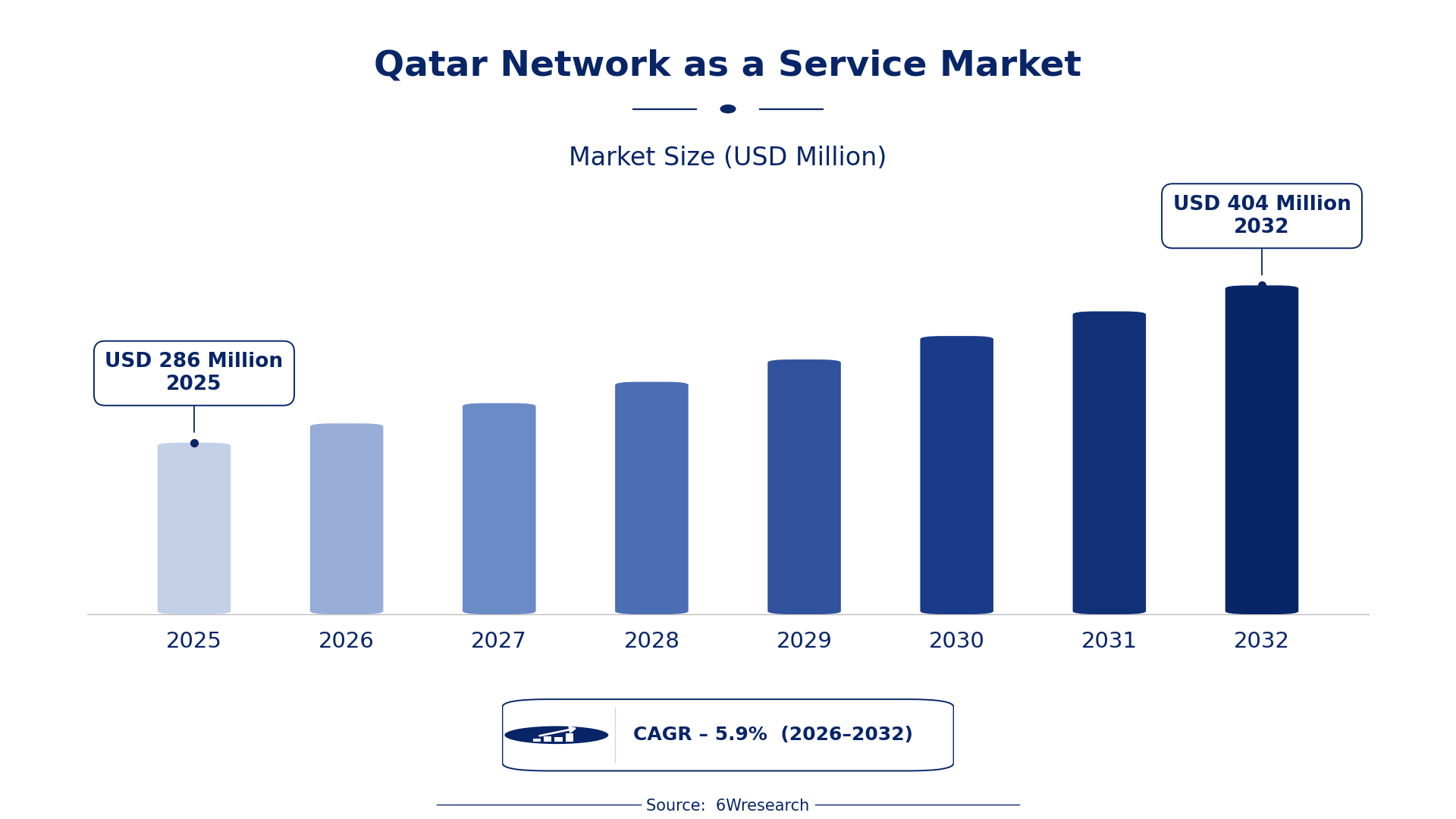
The Qatar Network as a Service Market was estimated at USD 286 Million in 2025 and is projected to reach USD 404 Million by 2032, growing at a CAGR of 5.9% from 2026 to 2032.
Qatar Network as a Service Market Synopsis
In Qatar, businesses are increasingly looking towards Network as a Service (NaaS) to enhance their operational efficiency. The shift to cloud-based networking solutions allows organizations to manage their networking needs flexibly, reflecting a growing demand for agility in operations.
The rapid adoption of NaaS is particularly evident in sectors like finance and education, where organizations require robust connectivity to support remote operations. This trend signifies a departure from traditional network models, underscoring the necessity for scalable and cost-effective solutions.
Qatar Network as a Service Market Year-wise Growth Rate and Key Drivers
This graph illustrates the annual growth rates of the Qatar Network as a Service Market from 2021 to 2032, highlighting a steady upward trajectory and projected expansion over the forecast period.
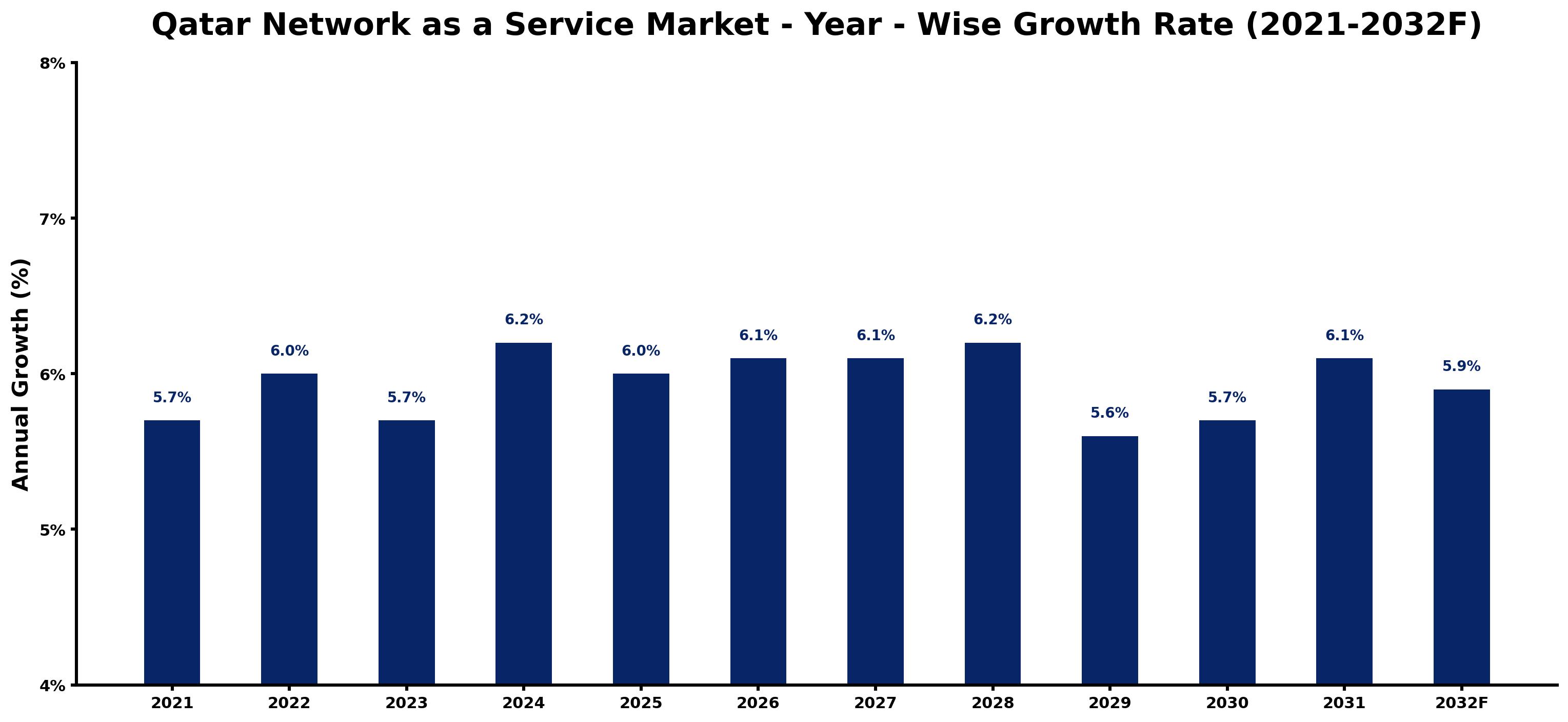
The table below presents the year‑wise growth rates along with the key drivers influencing the market
| Year | Growth Rate | Major Drivers |
| 2021 | 5.7% | Qatar National Vision 2030 accelerating digital transformation initiatives. |
| 2022 | 6.0% | Increased investment in sports infrastructure for global events. |
| 2023 | 5.7% | Emerging tech startups driving innovation in network solutions. |
| 2024 | 6.2% | Government encouraging cloud service adoption for businesses. |
| 2025 | 6.0% | Qatar's population growth fueling demand for digital services. |
| 2026 | 6.1% | Strategic partnerships enhancing local network service offerings. |
| 2027 | 6.1% | Increased focus on cybersecurity boosting network infrastructure needs. |
| 2028 | 6.2% | Doha hosting major international events increasing connectivity requirements. |
| 2029 | 5.6% | Rising e-commerce sector elevating demand for agile networks. |
| 2030 | 5.7% | Growing education initiatives promoting tech-savvy workforce. |
| 2031 | 6.1% | Public sector digitalization driving demand for network services. |
| 2032 | 5.9% | Local enterprises seeking scalable network solutions for growth. |
Note: Market size estimations and growth projections presented in this report are based on 6Wresearch's proprietary forecasting methodology, utilizing the latest available industry data, government publications, and primary research inputs.
Qatar Network as a Service Market Key Takeaways
Below are some of the specific key takeaways from the market, including:
- Increased adoption of NaaS is driven by businesses' need for flexible and scalable networking solutions.
- The market is significantly influenced by the rise in remote work and cloud-based service reliance.
- Cost efficiency and simplified network management are primary factors for the shift towards NaaS.
- The integration of NaaS with traditional infrastructures remains a challenge for organizations.
- Regulatory initiatives are shaping the NaaS environment, pushing for standards that enhance security and performance.
Evaluation of Restraints in Qatar Network as a Service Market
The Qatar Network as a Service market faces several constraints that hinder its full potential. Traditional networking models still dominate many organizations, creating resistance to adopting disruptive NaaS solutions. Integration challenges often arise when merging cloud-based services with existing infrastructure, leading to concerns about compatibility and performance. Additionally, issues surrounding data privacy and compliance remain significant barriers, as businesses must navigate the complexities of regulatory frameworks while ensuring robust security measures are in place.
Qatar Network as a Service Market Trends
The ongoing trend toward cloud adoption continues to reshape the networking sector in Qatar. Organizations are increasingly implementing Software-Defined Wide Area Networks (SD-WAN) to enhance connectivity and optimize performance. on top of that, there is a growing focus on automation in network management, which allows for real-time adjustments to network resources, fostering greater efficiency.
The demand for enhanced security protocols is also on the rise, as organizations seek to protect sensitive data against cyber threats. NaaS providers are responding by integrating advanced security features into their offerings, making them more appealing to businesses concerned about data integrity and compliance.
Qatar Network as a Service Market Opportunities
Several opportunities exist within the Qatar NaaS market that could drive growth in the coming years. The increasing digitization of various sectors presents a fertile ground for NaaS solutions, particularly in industries like healthcare and education, where reliable connectivity is essential. Investment in smart city initiatives and IoT integration further amplifies the need for scalable networking solutions.
Partnerships between local businesses and technology providers are likely to accelerate NaaS adoption, as collaboration can facilitate tailored solutions that meet specific market needs. As businesses increasingly recognize the strategic advantages of flexible network solutions, the potential for NaaS to become a core element of IT infrastructure is substantial.
Government Initiatives in the Qatar Network as a Service Market
The Qatari government plays a crucial role in shaping the Network as a Service market through various initiatives aimed at enhancing digital infrastructure and regulatory frameworks. With a focus on fostering innovation and supporting businesses in their digital transformation efforts, public policy is actively promoting the adoption of NaaS solutions across the country.
- A national digital infrastructure upgrade programme launched in 2025 aims to enhance connectivity and support NaaS deployment across multiple sectors.
- Currently, there is an ongoing initiative to develop a regulatory framework that mandates transparency and compliance for network service providers.
- Upcoming plans include a public-private partnership expected to boost telecom infrastructure access by 2028, encouraging NaaS adoption among smaller enterprises.
- Recent government workshops have focused on educating businesses about the benefits and implementation of NaaS solutions, fostering wider awareness.
- A technology grant programme initiated in early 2026 aims to provide funding for small and medium enterprises to adopt cloud-based networking solutions.
Future Insights of the Qatar Network as a Service Market
Looking ahead to 2026-2032, the Qatar Network as a Service market is set for substantial growth, driven by increasing demand for flexible network solutions. As more businesses shift towards digital transformation, NaaS is likely to become an integral part of their IT strategy, facilitating improved connectivity and operational efficiency. The integration of advanced technologies such as AI and machine learning into NaaS offerings will further enhance service delivery and performance.
The government's ongoing support for digital initiatives will provide a conducive environment for innovation, making Qatar an attractive destination for NaaS providers. As challenges around security and compliance are addressed, the market is anticipated to flourish, presenting ample opportunities for investment and growth.
Qatar Network as a Service Market Latest Developments
In the past year, the Qatar Network as a Service market has witnessed significant advancements, with numerous initiatives aimed at enhancing network capabilities. Organizations are increasingly prioritizing cloud solutions, leading to a surge in demand for managed services that cater to remote work requirements.
- A major technology vendor launched a new NaaS solution in Q1 2025, focusing on enhancing security features and optimizing network performance for businesses.
- In mid-2025, a regional operator announced an ongoing collaboration with local startups to develop customized NaaS solutions tailored to specific industry needs.
- Expected in late 2026, a rollout of advanced SD-WAN capabilities is set to provide businesses with improved connectivity options and cost savings.
- A recent pilot programme initiated in early 2025 tested new cloud networking technologies, demonstrating significant improvements in speed and reliability.
- By the end of 2025, an initiative aimed at increasing awareness about NaaS benefits through workshops and training sessions was successfully completed.
Qatar Network as a Service Market - Key Attractiveness of the Report
- 10 Years of Market Numbers
- Historical Data Starting from 2022 to 2025
- Base Year: 2025
- Forecast Data until 2032
- Key Performance Indicators Impacting the Market
- Major Upcoming Developments and Projects
Key Highlights of the Report:
- Qatar Network as a Service Market Outlook
- Market Size of Qatar Network as a Service Market, 2025
- Forecast of Qatar Network as a Service Market, 2032
- Historical Data and Forecast of Qatar Network as a Service Revenues & Volume for the Period 2022-2032F
- Qatar Network as a Service Market Trend Evolution
- Qatar Network as a Service Market Drivers and Challenges
- Qatar Network as a Service Price Trends
- Qatar Network as a Service Porter's Five Forces
- Qatar Network as a Service Industry Life Cycle
- Historical Data and Forecast of Qatar Network as a Service Market Revenues & Volume By Type for the Period 2022-2032F
- Historical Data and Forecast of Qatar Network as a Service Market Revenues & Volume By Local Area Network and Wireless Local Area Network for the Period 2022-2032F
- Historical Data and Forecast of Qatar Network as a Service Market Revenues & Volume By Wire Area Network for the Period 2022-2032F
- Historical Data and Forecast of Qatar Network as a Service Market Revenues & Volume By Communication and Collaboration for the Period 2022-2032F
- Historical Data and Forecast of Qatar Network as a Service Market Revenues & Volume By Network Security for the Period 2022-2032F
- Historical Data and Forecast of Qatar Network as a Service Market Revenues & Volume By End User for the Period 2022-2032F
- Historical Data and Forecast of Qatar Network as a Service Market Revenues & Volume By Banking, Financial, Services, and Insurance for the Period 2022-2032F
- Historical Data and Forecast of Qatar Network as a Service Market Revenues & Volume By Manufacturing for the Period 2022-2032F
- Historical Data and Forecast of Qatar Network as a Service Market Revenues & Volume By Retail and eCommerce for the Period 2022-2032F
- Historical Data and Forecast of Qatar Network as a Service Market Revenues & Volume By Software and Technology for the Period 2022-2032F
- Historical Data and Forecast of Qatar Network as a Service Market Revenues & Volume By Media and Entertainment for the Period 2022-2032F
- Historical Data and Forecast of Qatar Network as a Service Market Revenues & Volume By Healthcare for the Period 2022-2032F
- Historical Data and Forecast of Qatar Network as a Service Market Revenues & Volume By Education for the Period 2022-2032F
- Historical Data and Forecast of Qatar Network as a Service Market Revenues & Volume By Government for the Period 2022-2032F
- Historical Data and Forecast of Qatar Network as a Service Market Revenues & Volume By Organization Size for the Period 2022-2032F
- Historical Data and Forecast of Qatar Network as a Service Market Revenues & Volume By Large Enterprises for the Period 2022-2032F
- Historical Data and Forecast of Qatar Network as a Service Market Revenues & Volume By SMEs for the Period 2022-2032F
- Historical Data and Forecast of Qatar Network as a Service Market Revenues & Volume By Application for the Period 2022-2032F
- Historical Data and Forecast of Qatar Network as a Service Market Revenues & Volume By UCaaS/Video Conferencing for the Period 2022-2032F
- Historical Data and Forecast of Qatar Network as a Service Market Revenues & Volume By Virtual Private Network for the Period 2022-2032F
- Historical Data and Forecast of Qatar Network as a Service Market Revenues & Volume By Cloud and SaaS Connectivity for the Period 2022-2032F
- Historical Data and Forecast of Qatar Network as a Service Market Revenues & Volume By Bandwidth on Demand for the Period 2022-2032F
- Historical Data and Forecast of Qatar Network as a Service Market Revenues & Volume By Multi-Branch Connectivity for the Period 2022-2032F
- Historical Data and Forecast of Qatar Network as a Service Market Revenues & Volume By WAN Optimization for the Period 2022-2032F
- Historical Data and Forecast of Qatar Network as a Service Market Revenues & Volume By Secure Web Gateway for the Period 2022-2032F
- Qatar Network as a Service Import Export Trade Statistics
- Market Opportunity Assessment By Type
- Market Opportunity Assessment By End User
- Market Opportunity Assessment By Organization Size
- Market Opportunity Assessment By Application
- Qatar Network as a Service Top Companies Market Share
- Qatar Network as a Service Competitive Benchmarking By Technical and Operational Parameters
- Qatar Network as a Service Company Profiles
- Qatar Network as a Service Key Strategic Recommendations






































