Qatar Non-Fungible Tokens Market Size & Growth Rate (2026-2032)
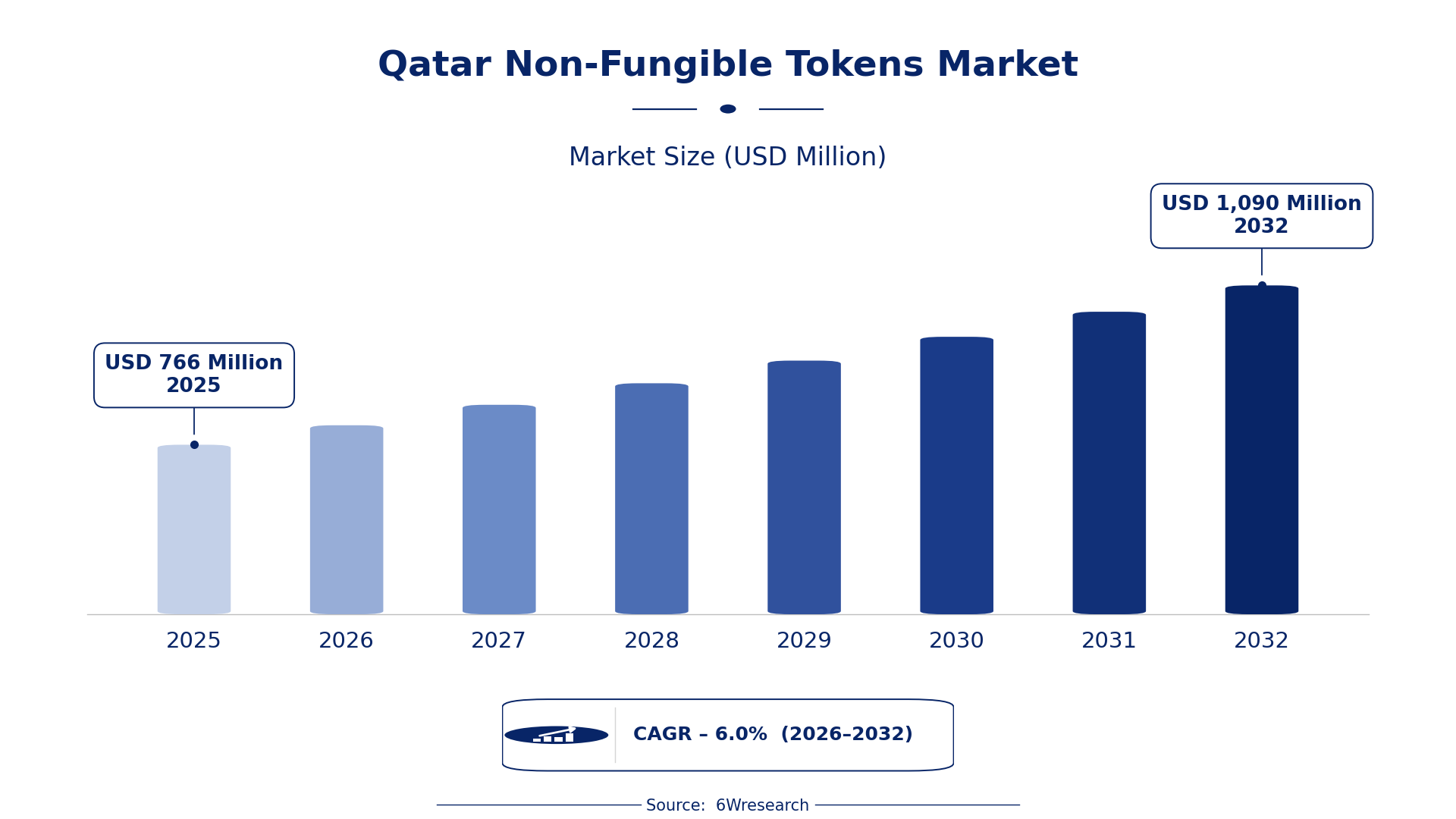
The Qatar Non-Fungible Tokens Market was estimated at USD 766 Million in 2025 and is projected to reach USD 1090 Million by 2032, growing at a CAGR of 6.0% from 2026 to 2032.
Qatar Non-Fungible Tokens Market Synopsis
The rise of Non-Fungible Tokens (NFTs) in Qatar has sparked a remarkable surge in interest among local artists and collectors, driven by a distinctive cultural landscape. This unique blend of heritage and modern technology creates fertile ground for NFT adoption, as creators seek new avenues to monetize their work while maintaining authenticity and ownership.
Investment in NFTs is not merely an economic trend; it reflects a broader cultural shift toward digital asset ownership. Qatari investors are increasingly viewing NFTs as a legitimate and exciting asset class, fostering innovation within the local creative sector while also appealing to global buyers.
Qatar Non-Fungible Tokens Market Year-wise Growth Rate and Key Drivers
This graph illustrates the annual growth rates of the Qatar Non-Fungible Tokens Market from 2021 to 2032, highlighting a steady upward trajectory and projected expansion over the forecast period.
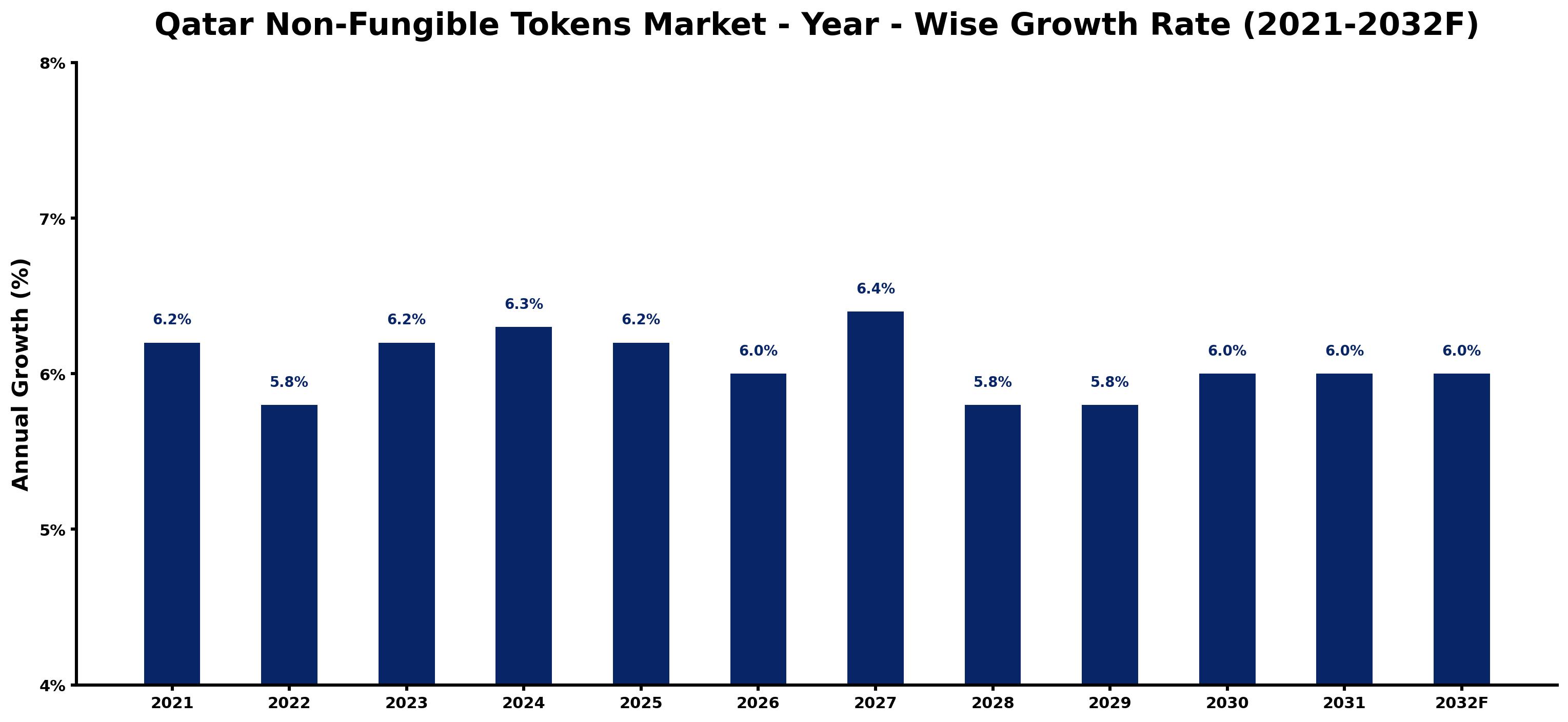
The table below presents the year‑wise growth rates along with the key drivers influencing the market
| Year | Growth Rate | Major Drivers |
| 2021 | 6.2% | Qatar embracing digital art through Qatar Museums initiatives. |
| 2022 | 5.8% | Growing interest in local NFT art among youth demographics. |
| 2023 | 6.2% | Qatar's ambitious 2030 National Vision promoting digital innovation. |
| 2024 | 6.3% | Increased participation in global NFT marketplaces by Qatari artists. |
| 2025 | 6.2% | Local startups leveraging NFTs for cultural heritage preservation. |
| 2026 | 6.0% | Government support for blockchain technology in creative industries. |
| 2027 | 6.4% | Emergence of NFT galleries enhancing local digital art visibility. |
| 2028 | 5.8% | Educational initiatives promoting blockchain and digital asset literacy. |
| 2029 | 5.8% | Partnerships with international celebrities to promote Qatari NFTs. |
| 2030 | 6.0% | Increased digital asset regulations encouraging secure NFT transactions. |
| 2031 | 6.0% | Growing collaborations between tech firms and local artists. |
| 2032 | 6.0% | Qatar hosting international NFT exhibitions attracting global interest. |
Note: Market size estimations and growth projections presented in this report are based on 6Wresearch's proprietary forecasting methodology, utilizing the latest available industry data, government publications, and primary research inputs.
Qatar Non-Fungible Tokens Market Key Takeaways
Below are some of the specific key takeaways from the market, including:
- Growing interest in blockchain technology is fostering NFT adoption across various sectors in Qatar.
- The local artistic community is actively engaging with NFTs to showcase and monetize digital art.
- Investors are recognizing NFTs as a new asset class, leading to increased market activity.
- Challenges around provenance and ownership remain critical as the market matures.
- Regulatory developments will play a key role in shaping the future of NFTs in the region.
Evaluation of Restraints in Qatar Non-Fungible Tokens Market
The burgeoning NFT market in Qatar is not without its constraints. One of the pressing issues is the challenge of establishing a transparent infrastructure that ensures the authenticity of digital assets. As the market matures, stakeholders must grapple with the implications of ownership, especially in terms of rights and provenance. Furthermore, addressing environmental concerns linked to blockchain technology is becoming increasingly urgent as awareness grows. Balancing innovation with inclusivity and accessibility will also be essential for fostering a more equitable NFT ecosystem within Qatar's unique cultural context.
Qatar Non-Fungible Tokens Market Trends
The Qatar Non-Fungible Tokens market is witnessing several notable trends that are shaping its trajectory. First, a growing focus on digital art has led to increased collaborations between artists and technology developers, creating unique NFT offerings. Additionally, gamification of NFTs, particularly in gaming and collectibles, is capturing the attention of younger demographics. The integration of NFTs into broader marketing strategies by brands is also noteworthy, reflecting a shift towards interactive consumer engagement. These trends signal a vibrant and multifaceted market that continues to evolve rapidly.
Qatar Non-Fungible Tokens Market Opportunities
The opportunities within the Qatar Non-Fungible Tokens market are vast and varied. Artists can explore new revenue streams by creating digital collectibles and limited-edition artworks. The gaming industry presents another significant avenue, with NFTs providing unique in-game assets that enhance user engagement. Additionally, as global interest in NFTs grows, Qatari companies could capitalize on this momentum by offering localized platforms and services tailored to the region's cultural nuances. This market holds considerable potential for investors and creators alike.
Government Initiatives in the Qatar Non-Fungible Tokens Market
Government policy in Qatar is beginning to actively influence the development of the Non-Fungible Tokens market. Authorities are focused on creating a regulatory framework that encourages innovation while addressing concerns related to digital assets. The proactive approach aims to position Qatar as a regional hub for blockchain technology and NFT trading, fostering an environment that supports both local artists and global collectors.
- A recently completed initiative involved the establishment of a national blockchain strategy to enhance digital asset security and transparency.
- A current program is underway to develop guidelines for NFT transactions, ensuring compliance with both local laws and international standards.
- Plans for an educational initiative targeting artists and creators aim to expand knowledge of NFT technologies and their benefits by 2026.
- An upcoming public-private partnership is expected to facilitate the creation of an NFT marketplace tailored to regional cultural expressions, anticipated to launch in late 2025.
Future Insights of the Qatar Non-Fungible Tokens Market
Looking ahead, the Qatar Non-Fungible Tokens market is set to experience significant growth and diversification from 2026 to 2032. As technological advancements continue to reshape the digital asset landscape, stakeholders will need to adapt swiftly to maintain competitive advantage. The alignment between government initiatives and market needs will play a crucial role in driving adoption and fostering innovation. Artists and investors alike will likely seek deeper integrations of NFTs within their respective domains, suggesting a dynamic and engaging market ahead.
Qatar Non-Fungible Tokens Market Latest Developments
Recent activity in the Qatar Non-Fungible Tokens market highlights an increasingly vibrant ecosystem fueled by innovation and collaboration. Over the past year, local stakeholders have been pushing boundaries to explore the full potential of NFTs, leading to notable advancements and partnerships.
- A major technology vendor announced a new platform dedicated to supporting artists in minting and selling NFTs, launched in early 2023 and already gaining traction among creators.
- An ongoing collaboration between Qatari universities and NFT platforms aims to integrate blockchain education into academic curricula, enhancing digital literacy.
- Recently, a leading regional operator introduced a service that provides digital asset management solutions, currently in the rollout phase.
- Another initiative is expected to launch a marketplace for NFTs focused on traditional Qatari art forms, planned for mid-2024.
Qatar Non-Fungible Tokens Market - Key Attractiveness of the Report
- 10 Years of Market Numbers
- Historical Data Starting from 2022 to 2025
- Base Year: 2025
- Forecast Data until 2032
- Key Performance Indicators Impacting the Market
- Major Upcoming Developments and Projects
Key Highlights of the Report:
- Qatar Non-Fungible Tokens Market Outlook
- Market Size of Qatar Non-Fungible Tokens Market, 2025
- Forecast of Qatar Non-Fungible Tokens Market, 2032
- Historical Data and Forecast of Qatar Non-Fungible Tokens Revenues & Volume for the Period 2022-2032F
- Qatar Non-Fungible Tokens Market Trend Evolution
- Qatar Non-Fungible Tokens Market Drivers and Challenges
- Qatar Non-Fungible Tokens Price Trends
- Qatar Non-Fungible Tokens Porter's Five Forces
- Qatar Non-Fungible Tokens Industry Life Cycle
- Historical Data and Forecast of Qatar Non-Fungible Tokens Market Revenues & Volume By Offering for the Period 2022-2032F
- Historical Data and Forecast of Qatar Non-Fungible Tokens Market Revenues & Volume By Business Strategy Formulation for the Period 2022-2032F
- Historical Data and Forecast of Qatar Non-Fungible Tokens Market Revenues & Volume By NFT Creation for the Period 2022-2032F
- Historical Data and Forecast of Qatar Non-Fungible Tokens Market Revenues & Volume By Management for the Period 2022-2032F
- Historical Data and Forecast of Qatar Non-Fungible Tokens Market Revenues & Volume By NFT Platform ?? Marketplace for the Period 2022-2032F
- Historical Data and Forecast of Qatar Non-Fungible Tokens Market Revenues & Volume By End-user for the Period 2022-2032F
- Historical Data and Forecast of Qatar Non-Fungible Tokens Market Revenues & Volume By Media for the Period 2022-2032F
- Historical Data and Forecast of Qatar Non-Fungible Tokens Market Revenues & Volume By Entertainment for the Period 2022-2032F
- Historical Data and Forecast of Qatar Non-Fungible Tokens Market Revenues & Volume By Gaming for the Period 2022-2032F
- Qatar Non-Fungible Tokens Import Export Trade Statistics
- Market Opportunity Assessment By Offering
- Market Opportunity Assessment By End-user
- Qatar Non-Fungible Tokens Top Companies Market Share
- Qatar Non-Fungible Tokens Competitive Benchmarking By Technical and Operational Parameters
- Qatar Non-Fungible Tokens Company Profiles
- Qatar Non-Fungible Tokens Key Strategic Recommendations






































