Qatar Office Chair Market Size Growth Rate
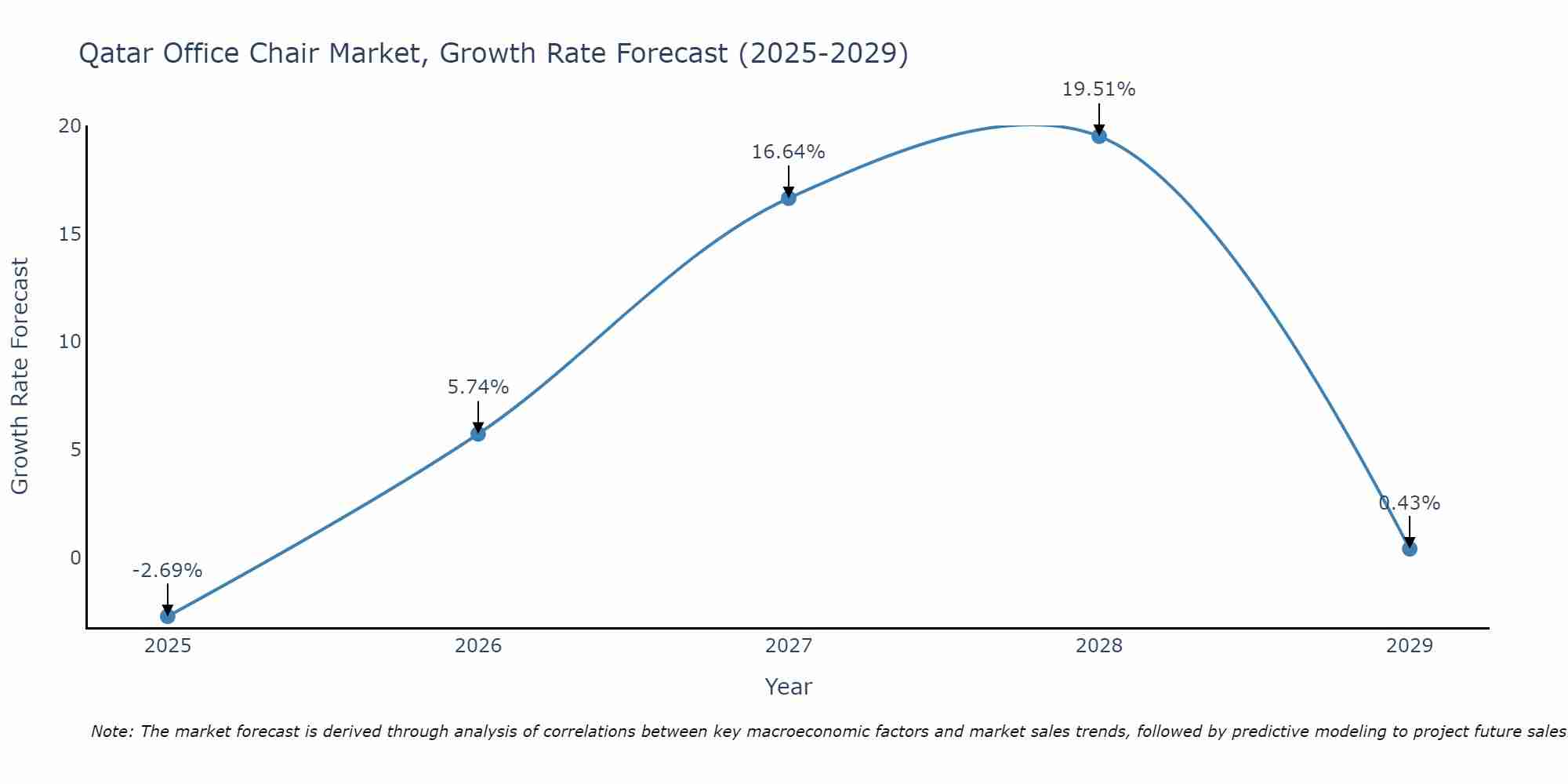
The Qatar Office Chair Market is projected to witness mixed growth rate patterns during 2025 to 2029. Growth accelerates to 19.51% in 2028, following an initial rate of -2.69%, before easing to 0.43% at the end of the period.
Qatar Office Chair Market Synopsis
The Qatar office chair market is poised for growth in the coming years. As the country continues to develop and diversify its economy, there is a rising demand for office spaces and modern ergonomic furniture. With a focus on comfort, functionality, and aesthetics, office chairs are becoming essential elements in creating productive work environments. The market is likely to see increased competition among manufacturers and suppliers, leading to innovative designs and features to cater to the evolving needs of businesses in Qatar.
Drivers of the Market
The office chair market in Qatar is witnessing robust growth, thanks to several key drivers. One of the primary drivers is the expansion of the corporate sector in the country. Qatar`s efforts to diversify its economy have led to an increase in the number of businesses and offices, which, in turn, has driven the demand for office furniture, including chairs. Additionally, the emphasis on employee comfort and well-being is fueling the demand for ergonomic office chairs. As organizations prioritize employee productivity and health, they are willing to invest in high-quality office chairs that offer ergonomic support. Furthermore, the country`s commitment to hosting global events and conferences has boosted the demand for office furniture, particularly in the hospitality and event management sectors. As a result, the Qatar office chair market is expected to thrive in the coming years.
Challenges of the Market
The office chair market in Qatar may face challenges related to the adoption of remote working trends, which can impact the demand for office furniture. Competition from international office furniture brands and the need to provide ergonomic and comfortable designs can pose challenges for local manufacturers. Additionally, the market may need to address sustainability concerns by using eco-friendly materials and manufacturing processes.
COVID-19 Impact on the Market
The office chair market in Qatar has experienced significant fluctuations due to the COVID-19 pandemic. In the initial stages of the pandemic, the market faced challenges as many offices and commercial spaces were forced to shut down or reduce their operations, leading to a decreased demand for office furniture, including chairs. Companies also delayed or canceled office renovations and expansions, impacting the market negatively. However, with the gradual reopening of businesses and the adoption of remote and hybrid work models, there has been a resurgence in demand for ergonomic and comfortable office chairs to support home office setups. The market has also seen a shift towards sustainable and eco-friendly office furniture as environmental concerns continue to rise. Overall, while the pandemic initially posed challenges, the Qatar office chair market is expected to rebound as businesses adapt to the new work environment.
Key Players in the Market
The office chair market in Qatar is witnessing significant growth due to the expansion of the corporate sector and the emergence of modern office spaces. Leading players such as Haworth, Steelcase, and Knoll are prominent in offering ergonomic and aesthetically pleasing office chair solutions tailored to the specific needs of businesses in Qatar. Their emphasis on comfort, functionality, and sustainability has positioned them as key contributors to the evolution of office furniture in the country.
Key Highlights of the Report:
- Qatar Office Chair Market Outlook
- Market Size of Qatar Office Chair Market, 2024
- Forecast of Qatar Office Chair Market, 2031
- Historical Data and Forecast of Qatar Office Chair Revenues & Volume for the Period 2021-2031
- Qatar Office Chair Market Trend Evolution
- Qatar Office Chair Market Drivers and Challenges
- Qatar Office Chair Price Trends
- Qatar Office Chair Porter's Five Forces
- Qatar Office Chair Industry Life Cycle
- Historical Data and Forecast of Qatar Office Chair Market Revenues & Volume By Product Type for the Period 2021-2031
- Historical Data and Forecast of Qatar Office Chair Market Revenues & Volume By Executive Office for the Period 2021-2031
- Historical Data and Forecast of Qatar Office Chair Market Revenues & Volume By Ergonomic for the Period 2021-2031
- Historical Data and Forecast of Qatar Office Chair Market Revenues & Volume By Conference for the Period 2021-2031
- Historical Data and Forecast of Qatar Office Chair Market Revenues & Volume By Material for the Period 2021-2031
- Historical Data and Forecast of Qatar Office Chair Market Revenues & Volume By Mesh for the Period 2021-2031
- Historical Data and Forecast of Qatar Office Chair Market Revenues & Volume By Lather for the Period 2021-2031
- Historical Data and Forecast of Qatar Office Chair Market Revenues & Volume By Plastic for the Period 2021-2031
- Historical Data and Forecast of Qatar Office Chair Market Revenues & Volume By Fabric for the Period 2021-2031
- Historical Data and Forecast of Qatar Office Chair Market Revenues & Volume By Sales Channel for the Period 2021-2031
- Historical Data and Forecast of Qatar Office Chair Market Revenues & Volume By Offline for the Period 2021-2031
- Historical Data and Forecast of Qatar Office Chair Market Revenues & Volume By Online for the Period 2021-2031
- Qatar Office Chair Import Export Trade Statistics
- Market Opportunity Assessment By Product Type
- Market Opportunity Assessment By Material
- Market Opportunity Assessment By Sales Channel
- Qatar Office Chair Top Companies Market Share
- Qatar Office Chair Competitive Benchmarking By Technical and Operational Parameters
- Qatar Office Chair Company Profiles
- Qatar Office Chair Key Strategic Recommendations






































