Japan Automotive Headrest Market Size & Growth Rate
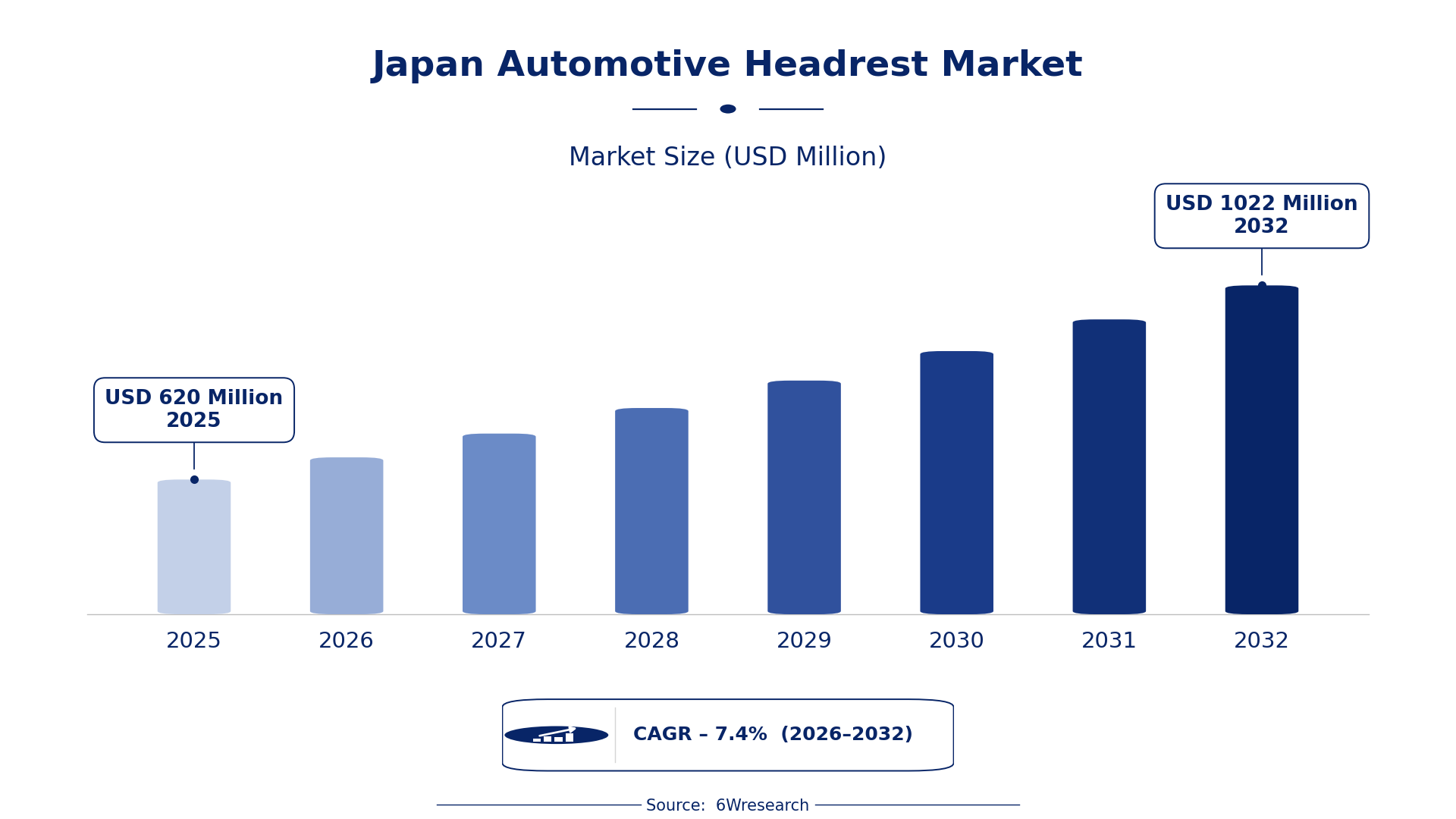
According to 6Wresearch internal database and industry insights, the Japan Automotive Headrest Market was valued at USD 620 Million in 2025 and is projected to reach USD 1,022 Million by 2032, growing at a CAGR of approximately 7.4% during 2026–2032.
Japan Automotive Headrest Market Highlights
| Report Metric | Details |
| Report Name | Japan Automotive Headrest Market (2026-2032) |
| Market Size 2025 | USD 620 Million |
| Market Size 2032 | USD 1,022 Million |
| Absolute Growth 2025–2032 | USD 402 Million |
| CAGR 2026–2032 | 7.4% |
| Peak Annual Growth | 8.1% in 2028 |
| Forecast Period | 2026–2032 |
| Historical Data | 2022–2025 |
| Base Year | 2025 |
| Leading Type, 2025 | Fixed Headrest (36% share) |
| Leading Material, 2025 | Leather (46% share) |
| Leading Vehicle Type, 2025 | Passenger Cars (38% share) |
| Fastest-Growing Type | Adjustable Headrest (10.3% CAGR) |
| Fastest-Growing Material | Fabric (10.8% CAGR) |
| Fastest-Growing Vehicle Type | Commercial Vehicles (10.7% CAGR) |
| Growing Sector | automotive industry |
| Key End Users | automotive manufacturers, vehicle importers, aftermarket suppliers, safety equipment providers |
Japan Automotive Headrest Market Year-wise Growth Rate and Key Drivers (2022–2032)
This graph illustrates the annual growth rates of the market from 2022 to 2032, highlighting a steady upward trajectory and projected market expansion over the forecast period.
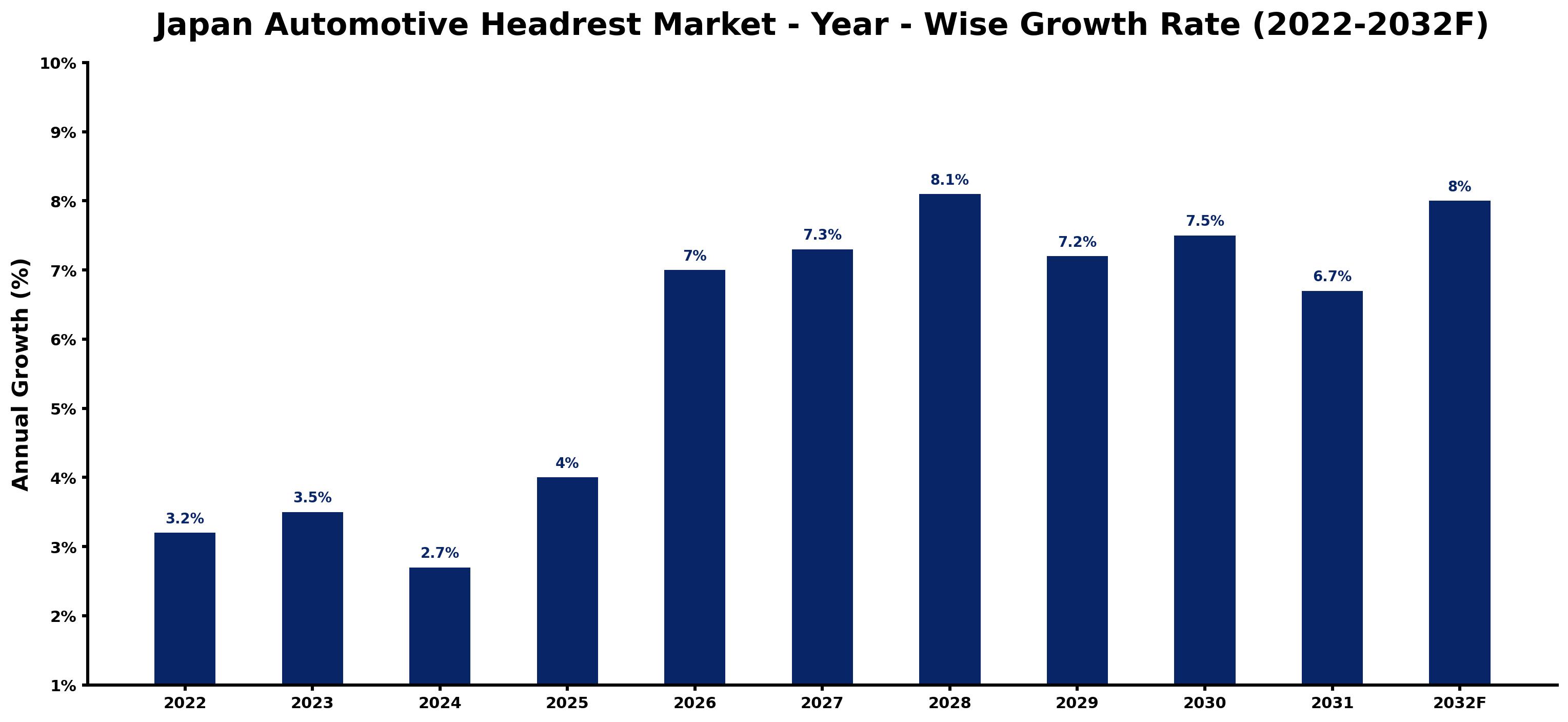
Each row of the following table gives one year's estimated growth and the event or demand shift that explains it.
| Year | Estimated Annual Growth (%) | Market Rationale |
| 2022 | 3.2 | The market showed steady growth, reflecting ongoing demand for vehicle safety features. |
| 2023 | 3.5 | Growth accelerated as manufacturers increased production to meet rising consumer expectations. |
| 2024 | 2.7 | Growth slowed slightly due to market saturation in certain vehicle segments. |
| 2025 | 4.0 | The market experienced a resurgence as new safety standards boosted headrest demand. |
| 2026 | 7.0 | Demand surged as electric vehicle production expanded, driving headrest innovations. |
| 2027 | 7.3 | Growth continued as manufacturers focused on enhancing comfort and safety features. |
| 2028 | 8.1 | The peak growth year saw significant investments in advanced headrest technologies. |
| 2029 | 7.2 | Growth slowed as the market began to stabilise after rapid expansion. |
| 2030 | 7.5 | Demand increased again as sustainability initiatives influenced design choices. |
| 2031 | 6.7 | Growth decelerated as the market adjusted to changing consumer preferences. |
| 2032 | 8.0 | The market rebounded with renewed interest in luxury and safety features. |
Note: Market size estimations and growth projections presented in this report are based on 6Wresearch's proprietary forecasting methodology, utilizing the latest available industry data, government publications, and primary research inputs.
Japan Automotive Headrest Market Synopsis
Automotive headrests are crucial for safety and comfort in vehicles, primarily constructed from foam and fabric. Japan's automotive sector, which produces around 8 million vehicles each year, generates substantial demand for headrests. This growth is driven by the rising production of electric vehicles, which hit 1 million units in 2023, alongside new safety initiatives like the 2023 safety initiative for vehicle interiors. Such factors create a robust environment for headrest manufacturers.
Market Dynamics Impact Analysis (2026–2032)
| Factor | Type | Impact | Primary Segment Affected |
| Increasing production of electric vehicles enhances demand for modern headrests. | Driver | High | Active Headrest |
| Rising consumer preference for comfort and safety features in vehicles creates opportunities. | Driver | High | Adjustable Headrest |
| Growing luxury vehicle segment presents a chance for premium headrest materials. | Opportunity | High | Leather |
| Demand for headrests in commercial vehicles is expanding as comfort becomes a focus. | Opportunity | Medium | Commercial Vehicles |
| High production costs for advanced materials can limit market expansion. | Restraint | High | Synthetic Leather |
| Competition from alternative safety technologies may constrain headrest adoption. | Restraint | Medium | Active Headrest |
| Supply chain disruptions can delay headrest production and delivery. | Challenge | High | Fixed Headrest |
| Shifts in consumer preferences towards minimalistic designs may impact demand. | Challenge | Medium | Removable Headrest |
Evaluation of Drivers in Japan Automotive Headrest Market (2026–2032)
The following drivers explain most of the expected growth.
| Drivers | Primary Segment Affected | Why It Matters (Evidence) |
| Increased production of electric vehicles drives demand for advanced headrest designs. | Active Headrest | The number of electric vehicles in Japan reached 1 million in 2023, prompting manufacturers to innovate safety features. |
| Rising consumer demand for comfort in vehicles boosts adjustable headrest sales. | Adjustable Headrest | The average vehicle age in Japan is about 13 years, leading to increased replacements and upgrades. |
| Luxury vehicle production growth fuels demand for premium headrest materials. | Leather | Leather is preferred in 70% of luxury vehicle headrests, reflecting consumer expectations for quality. |
| The introduction of new safety standards increases the need for compliant headrest designs. | Active Headrest | Active headrests have been mandated in new vehicle models since 2018, driving market growth. |
| The expansion of the automotive sector in the Tokyo region supports headrest manufacturing. | Fixed Headrest | The Tokyo region is a major hub for automotive manufacturing, facilitating headrest production. |
Most of the extra volume comes from the rising production of electric vehicles, which reached 1 million units in 2023, prompting manufacturers to innovate headrest designs. The average vehicle age in Japan is about 13 years, leading to increased demand for replacements, particularly for adjustable headrests. Consumer preference for luxury materials drives the use of leather in luxury vehicle headrests. The introduction of new safety standards mandates active headrests in new models, further boosting demand. The expansion of the automotive sector in the Tokyo region supports local production capabilities, creating a favourable environment for growth.
Evaluation of Restraints in Japan Automotive Headrest Market
These restraints slow adoption and weigh on supplier margins.
| Market Restraint | Primary Segment Affected | Why It Matters (Evidence) |
| High production costs for advanced materials limit market expansion. | Synthetic Leather | The cost of premium materials can deter manufacturers from adopting advanced headrest designs, with prices rising by 15% since 2020. |
| Competition from alternative safety technologies may constrain headrest adoption. | Active Headrest | Alternative safety technologies may provide similar benefits, impacting headrest demand as manufacturers explore options. |
| Supply chain disruptions can delay headrest production and delivery. | Fixed Headrest | Global supply chain issues have affected automotive parts availability, increasing lead times by 20%. |
| Changing consumer preferences towards minimalistic designs may impact demand. | Removable Headrest | As consumers seek simpler designs, removable headrests may see reduced interest, affecting sales in this segment. |
| Economic fluctuations can affect consumer spending on vehicle upgrades. | Adjustable Headrest | Economic downturns may lead consumers to postpone purchasing premium headrests, limiting market growth. |
Japan Automotive Headrest Market Challenges
Producers encounter fierce competition from both domestic and international manufacturers, which squeezes profit margins and compels price reductions. Importers face challenges with supply chain disruptions, as irregular availability of materials like synthetic leather can inflate costs by 20% and delay deliveries for up to two months. Regulatory pressures heighten operational burdens, particularly with the recent safety initiative, resulting in increased production costs and longer timelines for new model launches. Technological lag among certain producers restricts their capacity to adopt modern features, leading to a loss of market share to more agile competitors.
Trends in the Japan Automotive Headrest Market
Four trends stand out in the Japan Automotive Headrest Market.
- Shift from Traditional to Active Headrests: The trend towards active headrests commenced in 2018 with new safety regulations mandating their use in vehicles. This shift is evident in the rising number of models equipped with active headrests, enhancing passenger safety and comfort.
- Transition from Leather to Synthetic Materials: Since 2020, there has been a marked increase in synthetic leather usage in headrests, climbing by 15%. This transition mirrors a broader industry movement towards sustainable materials, appealing to environmentally conscious consumers.
- Emergence of Smart Headrests: The introduction of smart headrests began in 2023, incorporating technology for improved comfort and safety. This development is anticipated to attract tech-savvy consumers, driving demand for advanced automotive features.
- Growing Focus on Comfort in Commercial Vehicles: The emphasis on comfort in commercial vehicles has intensified, with a 10.7% CAGR projected for headrests in this segment. This trend is fuelled by increasing competition among manufacturers to enhance driver and passenger experiences.
Investment Opportunities in the Japan Automotive Headrest Market
The opportunities below stand out in the Japan Automotive Headrest Market for new entrants and existing suppliers.
- Market gap for luxury headrests in electric vehicles: With the electric vehicle market reaching 1 million units in 2023, there exists an opportunity to supply premium headrests. Targeting luxury electric vehicle manufacturers can yield substantial returns.
- Demand for adjustable headrests in older vehicles: As the average vehicle age is about 13 years, there is a pressing need for adjustable headrests. Concentrating on the aftermarket for older vehicles can capture this growing demand.
- Expansion of headrest offerings in commercial vehicles: The commercial vehicle segment is expanding, creating a need for comfortable headrests. Suppliers can penetrate this market by collaborating with manufacturers focused on driver comfort.
- Investment in sustainable headrest materials: With the increasing emphasis on sustainability, there is a demand for eco-friendly headrest materials. Partnering with manufacturers in the Tokyo region can facilitate entry into this market.
Government Initiatives in the Japan Automotive Headrest Market
The Green Growth Strategy Through Achieving Carbon Neutrality in 2050, established in December 2020 and updated in 2021, influences automotive producers by promoting the adoption of sustainable practices. This strategy aims for a 46% reduction in greenhouse-gas emissions from fiscal 2013 levels by fiscal 2030, encouraging manufacturers to innovate in headrest materials and production processes.
The GX Promotion Act, enacted in 2023, provides a legal framework for the GX strategy, facilitating public and private investments in decarbonisation. The Ministry of Land, Infrastructure, Transport and Tourism approves initiatives aimed at enhancing vehicle safety, including the recent 2023 safety initiative for vehicle interiors, which encourages manufacturers to improve headrest designs.
Future Insight of the Japan Automotive Headrest Market
The launch of advanced manufacturing facilities will optimise production efficiency and reduce costs for suppliers. By 2032, the adoption of smart materials in headrests will improve safety and comfort, meeting evolving consumer expectations. Stricter safety standards will stimulate product innovation, ensuring compliance with new regulations. The Japanese automotive market is projected to reach 5 trillion yen by 2025, presenting opportunities for suppliers to cater to the increasing demand for high-quality, compliant headrests.
Market Segmentation Analysis
Japan Automotive Headrest Market report covers a detailed analysis of the following market segments:
By Type – Fixed Headrest Leads, Adjustable Headrest Expected to Grow Fastest
According to Vasudha, AM at 6Wresearch, with 36% of type revenue in 2025, Fixed Headrest was the largest category. Fixed headrests are essential for providing basic support and are standard across most vehicle types, ensuring their dominance in the market. Their widespread use in both passenger and commercial vehicles solidifies their leading position in the automotive headrest segment. Adjustable Headrest is projected to grow fastest, at a CAGR of 10.3% during 2026–2032. Adjustable headrests are gaining traction as consumers increasingly seek personalised comfort options in their vehicles. This trend is bolstered by manufacturers incorporating adjustable designs to improve user experience and safety features, which will further widen the gap with fixed headrests. Suppliers must focus on developing adjustable headrests to meet the rising consumer demand for tailored comfort solutions.
By Material – Leather Leads, Fabric Expected to Grow Fastest
The largest material category in 2025 was Leather, at 46% of revenue. Leather is the preferred choice for headrests in luxury vehicles, appealing to buyers who value quality and aesthetics. Its dominance in 70% of luxury headrests highlights its strong position in the market. Over 2026–2032, Fabric is expected to post the fastest growth, at a CAGR of 10.8%. Fabric headrests are rapidly gaining traction due to their affordability and suitability for a wider range of vehicles. The growing demand for economical options is propelling this segment's growth in the automotive market. Manufacturers should consider expanding their fabric offerings to meet the rising demand for cost-effective headrest solutions.
By Vehicle Type – Passenger Cars Lead, Commercial Vehicles Expected to Grow Fastest
Passenger Cars took 38% of vehicle type revenue in 2025, more than any other category. Passenger cars represent the largest segment for headrest demand, reflecting Japan's strong automotive production capabilities. The production of approximately 8 million vehicles in 2022 underscores the importance of this segment in the headrest market. Commercial Vehicles are set to record the highest CAGR in this split, 10.7% over 2026–2032. Commercial vehicles are experiencing a surge in demand as companies place greater emphasis on driver comfort and safety features. This growing focus on comfort in commercial vehicles is driving their rapid expansion in the market. Suppliers should explore opportunities within the commercial vehicle segment to capitalise on this increasing trend.
Key Attractiveness of the Report
- 10 Years of Market Numbers
- Historical Data Starting from 2022 to 2025
- Base Year 2025
- Forecast Data until 2032
- Key Performance Indicators Impacting the Market
- Major Upcoming Developments and Projects
Key Highlights of the Report:
- Japan Automotive Headrest Market Outlook
- Market Size of Japan Automotive Headrest Market, 2025
- Forecast of Japan Automotive Headrest Market, 2032
- Historical Data and Forecast of Japan Automotive Headrest Revenues & Volume for the Period 2022-2032
- Japan Automotive Headrest Market Trend Evolution
- Japan Automotive Headrest Market Drivers and Challenges
- Japan Automotive Headrest Price Trends
- Japan Automotive Headrest Porter's Five Forces
- Japan Automotive Headrest Industry Life Cycle
- Historical Data and Forecast of Japan Automotive Headrest Market Revenues & Volume By Type for the Period 2022-2032
- Historical Data and Forecast of Japan Automotive Headrest Market Revenues & Volume By Fixed Headrest for the Period 2022-2032
- Historical Data and Forecast of Japan Automotive Headrest Market Revenues & Volume By Adjustable Headrest for the Period 2022-2032
- Historical Data and Forecast of Japan Automotive Headrest Market Revenues & Volume By Active Headrest for the Period 2022-2032
- Historical Data and Forecast of Japan Automotive Headrest Market Revenues & Volume By Removable Headrest for the Period 2022-2032
- Historical Data and Forecast of Japan Automotive Headrest Market Revenues & Volume By Material for the Period 2022-2032
- Historical Data and Forecast of Japan Automotive Headrest Market Revenues & Volume By Leather for the Period 2022-2032
- Historical Data and Forecast of Japan Automotive Headrest Market Revenues & Volume By Fabric for the Period 2022-2032
- Historical Data and Forecast of Japan Automotive Headrest Market Revenues & Volume By Memory Foam for the Period 2022-2032
- Historical Data and Forecast of Japan Automotive Headrest Market Revenues & Volume By Synthetic Leather for the Period 2022-2032
- Historical Data and Forecast of Japan Automotive Headrest Market Revenues & Volume By Vehicle Type for the Period 2022-2032
- Historical Data and Forecast of Japan Automotive Headrest Market Revenues & Volume By Passenger Cars for the Period 2022-2032
- Historical Data and Forecast of Japan Automotive Headrest Market Revenues & Volume By Commercial Vehicles for the Period 2022-2032
- Historical Data and Forecast of Japan Automotive Headrest Market Revenues & Volume By Electric Vehicles for the Period 2022-2032
- Historical Data and Forecast of Japan Automotive Headrest Market Revenues & Volume By Luxury Vehicles for the Period 2022-2032
- Japan Automotive Headrest Import Export Trade Statistics
- Market Opportunity Assessment By Type
- Market Opportunity Assessment By Material
- Market Opportunity Assessment By Vehicle Type
- Japan Automotive Headrest Top Companies Market Share
- Japan Automotive Headrest Competitive Benchmarking By Technical and Operational Parameters
- Japan Automotive Headrest Company Profiles
- Japan Automotive Headrest Key Strategic Recommendations
Market Covered
The study includes the following segmentation.
By Type
- Fixed Headrest
- Adjustable Headrest
- Active Headrest
- Removable Headrest
By Material
- Leather
- Fabric
- Memory Foam
- Synthetic Leather
By Vehicle Type
- Passenger Cars
- Commercial Vehicles
- Electric Vehicles
- Luxury Vehicles































