Qatar Ornamental Fish Market Size, Share & Growth Rate
The Qatar Ornamental Fish Market was estimated at USD 446 Million in 2025 and is projected to reach USD 602 Million by 2032, growing at a CAGR of 4.4% from 2026 to 2032. This upward trajectory is primarily driven by an increasing number of aquarium enthusiasts who are recognizing the aesthetic and therapeutic benefits of keeping ornamental fish. Enhanced disposable income levels in Qatar also play a significant role, as consumers are increasingly willing to invest in high-quality aquatic life and the necessary accessories.
Qatar Ornamental Fish Market Year-wise Growth Rate and Key Drivers
This graph highlights how the Qatar Ornamental Fish Market has steadily grown over the years, supported by major growth factors.
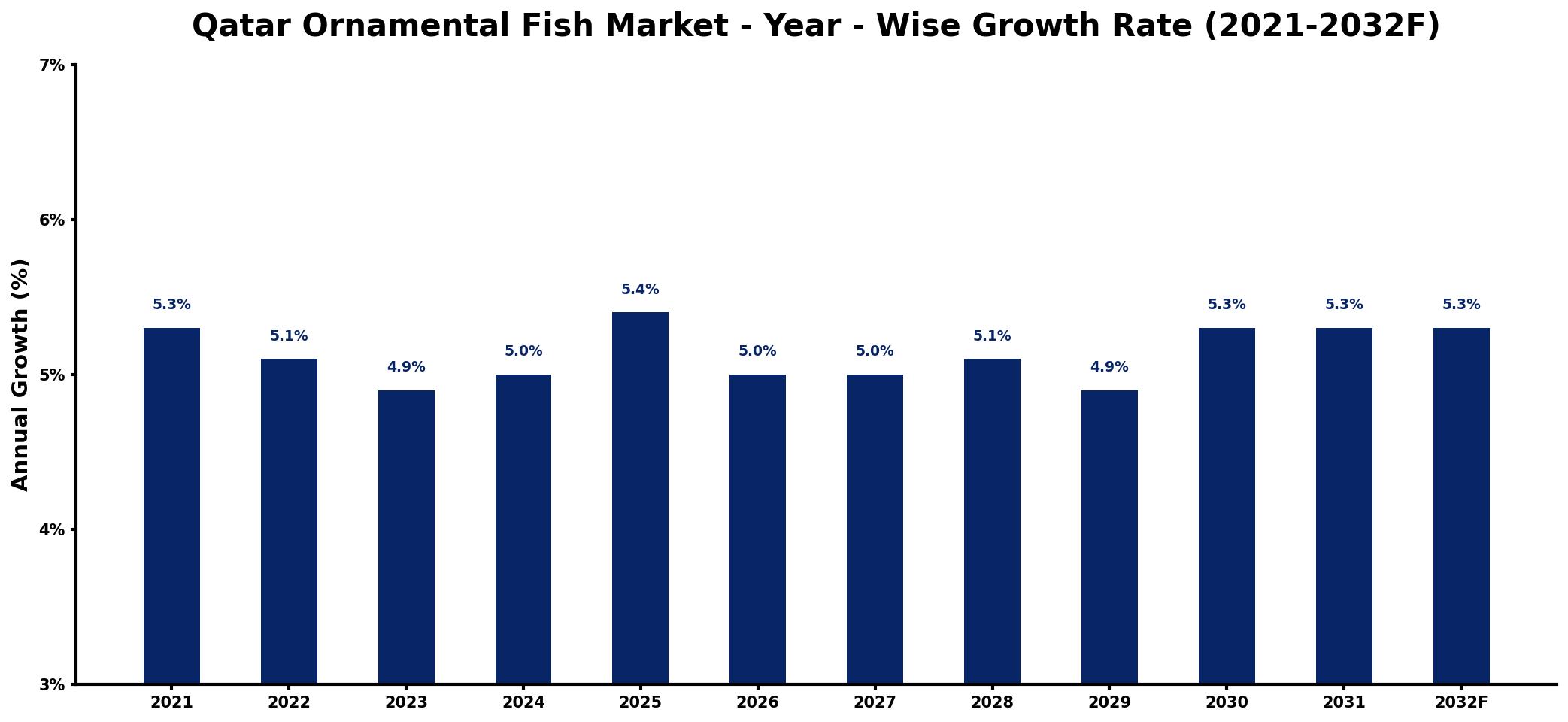
The table below presents the year‑wise growth rates along with the key drivers influencing the market
| Year | Growth Rate | Major Drivers |
| 2021 | 5.3% | Rising interest in aquascaping hobby |
| 2022 | 5.1% | Increase in home aquarium installations |
| 2023 | 4.9% | Growth in eco-friendly pet ownership |
| 2024 | 5.0% | Expansion of online retail platforms |
| 2025 | 5.4% | Higher disposable income for leisure |
| 2026 | 5.0% | Surge in urban gardening trends |
| 2027 | 5.0% | Increased focus on sustainable practices |
| 2028 | 5.1% | expanding manufacturing base activity |
| 2029 | 4.9% | Rise in pet care spending |
| 2030 | 5.3% | Boost in community aquaculture initiatives |
| 2031 | 5.3% | increased capital investment inflows |
| 2032 | 5.3% | Increased demand for decorative aquaria |
Note: Market size estimations and growth projections presented in this report are based on 6Wresearch's proprietary forecasting methodology, utilizing the latest available industry data, government publications, and primary research inputs.
Qatar Ornamental Fish Market Synopsis
The ornamental fish market in Qatar is witnessing a resurgence fueled by a growing interest in aquariums, a trend that has gained significant momentum in recent years. As more individuals turn to home aquariums for relaxation and interior decoration, the demand for diverse ornamental species has surged, reflecting a vibrant market poised for future growth.
Looking ahead, the market is expected to evolve with a focus on sustainability and responsible sourcing. As consumers become increasingly aware of environmental issues, the importance of maintaining ethical practices in breeding and distribution will be paramount to ensure ongoing consumer trust and market viability.
Qatar Ornamental Fish Market Key Takeaways
- The market is experiencing steady growth, driven by a rising number of aquarium hobbyists.
- Therapeutic benefits associated with fish-keeping are becoming more widely recognized.
- Sustainability and responsible sourcing will be critical for long-term market success.
- Import regulations and consumer education remain vital areas of focus for market players.
- Aesthetic value and interior enhancement through aquariums are key demand drivers.
Evaluation of Restraints in Qatar Ornamental Fish Market
While the ornamental fish market in Qatar is flourishing, it faces challenges that can hinder its potential. Stringent regulations regarding the health and well-being of fish during importation and distribution present a complex landscape for businesses. Any breaches in these regulations could not only affect fish populations but may also damage consumer trust. Furthermore, educating consumers on the requirements for maintaining fish and providing adequate equipment continues to be a hurdle, limiting the market's full potential.
Qatar Ornamental Fish Market Trends
Several trends are influencing the Qatar ornamental fish market today. Increasingly sophisticated aquarium setups, combined with the rising popularity of aquascaping, are shifting consumer preferences toward more visually stunning environments. Additionally, advancements in aquaculture technology are improving the health and availability of ornamental species. Social media platforms are also playing a significant role in educating and inspiring potential hobbyists, further driving interest in ornamental fish.
Qatar Ornamental Fish Market Opportunities
Opportunities for growth in the Qatar ornamental fish market are abundant. As consumers increasingly seek unique and exotic species, there is a clear demand for specialized breeding and sourcing operations. Furthermore, businesses that invest in eco-friendly practices and sustainable aquaculture will likely find favor among environmentally-conscious consumers. The rise of online retail channels presents another avenue for market players to reach a broader audience and enhance consumer engagement.
Government Initiatives in the Qatar Ornamental Fish Market
The Qatari government is actively promoting initiatives aimed at sustainability in aquaculture, which directly impacts the ornamental fish market. Public spending on marine conservation and responsible breeding practices underscores the commitment to preserving aquatic biodiversity. Furthermore, programs that educate both consumers and businesses about sustainable practices are expected to foster a more resilient market environment moving forward.
Future Insights of the Qatar Ornamental Fish Market
From 2026 to 2032, the Qatar ornamental fish market is likely to continue its upward trend as consumer demand stabilizes post-pandemic. With an emphasis on responsible pet ownership and sustainability, the market is expected to attract both hobbyists and environmentally-conscious consumers. Technological advancements in aquaculture, coupled with increased awareness of the mental health benefits of fish-keeping, will further drive market growth.
Qatar Ornamental Fish Market Latest Developments (2025 - 2026)
Recent months have seen a notable direction toward enhanced consumer education regarding the maintenance of home aquariums, with several workshops and online resources becoming available. Moreover, collaborations between local suppliers and international breeders are fostering a more diverse selection of ornamental species. Additionally, the government has increased efforts to regulate importation practices, ensuring the health and sustainability of the ornamental fish market in Qatar.
Qatar Ornamental Fish Market - Key Attractiveness of the Report
- 10 Years of Market Numbers
- Historical Data Starting from 2022 to 2025
- Base Year: 2025
- Forecast Data until 2032
- Key Performance Indicators Impacting the Market
- Major Upcoming Developments and Projects
Key Highlights of the Report:
- Qatar Ornamental Fish Market Outlook
- Market Size of Qatar Ornamental Fish Market, 2025
- Forecast of Qatar Ornamental Fish Market, 2032
- Historical Data and Forecast of Qatar Ornamental Fish Revenues & Volume for the Period 2022-2032F
- Qatar Ornamental Fish Market Trend Evolution
- Qatar Ornamental Fish Market Drivers and Challenges
- Qatar Ornamental Fish Price Trends
- Qatar Ornamental Fish Porter's Five Forces
- Qatar Ornamental Fish Industry Life Cycle
- Historical Data and Forecast of Qatar Ornamental Fish Market Revenues & Volume By Product for the Period 2022-2032F
- Historical Data and Forecast of Qatar Ornamental Fish Market Revenues & Volume By Tropical Freshwater for the Period 2022-2032F
- Historical Data and Forecast of Qatar Ornamental Fish Market Revenues & Volume By Temperate for the Period 2022-2032F
- Historical Data and Forecast of Qatar Ornamental Fish Market Revenues & Volume By Marine for the Period 2022-2032F
- Historical Data and Forecast of Qatar Ornamental Fish Market Revenues & Volume By Application for the Period 2022-2032F
- Historical Data and Forecast of Qatar Ornamental Fish Market Revenues & Volume By Commercial for the Period 2022-2032F
- Historical Data and Forecast of Qatar Ornamental Fish Market Revenues & Volume By Household for the Period 2022-2032F
- Qatar Ornamental Fish Import Export Trade Statistics
- Market Opportunity Assessment By Product
- Market Opportunity Assessment By Application
- Qatar Ornamental Fish Top Companies Market Share
- Qatar Ornamental Fish Competitive Benchmarking By Technical and Operational Parameters
- Qatar Ornamental Fish Company Profiles
- Qatar Ornamental Fish Key Strategic Recommendations






































