Romania Blockchain Market Size & Growth Rate (2026-2032)
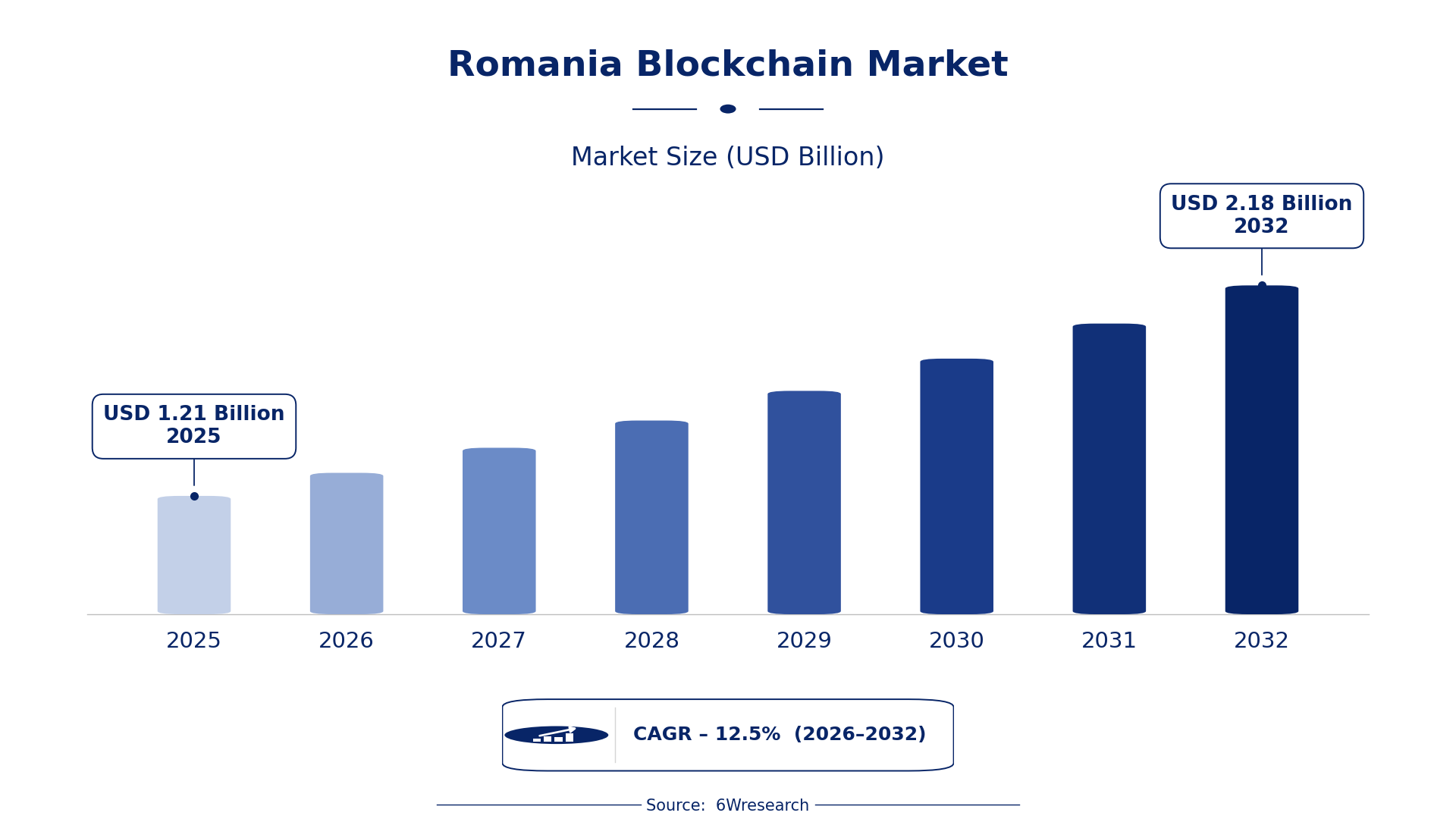
The Romania Blockchain Market was estimated at USD 1212 Million in 2025 and is projected to reach USD 2182 Million by 2032, growing at a CAGR of 12.5% from 2026 to 2032.
Romania Blockchain Market Synopsis
The primary force driving the Romania Blockchain Market is the government’s commitment to fostering innovation in blockchain technology across various sectors. With clear regulatory support, Romania is making strides towards becoming a central hub for blockchain applications in Europe.
A growing number of startups are emerging, coupled with established companies exploring blockchain’s capabilities in smart contracts, digital identity, and decentralized finance. The collaboration between academic institutions and industries is also gaining momentum, further reinforcing Romania’s position in the blockchain arena.
Romania Blockchain Market Year-wise Growth Rate and Key Drivers
This graph illustrates the annual growth rates of the Romania Blockchain Market from 2021 to 2032, highlighting a steady upward trajectory and projected expansion over the forecast period.
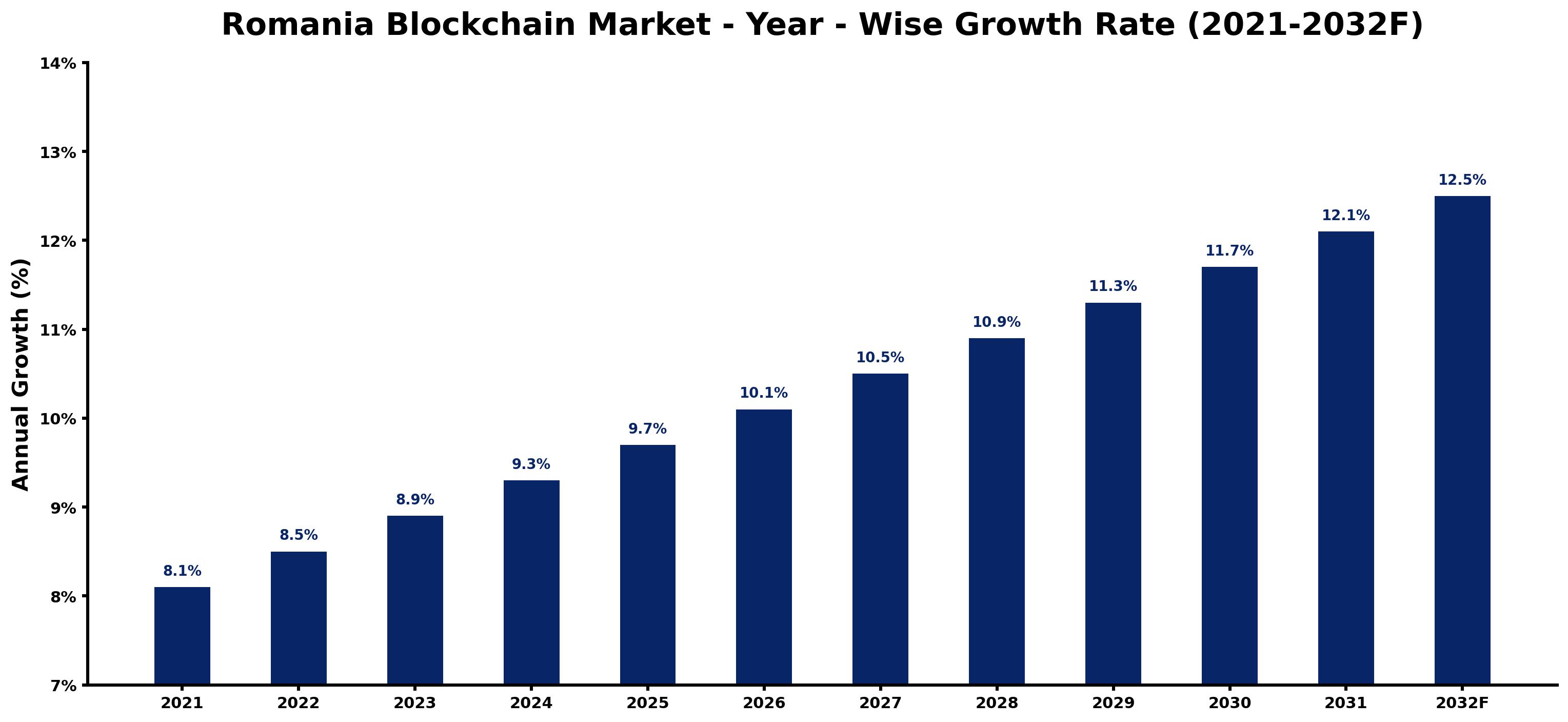
The table below presents the year‑wise growth rates along with the key drivers influencing the market
| Year | Growth Rate | Major Drivers |
| 2021 | 8.1% | Government support for blockchain technology integration. |
| 2022 | 8.5% | Increased adoption of cryptocurrency among local businesses. |
| 2023 | 8.9% | Enhanced regulatory framework promoting digital assets usage. |
| 2024 | 9.3% | Growing fintech startups leveraging blockchain solutions. |
| 2025 | 9.7% | Partnerships between universities and blockchain companies developing talent. |
| 2026 | 10.1% | Rising consumer demand for secure digital transactions. |
| 2027 | 10.5% | Local adoption of blockchain for public administration transparency. |
| 2028 | 10.9% | Romanian tech hubs fostering innovation in blockchain applications. |
| 2029 | 11.3% | Increased foreign investments in Romania's blockchain ecosystem. |
| 2030 | 11.7% | Establishment of blockchain-focused incubators and accelerators. |
| 2031 | 12.1% | Regulatory clarity driving enterprise blockchain solutions adoption. |
| 2032 | 12.5% | Integration of blockchain in supply chain management sectors. |
Note: Market size estimations and growth projections presented in this report are based on 6Wresearch's proprietary forecasting methodology, utilizing the latest available industry data, government publications, and primary research inputs.
Romania Blockchain Market Key Takeaways
Below are some of the specific key takeaways from the market, including:
- Romania's blockchain adoption spans various sectors, including finance, healthcare, and government.
- The regulatory environment is becoming increasingly favorable, promoting blockchain initiatives.
- Investment in local blockchain startups is on the rise, indicating strong market confidence.
- The talent pool for blockchain technology in Romania is expanding, ensuring a skilled workforce.
- Collaboration among public and private sectors is fueling innovation and development in blockchain applications.
Evaluation of Restraints in Romania Blockchain Market
Despite its promising growth, the Romania Blockchain Market faces challenges that could hinder its progress. A significant barrier is the existing uncertainty around regulatory frameworks, which complicates compliance for businesses eager to implement blockchain solutions. Additionally, the shortage of skilled professionals in this field limits the pace of innovation. Furthermore, a general lack of understanding about blockchain technology among both businesses and the public further impedes widespread adoption. Addressing these challenges is essential for realizing the full potential of blockchain in Romania.
Romania Blockchain Market Trends
There are several key trends currently shaping the Romania Blockchain Market. The emergence of innovative blockchain startups and dedicated innovation hubs is notable, providing fertile ground for new ideas. Government initiatives to incorporate blockchain into sectors like healthcare and public administration are on the rise, leading to more efficient processes. Regulatory efforts are also gaining traction, establishing clearer guidelines to facilitate market entry and development. Lastly, the demand for blockchain applications in supply chain management and finance continues to escalate.
Romania Blockchain Market Opportunities
The landscape is rich with opportunities for investment and growth in the Romania Blockchain Market. Key areas for development include blockchain solutions for healthcare, supply chain management, and cybersecurity. The Romanian government's support for innovation opens doors for public-private partnerships, especially in real estate transactions and government services. Collaborating with local developers to create tailored blockchain solutions can also yield lucrative returns as the market matures.
Government Initiatives in the Romania Blockchain Market
The Romanian government is actively positioning itself as a leader in blockchain technology by fostering an environment conducive to innovation and investment. Its regulatory framework is designed to provide clarity and support for blockchain projects. This proactive approach is essential for creating a sustainable ecosystem where technology can thrive.
- A national strategy for blockchain adoption was passed in 2018, emphasizing sectors such as healthcare and public administration.
- Ongoing initiatives aim to establish partnerships between government bodies and blockchain startups to encourage development.
- Recent funding opportunities have been made available to support innovative blockchain projects across various sectors.
- A planned program for 2026 focuses on enhancing digital infrastructure and incorporating blockchain into national security measures.
Future Insights of the Romania Blockchain Market
The future of the Romania Blockchain Market looks bright, with sustained growth expected across multiple sectors. Increasing adoption rates among public and private entities are anticipated, driven by a burgeoning demand for efficiency and transparency that blockchain technology offers. The expansion of supportive government initiatives and a growing investment climate will likely propel the market forward, establishing Romania as a significant player on the global blockchain stage.
Romania Blockchain Market Latest Developments
Recent developments in the Romania Blockchain Market indicate a vibrant and active industry. Over the past year, various projects have emerged, showcasing the ongoing interest and investment in blockchain technology.
- A collaborative project between local universities and tech firms focusing on blockchain education was launched in early 2025 and is still ongoing.
- A blockchain solution for improving traceability in supply chains is currently in development, expected to debut by mid-2026.
- A technology vendor announced an initiative in Q3 2025 aimed at integrating blockchain into public administration systems.
- A pilot program for blockchain-based digital identity solutions was successfully completed in late 2025, paving the way for broader implementation.
Romania Blockchain Market - Key Attractiveness of the Report
- 10 Years of Market Numbers
- Historical Data Starting from 2022 to 2025
- Base Year: 2025
- Forecast Data until 2032
- Key Performance Indicators Impacting the Market
- Major Upcoming Developments and Projects
Key Highlights of the Report:
- Romania Blockchain Market Outlook
- Market Size of Romania Blockchain Market, 2025
- Forecast of Romania Blockchain Market, 2032
- Historical Data and Forecast of Romania Blockchain Revenues & Volume for the Period 2022-2032F
- Romania Blockchain Market Trend Evolution
- Romania Blockchain Market Drivers and Challenges
- Romania Blockchain Price Trends
- Romania Blockchain Porter's Five Forces
- Romania Blockchain Industry Life Cycle
- Historical Data and Forecast of Romania Blockchain Market Revenues & Volume By Component for the Period 2022-2032F
- Historical Data and Forecast of Romania Blockchain Market Revenues & Volume By Platforms for the Period 2022-2032F
- Historical Data and Forecast of Romania Blockchain Market Revenues & Volume By Services for the Period 2022-2032F
- Historical Data and Forecast of Romania Blockchain Market Revenues & Volume By Provider for the Period 2022-2032F
- Historical Data and Forecast of Romania Blockchain Market Revenues & Volume By Application for the Period 2022-2032F
- Historical Data and Forecast of Romania Blockchain Market Revenues & Volume By Middleware for the Period 2022-2032F
- Historical Data and Forecast of Romania Blockchain Market Revenues & Volume By Infrastructure for the Period 2022-2032F
- Historical Data and Forecast of Romania Blockchain Market Revenues & Volume By Type for the Period 2022-2032F
- Historical Data and Forecast of Romania Blockchain Market Revenues & Volume By Public for the Period 2022-2032F
- Historical Data and Forecast of Romania Blockchain Market Revenues & Volume By Private for the Period 2022-2032F
- Historical Data and Forecast of Romania Blockchain Market Revenues & Volume By Hybrid for the Period 2022-2032F
- Historical Data and Forecast of Romania Blockchain Market Revenues & Volume By Organization Size for the Period 2022-2032F
- Historical Data and Forecast of Romania Blockchain Market Revenues & Volume By SMEs for the Period 2022-2032F
- Historical Data and Forecast of Romania Blockchain Market Revenues & Volume By Large Organizations for the Period 2022-2032F
- Romania Blockchain Import Export Trade Statistics
- Market Opportunity Assessment By Component
- Market Opportunity Assessment By Provider
- Market Opportunity Assessment By Type
- Market Opportunity Assessment By Organization Size
- Romania Blockchain Top Companies Market Share
- Romania Blockchain Competitive Benchmarking By Technical and Operational Parameters
- Romania Blockchain Company Profiles
- Romania Blockchain Key Strategic Recommendations






































