Romania Gas Generator Market Size (2020-2030)
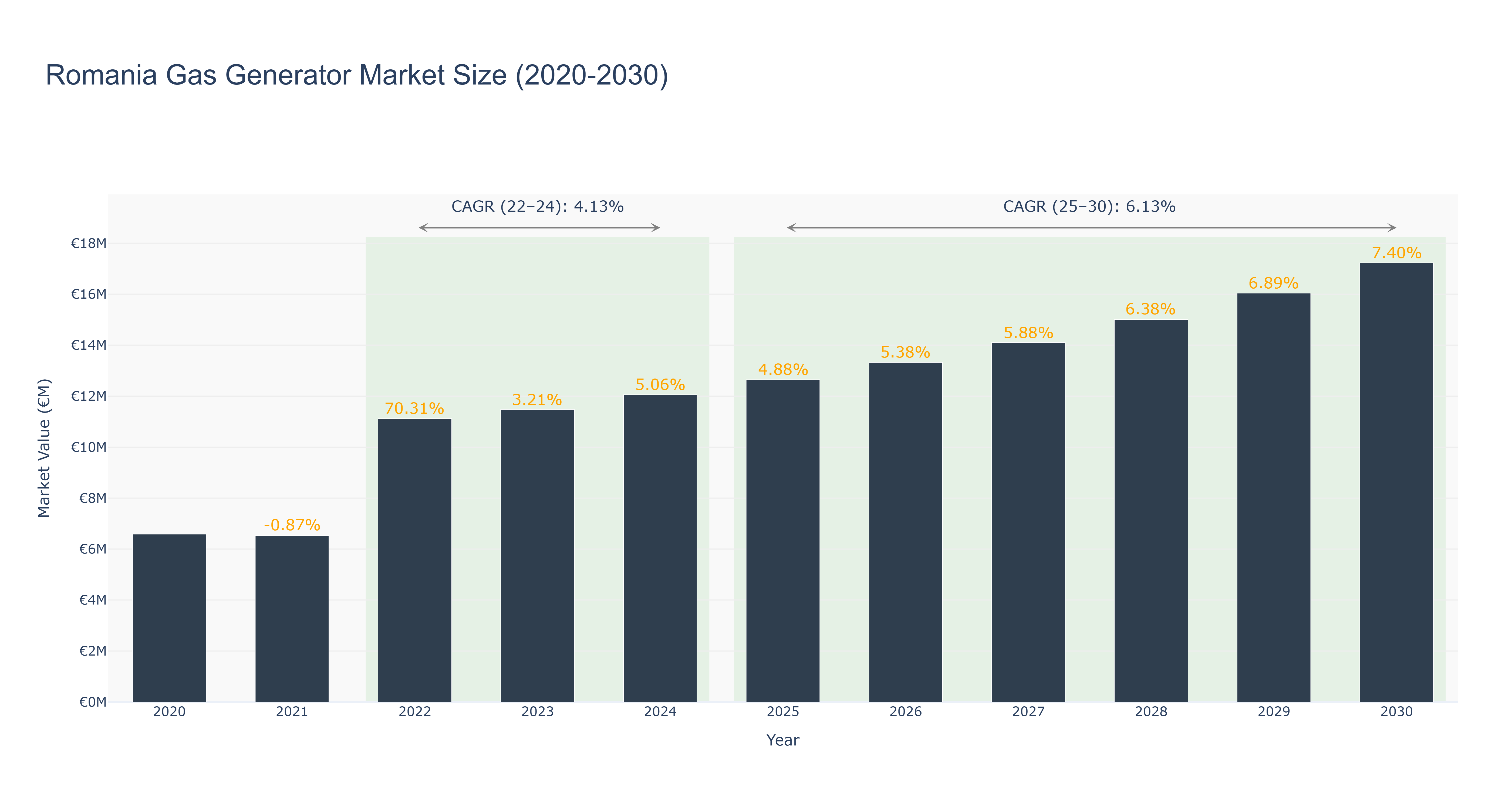
Romania Gas Generator Market has shown a steady growth trend over the years. The peak market size was €17.23 million in 2030 with a consistent increase in market size from €6.59 million in 2020 to €12.06 million in 2024. Forecasted market size is expected to reach €17.23 million by 2030, with a CAGR of 4.13% from 2022 to 2024 and 6.13% from 2025 to 2030. The market's growth can be attributed to factors such as increasing demand for electricity, industrialization, and government initiatives promoting sustainable energy sources. Recent developments in Romania's gas generator market include collaborations with renewable energy companies to integrate cleaner technologies, which are expected to drive further growth in the market. Industry drivers for the Romania Gas Generator Market include the need for reliable backup power solutions, increasing investments in infrastructure projects, and the shift towards cleaner energy sources. Looking ahead, the market is poised for continued growth with upcoming projects focusing on enhancing energy efficiency and reducing carbon emissions in line with environmental regulations.
Romania Gas Generator Market: Production & Trade Performance (2019-2025)
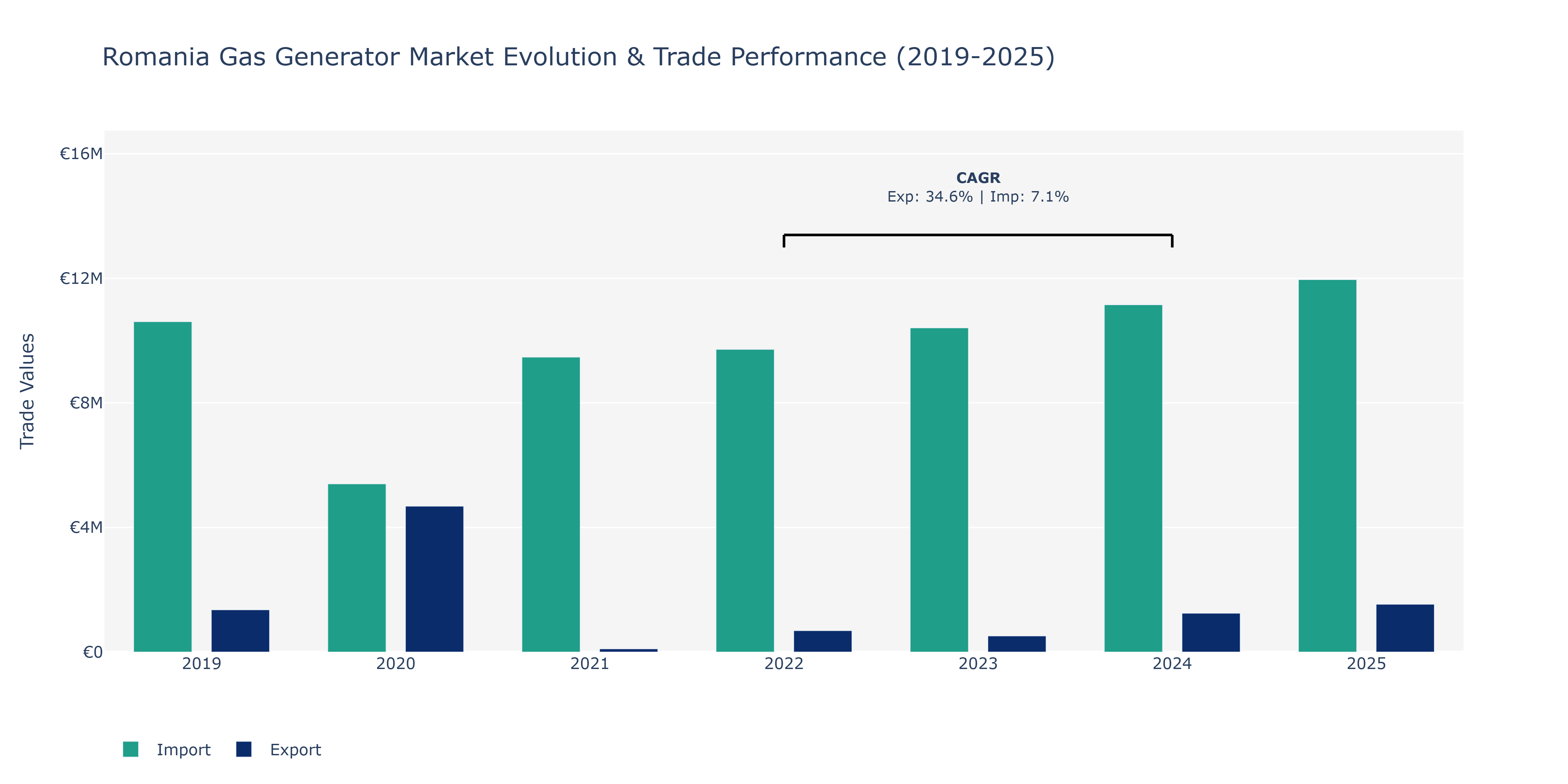
Between 2019 and 2025, Romania's Gas Generator Market demonstrated notable fluctuations in both exports and imports. In 2019, exports stood at €1.36 million, showing a substantial increase to €4.68 million in 2020. However, a sharp decline was observed in 2021 with exports dropping to €101.9 thousand before rebounding over the following years, reaching €1.54 million in 2025. On the other hand, imports followed a different trajectory, starting at €10.61 million in 2019, dipping in 2021 to €9.47 million, and then steadily increasing to €11.96 million by 2025. The market's exports peaked in 2020, potentially driven by rising demand or production capacity enhancements, while imports peaked in 2025, indicating increased reliance on foreign sources possibly due to supply chain considerations or domestic production constraints. These fluctuations could be attributed to various factors, including regulatory changes, economic conditions, or shifts in market demand for gas generator equipment in Romania's energy sector.
Romania Gas Generator Market Synopsis
The Romania Gas Generator Market is experiencing steady growth due to increasing demand for reliable backup power solutions in commercial, industrial, and residential sectors. Factors such as frequent power outages, aging power infrastructure, and the need for uninterrupted power supply are driving the market. Natural gas generators are preferred for their lower emissions, cost-effectiveness, and reliability compared to diesel generators. Key players in the market are focusing on product innovations to enhance efficiency and performance, while also expanding their distribution networks to reach a wider customer base. Government initiatives promoting the use of cleaner energy sources and advancements in gas generator technology are further propelling the market growth in Romania.
Romania Gas Generator Market Trends
The Romania Gas Generator Market is witnessing a growing demand for natural gas generators due to their lower emissions and cost-effectiveness compared to diesel generators. The increasing focus on sustainable and reliable power sources in industries, commercial buildings, and residential applications is driving the market growth. Additionally, the integration of advanced technologies such as IoT and cloud-based monitoring systems in gas generators is providing opportunities for remote monitoring and maintenance services. The market is also benefiting from government initiatives promoting clean energy solutions and investments in infrastructure development. Overall, there is a shift towards cleaner and more efficient power generation solutions in Romania, presenting lucrative opportunities for gas generator manufacturers and service providers in the country.
Romania Gas Generator Market Challenges
In the Romania gas generator market, some key challenges include the increasing competition from alternative energy sources such as solar and wind power, which are becoming more cost-effective and environmentally friendly. Additionally, fluctuations in gas prices and regulatory uncertainties can impact the profitability and investment decisions of companies operating in this market. Infrastructure limitations and the need for continuous maintenance and upgrades also pose challenges for gas generator providers. Addressing these challenges will require a strategic approach that considers market trends, regulatory developments, and the evolving energy landscape to ensure the long-term sustainability and growth of the gas generator market in Romania.
Romania Gas Generator Market Investment Opportunities
The Romania Gas Generator Market is primarily driven by factors such as increasing demand for reliable and uninterrupted power supply, growing industrial and commercial activities, and rising awareness towards environmental sustainability. Gas generators are preferred for their cleaner emissions and lower operational costs compared to diesel generators, making them a popular choice among various end-users in Romania. Additionally, government initiatives promoting the use of cleaner energy sources and investments in infrastructure development are further propelling the growth of the gas generator market in the country. The need for backup power solutions in critical sectors such as healthcare, data centers, and telecommunications is also contributing to the market expansion as businesses prioritize uninterrupted operations in the face of power outages.
Romania Gas Generator Market Government Polices
The Romania Gas Generator Market is influenced by government policies aimed at promoting renewable energy sources and reducing greenhouse gas emissions. The Romanian government has implemented various measures such as the National Energy Strategy and the Green Certificate Scheme to incentivize the use of renewable energy sources, which may impact the growth of gas generators in the market. Additionally, there are regulations in place to ensure the efficient and sustainable use of gas generators, including environmental standards and grid connection requirements. The government`s focus on transitioning to cleaner energy sources and ensuring energy security is likely to shape the future development of the gas generator market in Romania.
Romania Gas Generator Market Future Outlook
The future outlook for the Romania Gas Generator Market appears promising, driven by various factors such as the increasing demand for reliable and uninterrupted power supply, industrial growth, and infrastructure development projects. The market is expected to witness steady growth due to the country`s efforts to reduce dependency on traditional energy sources and transition towards cleaner and more sustainable energy solutions. Additionally, the rising focus on energy efficiency and the implementation of favorable government regulations supporting the use of gas generators are likely to further boost market growth. With advancements in technology leading to more efficient and eco-friendly gas generator solutions, the Romania Gas Generator Market is anticipated to expand in the coming years, offering opportunities for both domestic and international market players.
Key Highlights of the Report:
- Romania Gas Generator Market Outlook
- Market Size of Romania Gas Generator Market, 2025
- Forecast of Romania Gas Generator Market, 2032
- Historical Data and Forecast of Romania Gas Generator Revenues & Volume for the Period 2022 - 2032F
- Romania Gas Generator Market Trend Evolution
- Romania Gas Generator Market Drivers and Challenges
- Romania Gas Generator Price Trends
- Romania Gas Generator Porter's Five Forces
- Romania Gas Generator Industry Life Cycle
- Historical Data and Forecast of Romania Gas Generator Market Revenues & Volume By Capacity for the Period 2022 - 2032F
- Historical Data and Forecast of Romania Gas Generator Market Revenues & Volume By Less than 75 kVA for the Period 2022 - 2032F
- Historical Data and Forecast of Romania Gas Generator Market Revenues & Volume By 75-375 kVA for the Period 2022 - 2032F
- Historical Data and Forecast of Romania Gas Generator Market Revenues & Volume By Above 375 kVA for the Period 2022 - 2032F
- Historical Data and Forecast of Romania Gas Generator Market Revenues & Volume By End-User for the Period 2022 - 2032F
- Historical Data and Forecast of Romania Gas Generator Market Revenues & Volume By Residential for the Period 2022 - 2032F
- Historical Data and Forecast of Romania Gas Generator Market Revenues & Volume By Commercial for the Period 2022 - 2032F
- Historical Data and Forecast of Romania Gas Generator Market Revenues & Volume By Industrial for the Period 2022 - 2032F
- Romania Gas Generator Import Export Trade Statistics
- Market Opportunity Assessment By Capacity
- Market Opportunity Assessment By End-User
- Romania Gas Generator Top Companies Market Share
- Romania Gas Generator Competitive Benchmarking By Technical and Operational Parameters
- Romania Gas Generator Company Profiles
- Romania Gas Generator Key Strategic Recommendations






































