Romania Leather Market Summary
The romania leather market was estimated at USD 180 Million in 2025 and is projected to reach USD 246 Million by 2032, growing at a CAGR of 5.2% from 2026 to 2032.
Romania Leather Market Year-wise Growth Rate and Key Drivers
This graph highlights how the Romania Leather Market has steadily grown over the past five years, supported by major growth factors.
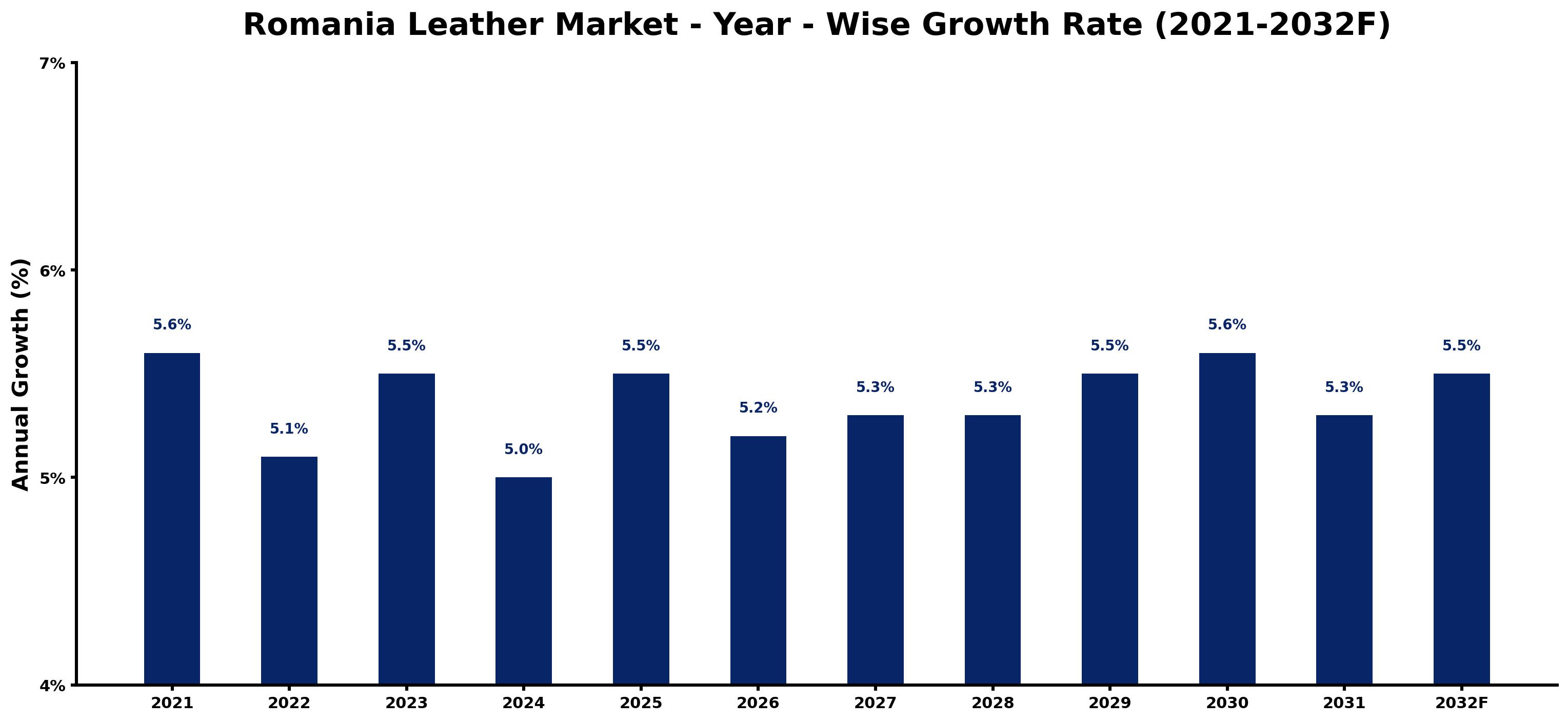
The table below presents the year wise growth rates along with the key drivers influencing the market
| Year | Growth Rate | Major Drivers |
| 2021 | 5.6% | Consumer interest in sustainable products began shaping preferences in the leather market. |
| 2022 | 5.1% | E-commerce platforms expanded significantly, creating new opportunities for local leather artisans. |
| 2023 | 5.5% | A focus on quality craftsmanship attracted international brands to the Romanian market. |
| 2024 | 5.0% | Attempts to revive traditional leatherworking skills gained traction in urban and rural areas. |
| 2025 | 5.5% | Fashion trends increasingly emphasize bespoke leather products, boosting local craftsmanship appeals. |
| 2026 | 5.2% | Investment in eco-friendly tanning processes became a priority for many manufacturers. |
| 2027 | 5.3% | Export opportunities flourished as Romanian leather gained recognition in European markets. |
| 2028 | 5.3% | Collaboration between designers and leather producers sparked innovative product lines and styles. |
| 2029 | 5.5% | Emerging technologies began enhancing manufacturing efficiency, reducing production costs significantly. |
| 2030 | 5.6% | Growing interest in premium leather goods coincided with rising disposable income levels. |
| 2031 | 5.3% | Cultural heritage projects revitalized traditional leather production methods across various regions. |
| 2032 | 5.5% | Integration of smart technologies into leather goods attracted tech-savvy consumers and opened new markets. |
Note - Market size estimations and growth projections presented in this report are based on 6Wresearch's advanced forecasting approach, validated with industry datasets as of June 2026.
Romania Leather Market Synopsis
The Romania Leather Market is projected to reach 5.2% and witness significant growth during the forecast period (2026-2032). This growth is attributed to Romania's rich heritage in leather production, which is marked by a combination of skilled craftsmanship, an abundant supply of high-quality raw materials, and a growing demand for leather products across various sectors including footwear, apparel, and accessories.
Romania Leather Market Growth Drivers
Several factors are contributing to the expansion of the Romania Leather Market. Firstly, the increasing demand for sustainable and ethically produced leather goods aligns with global consumer trends, prompting manufacturers to adapt environmentally friendly practices in their production processes. Secondly, Romania's cost-effective manufacturing capabilities make it an attractive destination for both domestic and international buyers seeking quality leather products without excessive pricing. Thirdly, the growth of the fashion industry in Romania, coupled with rising disposable incomes, has led to a surge in consumer spending on luxury leather items. Additionally, the development of e-commerce platforms has facilitated wider access to leather products, thus boosting market sales. Lastly, ongoing investments in technology and innovation within the sector are enhancing productivity and efficiency, positioning the Romania Leather Market for substantial growth.
Romania Leather Market Trends and Opportunities
The Romania Leather Market is witnessing notable trends that reflect evolving consumer preferences and industry practices. A significant trend is the shift towards sustainable production methods, which include the use of vegetable-tanned leather and a reduction in water and chemical usage during manufacturing. This trend is driven by consumers who prioritize environmentally friendly products and ethical treatment of animals. Furthermore, there is an increasing demand for high-quality leather goods, particularly in the fashion and accessories segment, leading to greater emphasis on design innovation and craftsmanship among manufacturers. The embrace of digital technologies for marketing and sales strategies is also rising, allowing companies to reach a broader audience and streamline operations. As these trends gain momentum, opportunities for investment, particularly in sustainable leather production and advanced manufacturing techniques, are becoming increasingly attractive.
Romania Leather Market Challenges and Restraints
While the Romania Leather Market is set for growth, it faces several challenges. Fluctuating raw material prices, particularly for hides and skins, pose a significant risk to manufacturers' profitability. This volatility can strain production costs and ultimately influence retail pricing strategies. Additionally, competition from synthetic leather alternatives, which are often perceived as more affordable and sustainable, continues to threaten traditional leather products. Furthermore, stringent environmental regulations are increasingly impacting the leather manufacturing sector, necessitating compliance that can incur substantial costs. Brands must invest in greener technologies and processes to meet these regulations, which may strain smaller enterprises. Lastly, adapting to labor shortages, as the workforce ages and younger generations pursue different career paths, presents ongoing challenges for the industry.
Romania Leather Market Investment Opportunities
The Romania Leather Market offers a plethora of investment opportunities for discerning investors. The country's historical expertise in leather craftsmanship and its skilled labor force provide a suitable landscape for establishing leather processing facilities, tanneries, and manufacturing units. Investors can leverage the growing domestic and international demand for high-quality leather goods by focusing on premium product lines. Moreover, there is a significant opportunity to invest in sustainable practices and technologies to enhance production efficiency while aligning with consumer preferences for eco-friendly products. The market's integration of innovation in design and production processes offers further avenues for investment, particularly for those looking to penetrate the luxury segment of the market. Overall, the potential for profitable returns in the Romania Leather Market remains high, making it an appealing consideration for investment.
Romania Leather Market Government Investment and Initiatives
Government initiatives play a crucial role in shaping the Romania Leather Market, particularly through regulations aimed at ensuring animal welfare and environmental standards. The Romanian government has implemented various measures to uphold humane treatment of animals in leather production, as well as to promote environmentally sound practices in manufacturing processes. Furthermore, as a member of the European Union, Romania adheres to EU regulations that foster sustainable practices in the leather industry. With public investment directed towards modernizing the industry and enhancing production capabilities, the government is actively supporting the sector's growth. Development plans aimed at improving infrastructure and facilitating access to international markets further demonstrate the government's commitment to the advancement of the leather industry, ensuring compliance with international trade standards and promoting ethical practices across the board.
Romania Leather Market Latest Developments (May 2025 - June 2026)
In the period from May 2025 to June 2026, the Romania Leather Market has seen several key developments that indicate a positive trajectory. Industry stakeholders have reported increased collaborations aimed at enhancing sustainability practices, with many companies beginning to adopt new technologies that optimize resource use. Moreover, there has been a notable increase in participation at international trade fairs and exhibitions, which has enabled manufacturers to showcase their innovations while connecting with potential buyers and partners. Additionally, consumer awareness regarding the importance of ethical sourcing has led to a shift in purchasing habits, with more consumers opting for products that are certified sustainable. These developments highlight the adaptability of the industry in response to market demands and regulations, reinforcing the market's commitment to sustainability and quality.
Romania Leather Market - Key Attractiveness of the Report
- 10 Years of Market Numbers
- Historical Data Starting from 2022 to 2025
- Base Year: 2025
- Forecast Data until 2032
- Key Performance Indicators Impacting the Market
- Major Upcoming Developments and Projects
Key Highlights of the Report:
- Romania Leather Market Outlook
- Market Size of Romania Leather Market, 2025
- Forecast of Romania Leather Market, 2032F
- Historical Data and Forecast of Romania Leather Revenues & Volume for the Period 2022-2032F
- Romania Leather Market Trend Evolution
- Romania Leather Market Drivers and Challenges
- Romania Leather Price Trends
- Romania Leather Porter's Five Forces
- Romania Leather Industry Life Cycle
- Historical Data and Forecast of Romania Leather Market Revenues & Volume By Type for the Period 2022-2032F
- Historical Data and Forecast of Romania Leather Market Revenues & Volume By Luggage for the Period 2022-2032F
- Historical Data and Forecast of Romania Leather Market Revenues & Volume By Footwear for the Period 2022-2032F
- Historical Data and Forecast of Romania Leather Market Revenues & Volume By Accessories for the Period 2022-2032F
- Historical Data and Forecast of Romania Leather Market Revenues & Volume By Distribution Channel for the Period 2022-2032F
- Historical Data and Forecast of Romania Leather Market Revenues & Volume By Online for the Period 2022-2032F
- Historical Data and Forecast of Romania Leather Market Revenues & Volume By Offline for the Period 2022-2032F
- Romania Leather Import Export Trade Statistics
- Market Opportunity Assessment By Type
- Market Opportunity Assessment By Distribution Channel
- Romania Leather Top Companies Market Share
- Romania Leather Competitive Benchmarking By Technical and Operational Parameters
- Romania Leather Company Profiles
- Romania Leather Key Strategic Recommendations






































