Romania Phenol Market Size (2020-2030)
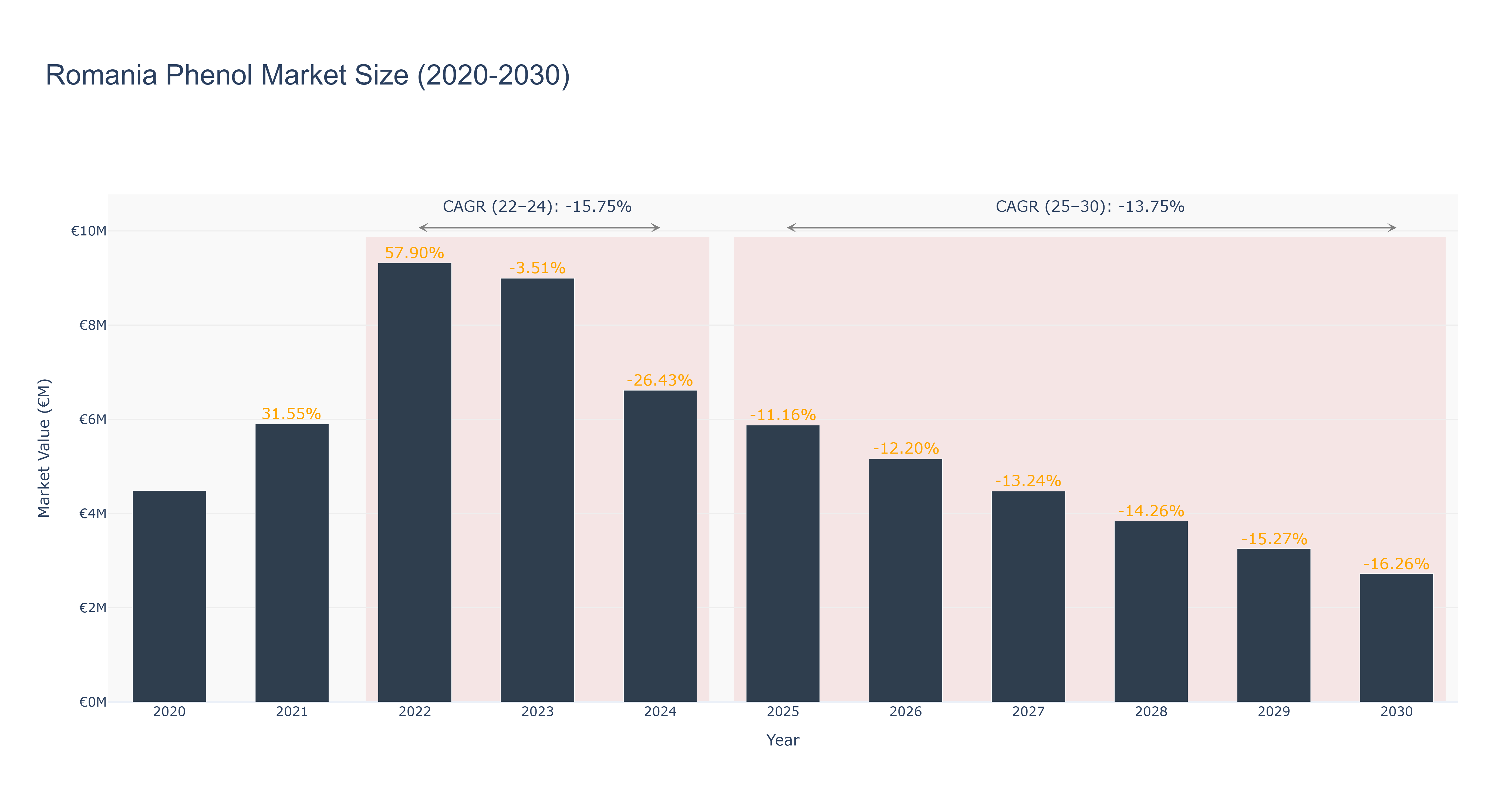
Romania Phenol Market has seen fluctuations in market size over the years. The peak market size was €9.32 million in 2022, followed by a decline to €2.72 million in 2030. The market experienced a significant drop in size from 2024 to 2025 due to a CAGR of -26.43%, possibly influenced by economic factors or industry shifts. Despite this, the market is projected to stabilize with a CAGR of -13.75% from 2025 to 2030, indicating a more moderate decline. Industry drivers such as changing consumer preferences or regulatory changes may continue to impact the market. In the near future, Romania is set to invest in sustainable production methods for phenol, aiming to align with global environmental standards and enhance market competitiveness.
Romania Phenol Market: Production & Trade Performance (2019-2025)
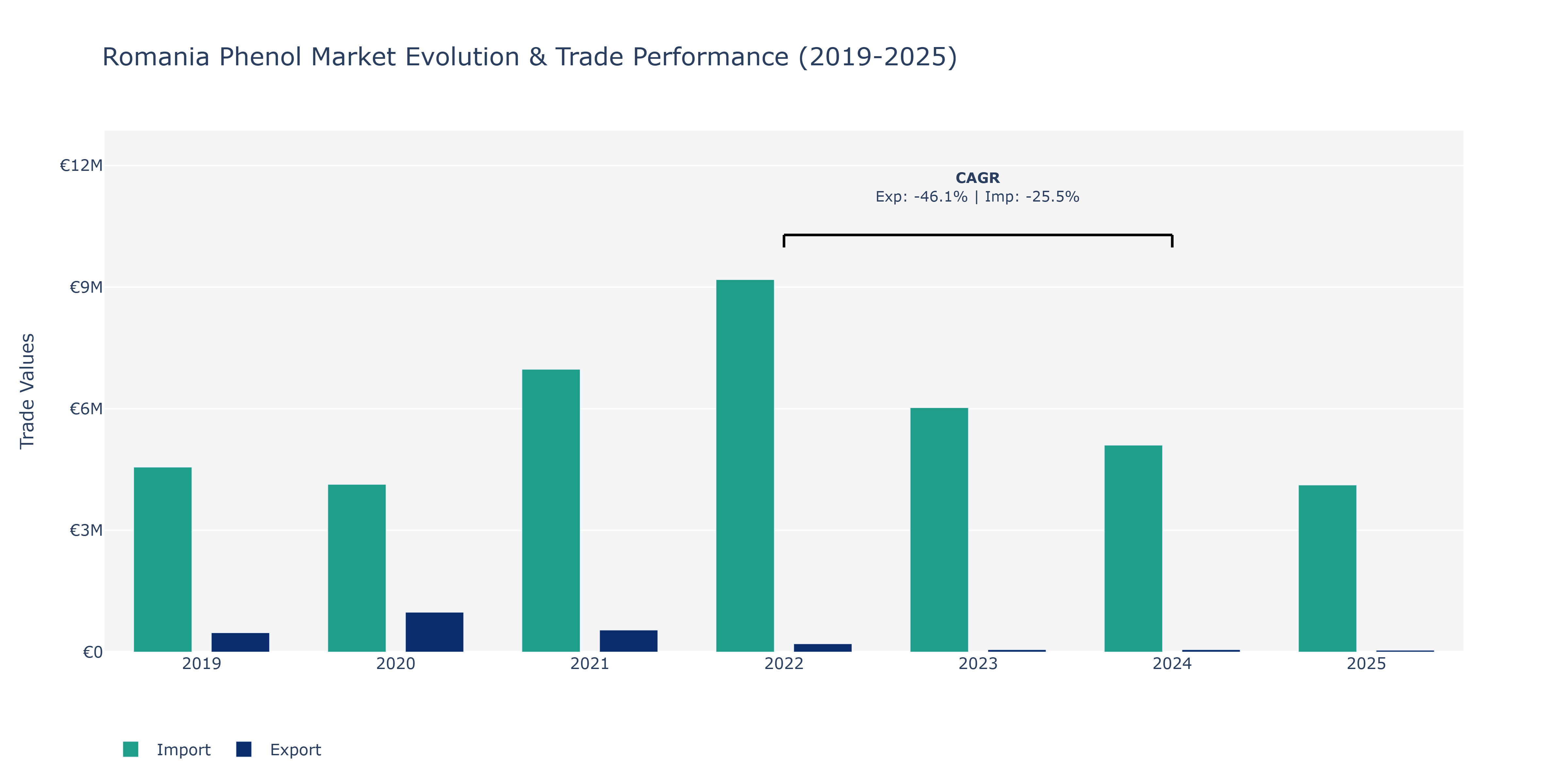
In the Romania Phenol Market, exports experienced a noticeable fluctuation over the years, starting at €476.36 thousand in 2019, peaking at €980.6 thousand in 2020, and then declining to €44.4 thousand in 2025. This decline can be attributed to various factors such as changes in global demand, shifts in market dynamics, and internal factors affecting production or competitiveness. On the other hand, imports followed a different trajectory, starting at €4.56 million in 2019, reaching their peak at €9.18 million in 2022, and then gradually decreasing to €4.12 million in 2020. The decrease in imports from 2022 to 2025 could be influenced by changes in domestic production capabilities, shifts in sourcing strategies, or regulatory adjustments impacting foreign trade. These trends underline the market's sensitivity to both internal and external factors, necessitating strategic planning to navigate uncertainties and optimize trade relationships.
Romania Phenol Market Overview
The Romania Phenol Market is witnessing steady growth driven by various end-use industries such as automotive, construction, electronics, and pharmaceuticals. Phenol, a versatile chemical compound, is primarily used in the production of resins, plastics, and pharmaceuticals. The market is also influenced by factors such as increasing demand for phenol derivatives like bisphenol-A (BPA) and growing awareness towards sustainable chemical products. Key players in the Romania Phenol Market include Oltchim SA and Chimcomplex SA, who are investing in research and development activities to introduce innovative products and gain a competitive edge. However, challenges such as fluctuating raw material prices and environmental concerns regarding phenol production processes may hinder market growth in the coming years.
Romania Phenol Market Trends
In the Romania Phenol market, there is a growing demand for Bisphenol-A (BPA)-free products due to increasing awareness about the potential health risks associated with BPA. This has led to a shift towards the use of alternative materials in various industries such as packaging, electronics, and automotive. Additionally, there is a rising emphasis on sustainable and environmentally friendly production processes, with companies investing in technologies that reduce carbon footprint and improve energy efficiency. The market is also witnessing a trend towards strategic partnerships and collaborations among key players to enhance product offerings and expand market reach. Overall, the Romania Phenol market is evolving towards more sustainable practices and innovative solutions to meet the changing consumer preferences and regulatory requirements.
Romania Phenol Market Challenges
In the Romania Phenol Market, some of the key challenges faced include fluctuating raw material prices, environmental regulations, and competition from imported phenol products. The volatility in raw material prices, particularly for benzene and propylene, can impact the overall production costs for local manufacturers. Strict environmental regulations require companies to invest in sustainable practices and technologies to minimize their carbon footprint and ensure compliance. Additionally, the market faces competition from imported phenol products, which can sometimes offer lower prices due to economies of scale or lower production costs in other regions. Local producers must focus on product quality, innovation, and developing strong distribution channels to remain competitive in the market while navigating these challenges.
Romania Phenol Market Investment Opportunities
The Romania Phenol Market presents promising investment opportunities due to the increasing demand for phenol in various industries such as automotive, construction, electronics, and healthcare. With a growing economy and favorable government policies attracting foreign investments, the market is poised for significant growth. Investing in phenol production facilities or partnering with local manufacturers can be lucrative strategies to capitalize on the rising demand. Additionally, advancements in technology and increasing emphasis on sustainable practices in the chemical industry present opportunities for innovation and differentiation in the market. Collaborating with key players in the value chain and staying informed about market trends and regulatory developments can help investors make informed decisions and achieve success in the Romania Phenol Market.
Romania Phenol Market Government Policy
In Romania, government policies related to the Phenol Market mainly focus on environmental protection and promoting sustainable development. The government has implemented regulations to control emissions and limit the use of hazardous chemicals in the production of phenol. Additionally, there are policies in place to encourage the adoption of cleaner production technologies and promote the recycling and reuse of phenol to minimize environmental impact. The government also supports research and development initiatives aimed at improving the efficiency and sustainability of phenol production processes. Overall, the regulatory framework in Romania for the Phenol Market is geared towards ensuring compliance with environmental standards and fostering a more sustainable and responsible approach to phenol manufacturing.
Romania Phenol Market Future Outlook
The future outlook for the Romania Phenol Market appears positive, driven by various factors such as the increasing demand for phenol in industries like pharmaceuticals, plastics, and construction. The market is expected to witness steady growth due to the rising investments in infrastructure development and the expanding manufacturing sector in the country. Additionally, the growing awareness about the benefits of using phenol in various applications, along with the government initiatives to promote sustainable practices, are likely to further fuel the market growth. However, challenges related to raw material availability and fluctuating prices of phenol may impact the market to some extent. Overall, with the favorable market conditions and increasing demand from end-user industries, the Romania Phenol Market is anticipated to show promising growth prospects in the coming years.
Key Highlights of the Report:
- Romania Phenol Market Outlook
- Market Size of Romania Phenol Market, 2025
- Forecast of Romania Phenol Market, 2032
- Historical Data and Forecast of Romania Phenol Revenues & Volume for the Period 2022 - 2032F
- Romania Phenol Market Trend Evolution
- Romania Phenol Market Drivers and Challenges
- Romania Phenol Price Trends
- Romania Phenol Porter's Five Forces
- Romania Phenol Industry Life Cycle
- Historical Data and Forecast of Romania Phenol Market Revenues & Volume By End-users for the Period 2022 - 2032F
- Historical Data and Forecast of Romania Phenol Market Revenues & Volume By Bisphenol A for the Period 2022 - 2032F
- Historical Data and Forecast of Romania Phenol Market Revenues & Volume By Phenolic Resins for the Period 2022 - 2032F
- Historical Data and Forecast of Romania Phenol Market Revenues & Volume By Caprolactam for the Period 2022 - 2032F
- Historical Data and Forecast of Romania Phenol Market Revenues & Volume By Alkyl Phenyls for the Period 2022 - 2032F
- Historical Data and Forecast of Romania Phenol Market Revenues & Volume By Others for the Period 2022 - 2032F
- Romania Phenol Import Export Trade Statistics
- Market Opportunity Assessment By End-users
- Romania Phenol Top Companies Market Share
- Romania Phenol Competitive Benchmarking By Technical and Operational Parameters
- Romania Phenol Company Profiles
- Romania Phenol Key Strategic Recommendations






































