Russia Canned Tuna Market Size Growth Rate
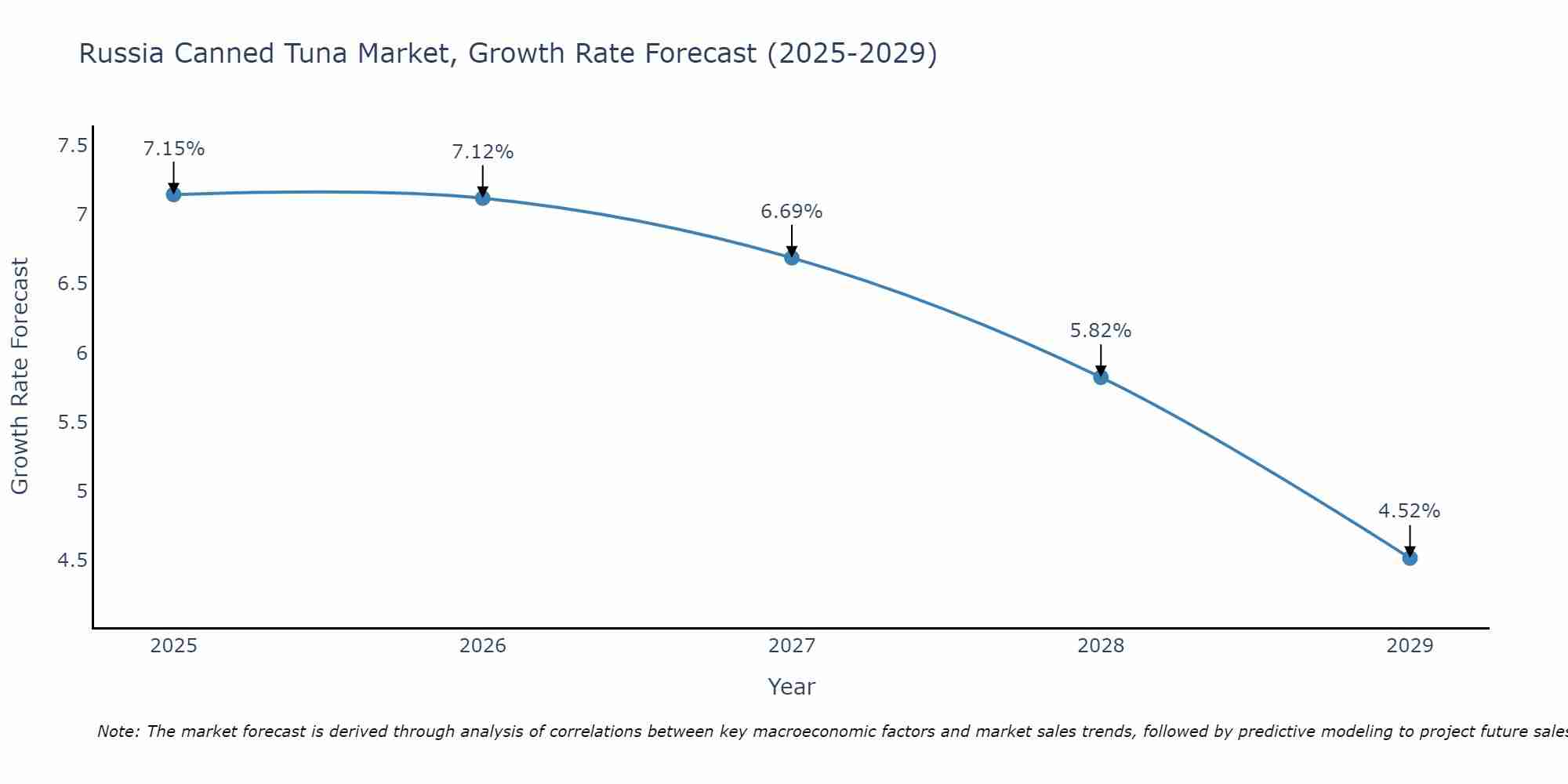
The Russia Canned Tuna Market may undergo a gradual slowdown in growth rates between 2025 and 2029. Beginning strongly at 7.15% in 2025, growth softens to 4.52% in 2029.
Russia Canned Tuna Market Overview
The canned tuna market in Russia is a significant segment of the overall canned seafood market. Tuna is favored for its nutritional value, convenience, and versatility in meal preparation. The market is characterized by a mix of domestic production and imports, primarily from countries like Thailand, Indonesia, and the Philippines. Price sensitivity among consumers, along with quality concerns, shapes purchasing decisions. The market is also seeing an uptick in demand for sustainable and responsibly sourced tuna products, reflecting broader global trends towards environmental responsibility in seafood consumption.
Drivers of the market
The canned tuna market in Russia is primarily driven by the growing consumer inclination towards protein-rich and low-fat food items. The versatility of canned tuna, which can be used in salads, sandwiches, and various culinary dishes, contributes to its popularity. Increased awareness about the health benefits of tuna, such as its omega-3 fatty acid content, is another driving factor. Furthermore, the advancements in canning technology have improved product quality and shelf life, making canned tuna a staple in many households. However, the market faces challenges from the rising concerns over sustainability and overfishing.
Challenges of the market
In the canned tuna market, Russia grapples with issues such as overfishing and environmental concerns, which affect the sustainability of tuna supplies. Regulatory changes and international agreements aimed at preserving marine life add complexity to the supply chain. Additionally, rising costs of tuna procurement and transportation, coupled with competition from alternative protein sources, put pressure on pricing strategies. Consumer health consciousness is also pushing demand for products with fewer preservatives, challenging traditional canned tuna products.
Government Policy of the market
In the canned tuna market, government policies focus on sustainable fishing practices and environmental protection. The Russia government has established quotas to prevent overfishing and introduced certification requirements to ensure that canned tuna products meet international standards. Import tariffs on canned tuna are also applied to promote domestic production.
Key Highlights of the Report:
- Russia Canned Tuna Market Outlook
- Market Size of Russia Canned Tuna Market, 2024
- Forecast of Russia Canned Tuna Market, 2031
- Historical Data and Forecast of Russia Canned Tuna Revenues & Volume for the Period 2021-2031
- Russia Canned Tuna Market Trend Evolution
- Russia Canned Tuna Market Drivers and Challenges
- Russia Canned Tuna Price Trends
- Russia Canned Tuna Porter`s Five Forces
- Russia Canned Tuna Industry Life Cycle
- Historical Data and Forecast of Russia Canned Tuna Market Revenues & Volume By Product for the Period 2021-2031
- Historical Data and Forecast of Russia Canned Tuna Market Revenues & Volume By Skipjack for the Period 2021-2031
- Historical Data and Forecast of Russia Canned Tuna Market Revenues & Volume By Yellowfin for the Period 2021-2031
- Historical Data and Forecast of Russia Canned Tuna Market Revenues & Volume By Others for the Period 2021-2031
- Historical Data and Forecast of Russia Canned Tuna Market Revenues & Volume By Distribution Channel for the Period 2021-2031
- Historical Data and Forecast of Russia Canned Tuna Market Revenues & Volume By Hypermarket & Supermarket for the Period 2021-2031
- Historical Data and Forecast of Russia Canned Tuna Market Revenues & Volume By Specialty Stores for the Period 2021-2031
- Historical Data and Forecast of Russia Canned Tuna Market Revenues & Volume By Online for the Period 2021-2031
- Russia Canned Tuna Import Export Trade Statistics
- Market Opportunity Assessment By Product
- Market Opportunity Assessment By Distribution Channel
- Russia Canned Tuna Top Companies Market Share
- Russia Canned Tuna Competitive Benchmarking By Technical and Operational Parameters
- Russia Canned Tuna Company Profiles
- Russia Canned Tuna Key Strategic Recommendations






































