Russia Insurance Telematics Market Size & Growth Rate (2026-2032)
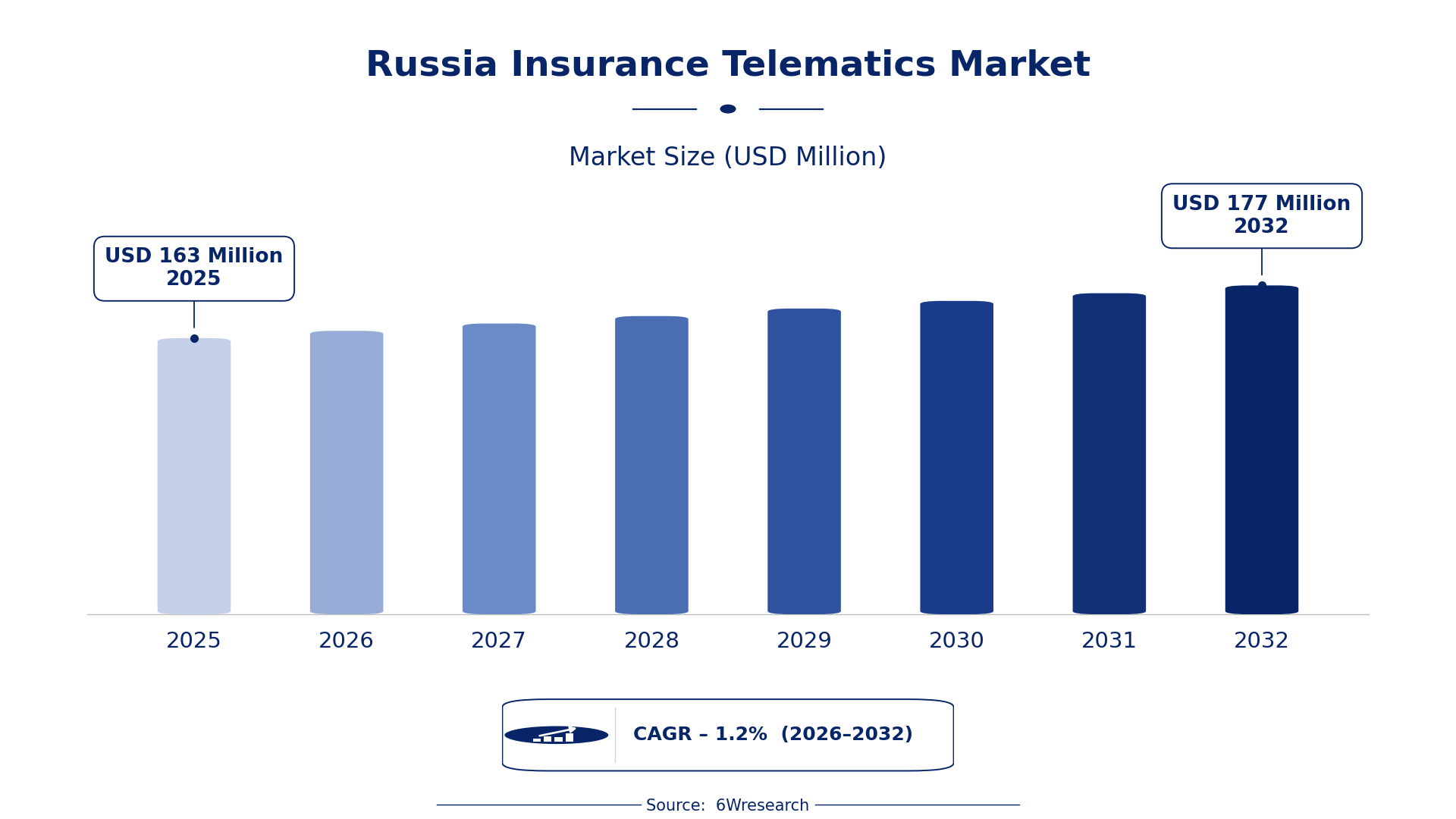
The Russia Insurance Telematics Market was estimated at USD 163 Million in 2025 and is projected to reach USD 177 Million by 2032, growing at a CAGR of 1.2% from 2026 to 2032.
Russia Insurance Telematics Market Synopsis
The primary force driving the Russia Insurance Telematics Market is the increasing demand for personalized insurance solutions. Insurers are keen to utilize telematics data to assess risk more accurately, which translates into tailored premiums and improved customer satisfaction.
Additionally, the proliferation of connected vehicles is contributing to market growth. As more consumers adopt smart technologies, insurers are leveraging real-time data to enhance their offerings, thus fostering stronger relationships with policyholders.
Russia Insurance Telematics Market Year-wise Growth Rate and Key Drivers
This graph illustrates the annual growth rates of the Russia Insurance Telematics Market from 2021 to 2032, highlighting a steady upward trajectory and projected expansion over the forecast period.
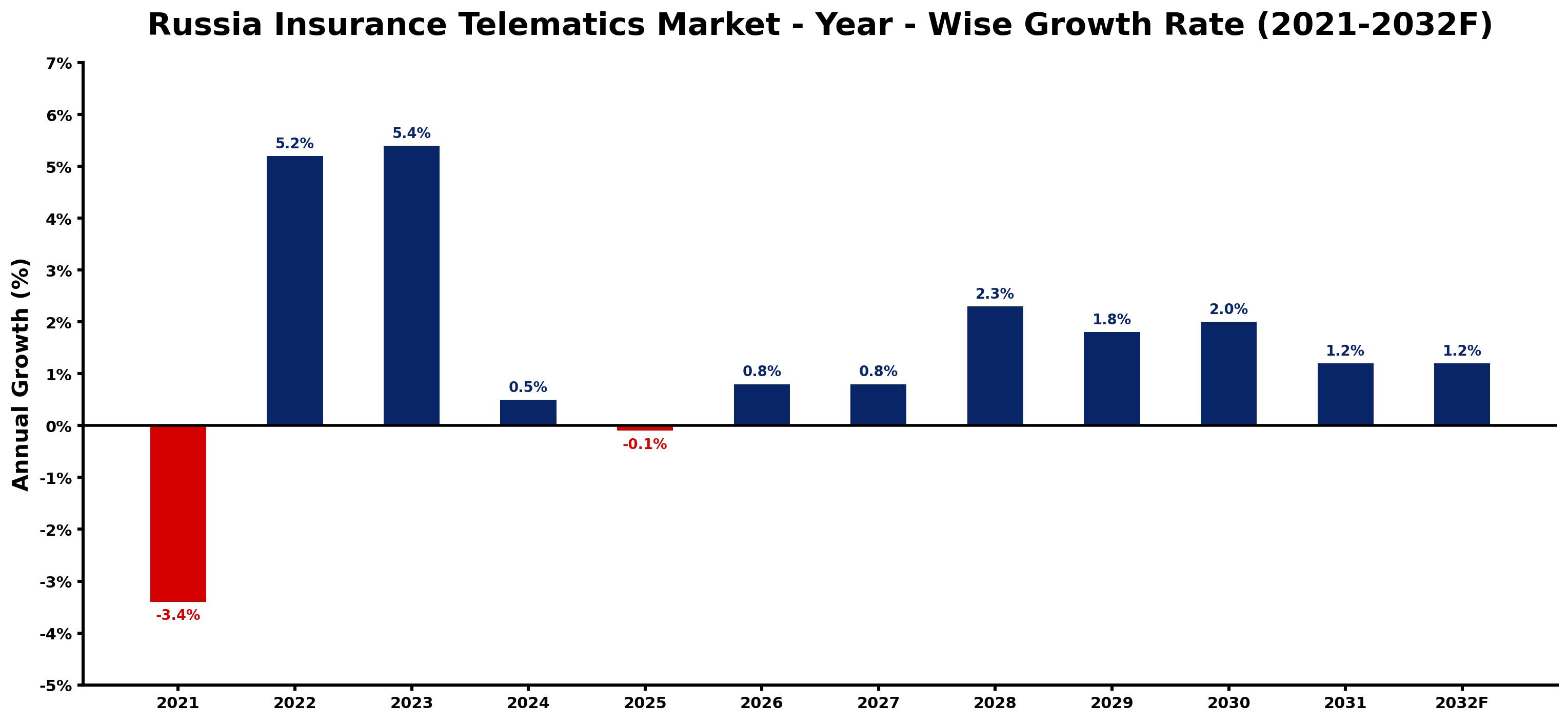
The table below presents the year‑wise growth rates along with the key drivers influencing the market
| Year | Growth Rate | Major Drivers |
| 2021 | -3.4% | Insurers faced strict regulations from the Central Bank of Russia. |
| 2022 | 5.2% | Increased government focus on road safety regulations |
| 2023 | 5.4% | Growing adoption of connected car technologies in Russia |
| 2024 | 0.5% | Introduction of telematics-based insurance discounts by insurers |
| 2025 | -0.1% | Increased skepticism about telematics among local consumers. |
| 2026 | 0.8% | Higher consumer awareness of telematics benefits for savings |
| 2027 | 0.8% | Partnerships between insurers and tech firms for analytics |
| 2028 | 2.3% | Strengthened data privacy regulations boosting consumer trust |
| 2029 | 1.8% | Rising usage of mobile devices among young drivers |
| 2030 | 2.0% | Government incentives for insurance companies adopting telematics |
| 2031 | 1.2% | Emerging telematics startups attracting investment capital |
| 2032 | 1.2% | Increased public campaigns on insurance fraud prevention |
Note: Market size estimations and growth projections presented in this report are based on 6Wresearch's proprietary forecasting methodology, utilizing the latest available industry data, government publications, and primary research inputs.
Russia Insurance Telematics Market Key Takeaways
Below are some of the specific key takeaways from the market, including:
- The market is witnessing an uptick in partnerships between insurers and telematics providers.
- Government initiatives are actively promoting the adoption of telematics in insurance policies.
- Consumer awareness around usage-based insurance is steadily increasing.
- Advanced technologies like AI are enhancing telematics solutions, driving better risk assessment.
- Challenges such as data privacy concerns still need to be addressed for broader adoption.
Evaluation of Restraints in Russia Insurance Telematics Market
Despite its potential, the Russia Insurance Telematics Market faces several restraints. Regulatory hurdles pose a significant challenge, particularly regarding data privacy. The collection of personal driving data raises concerns among consumers, which can lead to reluctance in adopting telematics solutions. Additionally, infrastructure limitations in remote areas hinder the widespread implementation of telematics technologies. These factors create a complex environment that insurers must navigate to fully harness the benefits of telematics.
Russia Insurance Telematics Market Trends
A notable trend in the Russia Insurance Telematics Market is the shift toward usage-based insurance (UBI). Insurers are increasingly utilizing telematics data to create personalized insurance products that reflect actual driver behavior. This shift not only enhances customer engagement but also results in improved risk assessment accuracy.
on top of that, advancements in telematics technology, including the integration of AI and machine learning, are transforming how data is analyzed and applied. These innovations are enabling insurers to offer more competitive products that cater to the evolving needs of consumers.
Russia Insurance Telematics Market Opportunities
Investment opportunities abound in the Russia Insurance Telematics Market. The increasing adoption of telematics devices opens avenues for technology providers and software developers focused on data analytics. Insurers looking to enhance their offerings through telematics will seek partnerships with innovative tech firms, creating a fertile ground for collaboration and growth. on top of that, the government's push for road safety through telematics implementation presents a unique opportunity for stakeholders to engage in projects aimed at reducing accidents and improving overall road safety.
Government Initiatives in the Russia Insurance Telematics Market
Government policy is playing a crucial role in shaping the Russia Insurance Telematics Market. With a focus on enhancing road safety and reducing insurance fraud, several initiatives are underway to promote telematics use in the insurance sector. These policies not only foster technological adoption but also aim to protect consumer data, thus addressing privacy concerns that could hinder market growth.
- A mandatory initiative for the installation of telematics devices in commercial vehicles was recently completed to monitor driving behavior.
- Current efforts include the promotion of usage-based insurance plans, which are being incentivized through various government programs.
- A national framework focused on data protection regulations to secure consumer information is currently being developed.
- Plans are in place for a public-private partnership expected to enhance infrastructure for telematics devices by 2028.
Future Insights of the Russia Insurance Telematics Market
Looking ahead to 2026-2032, the Russia Insurance Telematics Market is set for considerable expansion. The increasing integration of telematics technology into insurance practices will continue to drive demand for personalized insurance solutions. As government support grows and consumer awareness rises, we can expect innovative offerings that leverage real-time data to reshape the insurance sector. This evolution will create new opportunities for technology providers and insurers alike, establishing a more dynamic and responsive market environment.
Russia Insurance Telematics Market Latest Developments
Recent activity in the Russia Insurance Telematics Market indicates a strong momentum toward innovation and collaboration. Insurance companies are actively seeking new technologies and partnerships to enhance their telematics offerings and improve customer experiences. The ongoing developments reflect a commitment to adopting advanced analytics and improving operational efficiencies.
- A leading regional insurer launched an AI-powered telematics application in early 2025, enhancing risk assessment capabilities.
- A major technology vendor is currently rolling out a new telematics device that integrates with existing insurance platforms, enhancing data collection and analysis.
- Collaboration between insurers and telematics service providers is ongoing, aimed at creating a unified platform for usage-based insurance.
- Upcoming plans for a nationwide awareness campaign focused on the benefits of telematics in insurance are set to commence in Q2 2026.
Russia Insurance Telematics Market - Key Attractiveness of the Report
- 10 Years of Market Numbers
- Historical Data Starting from 2022 to 2025
- Base Year: 2025
- Forecast Data until 2032
- Key Performance Indicators Impacting the Market
- Major Upcoming Developments and Projects
Key Highlights of the Report:
- Russia Insurance Telematics Market Outlook
- Market Size of Russia Insurance Telematics Market, 2025
- Forecast of Russia Insurance Telematics Market, 2032
- Historical Data and Forecast of Russia Insurance Telematics Revenues & Volume for the Period 2022-2032F
- Russia Insurance Telematics Market Trend Evolution
- Russia Insurance Telematics Market Drivers and Challenges
- Russia Insurance Telematics Price Trends
- Russia Insurance Telematics Porter's Five Forces
- Russia Insurance Telematics Industry Life Cycle
- Historical Data and Forecast of Russia Insurance Telematics Market Revenues & Volume By End User for the Period 2022-2032F
- Historical Data and Forecast of Russia Insurance Telematics Market Revenues & Volume By Small for the Period 2022-2032F
- Historical Data and Forecast of Russia Insurance Telematics Market Revenues & Volume By Medium Enterprises for the Period 2022-2032F
- Historical Data and Forecast of Russia Insurance Telematics Market Revenues & Volume By Large Enterprises for the Period 2022-2032F
- Historical Data and Forecast of Russia Insurance Telematics Market Revenues & Volume By Deployment Type for the Period 2022-2032F
- Historical Data and Forecast of Russia Insurance Telematics Market Revenues & Volume By Cloud for the Period 2022-2032F
- Historical Data and Forecast of Russia Insurance Telematics Market Revenues & Volume By On-Premises for the Period 2022-2032F
- Historical Data and Forecast of Russia Insurance Telematics Market Revenues & Volume By Organization Size for the Period 2022-2032F
- Historical Data and Forecast of Russia Insurance Telematics Market Revenues & Volume By Small and Medium Enterprises (SMEs) for the Period 2022-2032F
- Historical Data and Forecast of Russia Insurance Telematics Market Revenues & Volume By Large Enterprises for the Period 2022-2032F
- Russia Insurance Telematics Import Export Trade Statistics
- Market Opportunity Assessment By End User
- Market Opportunity Assessment By Deployment Type
- Market Opportunity Assessment By Organization Size
- Russia Insurance Telematics Top Companies Market Share
- Russia Insurance Telematics Competitive Benchmarking By Technical and Operational Parameters
- Russia Insurance Telematics Company Profiles
- Russia Insurance Telematics Key Strategic Recommendations






































