Saudi Arabia Bicycle Market Size Growth Rate
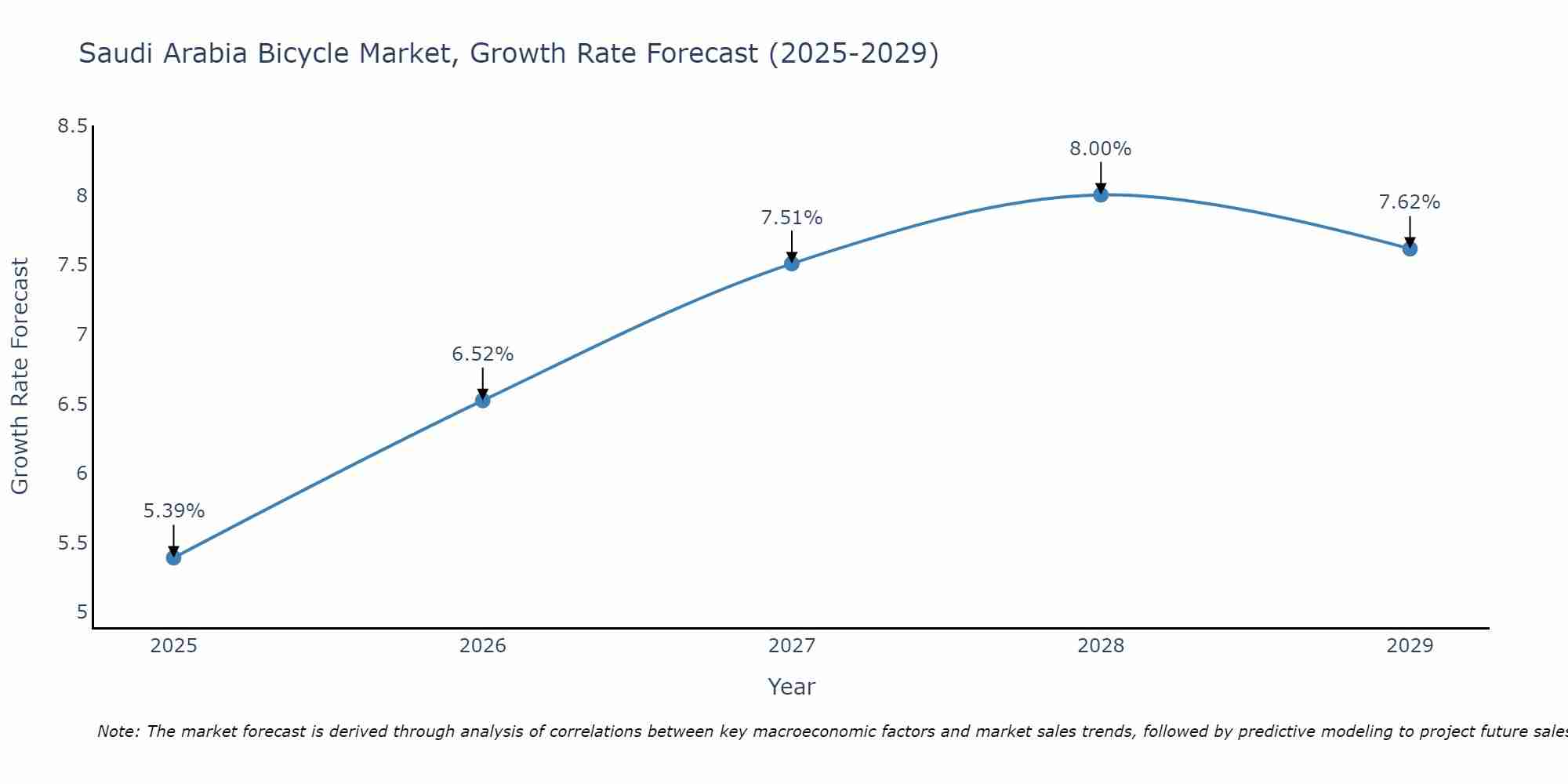
The Saudi Arabia Bicycle Market is projected to witness mixed growth rate patterns during 2025 to 2029. Growth accelerates to 8.00% in 2028, following an initial rate of 5.39%, before easing to 7.62% at the end of the period.
Saudi Arabia Bicycle Market Synopsis
The bicycle market in Saudi Arabia is gradually gaining traction as a result of changing attitudes toward health, fitness, and alternative transportation. Bicycles are becoming popular not only for recreational use but also as a means of commuting and reducing traffic congestion. The market offers a range of options, from basic bicycles to specialized models for different terrains and purposes. Factors such as urban planning, environmental concerns, and initiatives to promote active lifestyles contribute to the growth of the bicycle market. Additionally, bicycle-sharing programs and cycling events have further boosted awareness and interest in cycling.
Drivers of the Market
The Saudi Arabia bicycle market is influenced by factors like health and wellness trends, environmental awareness, and urban mobility needs. With a focus on promoting healthier lifestyles and reducing carbon emissions, cycling has gained popularity as an eco-friendly mode of transportation. As cities invest in cycling infrastructure and promote cycling-friendly environments, the demand for bicycles grows. Additionally, the affordability and versatility of bicycles make them an attractive option for both commuting and leisure activities, further propelling market growth.
Challenges of the Market
The Saudi Arabia bicycle market encounters challenges associated with promoting cycling as a mode of transportation, addressing road safety concerns, and developing cycling-friendly infrastructure. Changing cultural norms and encouraging sustainable transportation options pose notable challenges.
COVID-19 Impact on the Market
The bicycle market in Saudi Arabia experienced a unique impact during the COVID-19 pandemic. With restrictions on public transportation and a growing emphasis on personal health and fitness, there was increased interest in cycling as a means of transportation and exercise. Bicycle sales surged as people sought alternative modes of commuting and outdoor activities. However, supply chain disruptions and increased demand led to shortages in some areas. The market benefited from the growing trend toward sustainable transportation and healthier lifestyles.
Key Players in the Market
The Saudi Arabia bicycle market is currently dominated by a few key players, including Giant and Trek, both of which have had a presence in the country for many years. Other notable companies that are active in the Saudi Arabia bike sector include Specialized, Merida, Cannondale, Cube Bikes and Scott Sports. All these brands offer a wide range of models to suit different consumers? needs and preferences. Local businesses such as Al-Hassan Cycles also play an important role in providing bicycles to customers within the region.
Key Highlights of the Report:
- Saudi Arabia Bicycle Market Outlook
- Market Size of Saudi Arabia Bicycle Market, 2024
- Forecast of Saudi Arabia Bicycle Market, 2031
- Historical Data and Forecast of Saudi Arabia Bicycle Revenues & Volume for the Period 2021-2031
- Saudi Arabia Bicycle Market Trend Evolution
- Saudi Arabia Bicycle Market Drivers and Challenges
- Saudi Arabia Bicycle Price Trends
- Saudi Arabia Bicycle Porter's Five Forces
- Saudi Arabia Bicycle Industry Life Cycle
- Historical Data and Forecast of Saudi Arabia Bicycle Market Revenues & Volume By Product for the Period 2021-2031
- Historical Data and Forecast of Saudi Arabia Bicycle Market Revenues & Volume By Mountain Bikes for the Period 2021-2031
- Historical Data and Forecast of Saudi Arabia Bicycle Market Revenues & Volume By Hybrid Bikes for the Period 2021-2031
- Historical Data and Forecast of Saudi Arabia Bicycle Market Revenues & Volume By Road Bikes for the Period 2021-2031
- Historical Data and Forecast of Saudi Arabia Bicycle Market Revenues & Volume By Cargo Bikes for the Period 2021-2031
- Historical Data and Forecast of Saudi Arabia Bicycle Market Revenues & Volume By Others for the Period 2021-2031
- Historical Data and Forecast of Saudi Arabia Bicycle Market Revenues & Volume By Technology for the Period 2021-2031
- Historical Data and Forecast of Saudi Arabia Bicycle Market Revenues & Volume By Electric for the Period 2021-2031
- Historical Data and Forecast of Saudi Arabia Bicycle Market Revenues & Volume By Conventional for the Period 2021-2031
- Historical Data and Forecast of Saudi Arabia Bicycle Market Revenues & Volume By End-user for the Period 2021-2031
- Historical Data and Forecast of Saudi Arabia Bicycle Market Revenues & Volume By Men for the Period 2021-2031
- Historical Data and Forecast of Saudi Arabia Bicycle Market Revenues & Volume By Women for the Period 2021-2031
- Historical Data and Forecast of Saudi Arabia Bicycle Market Revenues & Volume By Kids for the Period 2021-2031
- Historical Data and Forecast of Saudi Arabia Bicycle Market Revenues & Volume By Distribution Channel for the Period 2021-2031
- Historical Data and Forecast of Saudi Arabia Bicycle Market Revenues & Volume By Online for the Period 2021-2031
- Historical Data and Forecast of Saudi Arabia Bicycle Market Revenues & Volume By Offline for the Period 2021-2031
- Saudi Arabia Bicycle Import Export Trade Statistics
- Market Opportunity Assessment By Product
- Market Opportunity Assessment By Technology
- Market Opportunity Assessment By End-user
- Market Opportunity Assessment By Distribution Channel
- Saudi Arabia Bicycle Top Companies Market Share
- Saudi Arabia Bicycle Competitive Benchmarking By Technical and Operational Parameters
- Saudi Arabia Bicycle Company Profiles
- Saudi Arabia Bicycle Key Strategic Recommendations






































