Saudi Arabia Digital Market Size & Growth Rate (2026-2032)
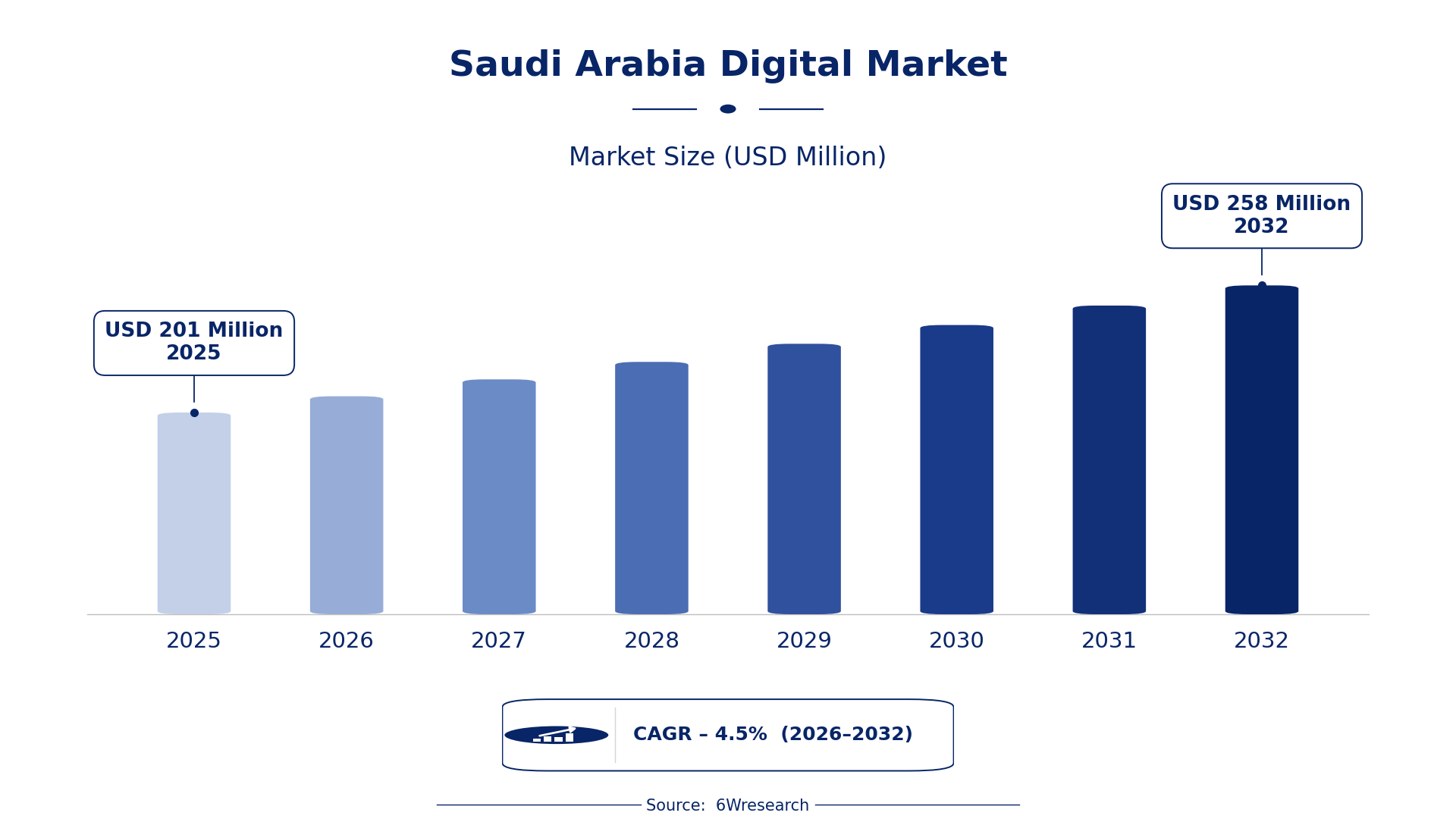
The Saudi Arabia Digital Market was estimated at USD 201 Million in 2025 and is projected to reach USD 258 Million by 2032, growing at a CAGR of 4.5% from 2026 to 2032.
Saudi Arabia Digital Market Synopsis
Recent years have seen a surge in the adoption of digital technologies across Saudi Arabia, driven by a strategic push toward modernization and innovation. The Kingdom's digital market is transitioning from early-stage development to a more mature ecosystem, one that actively supports businesses in their digital transformation efforts.
As organizations increasingly focus on enhancing customer engagement and operational efficiency, the demand for digital solutions is set to expand significantly. This shift is not merely a response to global trends; it’s a necessary adaptation to the unique socio-economic fabric of Saudi Arabia, positioning the market for sustained growth.
Saudi Arabia Digital Market Year-wise Growth Rate and Key Drivers
This graph illustrates the annual growth rates of the Saudi Arabia Digital Market from 2021 to 2032, highlighting a steady upward trajectory and projected expansion over the forecast period.
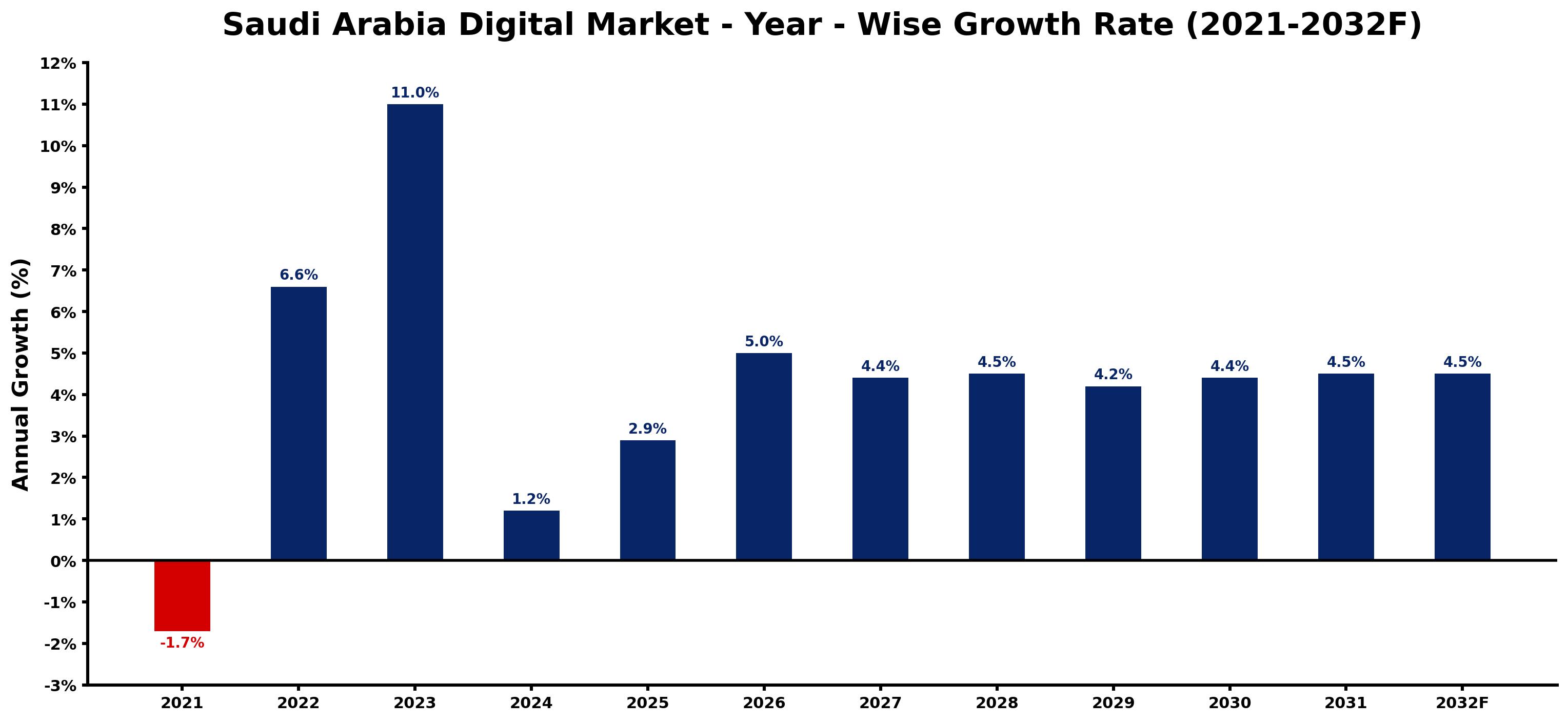
The table below presents the year‑wise growth rates along with the key drivers influencing the market
| Year | Growth Rate | Major Drivers |
| 2021 | -1.7% | Delayed digital investment due to Vision 2030 uncertainties |
| 2022 | 6.6% | Vision 2030 driving digital economy diversification efforts. |
| 2023 | 11.0% | Increased smartphone penetration boosting online service adoption. |
| 2024 | 1.2% | Growing e-commerce sector amidst rising consumer confidence. |
| 2025 | 2.9% | Government funding for digital skills training programs. |
| 2026 | 5.0% | Growing digital advertising fueled by local businesses. |
| 2027 | 4.4% | Adoption of cloud solutions by SMEs increasing efficiency. |
| 2028 | 4.5% | Regulatory reforms enhancing data protection and privacy. |
| 2029 | 4.2% | Rise of mobile applications catering to local preferences. |
| 2030 | 4.4% | Partnerships with global tech firms fostering innovation. |
| 2031 | 4.5% | Prioritization of cybersecurity initiatives by public sectors. |
| 2032 | 4.5% | Increased public awareness of digital literacy initiatives. |
Note: Market size estimations and growth projections presented in this report are based on 6Wresearch's proprietary forecasting methodology, utilizing the latest available industry data, government publications, and primary research inputs.
Saudi Arabia Digital Market Key Takeaways
Below are some of the specific key takeaways from the market, including:
- Cloud computing and AI technologies are becoming integral to business strategies.
- Government initiatives are fostering a supportive regulatory environment for digital innovation.
- Investment in digital infrastructure remains a top priority to bridge existing gaps.
- Businesses are increasingly focused on enhancing their online presence and customer experience.
- Digital literacy programs are vital to ensure equitable access to digital services.
Evaluation of Restraints in Saudi Arabia Digital Market
Despite the promising trajectory of the Saudi Arabia Digital Market, several constraints impede its full potential. The digital divide persists, particularly in rural areas where access to reliable internet services remains limited. This disparity undermines efforts to promote digital inclusion and hampers the ability of certain demographics to participate in the digital economy. on top of that, there is a pressing need for enhanced digital literacy initiatives to ensure that all citizens can effectively engage with emerging technologies.
Saudi Arabia Digital Market Trends
Several trends are currently shaping the Saudi Arabia Digital Market. The rise of e-commerce continues to accelerate, fueled by changing consumer behaviors and preferences for online shopping. Additionally, the integration of AI and machine learning into various sectors is facilitating smarter data analytics and improving decision-making processes. The trend towards remote working is also prompting businesses to invest in secure digital infrastructures to support their operations.
Saudi Arabia Digital Market Opportunities
Opportunities for growth are abundant in the Saudi Arabia Digital Market, particularly in areas like cybersecurity, which is critical given the increasing digital threats. The expansion of the IoT sector presents avenues for innovative applications across industries, from healthcare to logistics. on top of that, as the government prioritizes digital transformation, public-private partnerships could enhance infrastructure development, providing a fertile ground for new ventures and investments.
Government Initiatives in the Saudi Arabia Digital Market
The Saudi government is actively shaping the digital market through a series of initiatives aimed at fostering innovation and enhancing digital capabilities. With a focus on economic diversification, the authorities are implementing policies that support the integration of technology across various sectors. Such regulatory frameworks are essential to create a conducive environment for growth in the digital economy.
- A national digital infrastructure upgrade programme now in its rollout phase aims to enhance connectivity across urban and rural areas.
- Currently, the government is implementing a digital literacy initiative aimed at educating citizens on the use of digital platforms and services.
- A regulatory framework introduced in 2025 mandating billing transparency for digital services has begun to reshape service delivery.
- A planned public-private initiative expected to expand telecom infrastructure access by 2028 is underway to promote digital inclusion.
- Recently, a cybersecurity policy was launched to bolster defenses against increasing cyber threats in the digital space.
Future Insights of the Saudi Arabia Digital Market
Looking ahead to 2026-2032, the Saudi Arabia Digital Market is expected to evolve significantly. The ongoing emphasis on technology adoption will drive businesses to explore new digital avenues, resulting in innovative products and services. As the government continues to prioritize digital initiatives, investment in digital infrastructure and cybersecurity will be crucial for maintaining competitive advantages. The market is set to become a cornerstone of the Kingdom's economic diversification efforts.
Saudi Arabia Digital Market Latest Developments
In the past year, the Saudi Arabia Digital Market has experienced dynamic developments, signaling a strong commitment to digital transformation. Companies are increasingly aligning their strategies with national priorities, leading to a wave of innovations and initiatives across sectors.
- A major technology vendor announced a partnership in early 2025 to develop AI solutions for the healthcare sector, enhancing patient care through technology.
- In mid-2025, a leading regional operator began upgrading its cloud services to improve data management and security for enterprises.
- A digital marketing firm is currently underway with a campaign focused on promoting e-commerce platforms, expected to boost online sales by mid-2026.
- Plans are in place for an upcoming digital skills training program targeting youth, set to launch in late 2026.
- A financial technology company recently completed the rollout of a new mobile payment solution, enhancing transaction efficiency for users.
Saudi Arabia Digital Market - Key Attractiveness of the Report
- 10 Years of Market Numbers
- Historical Data Starting from 2022 to 2025
- Base Year: 2025
- Forecast Data until 2032
- Key Performance Indicators Impacting the Market
- Major Upcoming Developments and Projects
Key Highlights of the Report:
- Saudi Arabia Digital Market Outlook
- Market Size of Saudi Arabia Digital Market, 2025
- Forecast of Saudi Arabia Digital Market, 2032
- Historical Data and Forecast of Saudi Arabia Digital Revenues & Volume for the Period 2022-2032F
- Saudi Arabia Digital Market Trend Evolution
- Saudi Arabia Digital Market Drivers and Challenges
- Saudi Arabia Digital Price Trends
- Saudi Arabia Digital Porter's Five Forces
- Saudi Arabia Digital Industry Life Cycle
- Historical Data and Forecast of Saudi Arabia Digital Market Revenues & Volume By Software for the Period 2022-2032F
- Historical Data and Forecast of Saudi Arabia Digital Market Revenues & Volume By CRM Software for the Period 2022-2032F
- Historical Data and Forecast of Saudi Arabia Digital Market Revenues & Volume By Email Marketing Software for the Period 2022-2032F
- Historical Data and Forecast of Saudi Arabia Digital Market Revenues & Volume By Social Media Advertising for the Period 2022-2032F
- Saudi Arabia Digital Import Export Trade Statistics
- Market Opportunity Assessment By Software
- Saudi Arabia Digital Top Companies Market Share
- Saudi Arabia Digital Competitive Benchmarking By Technical and Operational Parameters
- Saudi Arabia Digital Company Profiles
- Saudi Arabia Digital Key Strategic Recommendations






































