Slovakia Digital Market Size & Growth Rate (2026-2032)
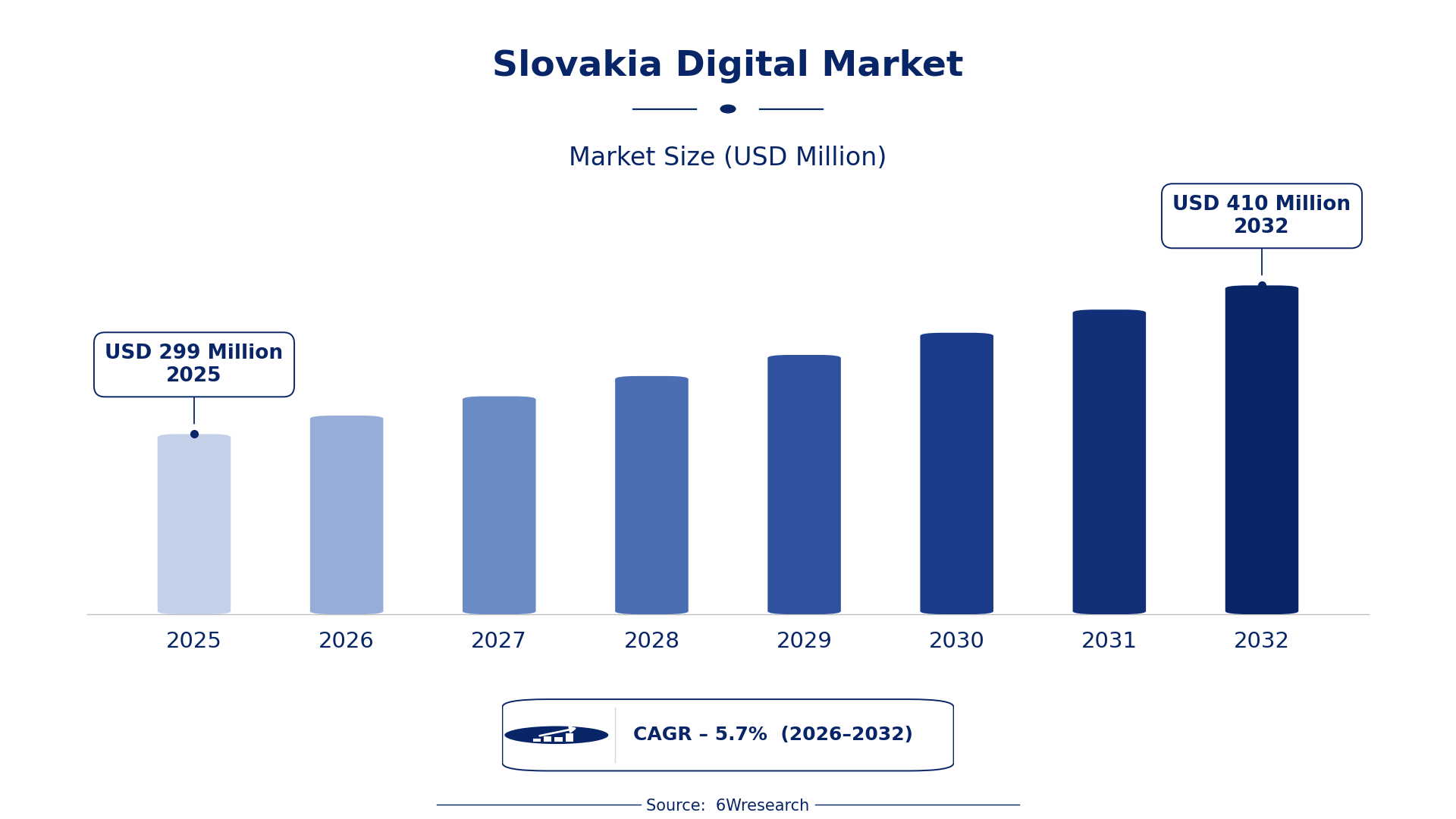
The Slovakia Digital Market was estimated at USD 299 Million in 2025 and is projected to reach USD 410 Million by 2032, growing at a CAGR of 5.7% from 2026 to 2032.
Slovakia Digital Market Synopsis
With around 80% of the Slovak population online, the digital market is witnessing a remarkable transformation. E-commerce, driven by a shift in consumer behavior, is rapidly expanding as more individuals embrace online shopping across various sectors, including electronics and groceries.
Mobile internet usage is surging, compelling businesses to adapt their digital strategies accordingly. The Slovak government’s focus on enhancing internet infrastructure and promoting digital literacy plays a crucial role in this growth, encouraging local companies to establish a more substantial online presence.
Slovakia Digital Market Year-wise Growth Rate and Key Drivers
This graph illustrates the annual growth rates of the Slovakia Digital Market from 2021 to 2032, highlighting a steady upward trajectory and projected expansion over the forecast period.
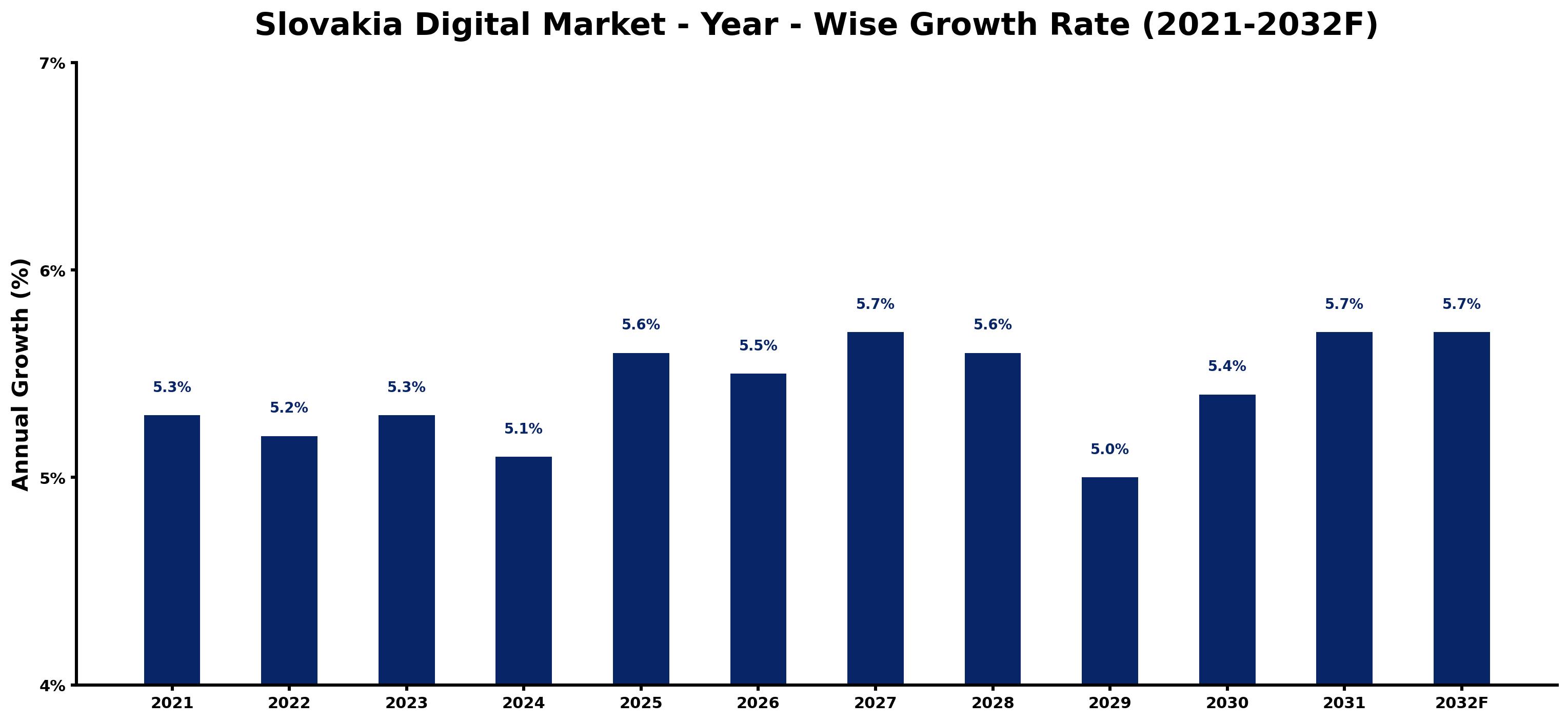
The table below presents the year‑wise growth rates along with the key drivers influencing the market
| Year | Growth Rate | Major Drivers |
| 2021 | 5.3% | Government's digitalization strategy enhancing online business presence. |
| 2022 | 5.2% | Increased e-commerce adoption among urban Slovak consumers. |
| 2023 | 5.3% | Growth of local fintech solutions boosting digital transactions. |
| 2024 | 5.1% | Rising interest in cybersecurity solutions following data breaches. |
| 2025 | 5.6% | Boost in remote work driving digital collaboration tools usage. |
| 2026 | 5.5% | Implementation of EU Digital Services Act promoting online safety. |
| 2027 | 5.7% | Expanding broadband infrastructure improving internet accessibility nationwide. |
| 2028 | 5.6% | Surge in mobile app usage among younger demographics. |
| 2029 | 5.0% | Greater public investment in digital literacy programs nationwide. |
| 2030 | 5.4% | Increased demand for digital entertainment post-pandemic. |
| 2031 | 5.7% | Adoption of 5G technology enhancing mobile service capabilities. |
| 2032 | 5.7% | Growing interest in AI-driven marketing solutions across sectors. |
Note: Market size estimations and growth projections presented in this report are based on 6Wresearch's proprietary forecasting methodology, utilizing the latest available industry data, government publications, and primary research inputs.
Slovakia Digital Market Key Takeaways
Below are some of the specific key takeaways from the market, including:
- Approximately 80% of the population actively uses the internet, significantly boosting online shopping.
- Mobile usage continues to rise, increasing demand for mobile-optimized digital solutions.
- There is a growing interest in cybersecurity and data protection following GDPR implementation.
- Government initiatives are enhancing digital infrastructure and literacy, facilitating market growth.
- Investment in fintech is on the rise, driven by consumer demand for digital payment solutions.
Evaluation of Restraints in Slovakia Digital Market
Despite its growth, the Slovakia Digital Market faces several hurdles that hinder its full potential. Slow internet speeds in some regions restrict access to quality digital services. on top of that, limited high-quality infrastructure poses challenges for local businesses, particularly those attempting to compete with larger international players. Concerns around data privacy and a lack of digital literacy among certain demographics further complicate the market's landscape. Addressing these issues is essential for sustained growth and innovation.
Slovakia Digital Market Trends
Key trends are shaping the Slovakia Digital Market, including an accelerated shift towards e-commerce, especially post-COVID-19. Consumers are increasingly opting for online purchases, prompting businesses to invest in user-friendly digital platforms. Social media has become a vital tool for marketing, with companies enhancing their digital advertising strategies to engage consumers effectively. Additionally, a heightened awareness of cybersecurity is influencing both consumer behavior and business practices, highlighting the need for secure digital transactions.
Slovakia Digital Market Opportunities
The Slovakia Digital Market is ripe with investment opportunities, particularly in e-commerce and digital advertising sectors. As internet penetration rises, platforms catering to online shopping are likely to see significant returns. on top of that, the digital advertising sector is expanding, offering room for companies that specialize in innovative online marketing solutions. Fintech is another promising area, driven by a growing demand for reliable digital payment and online banking services.
Government Initiatives in the Slovakia Digital Market
The Slovak government is actively shaping the digital market through a series of strategic initiatives aimed at enhancing infrastructure and promoting digital engagement. By prioritizing digital literacy and e-commerce growth, these policies foster a supportive environment for local businesses. This proactive approach is essential for positioning Slovakia within the broader European Union digital framework.
- A national digital infrastructure upgrade programme was recently completed to enhance internet connectivity across rural areas.
- Current initiatives focus on increasing digital literacy among the population through educational campaigns and workshops.
- A regulatory framework was introduced in 2025 mandating data protection compliance for all digital businesses.
- Upcoming public-private initiatives are expected to expand access to digital services by enhancing telecom infrastructure.
Future Insights of the Slovakia Digital Market
Looking ahead to 2026-2032, the Slovakia Digital Market is set for continued expansion. Increased internet penetration and a growing consumer base for digital services will drive growth across e-commerce and digital advertising sectors. As businesses adapt to digital-first strategies, the market will likely witness a surge in innovative solutions tailored to Slovak consumers. The supportive ecosystem for startups and emerging technologies will further enhance the market's dynamism.
Slovakia Digital Market Latest Developments
Recent activity in the Slovakia Digital Market reveals a dynamic shift as companies respond to evolving consumer preferences and technological advancements. Over the past year, various initiatives have been launched to bolster digital engagement and infrastructure, setting the stage for future growth.
- A major technology vendor launched a new e-commerce platform in early 2025, aimed at enhancing the shopping experience for Slovak consumers.
- An ongoing initiative began in mid-2025 to improve cybersecurity measures among local businesses, ensuring safer online transactions.
- A public-private partnership is planned to expand the availability of high-speed internet in underserved regions by late 2026.
- Several digital marketing agencies have begun offering tailored services to local businesses, capitalizing on the surge in online advertising demand.
Slovakia Digital Market - Key Attractiveness of the Report
- 10 Years of Market Numbers
- Historical Data Starting from 2022 to 2025
- Base Year: 2025
- Forecast Data until 2032
- Key Performance Indicators Impacting the Market
- Major Upcoming Developments and Projects
Key Highlights of the Report:
- Slovakia Digital Market Outlook
- Market Size of Slovakia Digital Market, 2025
- Forecast of Slovakia Digital Market, 2032
- Historical Data and Forecast of Slovakia Digital Revenues & Volume for the Period 2022-2032F
- Slovakia Digital Market Trend Evolution
- Slovakia Digital Market Drivers and Challenges
- Slovakia Digital Price Trends
- Slovakia Digital Porter's Five Forces
- Slovakia Digital Industry Life Cycle
- Historical Data and Forecast of Slovakia Digital Market Revenues & Volume By Software for the Period 2022-2032F
- Historical Data and Forecast of Slovakia Digital Market Revenues & Volume By CRM Software for the Period 2022-2032F
- Historical Data and Forecast of Slovakia Digital Market Revenues & Volume By Email Marketing Software for the Period 2022-2032F
- Historical Data and Forecast of Slovakia Digital Market Revenues & Volume By Social Media Advertising for the Period 2022-2032F
- Slovakia Digital Import Export Trade Statistics
- Market Opportunity Assessment By Software
- Slovakia Digital Top Companies Market Share
- Slovakia Digital Competitive Benchmarking By Technical and Operational Parameters
- Slovakia Digital Company Profiles
- Slovakia Digital Key Strategic Recommendations






































