Saudi Arabia Frozen Fish Market Size, Share & Growth Rate
The Saudi Arabia Frozen Fish Market was estimated at USD 276 Million in 2025 and is projected to reach USD 355 Million by 2032, growing at a CAGR of 3.7% from 2026 to 2032. This growth trajectory is driven by a surge in urban lifestyles, increasing disposable incomes, and evolving consumer preferences that lean towards convenient food options. Additionally, the investment in cold chain logistics has enhanced the distribution of frozen fish, further catering to the growing demand for diverse seafood products.
Saudi Arabia Frozen Fish Market Year-wise Growth Rate and Key Drivers
This graph highlights how the Saudi Arabia Frozen Fish Market has steadily grown over the years, supported by major growth factors.
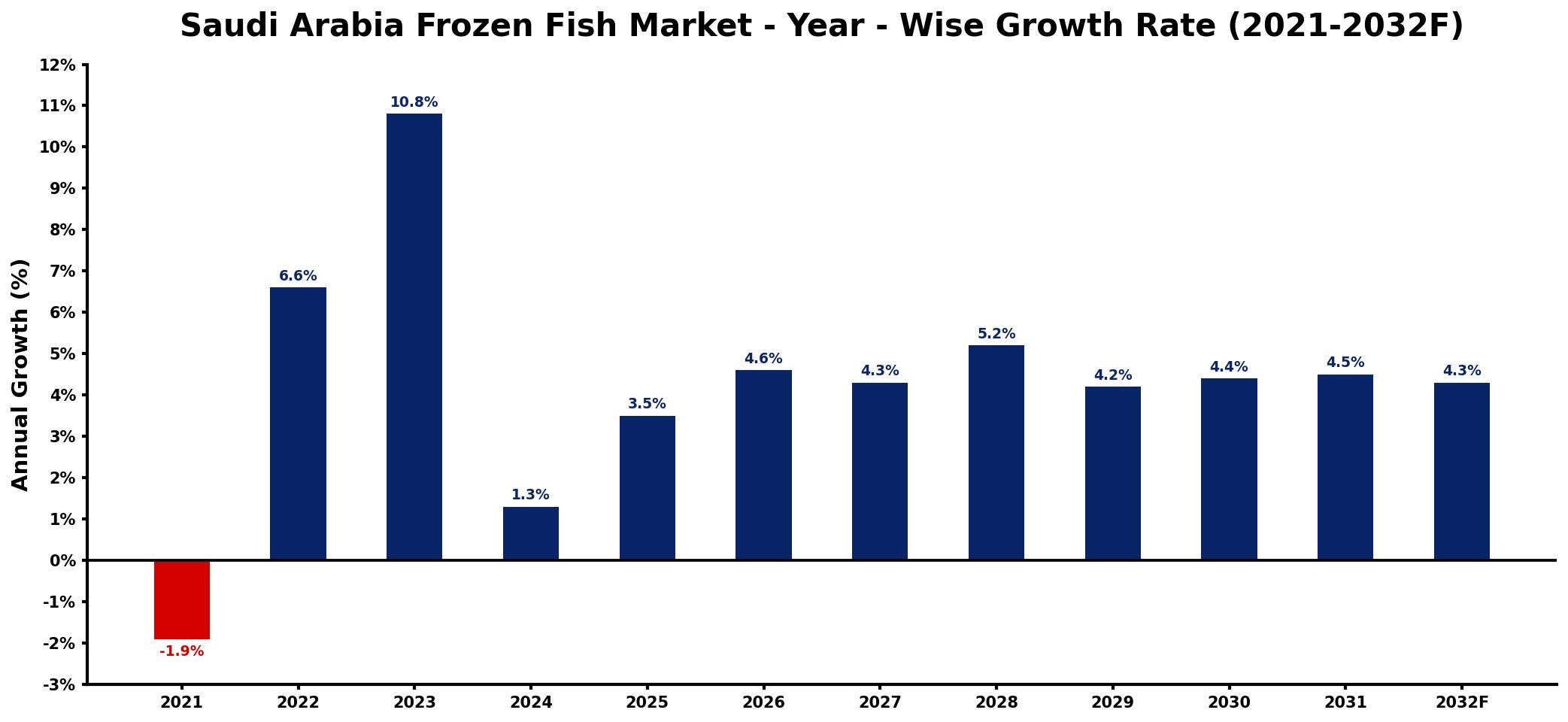
The table below presents the year‑wise growth rates along with the key drivers influencing the market
| Year | Growth Rate | Major Drivers |
| 2021 | -1.9% | Decreased consumer spending patterns |
| 2022 | 6.6% | Rising health consciousness trends |
| 2023 | 10.8% | Increased demand for convenience |
| 2024 | 1.3% | Growth in retail distribution channels |
| 2025 | 3.5% | Expansion of online grocery shopping |
| 2026 | 4.6% | Higher disposable income levels |
| 2027 | 4.3% | Development of new product offerings |
| 2028 | 5.2% | Strengthened food safety regulations |
| 2029 | 4.2% | Enhanced supply chain efficiencies |
| 2030 | 4.4% | Growing popularity of meal kits |
| 2031 | 4.5% | Increased focus on sustainability |
| 2032 | 4.3% | Broader culinary trends adoption |
Note: Market size estimations and growth projections presented in this report are based on 6Wresearch's proprietary forecasting methodology, utilizing the latest available industry data, government publications, and primary research inputs.
Saudi Arabia Frozen Fish Market Synopsis
The frozen fish market in Saudi Arabia is characterized by a robust selection of both local and imported fish species, which allows consumers to enjoy a variety of tastes throughout the year. The appeal of frozen fish lies in its extended shelf life, making it an essential component for households and the foodservice industry seeking reliable seafood solutions.
As consumer preferences shift towards convenience and health, the market continues to adapt by offering ready-to-cook frozen seafood options. The rising awareness of seafood's nutritional benefits further accelerates demand, as more consumers incorporate these products into their diets.
Saudi Arabia Frozen Fish Market Key Takeaways
- The market benefits from growing urbanization and fast-paced lifestyles.
- Local production capabilities are being leveraged to counterbalance supply chain disruptions.
- Health-conscious consumers are increasingly turning to frozen fish as a nutritious option.
- Improvements in cold chain infrastructure support better product quality and availability.
- Emerging culinary trends are inspiring innovative frozen fish products and offerings.
Evaluation of Restraints in Saudi Arabia Frozen Fish Market
Despite promising growth, the Saudi Arabia frozen fish market faces several challenges that could hinder its potential. The preservation of sensory qualities—such as texture and taste—post-freezing is crucial for maintaining consumer satisfaction. Additionally, logistical issues, particularly in cold chain management, can impact the quality of frozen fish products from sourcing to end consumer. As the market evolves, addressing these restraints will be critical for sustained growth.
Saudi Arabia Frozen Fish Market Trends
Key trends currently shaping the Saudi Arabia frozen fish market include a heightened consumer interest in sustainability and ethically sourced seafood. Moreover, the advent of online grocery shopping has revolutionized the way consumers access frozen fish, creating new distribution channels. Another notable trend is the growing popularity of value-added frozen fish products, such as marinated and pre-seasoned options, which cater to the demand for convenience in meal preparation.
Saudi Arabia Frozen Fish Market Opportunities
Opportunities for growth in the Saudi Arabia frozen fish market are ripe, particularly in the segment of premium and gourmet frozen seafood products. As consumers become increasingly discerning about food quality, there is a shift towards high-end options that offer superior taste and freshness. Additionally, expanding export markets could present lucrative avenues for local producers looking to diversify their revenue streams and strengthen their presence in the international market.
Government Initiatives in the Saudi Arabia Frozen Fish Market
The Saudi government has recognized the importance of the seafood sector and has initiated various policies aimed at boosting local production of frozen fish. These initiatives include investments in aquaculture and cold chain infrastructure, enhancing quality control standards, and promoting sustainable fishing practices. Such public spending initiatives aim to secure a stable supply of seafood while fostering economic growth within the sector.
Future Insights of the Saudi Arabia Frozen Fish Market
Looking ahead to 2026-2032, the Saudi Arabia frozen fish market is poised for continued growth, driven by evolving consumer habits and increasing health awareness. The trend towards convenience will persist, with innovations in packaging and product offerings likely to emerge. Furthermore, as local production capabilities improve, the market may see a rise in domestic brands competing with imported products, ultimately benefiting consumers through greater choice and competitive pricing.
Saudi Arabia Frozen Fish Market Latest Developments (2025 - 2026)
Recent developments in the Saudi Arabia frozen fish market indicate a strengthening of local sourcing initiatives, reflecting a shift in consumer confidence towards domestically produced products. Enhanced collaborations between the public and private sectors have focused on expanding cold chain logistics, improving overall distribution efficiency. Additionally, promotional campaigns have started to emphasize the health benefits of frozen fish, aiming to boost consumer awareness and drive sales.
Saudi Arabia Frozen Fish Market - Key Attractiveness of the Report
- 10 Years of Market Numbers
- Historical Data Starting from 2022 to 2025
- Base Year: 2025
- Forecast Data until 2032
- Key Performance Indicators Impacting the Market
- Major Upcoming Developments and Projects
Key Highlights of the Report:
- Saudi Arabia Frozen Fish Market Outlook
- Market Size of Saudi Arabia Frozen Fish Market, 2025
- Forecast of Saudi Arabia Frozen Fish Market, 2032
- Historical Data and Forecast of Saudi Arabia Frozen Fish Revenues & Volume for the Period 2022-2032F
- Saudi Arabia Frozen Fish Market Trend Evolution
- Saudi Arabia Frozen Fish Market Drivers and Challenges
- Saudi Arabia Frozen Fish Price Trends
- Saudi Arabia Frozen Fish Porter's Five Forces
- Saudi Arabia Frozen Fish Industry Life Cycle
- Historical Data and Forecast of Saudi Arabia Frozen Fish Market Revenues & Volume By Type for the Period 2022-2032F
- Historical Data and Forecast of Saudi Arabia Frozen Fish Market Revenues & Volume By Fish Fingers for the Period 2022-2032F
- Historical Data and Forecast of Saudi Arabia Frozen Fish Market Revenues & Volume By Fish Cakes for the Period 2022-2032F
- Historical Data and Forecast of Saudi Arabia Frozen Fish Market Revenues & Volume By Breaded/Battered Fish for the Period 2022-2032F
- Historical Data and Forecast of Saudi Arabia Frozen Fish Market Revenues & Volume By Whole Fish & Drawn Fish for the Period 2022-2032F
- Historical Data and Forecast of Saudi Arabia Frozen Fish Market Revenues & Volume By Single Fillet & Butterfly Fillet for the Period 2022-2032F
- Historical Data and Forecast of Saudi Arabia Frozen Fish Market Revenues & Volume By Dressed Fish for the Period 2022-2032F
- Historical Data and Forecast of Saudi Arabia Frozen Fish Market Revenues & Volume By Steaks Fish for the Period 2022-2032F
- Historical Data and Forecast of Saudi Arabia Fish Fingers Frozen Fish Market Revenues & Volume By Others for the Period 2022-2032F
- Historical Data and Forecast of Saudi Arabia Frozen Fish Market Revenues & Volume By Application for the Period 2022-2032F
- Historical Data and Forecast of Saudi Arabia Frozen Fish Market Revenues & Volume By Direct Consumption for the Period 2022-2032F
- Historical Data and Forecast of Saudi Arabia Frozen Fish Market Revenues & Volume By Restaurants for the Period 2022-2032F
- Historical Data and Forecast of Saudi Arabia Frozen Fish Market Revenues & Volume By Food Processing Factories for the Period 2022-2032F
- Historical Data and Forecast of Saudi Arabia Frozen Fish Market Revenues & Volume By Others for the Period 2022-2032F
- Historical Data and Forecast of Saudi Arabia Frozen Fish Market Revenues & Volume By Distribution Channel for the Period 2022-2032F
- Historical Data and Forecast of Saudi Arabia Frozen Fish Market Revenues & Volume By Supermarkets & Hypermarkets for the Period 2022-2032F
- Historical Data and Forecast of Saudi Arabia Frozen Fish Market Revenues & Volume By Convenience Stores for the Period 2022-2032F
- Historical Data and Forecast of Saudi Arabia Frozen Fish Market Revenues & Volume By Speciality Retailers for the Period 2022-2032F
- Historical Data and Forecast of Saudi Arabia Frozen Fish Market Revenues & Volume By Online for the Period 2022-2032F
- Historical Data and Forecast of Saudi Arabia Frozen Fish Market Revenues & Volume By Others for the Period 2022-2032F
- Saudi Arabia Frozen Fish Import Export Trade Statistics
- Market Opportunity Assessment By Type
- Market Opportunity Assessment By Application
- Market Opportunity Assessment By Distribution Channel
- Saudi Arabia Frozen Fish Top Companies Market Share
- Saudi Arabia Frozen Fish Competitive Benchmarking By Technical and Operational Parameters
- Saudi Arabia Frozen Fish Company Profiles
- Saudi Arabia Frozen Fish Key Strategic Recommendations






































