Saudi Arabia Gallic Acid Market: Import Trend Analysis
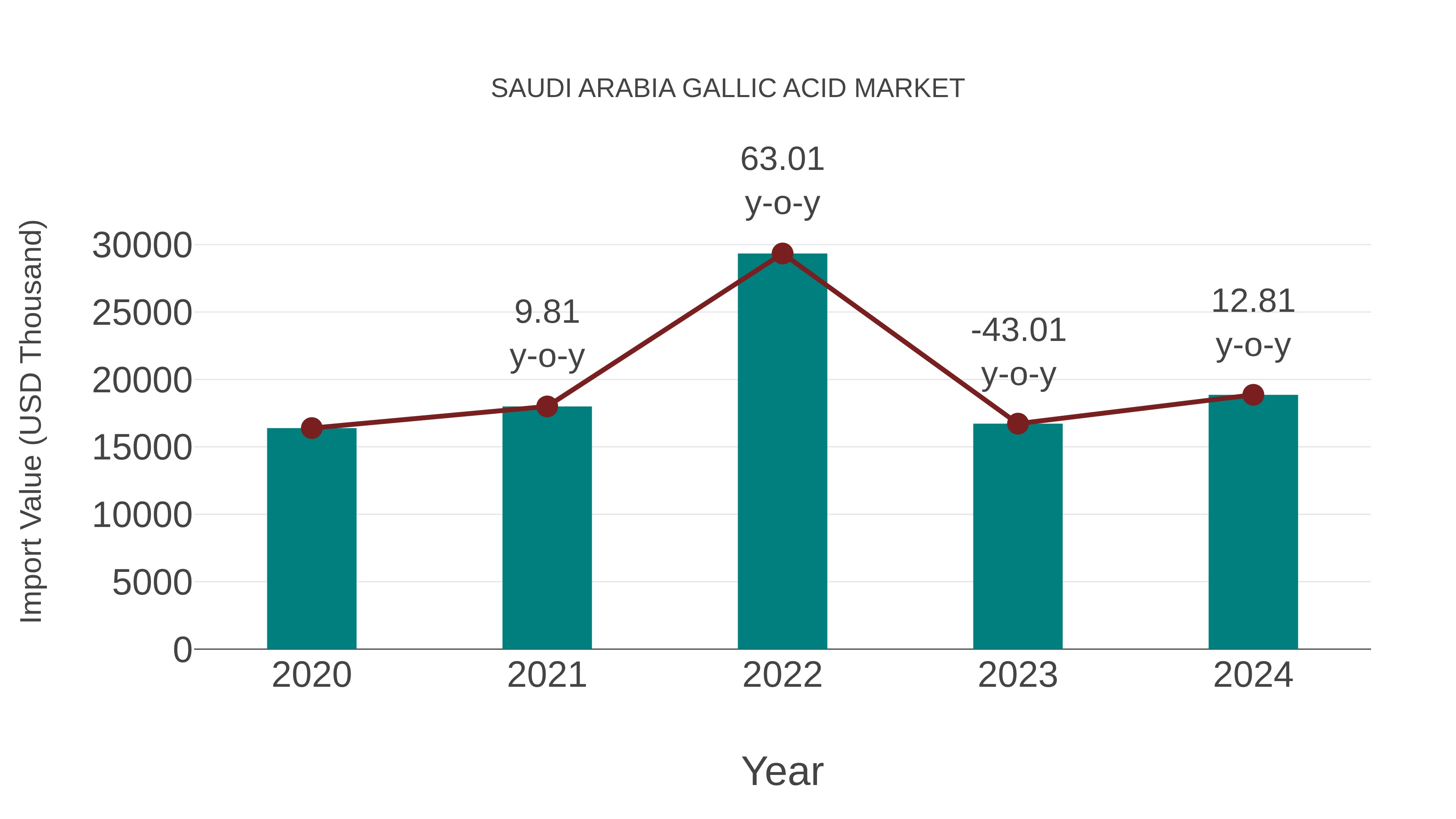
In the Saudi Arabia gallic acid market, the import trend exhibited a notable growth rate of 12.81% from 2023 to 2024, with a compound annual growth rate (CAGR) of 3.57% for the period 2020-2024. This import momentum can be attributed to shifting demand patterns in the pharmaceutical and food industries, indicating a market stability amidst evolving trade policies.
Saudi Arabia Gallic Acid Market Overview
The Saudi Arabia gallic acid market is witnessing steady growth driven by its widespread applications in various industries such as pharmaceuticals, food and beverage, and personal care products. Gallic acid is a natural antioxidant and anti-inflammatory agent, making it a popular ingredient in skincare products and dietary supplements. The increasing awareness among consumers regarding the health benefits of gallic acid has led to a rise in demand for products containing this compound. Moreover, the growing trend towards natural and organic ingredients in food and cosmetics is further fueling the market growth in Saudi Arabia. Key players in the market are focusing on product innovation and expanding their distribution networks to capitalize on the increasing demand for gallic acid in the region.
Saudi Arabia Gallic Acid Market Trends
The gallic acid market in Saudi Arabia is experiencing steady growth due to the increasing demand for natural antioxidants in various industries such as food and beverages, pharmaceuticals, and cosmetics. Consumers are becoming more conscious of the health benefits associated with gallic acid, leading to a rise in its use as a natural ingredient. Additionally, the growing awareness of the potential health risks associated with synthetic antioxidants has further fueled the demand for gallic acid. The market is also witnessing a trend towards the development of innovative products incorporating gallic acid, such as functional foods and nutraceuticals. As the preference for natural ingredients continues to rise, the Saudi Arabian gallic acid market is expected to expand further in the coming years.
Saudi Arabia Gallic Acid Market Challenges
In the Saudi Arabia gallic acid market, key challenges include limited awareness about the benefits and applications of gallic acid among consumers and industries, resulting in lower demand. Additionally, the lack of local production facilities for gallic acid leads to dependency on imports, which can be affected by fluctuations in international prices and supply chain disruptions. Regulatory hurdles and varying quality standards also pose challenges for market players looking to enter or expand in the Saudi Arabian market. Furthermore, competition from alternative ingredients and substitutes further complicates the market landscape, making it essential for companies to invest in marketing efforts and product differentiation strategies to overcome these obstacles and drive growth in the gallic acid market in Saudi Arabia.
Saudi Arabia Gallic Acid Market Investment Opportunities
In the Saudi Arabia gallic acid market, there are several investment opportunities for interested investors. With the increasing demand for gallic acid in various industries such as pharmaceuticals, cosmetics, and food and beverage, investing in local production facilities could be a lucrative option. Additionally, there is potential for partnerships with existing manufacturers to expand production capacities and meet the growing market demand. Another opportunity lies in research and development to explore new applications of gallic acid, potentially creating innovative products that cater to evolving consumer preferences. Investing in marketing and distribution channels to effectively reach target customers and establish a strong market presence could also yield favorable returns in the Saudi Arabian gallic acid market.
Saudi Arabia Gallic Acid Market Government Policy
In Saudi Arabia, government policies related to the gallic acid market primarily focus on promoting the growth and development of the pharmaceutical and cosmetic industries, which are significant users of this compound. The Saudi Food and Drug Authority plays a crucial role in regulating the quality and safety standards of gallic acid products to ensure consumer protection. Additionally, the government has implemented trade policies that aim to facilitate the import and export of gallic acid, fostering international trade relationships and promoting economic growth in the market. Furthermore, there are ongoing efforts to encourage research and innovation in the production and application of gallic acid to enhance its value and competitiveness in the global market.
Saudi Arabia Gallic Acid Market Future Outlook
The future outlook for the Saudi Arabia gallic acid market appears promising due to increasing demand for the compound across various industries such as pharmaceuticals, food and beverages, and cosmetics. With a growing population and rising disposable income levels in the region, there is a greater emphasis on health and wellness products, driving the demand for gallic acid as a natural antioxidant and anti-inflammatory agent. Additionally, the expanding pharmaceutical sector in Saudi Arabia, coupled with a rising trend towards organic and natural ingredients, is expected to further boost the market for gallic acid. However, market growth may face challenges due to regulatory factors and competition from synthetic alternatives. Overall, the Saudi Arabia gallic acid market is poised for steady growth in the coming years.
Key Highlights of the Report:
- Saudi Arabia Gallic Acid Market Outlook
- Market Size of Saudi Arabia Gallic Acid Market,2025
- Forecast of Saudi Arabia Gallic Acid Market, 2032
- Historical Data and Forecast of Saudi Arabia Gallic Acid Revenues & Volume for the Period 2022-2032F
- Saudi Arabia Gallic Acid Market Trend Evolution
- Saudi Arabia Gallic Acid Market Drivers and Challenges
- Saudi Arabia Gallic Acid Price Trends
- Saudi Arabia Gallic Acid Porter's Five Forces
- Saudi Arabia Gallic Acid Industry Life Cycle
- Historical Data and Forecast of Saudi Arabia Gallic Acid Market Revenues & Volume By Type for the Period 2022-2032F
- Historical Data and Forecast of Saudi Arabia Gallic Acid Market Revenues & Volume By Natural Gallic Acid for the Period 2022-2032F
- Historical Data and Forecast of Saudi Arabia Gallic Acid Market Revenues & Volume By Synthetic Gallic Acid for the Period 2022-2032F
- Historical Data and Forecast of Saudi Arabia Gallic Acid Market Revenues & Volume By Application for the Period 2022-2032F
- Historical Data and Forecast of Saudi Arabia Gallic Acid Market Revenues & Volume By Pharmaceuticals for the Period 2022-2032F
- Historical Data and Forecast of Saudi Arabia Gallic Acid Market Revenues & Volume By Food & Beverages for the Period 2022-2032F
- Historical Data and Forecast of Saudi Arabia Gallic Acid Market Revenues & Volume By End User for the Period 2022-2032F
- Historical Data and Forecast of Saudi Arabia Gallic Acid Market Revenues & Volume By Food Manufacturers for the Period 2022-2032F
- Historical Data and Forecast of Saudi Arabia Gallic Acid Market Revenues & Volume By Pharmaceutical Companies for the Period 2022-2032F
- Saudi Arabia Gallic Acid Import Export Trade Statistics
- Market Opportunity Assessment By Type
- Market Opportunity Assessment By Application
- Market Opportunity Assessment By End User
- Saudi Arabia Gallic Acid Top Companies Market Share
- Saudi Arabia Gallic Acid Competitive Benchmarking By Technical and Operational Parameters
- Saudi Arabia Gallic Acid Company Profiles
- Saudi Arabia Gallic Acid Key Strategic Recommendations






































