Saudi Arabia Musical Instrument Market Size Growth Rate
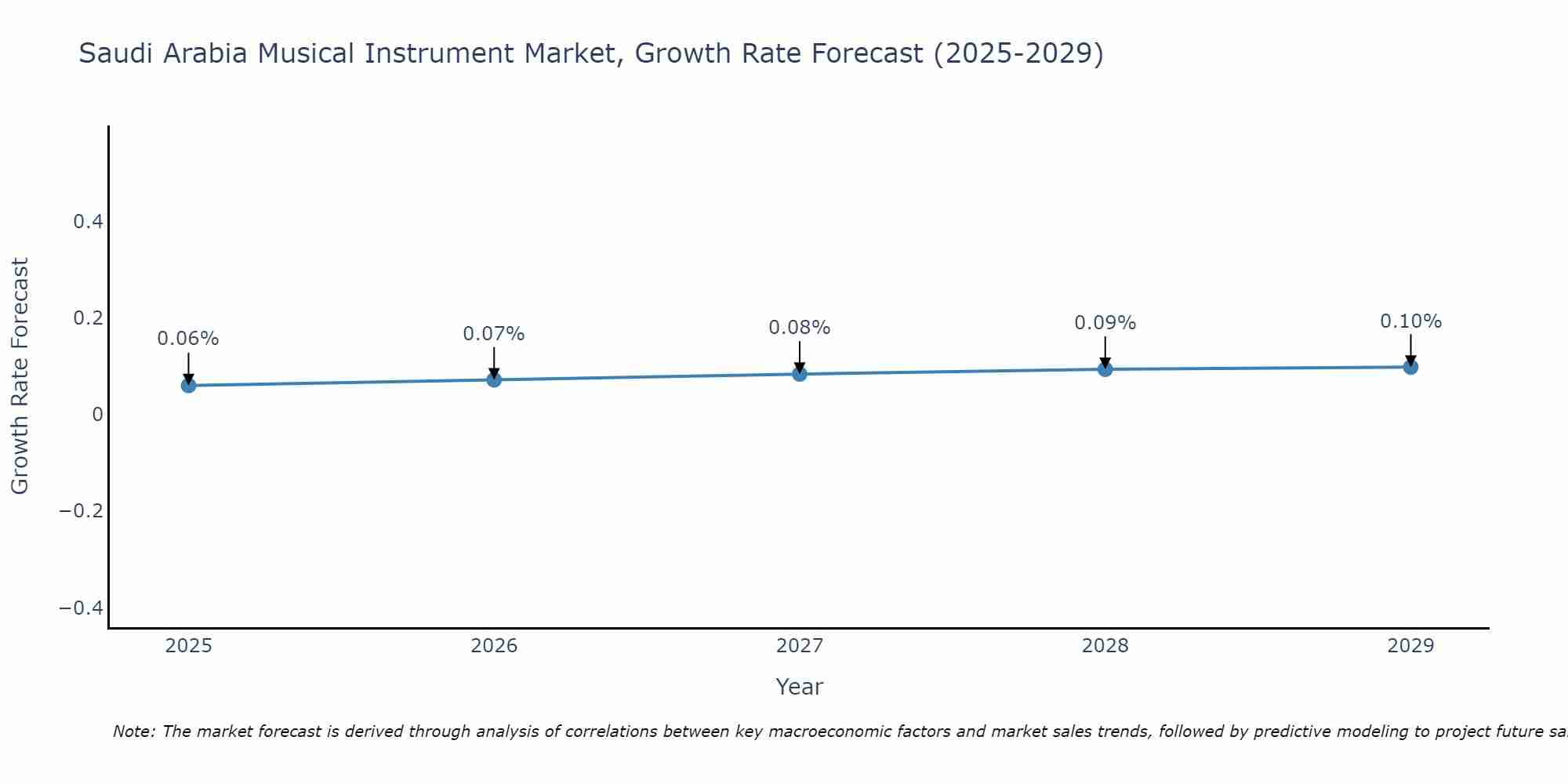
The Saudi Arabia Musical Instrument Market is likely to experience consistent growth rate gains over the period 2025 to 2029. The growth rate starts at 0.06% in 2025 and reaches 0.10% by 2029.
Saudi Arabia Musical Instrument Market Synopsis
The musical instrument market in Saudi Arabia has been growing steadily as the country`s interest in music and cultural activities increases. Traditional Arabic musical instruments like the oud, darbuka, and qanun are widely popular. Additionally, Western musical instruments such as guitars and keyboards have gained a significant presence among music enthusiasts. The market comprises both local manufacturers and importers of musical instruments.
Drivers of the Market
The musical instrument market in Saudi Arabia is experiencing significant growth due to multiple factors. One of the key drivers is the growing interest in music and cultural appreciation among the Saudi population. The government`s efforts to promote the arts and culture are also fostering a vibrant music scene, spurring demand for musical instruments. Additionally, the increasing number of music schools, academies, and cultural events is encouraging people to take up music, driving the sales of instruments. The rising disposable income of the middle class is another crucial factor, as it enables individuals to invest in musical instruments, further stimulating market growth.
Opportunities of the Market
Challenges of the Market
The musical instrument market in Saudi Arabia encounters challenges related to cultural preferences and economic factors. Traditional music and instruments hold significant cultural value, affecting the demand for certain instruments. Additionally, the market can be influenced by economic fluctuations and consumer discretionary spending, impacting the affordability of musical instruments. Staying up-to-date with technological advancements and consumer trends is crucial for businesses in this market, as digital music and electronic instruments gain popularity.
COVID-19 Impact on the Market
The Saudi Arabia musical instrument market experienced fluctuations in demand during the pandemic, influenced by limited public gatherings and cultural events. As the entertainment and cultural sectors regain momentum, the market for musical instruments is expected to rebound, driven by live performances, music education, and recreational activities.
Key Players in the Market
The musical instrument market in Saudi Arabia includes retailers and distributors of instruments. Some notable names are Yamaha Corporation, Fender Musical Instruments Corporation, and Gibson Brands, Inc.
Key Highlights of the Report:
- Saudi Arabia Musical Instrument Market Outlook
- Market Size of Saudi Arabia Musical Instrument Market, 2024
- Forecast of Saudi Arabia Musical Instrument Market, 2031
- Historical Data and Forecast of Saudi Arabia Musical Instrument Revenues & Volume for the Period 2021-2031
- Saudi Arabia Musical Instrument Market Trend Evolution
- Saudi Arabia Musical Instrument Market Drivers and Challenges
- Saudi Arabia Musical Instrument Price Trends
- Saudi Arabia Musical Instrument Porter's Five Forces
- Saudi Arabia Musical Instrument Industry Life Cycle
- Historical Data and Forecast of Saudi Arabia Musical Instrument Market Revenues & Volume By Product for the Period 2021-2031
- Historical Data and Forecast of Saudi Arabia Musical Instrument Market Revenues & Volume By String Instruments for the Period 2021-2031
- Historical Data and Forecast of Saudi Arabia Musical Instrument Market Revenues & Volume By Pianos And Keyboards for the Period 2021-2031
- Historical Data and Forecast of Saudi Arabia Musical Instrument Market Revenues & Volume By Drums And Percussion Instruments for the Period 2021-2031
- Historical Data and Forecast of Saudi Arabia Musical Instrument Market Revenues & Volume By Others for the Period 2021-2031
- Saudi Arabia Musical Instrument Import Export Trade Statistics
- Market Opportunity Assessment By Product
- Saudi Arabia Musical Instrument Top Companies Market Share
- Saudi Arabia Musical Instrument Competitive Benchmarking By Technical and Operational Parameters
- Saudi Arabia Musical Instrument Company Profiles
- Saudi Arabia Musical Instrument Key Strategic Recommendations






































