Saudi Arabia Wax Market: Import Trend Analysis
In 2024, Saudi Arabia`s wax market witnessed a steady increase in imports. The trend indicated a growing demand for wax products in the country. This import growth was driven by factors such as expanding industrial activities and rising consumer preferences for wax-based goods.
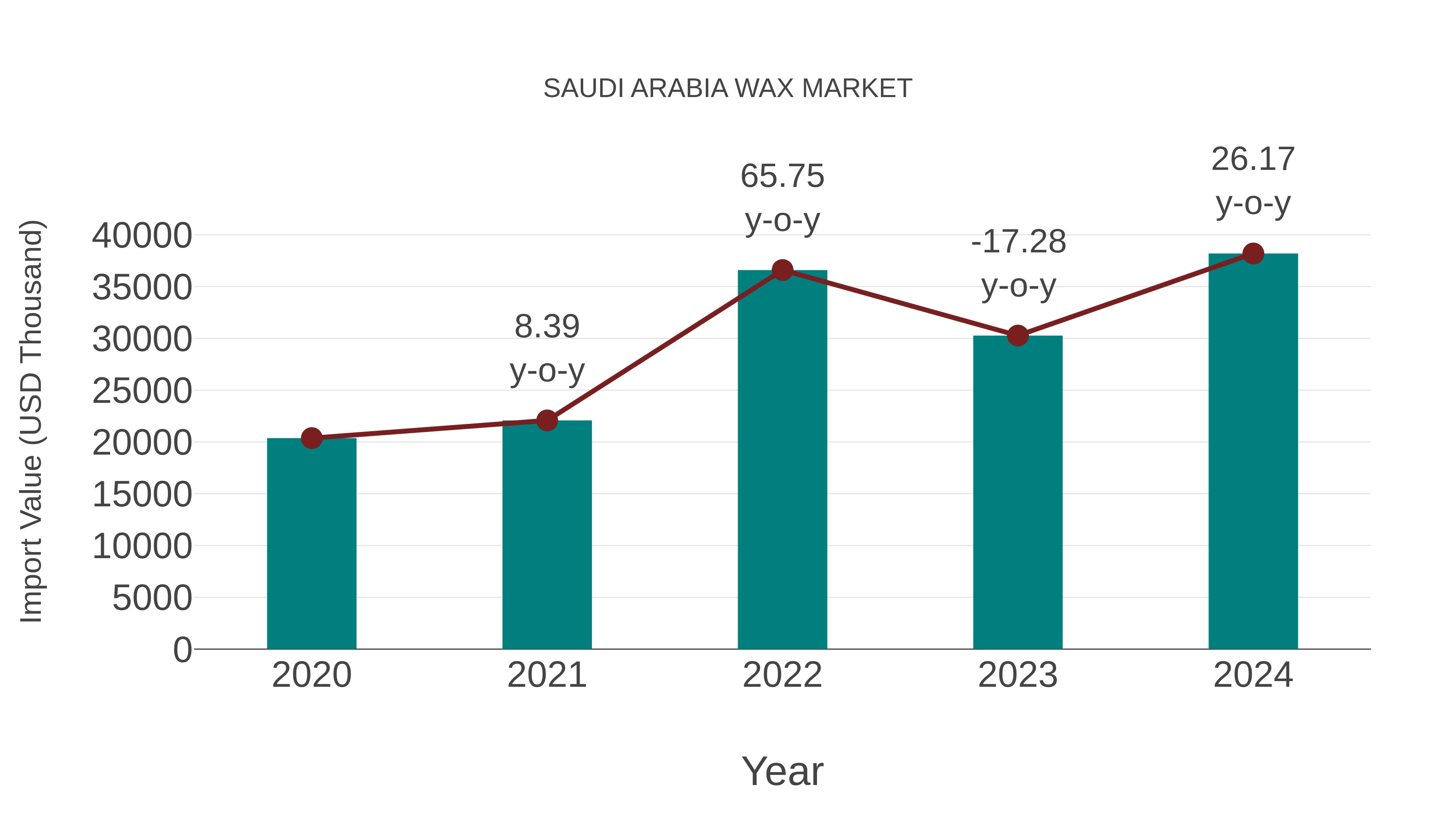
Saudi Arabia Wax Market Synopsis
The Saudi Arabia wax market is expected to grow at a CAGR of 4.5% during the forecast period from 2025 to 2031, reaching USD 380 million by 2031. The growth of this market can be attributed to the increased usage of wax in various industries such as paints & coatings, cosmetics, rubber and plastics among others. Moreover, increasing demand for environment-friendly products is also driving the growth of this market. Additionally, growing industrialization and urbanization are further escalating the demand for wax in Saudi Arabia.
Market Drivers
The increasing use of waxes in several industries such as paints & coatings, cosmetics, rubber and plastics among others is driving the growth of this market significantly. Furthermore, availability of different types like petroleum based or synthetic waxes which have wide range applications coupled with their superior performance over conventional substances has been contributing towards its rising popularity in various end-use segments globally including Saudi Arabia. There has been a shift towards renewable sources due to concerns about climate change resulting into an increased demand for eco-friendly products that include plant derived alternatives instead of petrochemical ones like paraffin or polyethylene (PE). This factor has led manufacturers to focus on producing bio based materials through green chemistry process so as to reduce environmental pollution while helping them comply with existing regulations imposed by governments worldwide including those present in Saudi Arabia region thus providing a healthy boost to its overall sales figures over recent years.
Challenges of the Market
Wax find itself competing against numerous other materials like silicones or polyurethanes which may prove advantageous when compared against it`s own properties offering better temperature resistance along with being relatively cheaper than their traditional counterparts thus posing a potential threat whenever consumer needs arise warranting substitution effects into consideration while making purchase decisions within certain price brackets specially during pandemic situations where every penny count more than ever before.
Covid 19 Impact on the Market
The COVID-19 pandemic has had a significant impact on the economy of Saudi Arabia with decrease in both demand and supply for all commodities including wax products since February 2025. However, country??s policies towards controlling spread of novel coronavirus have been successful which has generated better macroeconomic environment with increase in many sectors activities such as construction, manufacturing etc., that will help revive Saudi Arabia economy over time leading to gradual recovery for wax industry also from 2025 onwards.
key players of the Market
Some key players operating in the Saudi Arabia Wax Market are Shell Chemicals Middle East FZE (UAE), Sasol Limited (South Africa), ExxonMobil Chemical Company (USA), Koster Keunen LLC (US) , International Group For Specialty Additives And Polymers Trading Ltd.(IGSAP) (Saudi Arabia), Petro Rabigh Refining & Petrochemical Co Ltd.(Saudi Arabia) , Evonik Industries AG(Germany).
Key Highlights of the Report:
- Saudi Arabia Wax Market Outlook
- Market Size of Saudi Arabia Wax Market, 2025
- Forecast of Saudi Arabia Wax Market, 2032
- Historical Data and Forecast of Saudi Arabia Wax Revenues & Volume for the Period 2022-2032F
- Saudi Arabia Wax Market Trend Evolution
- Saudi Arabia Wax Market Drivers and Challenges
- Saudi Arabia Wax Price Trends
- Saudi Arabia Wax Porter's Five Forces
- Saudi Arabia Wax Industry Life Cycle
- Historical Data and Forecast of Saudi Arabia Wax Market Revenues & Volume By Product for the Period 2022-2032F
- Historical Data and Forecast of Saudi Arabia Wax Market Revenues & Volume By Mineral for the Period 2022-2032F
- Historical Data and Forecast of Saudi Arabia Wax Market Revenues & Volume By Synthetic for the Period 2022-2032F
- Historical Data and Forecast of Saudi Arabia Wax Market Revenues & Volume By Natural for the Period 2022-2032F
- Historical Data and Forecast of Saudi Arabia Wax Market Revenues & Volume By Applications for the Period 2022-2032F
- Historical Data and Forecast of Saudi Arabia Wax Market Revenues & Volume By Candles for the Period 2022-2032F
- Historical Data and Forecast of Saudi Arabia Wax Market Revenues & Volume By Packaging for the Period 2022-2032F
- Historical Data and Forecast of Saudi Arabia Wax Market Revenues & Volume By Plastic & Rubber for the Period 2022-2032F
- Historical Data and Forecast of Saudi Arabia Wax Market Revenues & Volume By Cosmetics & Toiletries for the Period 2022-2032F
- Historical Data and Forecast of Saudi Arabia Wax Market Revenues & Volume By Fire Logs for the Period 2022-2032F
- Historical Data and Forecast of Saudi Arabia Wax Market Revenues & Volume By Adhesives for the Period 2022-2032F
- Historical Data and Forecast of Saudi Arabia Wax Market Revenues & Volume By Others for the Period 2022-2032F
- Saudi Arabia Wax Import Export Trade Statistics
- Market Opportunity Assessment By Product
- Market Opportunity Assessment By Applications
- Saudi Arabia Wax Top Companies Market Share
- Saudi Arabia Wax Competitive Benchmarking By Technical and Operational Parameters
- Saudi Arabia Wax Company Profiles
- Saudi Arabia Wax Key Strategic Recommendations






































