Serbia Emollient Market: Import Trend Analysis
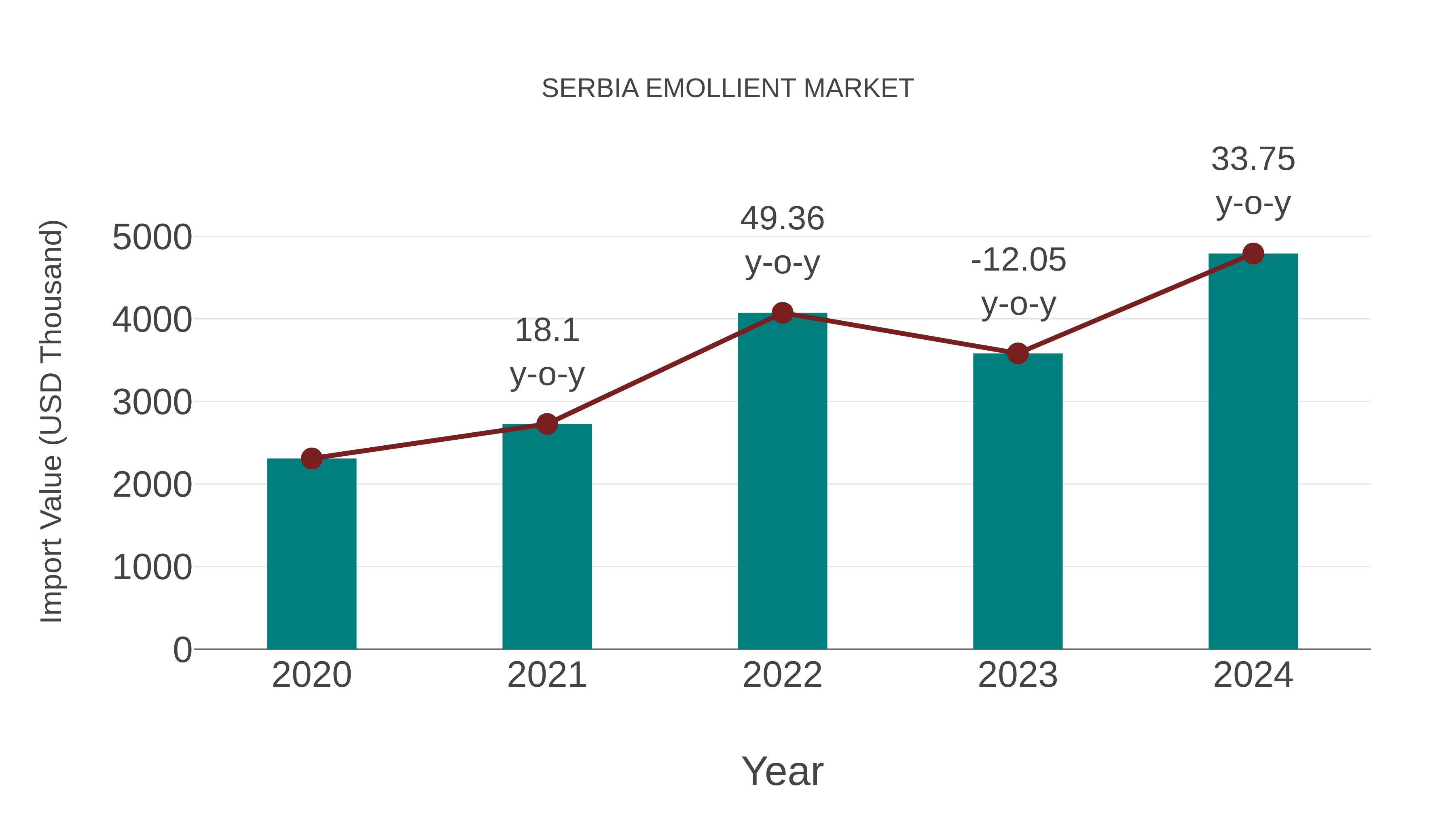
Serbia`s import trend for the emollient market showed significant growth from 2023 to 2024, with a rate of 33.75%. The compound annual growth rate (CAGR) for the period from 2020 to 2024 was 20.02%. This surge in imports could be attributed to increasing demand for skincare products and shifting trade policies in the region.
Serbia Emollient Market Overview
The Serbia Emollient Market is witnessing steady growth driven by the increasing demand for skincare products and cosmetics. Emollients are essential ingredients in moisturizers and other personal care products to keep the skin hydrated and smooth. With rising awareness about skincare routines and self-care practices, Serbian consumers are increasingly opting for products containing emollients to maintain healthy skin. The market is characterized by the presence of both domestic and international manufacturers offering a wide range of emollient products to cater to different skin types and preferences. Key players are focusing on product innovation and marketing strategies to capitalize on the growing consumer interest in skincare, thereby driving the overall growth of the emollient market in Serbia.
Serbia Emollient Market Trends and Opportunities
The Serbia Emollient Market is experiencing a growing demand for natural and organic emollient products due to increasing consumer awareness about the benefits of using non-toxic and environmentally friendly ingredients. There is also a trend towards multi-functional emollients that offer additional skincare benefits such as anti-aging properties or UV protection. Opportunities lie in developing innovative emollient formulations tailored to specific skin concerns, targeting niche market segments such as sensitive skin or aging population. Collaborations with local cosmetic manufacturers and retailers can help to penetrate the market effectively. Additionally, the rising popularity of e-commerce platforms in Serbia presents a significant opportunity for emollient brands to reach a wider audience and increase sales through online channels.
Serbia Emollient Market Challenges
In the Serbia Emollient Market, some of the key challenges include increasing competition from both domestic and international emollient manufacturers, fluctuating raw material prices, regulatory complexities related to ingredient sourcing and labeling requirements, and changing consumer preferences towards natural and sustainable products. Additionally, the market is also impacted by economic uncertainties, limited awareness about the benefits of emollients among consumers, and the need for continuous product innovation to meet evolving skincare needs. Overall, companies operating in the Serbia Emollient Market need to navigate these challenges effectively by adapting their strategies, investing in research and development, and building strong partnerships to stay competitive in the rapidly evolving skincare industry.
Serbia Emollient Market Drivers
The Serbia Emollient Market is primarily driven by the growing awareness among consumers about the benefits of emollients in skincare products, leading to an increased demand for products that provide hydration and nourishment to the skin. Additionally, the rising disposable income and changing lifestyles are fueling the demand for premium and natural emollient products. The expanding beauty and personal care industry in Serbia, coupled with the growing trend of self-care and wellness, are further contributing to the market growth. Moreover, the increasing focus on innovation and product development by key players to cater to specific skin concerns and preferences is driving the market towards offering a wide range of emollient-based products to meet the diverse needs of consumers.
Serbia Emollient Market Government Policy
Government policies related to the Serbia Emollient Market primarily focus on ensuring product safety, quality control, and compliance with EU regulations. The government has implemented regulations such as the Law on Cosmetic Products, which requires emollient manufacturers to adhere to strict standards for ingredients, labeling, and packaging. Additionally, Serbia`s accession to the EU has led to the harmonization of its regulatory framework with EU directives, promoting market transparency and consumer protection. The government also encourages innovation and competitiveness in the emollient market through support programs and incentives for research and development activities. Overall, government policies in Serbia aim to create a favorable environment for the growth of the emollient market while safeguarding public health and environmental sustainability.
Serbia Emollient Market Future Outlook
The Serbia Emollient Market is expected to witness steady growth in the coming years, driven by increasing consumer awareness about skincare products and a growing demand for natural and organic ingredients. As consumers become more conscious about the products they use on their skin, there is a rising preference for emollients that offer moisturizing and nourishing benefits without harsh chemicals. Additionally, the expanding beauty and personal care industry in Serbia, coupled with a shift towards premium and specialized skincare products, will further fuel the demand for emollients. Market players are likely to focus on product innovation and development of sustainable emollients to cater to evolving consumer preferences, creating opportunities for growth and expansion in the Serbia Emollient Market.
Key Highlights of the Report:
- Serbia Emollient Market Outlook
- Market Size of Serbia Emollient Market, 2025
- Forecast of Serbia Emollient Market, 2032
- Historical Data and Forecast of Serbia Emollient Revenues & Volume for the Period 2022 - 2032F
- Serbia Emollient Market Trend Evolution
- Serbia Emollient Market Drivers and Challenges
- Serbia Emollient Price Trends
- Serbia Emollient Porter's Five Forces
- Serbia Emollient Industry Life Cycle
- Historical Data and Forecast of Serbia Emollient Market Revenues & Volume By Type for the Period 2022 - 2032F
- Historical Data and Forecast of Serbia Emollient Market Revenues & Volume By Esters for the Period 2022 - 2032F
- Historical Data and Forecast of Serbia Emollient Market Revenues & Volume By Fatty Alcohols for the Period 2022 - 2032F
- Historical Data and Forecast of Serbia Emollient Market Revenues & Volume By Fatty Acids for the Period 2022 - 2032F
- Historical Data and Forecast of Serbia Emollient Market Revenues & Volume By Ethers for the Period 2022 - 2032F
- Historical Data and Forecast of Serbia Emollient Market Revenues & Volume By Silicones for the Period 2022 - 2032F
- Historical Data and Forecast of Serbia Emollient Market Revenues & Volume By Others for the Period 2022 - 2032F
- Historical Data and Forecast of Serbia Emollient Market Revenues & Volume By Form for the Period 2022 - 2032F
- Historical Data and Forecast of Serbia Emollient Market Revenues & Volume By Solid for the Period 2022 - 2032F
- Historical Data and Forecast of Serbia Emollient Market Revenues & Volume By Liquid for the Period 2022 - 2032F
- Historical Data and Forecast of Serbia Emollient Market Revenues & Volume By Application for the Period 2022 - 2032F
- Historical Data and Forecast of Serbia Emollient Market Revenues & Volume By Skin Care for the Period 2022 - 2032F
- Historical Data and Forecast of Serbia Emollient Market Revenues & Volume By Hair Care for the Period 2022 - 2032F
- Historical Data and Forecast of Serbia Emollient Market Revenues & Volume By Deodorants for the Period 2022 - 2032F
- Historical Data and Forecast of Serbia Emollient Market Revenues & Volume By Oral Care for the Period 2022 - 2032F
- Historical Data and Forecast of Serbia Emollient Market Revenues & Volume By Others for the Period 2022 - 2032F
- Serbia Emollient Import Export Trade Statistics
- Market Opportunity Assessment By Type
- Market Opportunity Assessment By Form
- Market Opportunity Assessment By Application
- Serbia Emollient Top Companies Market Share
- Serbia Emollient Competitive Benchmarking By Technical and Operational Parameters
- Serbia Emollient Company Profiles
- Serbia Emollient Key Strategic Recommendations






































