Serbia Insect Repellent Market: Import Trend Analysis
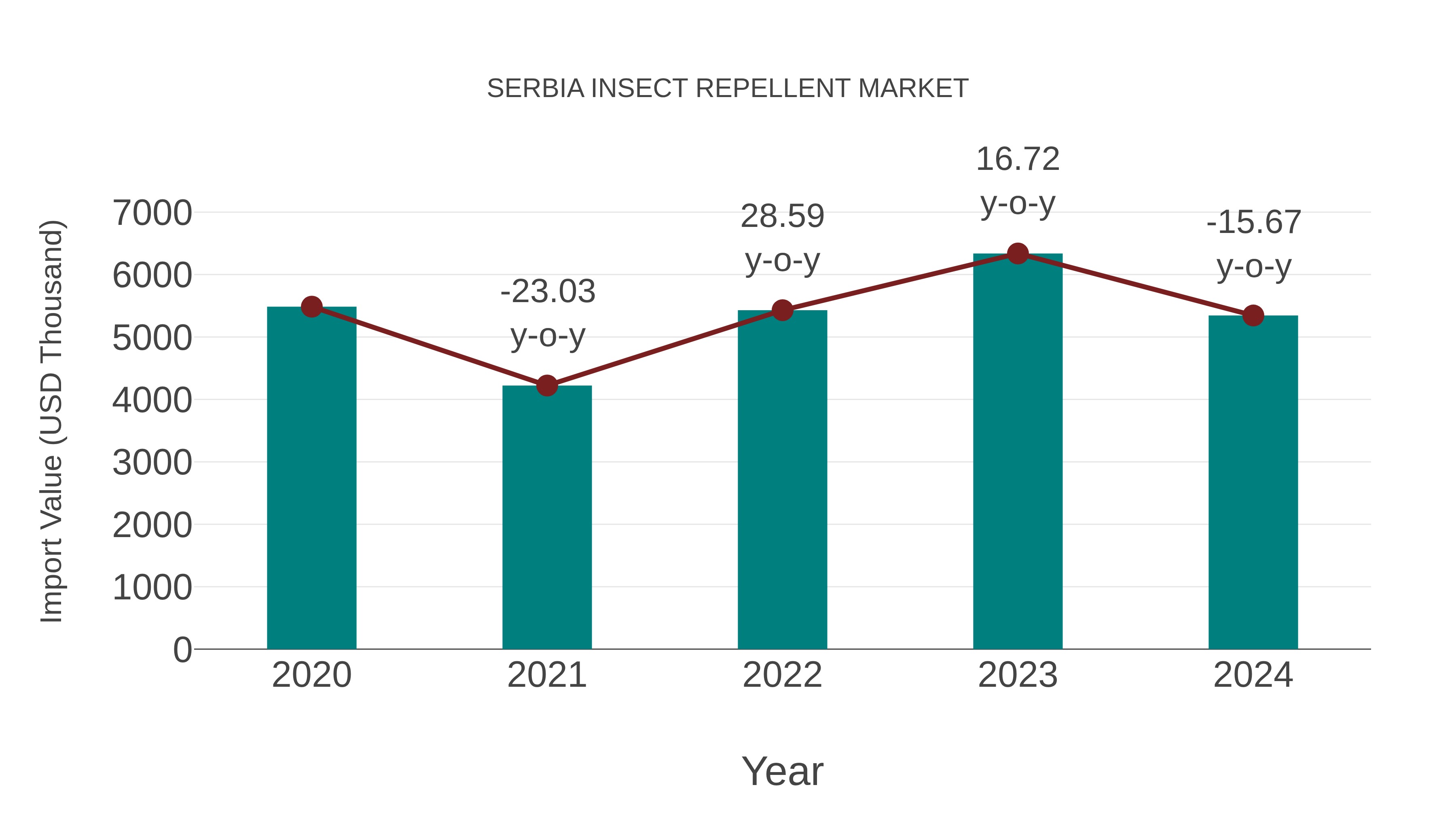
Serbia`s import trend for the insect repellent market experienced a decline, with a growth rate of -15.67% from 2023 to 2024 and a compound annual growth rate (CAGR) of -0.65% from 2020 to 2024. This decline could be attributed to shifts in consumer preferences, increased competition, or changes in trade policies impacting market dynamics.
Serbia Insect Repellent Market Overview
The Serbia Insect Repellent Market is experiencing steady growth driven by increasing awareness about insect-borne diseases such as West Nile virus and Lyme disease. Consumers are increasingly looking for effective and long-lasting repellent products to protect themselves from mosquito and tick bites. Key market players offering a wide range of insect repellent products, including sprays, creams, lotions, and wearable devices, are actively competing in the market. The demand for natural and DEET-free repellents is also on the rise, leading to the introduction of eco-friendly options. Distribution channels such as supermarkets, pharmacies, and online retailers play a crucial role in reaching a wide consumer base. With the growing concern for health and safety, the Serbia Insect Repellent Market is expected to continue expanding as consumers prioritize protection against insect-borne illnesses.
Serbia Insect Repellent Market Trends and Opportunities
The Serbia insect repellent market is experiencing a growing demand for natural and chemical-free products, driven by increasing awareness of the harmful effects of traditional repellents. Consumers are seeking products with ingredients like citronella, eucalyptus, and lemon eucalyptus that are perceived as safer for personal and environmental health. There is also a rising interest in innovative formats such as wearable repellent devices and botanical-based sprays. Opportunities exist for companies to capitalize on these trends by introducing eco-friendly and effective insect repellent solutions tailored to the preferences of the Serbian market. Additionally, partnerships with retailers, online platforms, and outdoor recreation companies can help expand distribution channels and reach a wider consumer base.
Serbia Insect Repellent Market Challenges
In the Serbia Insect Repellent Market, some key challenges include increasing competition from both domestic and international brands, as well as a lack of awareness among consumers regarding the importance of using insect repellents. Additionally, changing weather patterns and the rise of new insect-borne diseases are driving the demand for more effective repellent solutions, putting pressure on companies to innovate and develop products that offer better protection. Distribution and retail infrastructure limitations in certain regions of Serbia also present challenges in reaching the target market effectively. Furthermore, regulatory hurdles and compliance requirements for insect repellent products can add complexity to the market landscape, requiring companies to navigate and adhere to stringent guidelines to ensure product quality and safety.
Serbia Insect Repellent Market Drivers
The Serbia Insect Repellent Market is primarily driven by increasing awareness about the health risks associated with insect bites and the transmission of diseases such as Zika virus, West Nile virus, and Lyme disease. Growing concerns about vector-borne diseases have led to a rise in demand for insect repellents as a preventive measure. Additionally, rising disposable incomes and changing lifestyles are influencing consumers to invest in insect repellent products for personal protection. The popularity of outdoor activities, camping, and travel among the Serbian population further fuels the demand for insect repellents. Furthermore, the availability of a wide range of innovative and natural insect repellent products, coupled with aggressive marketing strategies by key players, is also driving market growth in Serbia.
Serbia Insect Repellent Market Government Policies
Government policies related to the Serbia Insect Repellent Market primarily focus on ensuring the safety and efficacy of insect repellent products. The Ministry of Health in Serbia regulates the registration, labeling, and advertising of insect repellents to ensure they meet quality and safety standards. The government also works to educate the public about the importance of using insect repellents to prevent vector-borne diseases such as Zika virus and Lyme disease. Additionally, there are regulations in place to control the import and distribution of insect repellents in the market to protect consumers from counterfeit or substandard products. Overall, the government`s policies aim to promote the use of effective and safe insect repellents while safeguarding public health and consumer rights in Serbia.
Serbia Insect Repellent Market Future Outlook
The future outlook for the Serbia Insect Repellent Market appears promising, with a projected growth driven by increasing awareness of insect-borne diseases and a growing demand for natural and chemical-free repellent solutions. Factors such as rising disposable incomes, expanding outdoor recreational activities, and a shift towards eco-friendly products are expected to further fuel market growth. Additionally, the ongoing advancements in product formulations and technologies, coupled with aggressive marketing strategies by key players, are likely to contribute to the market`s expansion. With a focus on innovation and sustainability, the Serbia Insect Repellent Market is poised for steady growth in the coming years as consumers prioritize protection against insect-related health risks while also seeking effective and environmentally friendly solutions.
Key Highlights of the Report:
- Serbia Insect Repellent Market Outlook
- Market Size of Serbia Insect Repellent Market, 2025
- Forecast of Serbia Insect Repellent Market, 2032
- Historical Data and Forecast of Serbia Insect Repellent Revenues & Volume for the Period 2022 - 2032F
- Serbia Insect Repellent Market Trend Evolution
- Serbia Insect Repellent Market Drivers and Challenges
- Serbia Insect Repellent Price Trends
- Serbia Insect Repellent Porter's Five Forces
- Serbia Insect Repellent Industry Life Cycle
- Historical Data and Forecast of Serbia Insect Repellent Market Revenues & Volume By Type for the Period 2022 - 2032F
- Historical Data and Forecast of Serbia Insect Repellent Market Revenues & Volume By Mosquito Repellent for the Period 2022 - 2032F
- Historical Data and Forecast of Serbia Insect Repellent Market Revenues & Volume By Bugs Repellent for the Period 2022 - 2032F
- Historical Data and Forecast of Serbia Insect Repellent Market Revenues & Volume By Fly Repellent for the Period 2022 - 2032F
- Historical Data and Forecast of Serbia Insect Repellent Market Revenues & Volume By Others for the Period 2022 - 2032F
- Historical Data and Forecast of Serbia Insect Repellent Market Revenues & Volume By Product Type for the Period 2022 - 2032F
- Historical Data and Forecast of Serbia Insect Repellent Market Revenues & Volume By Vaporizers for the Period 2022 - 2032F
- Historical Data and Forecast of Serbia Insect Repellent Market Revenues & Volume By Spray for the Period 2022 - 2032F
- Historical Data and Forecast of Serbia Insect Repellent Market Revenues & Volume By Cream for the Period 2022 - 2032F
- Historical Data and Forecast of Serbia Insect Repellent Market Revenues & Volume By Others for the Period 2022 - 2032F
- Serbia Insect Repellent Import Export Trade Statistics
- Market Opportunity Assessment By Type
- Market Opportunity Assessment By Product Type
- Serbia Insect Repellent Top Companies Market Share
- Serbia Insect Repellent Competitive Benchmarking By Technical and Operational Parameters
- Serbia Insect Repellent Company Profiles
- Serbia Insect Repellent Key Strategic Recommendations






































