Singapore Apiculture Market: Import Trend Analysis
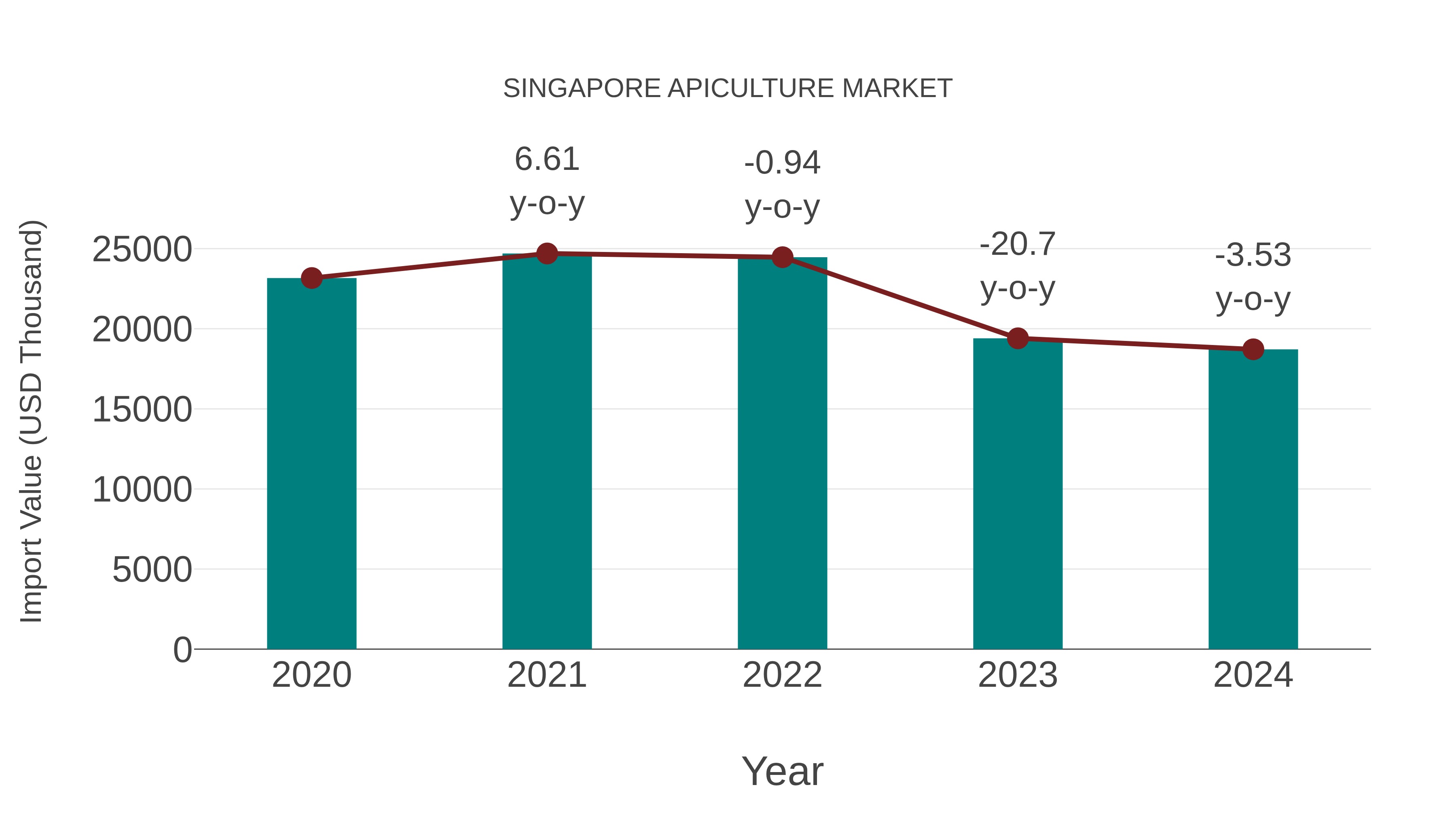
Singapore`s import trend for the apiculture market experienced a decline from 2023 to 2024, with a growth rate of -3.53% during that period. The compound annual growth rate (CAGR) for imports in the Singapore apiculture market from 2020 to 2024 stood at -5.19%. This decline could be attributed to shifting consumer preferences or changes in trade policies impacting the market`s stability.
Singapore Apiculture Market Synopsis
The Singapore apiculture market is expected to grow as consumers recognize the benefits of honey and bee-related products. Beekeeping and honey production can contribute to biodiversity and sustainable agriculture. Market players should focus on product quality, bee health, and ethical beekeeping practices.
Drivers of the Market
The growth of the Singapore apiculture market is influenced by factors such as honey production, natural sweeteners, and beekeeping. Apiculture involves beekeeping and honey production. Growth drivers include the demand for natural and locally sourced honey, innovations in beekeeping practices, and applications in honey production, beekeeping equipment, and natural sweeteners. As consumers seek healthier and sustainable sweetening options, the apiculture market is expected to grow, providing essential honey and beekeeping products.
Challenges of the Market
The apiculture market in Singapore encounters challenges related to beekeeping practices and honey production. Promoting beekeeping for honey production while ensuring bee health and sustainable honey extraction practices remains a significant challenge. Addressing concerns about bee colony health, pesticide exposure, and honey quality is essential for the apiculture industry.
COVID-19 Impact on the Market
The apiculture market in Singapore navigated the COVID-19 pandemic with adaptability. While there were fluctuations in some beekeeping activities, apiculture products such as honey and beeswax remained valued for their natural and health-related qualities. Beekeepers and suppliers adapted by ensuring product availability and quality. The pandemic underscored the importance of beekeeping in supporting local ecosystems and producing natural bee products, influencing market strategies.
Key Players in the Market
Apiculture in Singapore is supported by beekeepers and honey producers like The Honeys and The Honey Colony. They contribute to the local honey industry by producing high-quality honey and related products.
Key Highlights of the Report:
- Singapore Apiculture Market Outlook
- Market Size of Singapore Apiculture Market, 2025
- Forecast of Singapore Apiculture Market, 2032
- Historical Data and Forecast of Singapore Apiculture Revenues & Volume for the Period 2022-2032F
- Singapore Apiculture Market Trend Evolution
- Singapore Apiculture Market Drivers and Challenges
- Singapore Apiculture Price Trends
- Singapore Apiculture Porter's Five Forces
- Singapore Apiculture Industry Life Cycle
- Historical Data and Forecast of Singapore Apiculture Market Revenues & Volume By Product Type for the Period 2022-2032F
- Historical Data and Forecast of Singapore Apiculture Market Revenues & Volume By Honey for the Period 2022-2032F
- Historical Data and Forecast of Singapore Apiculture Market Revenues & Volume By Beeswax for the Period 2022-2032F
- Historical Data and Forecast of Singapore Apiculture Market Revenues & Volume By Live-bees for the Period 2022-2032F
- Historical Data and Forecast of Singapore Apiculture Market Revenues & Volume By Others for the Period 2022-2032F
- Historical Data and Forecast of Singapore Apiculture Market Revenues & Volume By Application for the Period 2022-2032F
- Historical Data and Forecast of Singapore Apiculture Market Revenues & Volume By Medical for the Period 2022-2032F
- Historical Data and Forecast of Singapore Apiculture Market Revenues & Volume By Food Beverages for the Period 2022-2032F
- Historical Data and Forecast of Singapore Apiculture Market Revenues & Volume By Cosmetics for the Period 2022-2032F
- Historical Data and Forecast of Singapore Apiculture Market Revenues & Volume By Others for the Period 2022-2032F
- Singapore Apiculture Import Export Trade Statistics
- Market Opportunity Assessment By Product Type
- Market Opportunity Assessment By Application
- Singapore Apiculture Top Companies Market Share
- Singapore Apiculture Competitive Benchmarking By Technical and Operational Parameters
- Singapore Apiculture Company Profiles
- Singapore Apiculture Key Strategic Recommendations






































