Singapore Corticosteroid Market: Import Trend Analysis
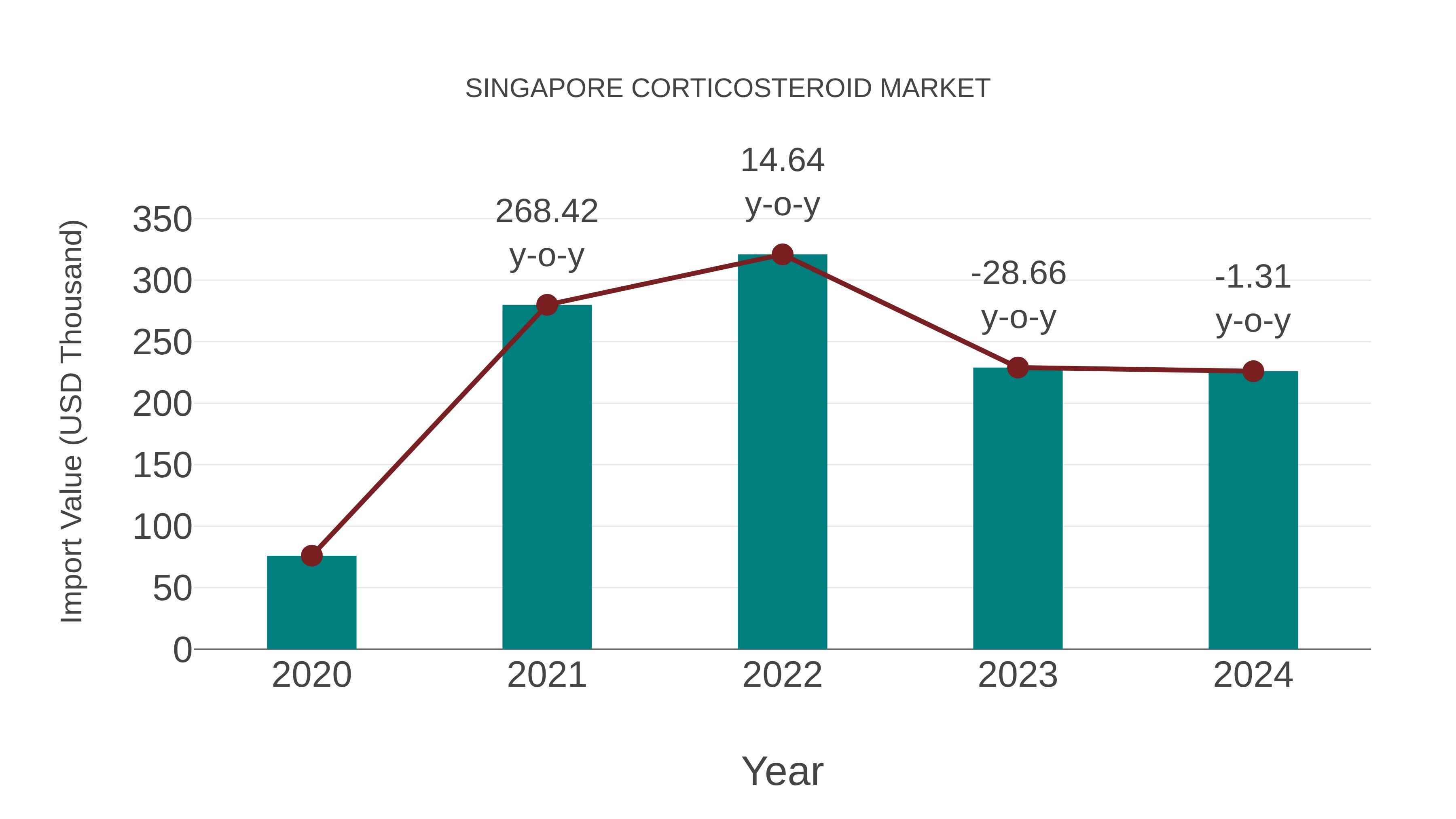
In the Singapore corticosteroid market, the import trend experienced a slight decline from 2023 to 2024, with a growth rate of -1.31%. However, the compound annual growth rate (CAGR) for imports from 2020 to 2024 stood at a notable 31.32%. This shift in import momentum could be attributed to evolving demand dynamics or changes in market stability.
Singapore Corticosteroid Market Synopsis
The Singapore corticosteroid market forms a crucial part of the pharmaceutical industry, catering to various medical conditions. Corticosteroids are synthetic drugs that mimic the body`s natural hormones and are used to treat a wide range of inflammatory and immune-related disorders. As Singapore healthcare system continues to advance, the demand for corticosteroid medications for conditions such as asthma, arthritis, and dermatological issues has been on the rise. The market`s growth is driven by both medical advancements and the country`s aging population, which leads to an increased prevalence of conditions that require corticosteroid treatments.
Drivers of the Market
The Singapore corticosteroid market is expanding due to a range of factors. Firstly, the prevalence of skin disorders, allergies, and inflammatory conditions has increased the demand for corticosteroid-based pharmaceuticals. These drugs are effective in managing various medical conditions, including dermatological issues and respiratory ailments. Secondly, the aging population in Singapore has led to a higher incidence of chronic diseases, further driving the demand for corticosteroid medications. Lastly, advancements in drug formulations and delivery methods have made corticosteroids more accessible and convenient, contributing to market growth.
Challenges of the Market
The corticosteroid market in Singapore faces challenges related to regulatory compliance and patent expirations. Stringent regulations govern the pharmaceutical industry, requiring companies to invest heavily in research and development, clinical trials, and compliance measures. Additionally, as patents for certain corticosteroid drugs expire, generic competition intensifies, impacting pricing and market share. Navigating this landscape while ensuring product quality and compliance is a complex task for industry players.
COVID-19 Impact on the Market
The Singapore corticosteroid market witnessed fluctuations during the COVID-19 pandemic. Corticosteroids are pharmaceutical products used for a wide range of medical conditions, including inflammatory and autoimmune diseases. The pandemic led to increased demand for corticosteroids in the treatment of severe COVID-19 cases, including the use of dexamethasone. This surge in demand put pressure on the supply chain, leading to temporary shortages and price fluctuations. However, as the healthcare system adapted to the situation and manufacturers ramped up production, the market stabilized. Corticosteroids remained essential for managing various medical conditions, ensuring their continued demand. The market is expected to remain steady with a focus on pharmaceutical supply chain resilience.
Key Players in the Market
In the Singapore Corticosteroid market, pharmaceutical companies like GlaxoSmithKline (GSK), AstraZeneca, and Pfizer are prominent players. They produce corticosteroid medications used for various medical conditions.
Key Highlights of the Report:
- Singapore Corticosteroid Market Outlook
- Market Size of Singapore Corticosteroid Market, 2025
- Forecast of Singapore Corticosteroid Market, 2032
- Historical Data and Forecast of Singapore Corticosteroid Revenues & Volume for the Period 2022-2032F
- Singapore Corticosteroid Market Trend Evolution
- Singapore Corticosteroid Market Drivers and Challenges
- Singapore Corticosteroid Price Trends
- Singapore Corticosteroid Porter's Five Forces
- Singapore Corticosteroid Industry Life Cycle
- Historical Data and Forecast of Singapore Corticosteroid Market Revenues & Volume By Product for the Period 2022-2032F
- Historical Data and Forecast of Singapore Corticosteroid Market Revenues & Volume By Glucocorticoids for the Period 2022-2032F
- Historical Data and Forecast of Singapore Corticosteroid Market Revenues & Volume By Mineralocorticoids for the Period 2022-2032F
- Historical Data and Forecast of Singapore Corticosteroid Market Revenues & Volume By Administration for the Period 2022-2032F
- Historical Data and Forecast of Singapore Corticosteroid Market Revenues & Volume By Topical Steroids for the Period 2022-2032F
- Historical Data and Forecast of Singapore Corticosteroid Market Revenues & Volume By Inhaled Steroids for the Period 2022-2032F
- Historical Data and Forecast of Singapore Corticosteroid Market Revenues & Volume By Oral Forms for the Period 2022-2032F
- Historical Data and Forecast of Singapore Corticosteroid Market Revenues & Volume By Systemic Forms for the Period 2022-2032F
- Historical Data and Forecast of Singapore Corticosteroid Market Revenues & Volume By Others for the Period 2022-2032F
- Historical Data and Forecast of Singapore Corticosteroid Market Revenues & Volume By Application for the Period 2022-2032F
- Historical Data and Forecast of Singapore Corticosteroid Market Revenues & Volume By Rheumatology Indications for the Period 2022-2032F
- Historical Data and Forecast of Singapore Corticosteroid Market Revenues & Volume By Skin Allergies for the Period 2022-2032F
- Historical Data and Forecast of Singapore Corticosteroid Market Revenues & Volume By Endocrinology for the Period 2022-2032F
- Historical Data and Forecast of Singapore Corticosteroid Market Revenues & Volume By Gastroenterology for the Period 2022-2032F
- Historical Data and Forecast of Singapore Corticosteroid Market Revenues & Volume By Acute Respiratory Diseases for the Period 2022-2032F
- Historical Data and Forecast of Singapore Corticosteroid Market Revenues & Volume By Others for the Period 2022-2032F
- Singapore Corticosteroid Import Export Trade Statistics
- Market Opportunity Assessment By Product
- Market Opportunity Assessment By Administration
- Market Opportunity Assessment By Application
- Singapore Corticosteroid Top Companies Market Share
- Singapore Corticosteroid Competitive Benchmarking By Technical and Operational Parameters
- Singapore Corticosteroid Company Profiles
- Singapore Corticosteroid Key Strategic Recommendations






































