Singapore Fragrance Ingredients Market: Import Trend Analysis
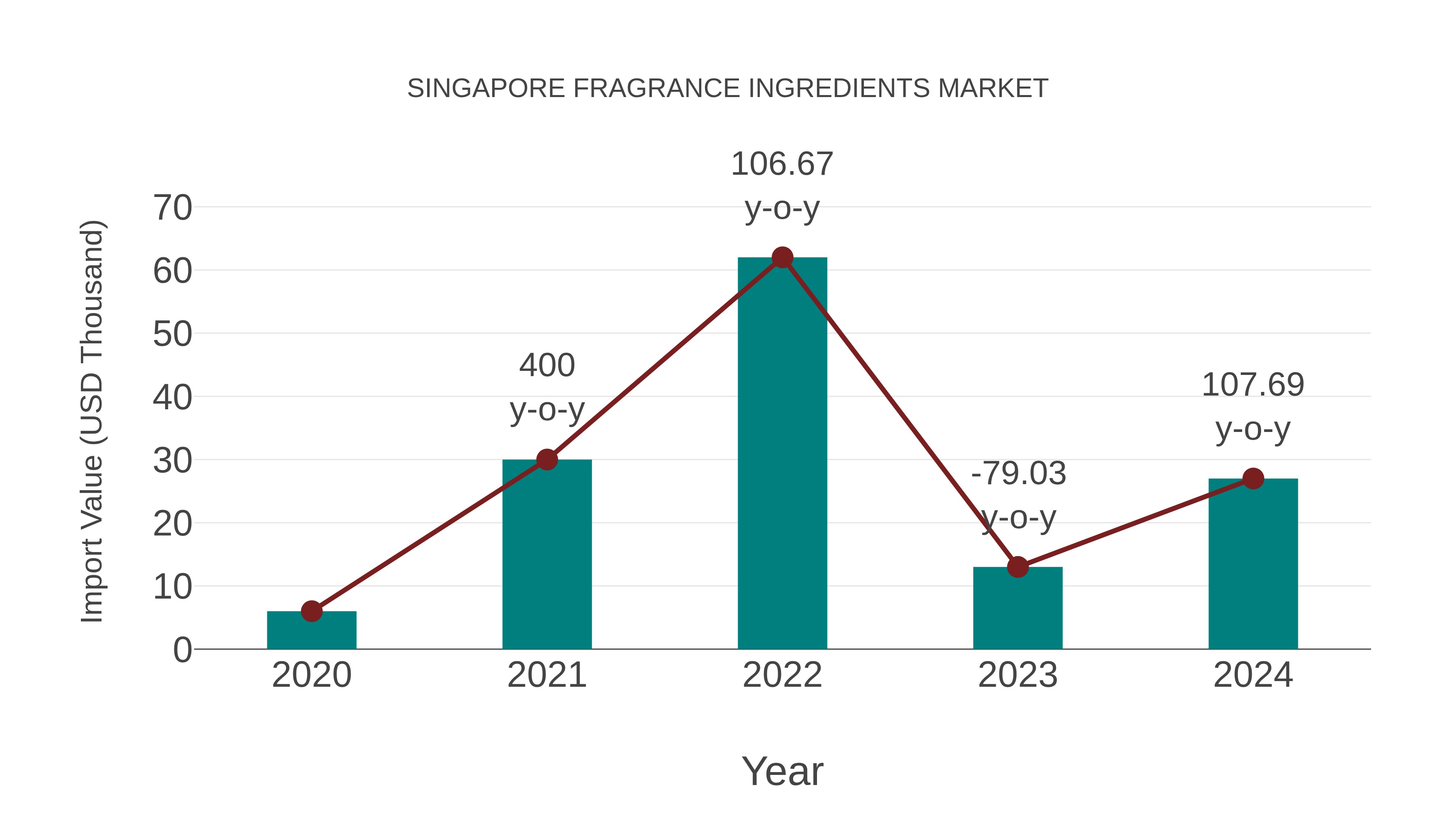
In the Singapore fragrance ingredients market, the import trend showed significant growth from 2023 to 2024, with a growth rate of 107.69%. The compound annual growth rate (CAGR) for the period 2020-2024 stood at 45.65%. The substantial increase in imports can be attributed to a shift in demand towards premium fragrance products, driving market stability and indicating a robust trade momentum within the industry.
Singapore Fragrance Ingredients Market Overview
Fragrance ingredients are essential components in the perfumery, personal care, and household product industries. The Singapore fragrance ingredients market serves the needs of these sectors by providing a diverse range of fragrance compounds. This market is characterized by the demand for unique and long-lasting scents that enhance the sensory experience of various products. Innovations in fragrance ingredient development, including natural and sustainable options, are crucial in meeting the evolving preferences of consumers in Singapore.
Drivers of the Market
The Singapore Fragrance Ingredients Market is driven by the cosmetics, personal care, and household products industries` demand for captivating scents. Fragrance ingredients, including natural and synthetic options, are essential in creating signature perfumes, colognes, and scented products. The market benefits from the constant desire for pleasing and unique fragrances in consumer goods.
Challenges of the Market
The Singapore Fragrance Ingredients Market encounters challenges linked to the development of unique and long-lasting fragrances. Creating distinctive and long-lasting scents that cater to changing consumer preferences and market trends is an ongoing task for manufacturers. Additionally, regulatory compliance and safety standards for fragrance ingredients must be consistently met.
Covid-19 impact of the Market
The COVID-19 pandemic influenced the Singapore fragrance ingredients market as consumers sought sensory experiences to counter stress and uncertainty. Fragrance ingredients gained importance in personal care and household products, contributing to their market growth. As people spent more time at home, the role of fragrances in creating soothing and enjoyable environments became evident. The market saw increased demand for fragrance ingredients in various applications, including perfumes, candles, and air fresheners.
Leading Players of the Market
Leading fragrance ingredients companies in Singapore include Symrise, Givaudan, and Firmenich. These firms are renowned for their extensive portfolios of fragrance compounds, essential oils, and aroma chemicals used in the personal care, perfumery, and household product industries.
Key Highlights of the Report:
- Singapore Fragrance Ingredients Market Outlook
- Market Size of Singapore Fragrance Ingredients Market, 2025
- Forecast of Singapore Fragrance Ingredients Market, 2032
- Historical Data and Forecast of Singapore Fragrance Ingredients Revenues & Volume for the Period 2022-2032F
- Singapore Fragrance Ingredients Market Trend Evolution
- Singapore Fragrance Ingredients Market Drivers and Challenges
- Singapore Fragrance Ingredients Price Trends
- Singapore Fragrance Ingredients Porter's Five Forces
- Singapore Fragrance Ingredients Industry Life Cycle
- Historical Data and Forecast of Singapore Fragrance Ingredients Market Revenues & Volume By Type for the Period 2022-2032F
- Historical Data and Forecast of Singapore Fragrance Ingredients Market Revenues & Volume By Essential Oils for the Period 2022-2032F
- Historical Data and Forecast of Singapore Fragrance Ingredients Market Revenues & Volume By Aroma Chemicals for the Period 2022-2032F
- Historical Data and Forecast of Singapore Fragrance Ingredients Market Revenues & Volume By Application for the Period 2022-2032F
- Historical Data and Forecast of Singapore Fragrance Ingredients Market Revenues & Volume By Cosmetics & toiletries for the Period 2022-2032F
- Historical Data and Forecast of Singapore Fragrance Ingredients Market Revenues & Volume By Fine fragrances for the Period 2022-2032F
- Historical Data and Forecast of Singapore Fragrance Ingredients Market Revenues & Volume By Soaps & detergents for the Period 2022-2032F
- Historical Data and Forecast of Singapore Fragrance Ingredients Market Revenues & Volume By Others for the Period 2022-2032F
- Singapore Fragrance Ingredients Import Export Trade Statistics
- Market Opportunity Assessment By Type
- Market Opportunity Assessment By Application
- Singapore Fragrance Ingredients Top Companies Market Share
- Singapore Fragrance Ingredients Competitive Benchmarking By Technical and Operational Parameters
- Singapore Fragrance Ingredients Company Profiles
- Singapore Fragrance Ingredients Key Strategic Recommendations






































