Singapore Fruit Pulp Market Size, Share & Growth Rate
The Singapore Fruit Pulp Market was estimated at USD 421 Million in 2025 and is projected to reach USD 549 Million by 2032, growing at a CAGR of 3.9% from 2026 to 2032. This growth trajectory is driven primarily by the increasing consumer demand for natural flavors and convenience in food and beverages, as more individuals prioritize health-conscious eating habits. Additionally, the rising popularity of exotic fruit flavors reflects the evolving tastes of Singaporean consumers, prompting manufacturers to innovate and expand their product offerings.
Singapore Fruit Pulp Market Year-wise Growth Rate and Key Drivers
This graph highlights how the Singapore Fruit Pulp Market has steadily grown over the years, supported by major growth factors.
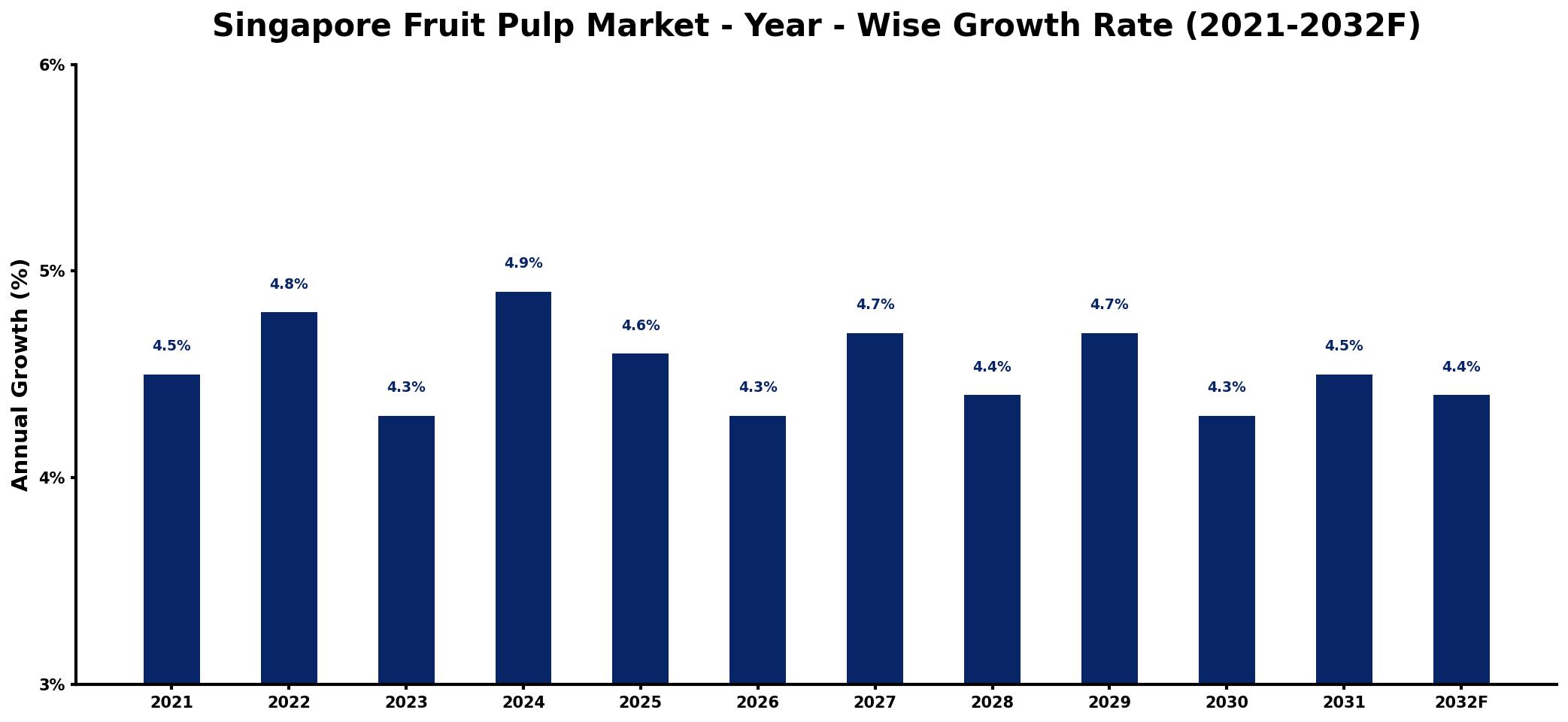
The table below presents the year‑wise growth rates along with the key drivers influencing the market
| Year | Growth Rate | Major Drivers |
| 2021 | 4.5% | Rising health consciousness among consumers |
| 2022 | 4.8% | Increased demand for natural ingredients |
| 2023 | 4.3% | Growing popularity of plant-based diets |
| 2024 | 4.9% | Expansion of food processing facilities |
| 2025 | 4.6% | Boost in online retail channels |
| 2026 | 4.3% | Surge in tropical beverage innovations |
| 2027 | 4.7% | Growth in export opportunities abroad |
| 2028 | 4.4% | Increased investments in local production |
| 2029 | 4.7% | Rising trend of sustainable sourcing |
| 2030 | 4.3% | Growing consumer preference for convenience |
| 2031 | 4.5% | stronger distribution network expansion |
| 2032 | 4.4% | Increased collaboration with manufacturers |
Note: Market size estimations and growth projections presented in this report are based on 6Wresearch's proprietary forecasting methodology, utilizing the latest available industry data, government publications, and primary research inputs.
Singapore Fruit Pulp Market Synopsis
The prevailing trend of health and wellness is the most significant force currently shaping the Singapore fruit pulp market. Consumers are increasingly seeking out products that deliver natural flavors without artificial additives, fueling the demand for high-quality fruit pulp across various applications.
Moreover, the market is witnessing a surge in the popularity of tropical and exotic fruit pulps, which cater to a growing segment of adventurous consumers. Manufacturers are responding to this demand by investing in advanced processing techniques to ensure the freshness and nutritional integrity of their offerings, thereby enhancing product appeal.
Singapore Fruit Pulp Market Key Takeaways
- The market is anticipated to grow significantly, reaching USD 549 Million by 2032.
- Consumer preference is shifting towards natural and minimally processed fruit ingredients.
- There is an increasing demand for exotic and tropical fruit flavors among consumers.
- Manufacturers are focusing on innovative processing methods to enhance quality and nutrition.
- The rise of home cooking trends during the pandemic has expanded consumer access to fruit pulps.
Evaluation of Restraints in Singapore Fruit Pulp Market
Despite its promising growth, the Singapore fruit pulp market faces notable constraints. The sourcing of fruit pulp remains a challenge, as it depends heavily on seasonal availability and fluctuating import costs. Moreover, ensuring the freshness and quality of fruit pulp during transportation is critical; any decline in quality can jeopardize the trust consumers place in these products. Additionally, some consumer segments still prefer whole fruits or minimally processed options, which may limit the broader market appeal of fruit pulps.
Singapore Fruit Pulp Market Trends
Currently, there is a clear trend towards sustainability in sourcing fruit pulp, with a growing emphasis on ethical practices among manufacturers. Furthermore, innovative product development is on the rise, with brands exploring hybrid flavors and unique combinations to differentiate their offerings. The increasing integration of fruit pulps into health-oriented products, such as functional foods and beverages, signals a significant shift towards wellness-focused consumption. This transition is bolstered by the ongoing exploration of new processing techniques to better preserve nutritional content and flavor.
Singapore Fruit Pulp Market Opportunities
There are substantial opportunities for growth within the Singapore fruit pulp market, particularly as consumer demand for diverse and exotic flavors continues to expand. The rising trend of health and wellness opens avenues for product innovation, such as sugar-free and organic fruit pulps. Additionally, the increasing popularity of home cooking presents an opportunity for brands to penetrate new customer segments through innovative packaging and marketing strategies. Leveraging local fruits that resonate with the Singaporean palate could further enhance market appeal.
Government Initiatives in the Singapore Fruit Pulp Market
The Singaporean government has implemented various initiatives aimed at supporting the food and beverage sector, which indirectly benefits the fruit pulp market. Programs promoting sustainable agricultural practices and the adoption of advanced food processing technologies are pivotal. Additionally, public spending on research and development fosters innovation within the industry, helping manufacturers improve product quality and operational efficiency. These measures align with the governments broader objective of enhancing Singapore's reputation as a global food hub.
Future Insights of the Singapore Fruit Pulp Market
Looking ahead to 2026-2032, the Singapore fruit pulp market is poised for significant expansion, driven by evolving consumer preferences and a continued focus on health and wellness. The integration of technology in processing and packaging is likely to enhance product accessibility and quality, further stimulating growth. As manufacturers increasingly explore innovative flavor profiles and sustainable sourcing, they will be well-positioned to capitalize on changing market dynamics. Overall, the outlook remains optimistic, with a robust demand trajectory anticipated through the coming years.
Singapore Fruit Pulp Market Latest Developments (2025 - 2026)
Recent developments in the Singapore fruit pulp market highlight a shift towards diversification in product offerings. Brands are increasingly experimenting with blends of tropical fruit pulps, responding to consumer demand for unique flavor experiences. Additionally, sustainable packaging solutions have gained traction, with several manufacturers committing to eco-friendly practices. The ongoing emphasis on quality assurance and innovation in processing methods signifies a proactive approach to maintaining market competitiveness in a rapidly evolving landscape.
Singapore Fruit Pulp Market - Key Attractiveness of the Report
- 10 Years of Market Numbers
- Historical Data Starting from 2022 to 2025
- Base Year: 2025
- Forecast Data until 2032
- Key Performance Indicators Impacting the Market
- Major Upcoming Developments and Projects
Key Highlights of the Report:
- Singapore Fruit Pulp Market Outlook
- Market Size of Singapore Fruit Pulp Market, 2025
- Forecast of Singapore Fruit Pulp Market, 2032
- Historical Data and Forecast of Singapore Fruit Pulp Revenues & Volume for the Period 2022-2032F
- Singapore Fruit Pulp Market Trend Evolution
- Singapore Fruit Pulp Market Drivers and Challenges
- Singapore Fruit Pulp Price Trends
- Singapore Fruit Pulp Porter's Five Forces
- Singapore Fruit Pulp Industry Life Cycle
- Historical Data and Forecast of Singapore Fruit Pulp Market Revenues & Volume By Fruit Type for the Period 2022-2032F
- Historical Data and Forecast of Singapore Fruit Pulp Market Revenues & Volume By Mango for the Period 2022-2032F
- Historical Data and Forecast of Singapore Fruit Pulp Market Revenues & Volume By Strawberry for the Period 2022-2032F
- Historical Data and Forecast of Singapore Fruit Pulp Market Revenues & Volume By Apple for the Period 2022-2032F
- Historical Data and Forecast of Singapore Fruit Pulp Market Revenues & Volume By Guava for the Period 2022-2032F
- Historical Data and Forecast of Singapore Fruit Pulp Market Revenues & Volume By Berries for the Period 2022-2032F
- Historical Data and Forecast of Singapore Fruit Pulp Market Revenues & Volume By Citrus Fruits for the Period 2022-2032F
- Historical Data and Forecast of Singapore Fruit Pulp Market Revenues & Volume By Others for the Period 2022-2032F
- Historical Data and Forecast of Singapore Fruit Pulp Market Revenues & Volume By Form for the Period 2022-2032F
- Historical Data and Forecast of Singapore Fruit Pulp Market Revenues & Volume By Liquid for the Period 2022-2032F
- Historical Data and Forecast of Singapore Fruit Pulp Market Revenues & Volume By Powder for the Period 2022-2032F
- Historical Data and Forecast of Singapore Fruit Pulp Market Revenues & Volume By Application for the Period 2022-2032F
- Historical Data and Forecast of Singapore Fruit Pulp Market Revenues & Volume By Food and Beverages for the Period 2022-2032F
- Historical Data and Forecast of Singapore Fruit Pulp Market Revenues & Volume By Distribution for the Period 2022-2032F
- Historical Data and Forecast of Singapore Fruit Pulp Market Revenues & Volume By E-Commerce for the Period 2022-2032F
- Historical Data and Forecast of Singapore Fruit Pulp Market Revenues & Volume By Convenience Stores for the Period 2022-2032F
- Historical Data and Forecast of Singapore Fruit Pulp Market Revenues & Volume By Supermarkets/Hypermarkets for the Period 2022-2032F
- Historical Data and Forecast of Singapore Fruit Pulp Market Revenues & Volume By Specialty Stores for the Period 2022-2032F
- Historical Data and Forecast of Singapore Fruit Pulp Market Revenues & Volume By Others for the Period 2022-2032F
- Singapore Fruit Pulp Import Export Trade Statistics
- Market Opportunity Assessment By Fruit Type
- Market Opportunity Assessment By Form
- Market Opportunity Assessment By Application
- Market Opportunity Assessment By Distribution
- Singapore Fruit Pulp Top Companies Market Share
- Singapore Fruit Pulp Competitive Benchmarking By Technical and Operational Parameters
- Singapore Fruit Pulp Company Profiles
- Singapore Fruit Pulp Key Strategic Recommendations






































