Singapore Household Textile Market: Import Trend Analysis
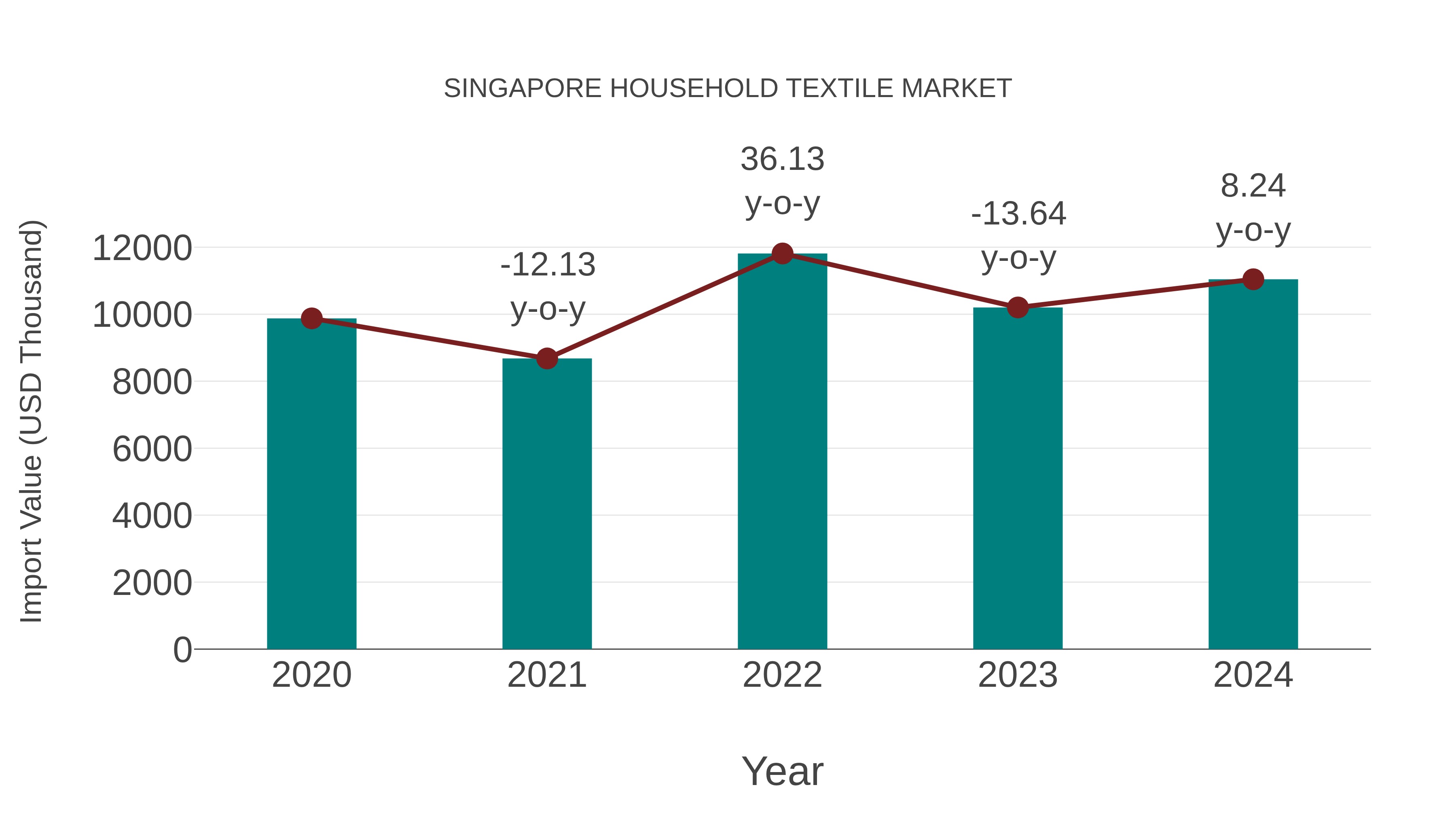
In the Singapore household textile market, the import trend exhibited positive momentum from 2023 to 2024, with a growth rate of 8.24%. The compound annual growth rate (CAGR) for imports in the period 2020-2024 stood at 2.83%. This uptick in import growth could be attributed to shifting consumer preferences towards higher-quality textiles or changes in trade agreements benefiting the market.
Singapore Household Textile Market Synopsis
Singapore household textile market is expected to witness a healthy growth rate during the forecast period of 2020-2025. Consumers in Singapore are inclined towards purchasing products that are high quality, affordable and environmentally friendly. This has resulted in significant expansion for retailers into the household textiles market, as they look to satisfy consumers` demands for materials that meet their needs. Major companies present in this sector include IKEA, H&M Home, Marks & Spencer, Muji and Uniqlo Home among others.
Market Drivers
The key drivers of growth within the Singapore household textiles industry include increasing demand from higher-income households due to rising disposable incomes and changing fashion trends among younger generations who prioritize comfort over traditional aesthetics when shopping for home furnishings. The growing popularity of e-commerce platforms such as Amazon also offers an opportunity for retailers on these platforms to target untapped segments with customized offerings at competitive prices. Furthermore, manufacturers are introducing innovative products such as bamboo sheets which offer superior comfort levels compared to conventional cotton fabrics while being more sustainable than polyester or nylon options making them attractive alternatives in terms of both price point and environmental impact.
Market challenges
The major challenge faced by the Singapore Household Textile Market is intense competition from international players who have decided to enter into this industry due to its lucrative nature while offering low cost goods made with inferior quality materials thus negatively impacting local suppliers whose profit margins may be squeezed further causing some degree if instability within the overall supply chain network operating within this sector. Additionally strict environmental regulation regarding water discharges and carbon emissions pose another potential threat that can hinder future business prospects if not properly managed thereby leading firms into financial difficulty through fines or other penalties imposed by regulatory bodies.
Key players
Heng Long Textiles Pte Ltd, Continental Textiles & Trading Co., Utex Industries Pte Ltd, YC Lee & Co, Vico International (Singapore) Pte Ltd, New Way Enterprises Group Int`l P are the major players.
Covid-19 Impact
The Covid 19 pandemic had a huge effect on many industries including those related specifically to household textiles resulting in a decline overall sales volume recorded across all markets worldwide however it was especially severe here in Singapore where most stores were forced close temporarily resulting total lockdowns or restrictions placed upon certain businesses severely hindering movement both physically and financially consequently retarding any economic activity conducted by suppliers directly involved with production manufacture retailing ETC Additionally aside from increased costs associated with running online operations instead brick mortar locations there were additional challenges incurred by suppliers trying source raw materials abroad since global transportation networks ground almost standstill during peak periods lockdown measures adversely affecting any kind trade imports exports which could take months
Key Highlights of the Report:
- Singapore Household Textile Market Outlook
- Market Size of Singapore Household Textile Market, 2023
- Forecast of Singapore Household Textile Market, 2030
- Historical Data and Forecast of Singapore Household Textile Revenues & Volume for the Period 2020-2030
- Singapore Household Textile Market Trend Evolution
- Singapore Household Textile Market Drivers and Challenges
- Singapore Household Textile Price Trends
- Singapore Household Textile Porter's Five Forces
- Singapore Household Textile Industry Life Cycle
- Historical Data and Forecast of Singapore Household Textile Market Revenues & Volume By Type for the Period 2020-2030
- Historical Data and Forecast of Singapore Household Textile Market Revenues & Volume By Non-woven Textile for the Period 2020-2030
- Historical Data and Forecast of Singapore Household Textile Market Revenues & Volume By Woven Textile for the Period 2020-2030
- Historical Data and Forecast of Singapore Household Textile Market Revenues & Volume By Application for the Period 2020-2030
- Historical Data and Forecast of Singapore Household Textile Market Revenues & Volume By Bed for the Period 2020-2030
- Historical Data and Forecast of Singapore Household Textile Market Revenues & Volume By Furniture for the Period 2020-2030
- Historical Data and Forecast of Singapore Household Textile Market Revenues & Volume By Door & Window for the Period 2020-2030
- Historical Data and Forecast of Singapore Household Textile Market Revenues & Volume By Dining & Wash for the Period 2020-2030
- Historical Data and Forecast of Singapore Household Textile Market Revenues & Volume By Ground for the Period 2020-2030
- Singapore Household Textile Import Export Trade Statistics
- Market Opportunity Assessment By Type
- Market Opportunity Assessment By Application
- Singapore Household Textile Top Companies Market Share
- Singapore Household Textile Competitive Benchmarking By Technical and Operational Parameters
- Singapore Household Textile Company Profiles
- Singapore Household Textile Key Strategic Recommendations






































