Singapore Oil and Gas Upstream Market: Import Trend Analysis
In 2024, Singapore`s oil and gas upstream market saw a significant increase in imports. This trend was driven by rising demand for energy resources to support industrial activities and economic growth. Key suppliers included countries in the Middle East and Southeast Asia.
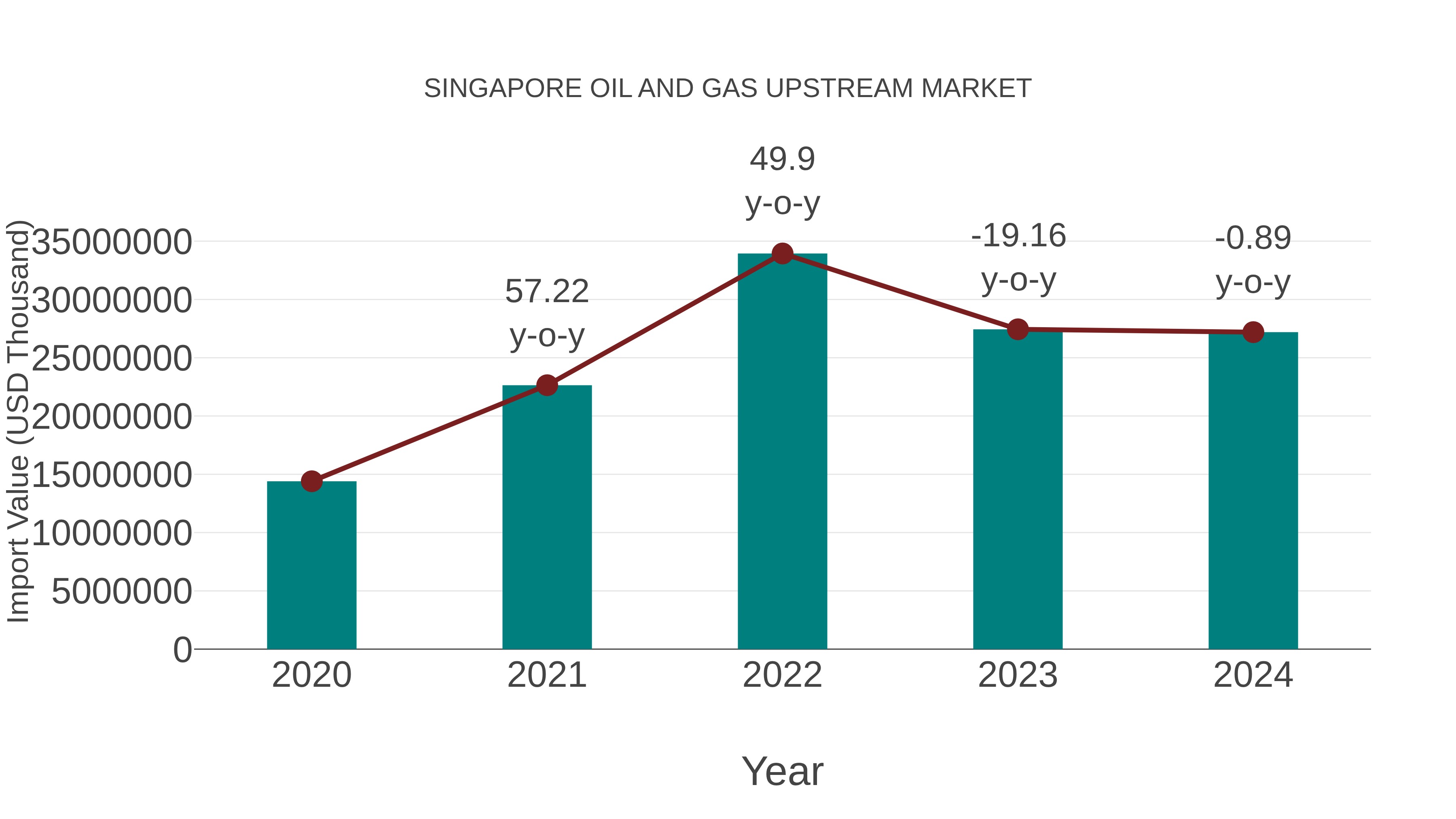
Singapore Oil and Gas Upstream Market Synopsis
The Singapore Oil and Gas Upstream Market is a key sector in the country`s economy, with significant focus on exploration, drilling, and production activities. The industry is largely dominated by multinational corporations and state-owned enterprises, with a strong presence of local companies as well. Singapore benefits from its strategic location, advanced infrastructure, and a skilled workforce, making it an attractive hub for upstream operations in the region. The market faces challenges such as fluctuating oil prices, regulatory changes, and environmental concerns, driving companies to innovate and adopt sustainable practices. Despite these challenges, Singapore remains a competitive player in the global oil and gas upstream market, with ongoing investments in technology and talent to ensure long-term growth and sustainability.
Singapore Oil and Gas Upstream Market Trends
In the Singapore Oil and Gas Upstream Market, one of the current trends is a shift towards digitalization and automation to increase efficiency and reduce costs. Companies are increasingly adopting advanced technologies such as artificial intelligence, Internet of Things (IoT), and machine learning to optimize operations, monitor equipment performance, and enhance safety measures. Additionally, there is a growing focus on sustainability and environmental responsibility, with a push towards renewable energy sources and carbon reduction initiatives. Collaborations and partnerships between industry players, research institutions, and government bodies are also on the rise to drive innovation and address challenges in the upstream sector. Overall, the Singapore Oil and Gas Upstream Market is witnessing a transformation towards a more technologically advanced, sustainable, and collaborative ecosystem.
Singapore Oil and Gas Upstream Market Challenges
The Singapore Oil and Gas Upstream Market faces challenges such as declining production from mature fields, high operational costs, and competition from neighboring countries. The maturing fields in Singapore result in diminishing reserves, leading to a need for exploration in more challenging environments which can be costly. Additionally, the high operational costs in Singapore, including labor and equipment expenses, can impact profitability for upstream companies. Furthermore, neighboring countries like Malaysia and Indonesia offer attractive investment opportunities and potentially lower costs, posing a competitive threat to Singapore`s oil and gas industry. Overall, navigating these challenges requires innovation, cost-efficiency measures, and strategic partnerships to sustain and grow the upstream sector in Singapore.
Singapore Oil and Gas Upstream Market Investment Opportunities
The Singapore Oil and Gas Upstream Market offers promising investment opportunities in exploration and production activities, as well as in technology and innovation. With Singapore`s strategic location and established infrastructure, companies can leverage the country`s hub status to access regional markets and resources. Furthermore, Singapore`s commitment to sustainable energy practices and digitalization in the oil and gas sector presents opportunities for investments in renewable energy projects and advanced technologies. Investors can also consider partnerships with local companies to benefit from their expertise and network in the region. Overall, the Singapore Oil and Gas Upstream Market is dynamic and evolving, providing ample opportunities for growth and diversification in the energy sector.
Singapore Oil and Gas Upstream Market Future Outlook
The future outlook for the Singapore Oil and Gas Upstream Market appears promising, driven by increasing investment in exploration and production activities. The country`s strategic location, advanced infrastructure, and stable regulatory environment make it an attractive destination for oil and gas companies. Technological advancements, such as the adoption of digital solutions and automation, are expected to enhance operational efficiency and reduce costs in the sector. Additionally, Singapore`s focus on sustainable energy solutions and commitment to reducing carbon emissions could lead to opportunities for growth in renewable energy sources within the industry. Overall, the Singapore Oil and Gas Upstream Market is poised for steady growth and innovation in the coming years.
Key Highlights of the Report:
- Singapore Oil and Gas Upstream Market Outlook
- Market Size of Singapore Oil and Gas Upstream Market, 2025
- Forecast of Singapore Oil and Gas Upstream Market, 2032
- Historical Data and Forecast of Singapore Oil and Gas Upstream Revenues & Volume for the Period 2022 - 2032F
- Singapore Oil and Gas Upstream Market Trend Evolution
- Singapore Oil and Gas Upstream Market Drivers and Challenges
- Singapore Oil and Gas Upstream Price Trends
- Singapore Oil and Gas Upstream Porter's Five Forces
- Singapore Oil and Gas Upstream Industry Life Cycle
- Historical Data and Forecast of Singapore Oil and Gas Upstream Market Revenues & Volume By Location of Deployment for the Period 2022 - 2032F
- Historical Data and Forecast of Singapore Oil and Gas Upstream Market Revenues & Volume By Onshore for the Period 2022 - 2032F
- Historical Data and Forecast of Singapore Oil and Gas Upstream Market Revenues & Volume By Offshore for the Period 2022 - 2032F
- Singapore Oil and Gas Upstream Import Export Trade Statistics
- Market Opportunity Assessment By Location of Deployment
- Singapore Oil and Gas Upstream Top Companies Market Share
- Singapore Oil and Gas Upstream Competitive Benchmarking By Technical and Operational Parameters
- Singapore Oil and Gas Upstream Company Profiles
- Singapore Oil and Gas Upstream Key Strategic Recommendations






































