Singapore Personal Hygiene Market: Import Trend Analysis
In 2024, Singapore`s personal hygiene market saw a notable import trend with a steady increase in imported personal care products. The demand for high-quality and innovative personal hygiene items contributed to the growth of imports in the market.
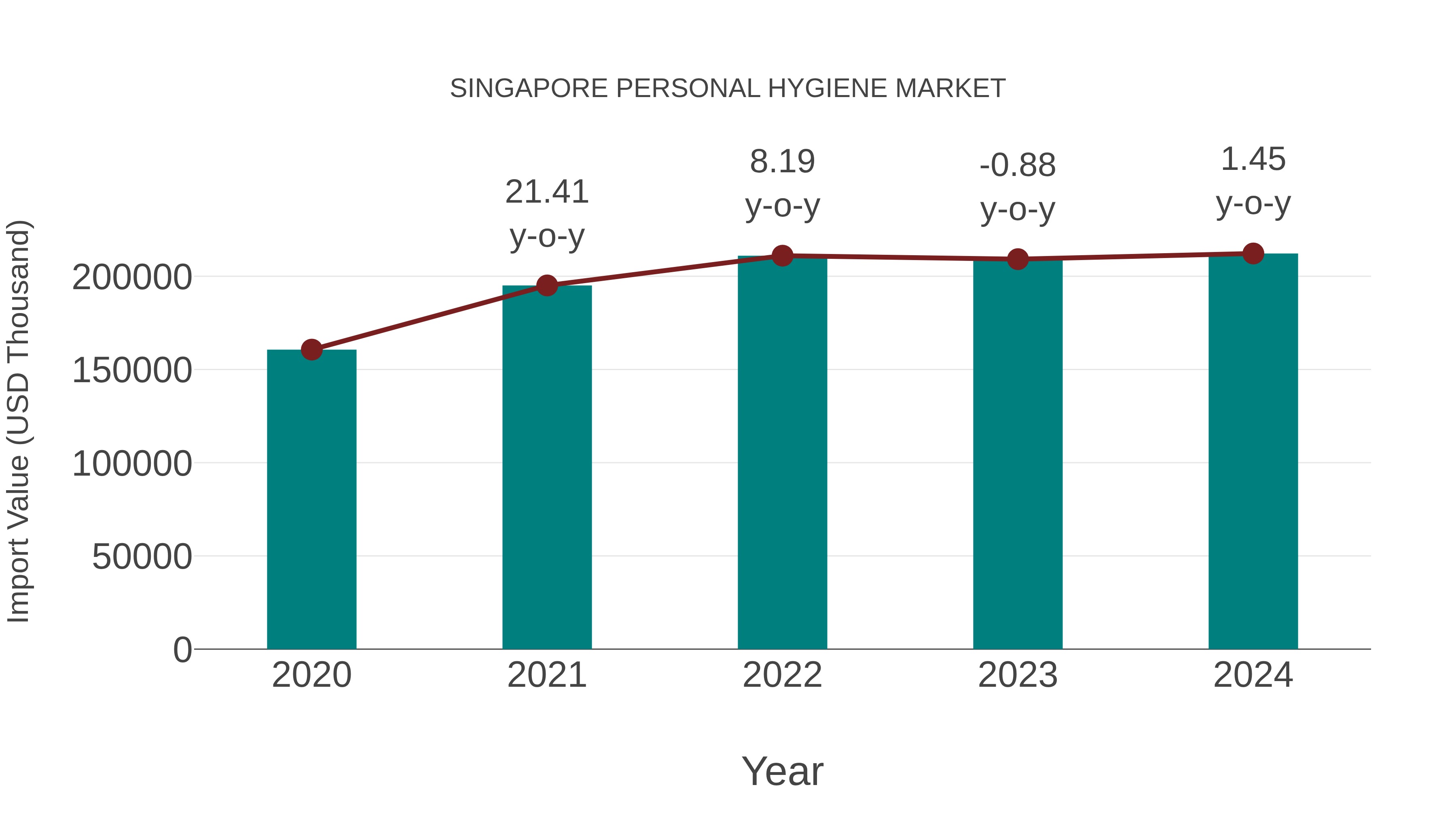
Singapore Personal Hygiene Market Synopsis
The Singapore Personal Hygiene Market is a dynamic and growing sector driven by increasing awareness of health and wellness among the population. The market encompasses a wide range of products including personal care items such as soaps, shampoos, deodorants, and oral care products. With a focus on hygiene and cleanliness, there is a rising demand for natural and organic products, as well as innovative solutions such as antibacterial and anti-aging formulas. Key players in the market include international brands like Unilever, Procter & Gamble, and Johnson & Johnson, as well as local companies catering to specific consumer preferences. The market is characterized by intense competition, leading to continuous product innovation and marketing strategies to capture the attention of discerning consumers.
Singapore Personal Hygiene Market Trends
In the Singapore Personal Hygiene Market, there is a growing demand for natural and eco-friendly products as consumers become more conscious of their environmental impact. Brands are expanding their offerings to include sustainable options such as biodegradable wipes, organic soaps, and refillable packaging. There is also a rising interest in products with advanced technology features, such as UV sanitizing devices and smart toothbrushes. With the ongoing COVID-19 pandemic, there has been a heightened focus on hygiene and disinfection, leading to increased sales of hand sanitizers, antibacterial soaps, and disinfectant wipes. E-commerce has seen a significant boost as consumers prefer to shop online for personal hygiene products, driving companies to enhance their digital presence and offer convenient delivery options to cater to changing consumer preferences.
Singapore Personal Hygiene Market Challenges
In the Singapore Personal Hygiene Market, one of the key challenges faced is the intense competition from both local and international brands offering a wide range of products. This competition leads to price wars and aggressive marketing strategies, making it challenging for smaller or newer companies to establish a strong presence in the market. Additionally, consumer preferences and trends are constantly evolving, requiring companies to stay innovative and responsive to changing demands. Another challenge is the increasing focus on sustainability and eco-friendliness, with consumers seeking products that are not only effective but also environmentally friendly. Meeting these sustainability requirements while maintaining product efficacy can be a significant challenge for companies operating in the Singapore Personal Hygiene Market.
Singapore Personal Hygiene Market Investment Opportunities
The Singapore Personal Hygiene Market presents various investment opportunities across different product categories such as skincare, hair care, oral care, and feminine hygiene. With the rising awareness of personal hygiene and grooming among consumers in Singapore, there is a growing demand for premium and natural products. Investing in innovative and sustainable personal hygiene brands that offer unique formulations, eco-friendly packaging, and cater to specific consumer needs can be lucrative. Additionally, leveraging e-commerce platforms and digital marketing strategies to reach a wider audience and capitalize on the online shopping trend in Singapore can enhance growth prospects in the personal hygiene market. Partnering with local distributors or retailers to expand distribution channels and conducting market research to understand consumer preferences and trends are essential for successful investments in the Singapore personal hygiene market.
Jordan Agar Market Government Policies
The Singaporean government has stringent regulations in place to ensure the safety and quality of personal hygiene products in the market. The Health Sciences Authority (HSA) oversees the registration and approval of these products, requiring manufacturers to adhere to specific standards and guidelines. Additionally, the Singapore Food Agency (SFA) monitors the labeling and advertising of personal hygiene products to prevent misleading claims. The government also promotes public awareness campaigns on proper hygiene practices to educate consumers on the importance of personal cleanliness. Overall, the government`s policies aim to uphold high standards of hygiene products, safeguard consumer health, and maintain a competitive and transparent marketplace for personal hygiene in Singapore.
Singapore Personal Hygiene Market Future Outlook
The Singapore Personal Hygiene Market is expected to see steady growth in the coming years driven by increasing awareness of personal health and hygiene, a growing aging population, and rising disposable income levels. Consumers are becoming more conscious of the importance of personal hygiene products, leading to a higher demand for innovative and specialized products. The market is also witnessing a shift towards sustainable and eco-friendly options, as consumers become more environmentally conscious. With the rise of e-commerce platforms and digital marketing strategies, companies are expected to focus on online sales channels to reach a wider consumer base and enhance brand visibility. Overall, the Singapore Personal Hygiene Market is anticipated to continue expanding, offering opportunities for new product developments and market entrants to cater to evolving consumer preferences.
Key Highlights of the Report:
- Singapore Personal Hygiene Market Outlook
- Market Size of Singapore Personal Hygiene Market, 2025
- Forecast of Singapore Personal Hygiene Market, 2032
- Historical Data and Forecast of Singapore Personal Hygiene Revenues & Volume for the Period 2022 - 2032F
- Singapore Personal Hygiene Market Trend Evolution
- Singapore Personal Hygiene Market Drivers and Challenges
- Singapore Personal Hygiene Price Trends
- Singapore Personal Hygiene Porter's Five Forces
- Singapore Personal Hygiene Industry Life Cycle
- Historical Data and Forecast of Singapore Personal Hygiene Market Revenues & Volume By Product for the Period 2022 - 2032F
- Historical Data and Forecast of Singapore Personal Hygiene Market Revenues & Volume By Soaps for the Period 2022 - 2032F
- Historical Data and Forecast of Singapore Personal Hygiene Market Revenues & Volume By Hand Sanitizers for the Period 2022 - 2032F
- Historical Data and Forecast of Singapore Personal Hygiene Market Revenues & Volume By Bath and Shower Products for the Period 2022 - 2032F
- Historical Data and Forecast of Singapore Personal Hygiene Market Revenues & Volume By Face Care Products for the Period 2022 - 2032F
- Historical Data and Forecast of Singapore Personal Hygiene Market Revenues & Volume By Other Products for the Period 2022 - 2032F
- Historical Data and Forecast of Singapore Personal Hygiene Market Revenues & Volume By Gender for the Period 2022 - 2032F
- Historical Data and Forecast of Singapore Personal Hygiene Market Revenues & Volume By Unisex for the Period 2022 - 2032F
- Historical Data and Forecast of Singapore Personal Hygiene Market Revenues & Volume By Male for the Period 2022 - 2032F
- Historical Data and Forecast of Singapore Personal Hygiene Market Revenues & Volume By Female for the Period 2022 - 2032F
- Historical Data and Forecast of Singapore Personal Hygiene Market Revenues & Volume By Distribution Channel for the Period 2022 - 2032F
- Historical Data and Forecast of Singapore Personal Hygiene Market Revenues & Volume By Retail Pharmacies for the Period 2022 - 2032F
- Historical Data and Forecast of Singapore Personal Hygiene Market Revenues & Volume By Hospital based Pharmacies for the Period 2022 - 2032F
- Historical Data and Forecast of Singapore Personal Hygiene Market Revenues & Volume By Supermarkets for the Period 2022 - 2032F
- Historical Data and Forecast of Singapore Personal Hygiene Market Revenues & Volume By E-commerce for the Period 2022 - 2032F
- Singapore Personal Hygiene Import Export Trade Statistics
- Market Opportunity Assessment By Product
- Market Opportunity Assessment By Gender
- Market Opportunity Assessment By Distribution Channel
- Singapore Personal Hygiene Top Companies Market Share
- Singapore Personal Hygiene Competitive Benchmarking By Technical and Operational Parameters
- Singapore Personal Hygiene Company Profiles
- Singapore Personal Hygiene Key Strategic Recommendations






































